
Carnival Glass Identification: How to Identify Patterns and Iridescence
Carnival glass identification relies on recognizing iridescent finishes, specific pattern names, base marks, and mold characteristics. This guide explains what to look for and how to photograph pieces effectively for identification.
Carnival Glass Identification: How to Identify Patterns and Iridescence
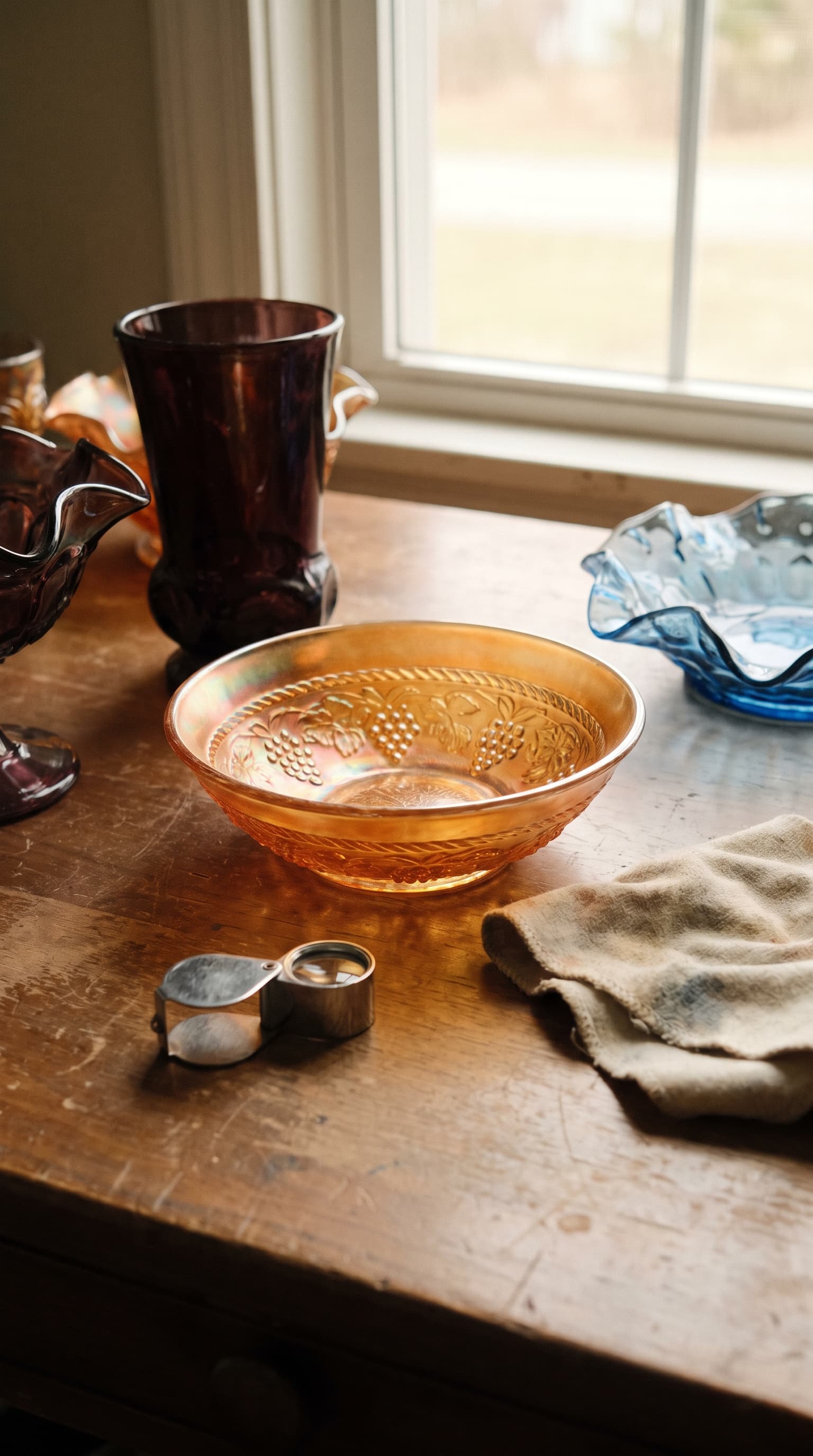
Carnival glass identification starts with understanding the distinctive rainbow-like iridescence that gives these pieces their magic. Produced primarily between 1905 and the 1930s by manufacturers like Fenton, Northwood, Millersburg, and Imperial, carnival glass was pressed into patterns then sprayed with metallic salts before firing. The result is that shimmering, oil-slick surface collectors love. But identifying carnival glass goes beyond just spotting that shine—pattern names, base marks, color combinations, and mold details all matter when you're trying to pin down exactly what you have.
What Clues Matter for Carnival Glass Identification
The iridescence itself tells you a lot. Quality carnival glass shows a strong, even finish with colors that shift as you tilt the piece. Common base colors include marigold (amber with gold iridescence), amethyst, green, blue, and red. The iridescence can appear as gold, purple, blue, or even rainbow. Weak or patchy iridescence often indicates later reproduction pieces or lower-quality examples.
Pattern names are crucial. Carnival glass collectors use specific names like "Grape and Cable," "Peacock at the Fountain," "Holly," "Persian Medallion," and "Dragon and Lotus." These aren't just decorative descriptions—they're standardized identifiers that reference specific mold designs. Learning even a handful of major patterns helps tremendously.
Base marks provide manufacturer clues. Northwood often used an "N" inside a circle or underlined. Fenton pieces might be unmarked or show a "Fenton" mark (though many early pieces weren't marked at all). Millersburg pieces are often unmarked but have distinctive weight and quality. Imperial used various marks including "IG" and crossed lines. Many carnival glass pieces carry no mark, so pattern recognition becomes essential.
Mold characteristics matter too. Look at the quality of the pressing—sharp, detailed patterns suggest better makers or earlier production. Check the base for pontil marks, mold seams, and ground edges. The weight and ring of the glass when gently tapped can also indicate quality and authenticity.
Color rarity affects identification significance. While marigold carnival glass is common, colors like red, ice blue, ice green, and aqua opalescent are rare and highly collectible. Vaseline (uranium glass with iridescence) and pastel colors command premium attention.
What Photos to Take for Carnival Glass Identification
Photographing carnival glass requires capturing both the iridescence and the underlying details. Start with a straight-on shot of the entire piece against a neutral background. Natural indirect light works best—direct sunlight can wash out details, while indoor lighting helps the iridescence pop.
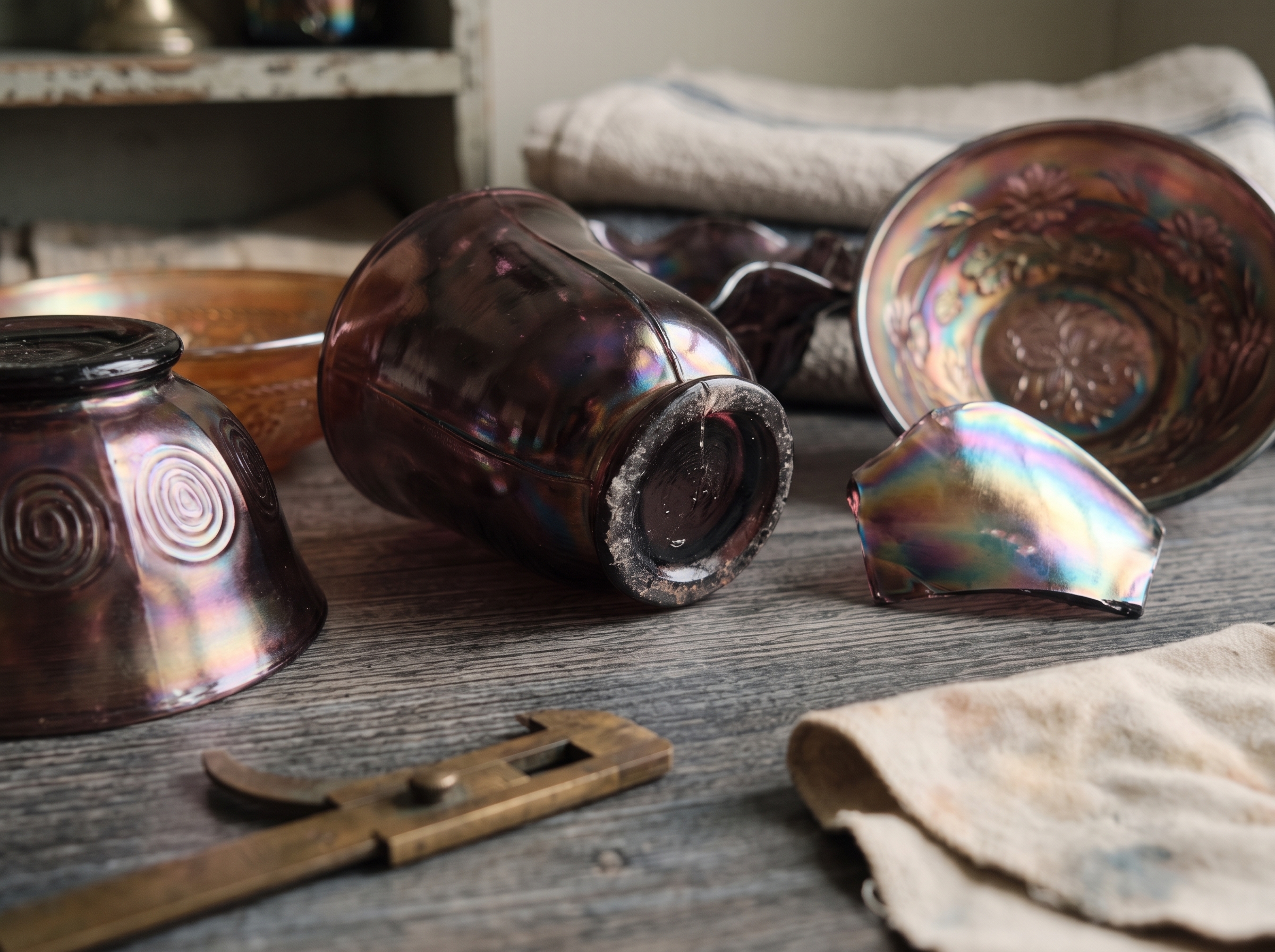
Take multiple angles showing the iridescence in different lighting. Tilt the piece slightly and capture how the colors shift. This shimmer pattern helps identify quality and can reveal whether you're looking at genuine carnival glass or modern reproduction.
Photograph the pattern in sharp detail. Get close enough that the pressed design is clearly visible. For bowls and plates, shoot straight down into the center to show the full pattern. For vases and tumblers, capture the full circumference if possible.
The base photo is critical. Flip the piece over and photograph the bottom with even lighting. Capture any maker's marks, mold numbers, or ground pontils. Show the base color clearly—the bottom often reveals the true glass color before iridescence was applied.
Document any chips, wear, or damage. Check the high points of the pattern where iridescence wears first. Photograph rim edges, handles, and feet where damage commonly occurs.
For larger pieces like punch bowls with bases or epergnes, photograph each component separately and assembled. Show how pieces fit together and any connection points or hardware.
Common Carnival Glass Misidentifications
People often confuse carnival glass with contemporary iridescent glass. Modern art glass by makers like Fenton (post-1970s), Mosser, and Summit produces iridescent pieces that lack the specific patterns and characteristics of vintage carnival glass. These pieces can be beautiful but aren't the same thing collectors seek.
Depression glass gets mixed up with carnival glass, especially purple and amber pieces. Depression glass lacks the iridescent spray finish and was typically produced later (1930s-1940s) using different manufacturing techniques.
Iridized reproduction carnival glass floods the market. These modern pieces copy vintage patterns but often show weaker iridescence, lighter weight, and less crisp mold detail. Imperial Glass reissued many patterns in the 1960s-1970s, sometimes marked, sometimes not.
Cut glass with iridescence confuses beginners. Cut glass features deep, sharp cuts and facets, while carnival glass is pressed with raised or indented patterns. The processes and products are completely different.
Stretched or pulled carnival glass pieces can puzzle collectors. Manufacturers would reshape molded pieces while hot, creating ruffled edges, crimped rims, or flared shapes. These variations of the same pattern can look quite different.
Some people mistake slag glass or end-of-day glass for carnival glass. These feature marbled or streaked color patterns but lack the characteristic metallic iridescence.
What Tocuro Can Help Resolve in Carnival Glass Identification
When you're staring at a bowl that might be "Grape and Cable" or could be "Harvest Grape," or trying to determine if that marigold color is Fenton or Northwood, pattern identification gets complicated fast. Tocuro analyzes photos to match specific carnival glass patterns, helping you move from "pretty iridescent bowl" to a specific pattern name and potential maker.
Base marks can be worn, partial, or confusing. A faint mark that you can barely see might be clear enough in a photo for identification. Tocuro helps distinguish between similar marks from different manufacturers and time periods.
Color identification matters because value varies dramatically. Determining whether you have common marigold, collectible amethyst, or rare red requires good photo comparison. Tocuro's identification process considers color alongside pattern and maker marks to provide more complete identification.
The difference between vintage and reproduction can be subtle. Manufacturing details, glass quality, iridescence characteristics, and pattern sharpness all factor into determining age and authenticity. Having a second set of eyes—digital or otherwise—helps when you're evaluating a piece for purchase or sale.
Get Your Carnival Glass Identified
That iridescent treasure you found at an estate sale could be a common marigold bowl or a rare Millersburg pattern worth real money. Knowing exactly what you have makes all the difference. Upload clear photos to Tocuro, and get detailed identification including pattern name, likely maker, color designation, and estimated value range based on current market signals.
Carnival glass collecting relies on accurate identification—pattern matters, color matters, maker matters. Whether you're building a collection, selling inherited pieces, or just curious about that shimmering purple bowl, proper identification is where everything starts. Take clear photos showing the iridescence, pattern details, and base marks, and let Tocuro help you identify exactly what you've found.
Photo identification
Identify Your Glassware
Use Tocuro to identify your item from a photo and get an estimated value range when market data is available.