
Depression Glass Identification: How to Identify Patterns and Colors
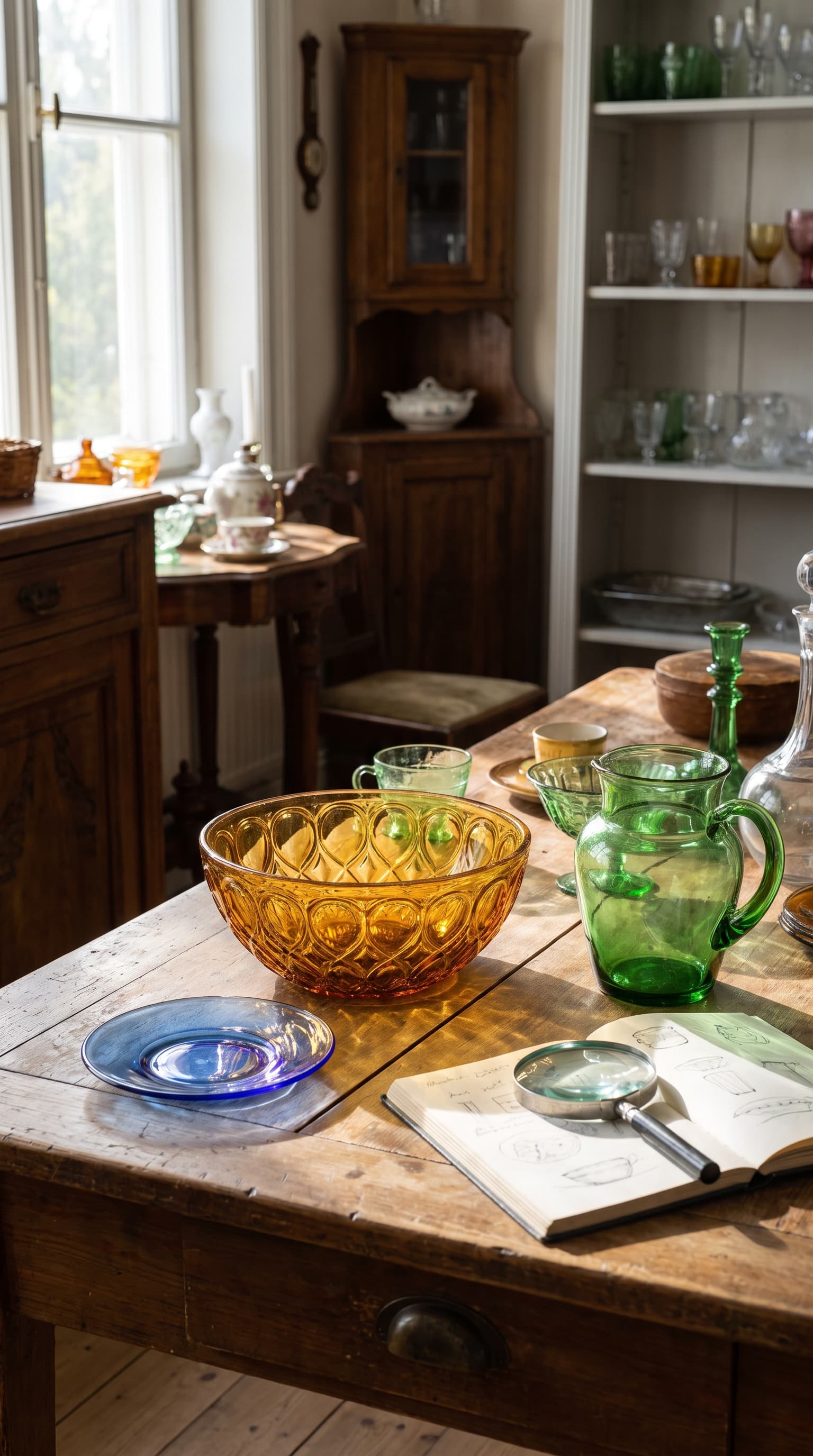
Depression glass identification relies on pattern details, color accuracy, and mold marks. This guide shows you which features to photograph and how to avoid common mix-ups between patterns and reproductions.
Depression Glass Identification: How to Identify Patterns and Colors
Depression glass identification starts with recognizing that hundreds of patterns were produced between 1920 and 1940, often in multiple colors by different manufacturers. The difference between a $5 common plate and a $200 rare piece often comes down to subtle pattern variations, exact color matching, and knowing which companies made what. Unlike identifying glassware in general, depression glass demands attention to specific mold details, seam placement, and color nuances that define value.
Most collectors struggle because patterns look similar at first glance, colors vary with lighting, and reproductions flood the market. You need to know what matters and what doesn't.
What Clues Matter for Depression Glass Identification
Pattern recognition drives accurate depression glass identification, but not all pattern elements carry equal weight.
Motif density and placement tell the real story. Look at how tightly flowers, geometric shapes, or scrollwork appear on the piece. Cameo has densely packed dancing figures and floral bouquets. American Sweetheart shows a delicate center motif with minimal edge detail. Cherry Blossom features bold cherry branches spreading across the surface. The spacing, scale, and arrangement of these elements separate one pattern from dozens of lookalikes.
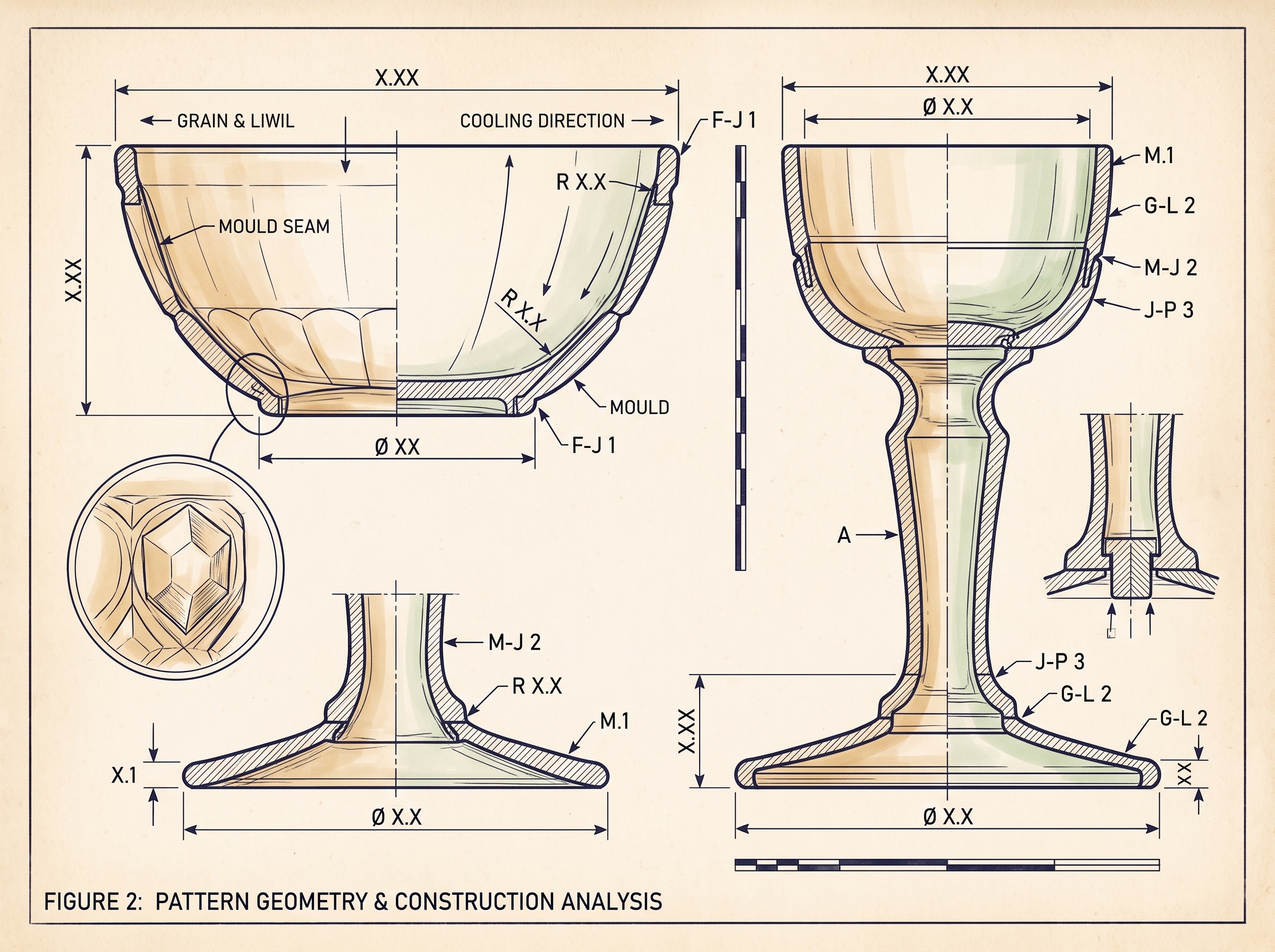
Edge and rim treatment varies dramatically between patterns. Some have scalloped edges (Miss America), others show smooth rims (Moderntone), and many feature molded edge patterns that continue the interior design. Photograph the rim straight-on and at an angle to capture both the profile and any molded detail.
Base and foot details often get overlooked but matter enormously. Check whether the piece has a plain flat base, a raised foot ring, or a paneled base. Many patterns include distinctive radial lines, concentric circles, or pattern extensions on the underside. Royal Lace shows a different pattern on the base than on the interior. Mayfair has specific rayed bases depending on the manufacturer.
Mold seams and manufacturing marks reveal production methods and sometimes manufacturers. Depression glass was machine-pressed, leaving visible seams. Note where seams run—through handles, along edges, or across the base. Some manufacturers ground their seams smooth, others left them raised. These details help separate Federal Glass from Anchor Hocking from Hazel-Atlas pieces in similar patterns.
Color accuracy makes or breaks identification because many patterns came in 6-10 colors, and values differ wildly. Pink Cameo is common; green commands higher prices. Cobalt blue Moderntone is rare; amethyst is scarce. Color names varied by manufacturer—what Federal called "Rose Glow" others called "Pink." Natural light photography captures true color better than indoor lighting, which can make pink look orange or green look teal.
What Photos to Take for Pattern Identification
Capturing the right angles makes depression glass identification possible from photos alone.
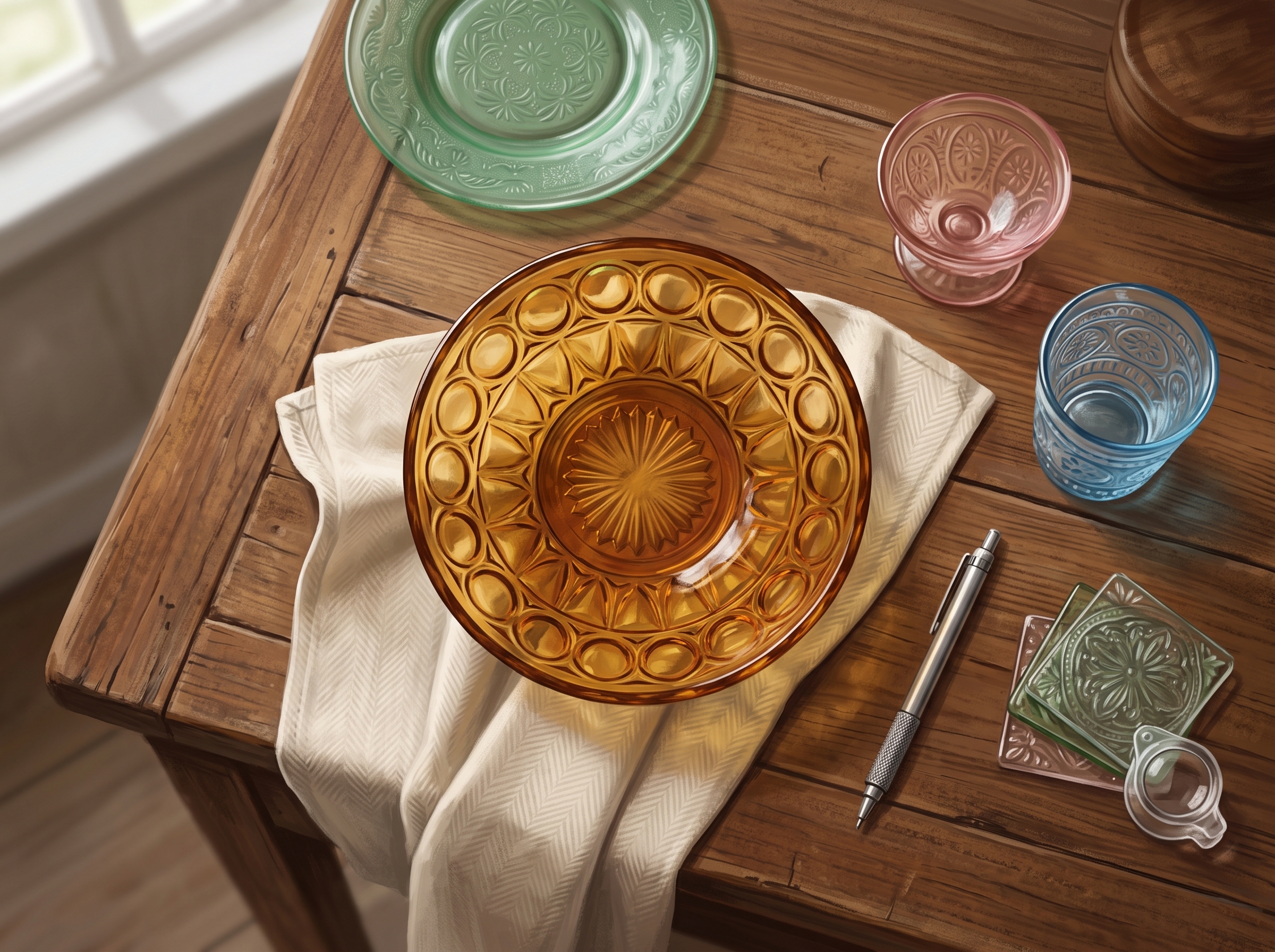
Overhead interior shot in natural light should be your first image. Place the piece on a neutral surface—white paper works well—and photograph straight down to show the complete pattern layout. This reveals motif placement, center medallions, and how the pattern flows across the piece. Avoid harsh shadows by shooting on an overcast day or near a bright window without direct sun.
Angled side view showing depth and dimension captures the relief pattern's height. Depression glass patterns are molded, creating depth differences that identify specific patterns. Tilt the piece slightly toward the light so shadows emphasize raised elements. This shot distinguishes high-relief patterns like Iris from flatter designs like Circle.
Close-up of the most detailed section zooms in on the signature element—the flower center, the geometric repeat, or the figural motif. At this magnification, you can see mold sharpness, which helps separate early production (crisp) from late production (blurry) or reproductions (often too sharp or too soft).
Base and underside shows foot style, any markings, ground pontils, and whether the pattern continues underneath. Many depression glass patterns extend to the base in distinctive ways. Capture this in good light to reveal faint manufacturer marks or pattern numbers.
Edge detail and rim profile requires a side angle that shows the rim's shape and any scalloping, beading, or molded edge pattern. This single shot can eliminate dozens of wrong pattern matches.
Color in multiple lighting conditions helps if you're uncertain about the exact shade. One photo in natural daylight and one in shade gives better context than indoor photos alone, which can misrepresent pink as amber or vaseline glass as pale yellow.
Common Depression Glass Misidentifications
Certain patterns and colors trip up even experienced collectors.
Pink Sharon versus Pink Cabbage Rose: Sharon (also called Cabbage Rose) gets confused with similar floral patterns like Rosemary or Mayfair. Sharon has roses with surrounding foliage arranged in a specific layout with a basket-weave band. Mayfair shows open roses with more space between motifs. The difference affects value significantly—rare Sharon pieces command premiums.
Madrid reproductions versus originals: Federal Glass's Madrid pattern was heavily reproduced in the 1970s and again in the 1990s. Reproductions often appear in colors never made originally (like teal) or show mold degradation making edges fuzzy. Original Madrid has sharp, crisp molding and specific color ranges. The butter dish is a particularly reproduced form.
Vaseline glass color confusion: True vaseline glass (uranium glass) glows bright green under UV light. Yellow depression glass, canary glass, and pale green all get mislabeled as vaseline. Unless it fluoresces, it's not vaseline glass, regardless of color name.
Anchor Hocking versus Hazel-Atlas versions: Multiple manufacturers produced similar patterns—sometimes the same design under different names. Mayfair was made by both Anchor Hocking and Federal Glass in different variations. Without knowing the specific mold characteristics for each maker, you'll misidentify the manufacturer and undervalue or overvalue the piece.
Fire-King confusion: Fire-King is a brand name for heat-resistant glassware made from the 1940s onward, often confused with depression glass because of overlapping production years and similar collecting communities. Fire-King is generally opaque (Jadeite, Azurite) rather than transparent, and made with different glass formulas. It's valuable but represents different collecting categories.
Lace edge variants: Imperial Glass, Hocking, and others made lace-edge patterns. Old Colony Lace Edge by Hocking differs from Imperial's Laced Edge. The spacing of the lace points, the interior pattern, and the way the lace integrates with the rim all vary. Collectors pay different prices for each.
What Tocuro Can Help Resolve in Depression Glass Identification
Depression glass identification demands pattern databases, color references, and manufacturer knowledge that most people don't have memorized. Tocuro uses photo analysis to match your piece against known depression glass patterns, colors, and production details.
Upload your photos to Tocuro and the system evaluates pattern characteristics, color, form, and manufacturing details to suggest likely matches. You'll see whether your pink plate is Miss America, Princess, or Queen Mary—patterns that look surprisingly similar in casual photos but differ in mold details Tocuro can detect.
Tocuro also provides context about production years, color availability, and which forms are common versus rare in a given pattern. If you're holding a Cameo green sherbet dish, Tocuro helps you understand that green Cameo is more desirable than pink, and that certain forms command higher prices than others.
For pieces with ambiguous color—is it pink or rose? amber or yellow?—comparing Tocuro's identification against your photos helps confirm the exact shade, which directly impacts value. The platform shows market signal-based value ranges, giving you realistic expectations rather than wishful thinking.
Start Identifying Your Depression Glass
Depression glass identification gets easier when you know which details matter and have the right photos. Pattern recognition, color accuracy, and manufacturing marks separate valuable finds from common pieces.
Ready to identify your depression glass? Upload your photos to Tocuro and get pattern matches, color confirmation, and value ranges based on current market signals. Whether you inherited a full set or found a single piece at an estate sale, knowing exactly what you have helps you collect, sell, or simply appreciate these colorful remnants of American glassmaking history.
Photo identification
Identify Your Glassware
Use Tocuro to identify your item from a photo and get an estimated value range when market data is available.