
Cut Glass Identification: How to Identify Cut Glass Patterns and Makers
Cut glass identification relies on understanding motif sharpness, blank shapes, and manufacturing clues. This guide shows you which details matter most, what photos to capture, and how to avoid common misidentifications when identifying cut glass patterns and makers.
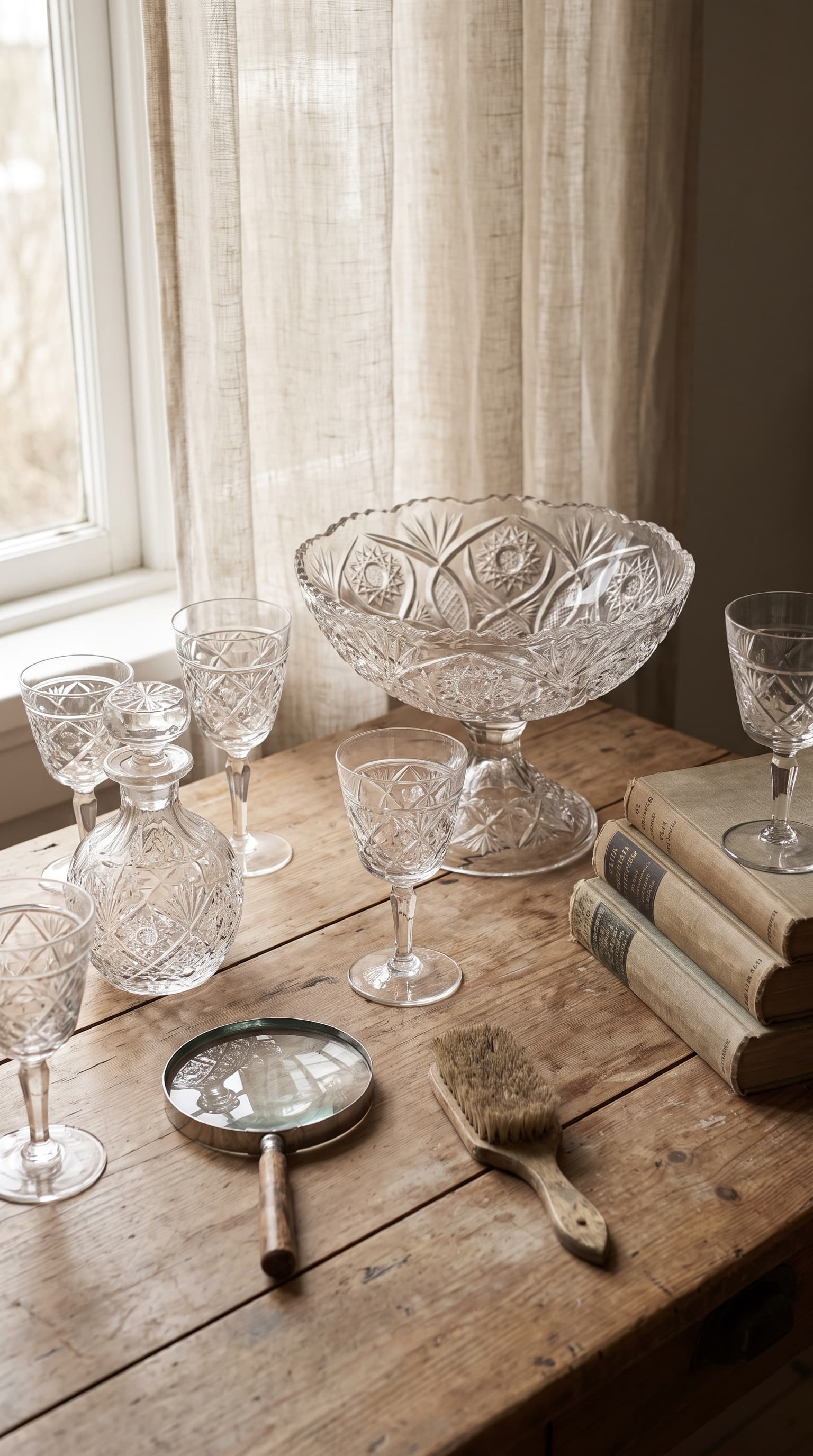
Cut Glass Identification: How to Identify Cut Glass Patterns and Makers
Cut glass identification starts with understanding the difference between hand-cut luxury and machine-pressed imitations. Whether you're holding a heavy American Brilliant Period bowl or a lighter pressed glass lookalike, the details in the cutting, the weight of the blank, and the sharpness of the motifs tell the story. Knowing which clues matter—and which photos capture them—makes cut glass identification from photos much more reliable.
What Clues Matter in Cut Glass Identification
Successful cut glass identification depends on reading a combination of physical and visual signals that cameras can capture well when you know what to photograph.
Sharpness and depth of the cutting
Authentic cut glass features crisp, sharp edges where the wheel cut into the blank. Run your finger along the pattern—genuine cut glass feels razor-sharp, sometimes enough to catch on fabric. The cuts have depth and dimension. Pressed glass mimics these patterns in molds, resulting in softer, rounded edges and uniform depth across the entire piece. In photos, look for shadow lines that show variation in cut depth and light refraction that creates prismatic color breaks.
Weight and blank quality
Cut glass blanks are thick, heavy lead crystal designed to withstand deep wheel cutting. The weight-to-size ratio feels substantial. Pressed glass uses thinner, lighter blanks because the pattern comes from the mold, not from removing material. When photographing, a scale reading next to the piece helps, but even without one, shots showing the thickness of the rim and base communicate blank quality.
Pattern complexity and registration
High-end American Brilliant Period cut glass (roughly 1876-1917) features intricate, multilayer patterns—hobstars, fans, crosshatch diamonds, and strawberry diamond motifs layered with precision. Each motif aligns perfectly with its neighbors. Pressed glass patterns often show mold seams and slight misalignment. Lesser-quality cut glass from later periods may have simpler, more repetitive patterns with less variety in motif types.
Maker marks and signatures
Many top-tier manufacturers—Hawkes, Libbey, Tuthill, Dorflinger, Sinclaire—signed their work with acid-etched marks on the base. Not all quality cut glass is signed, but a signature narrows identification significantly. Marks can be faint and hard to spot without the right lighting. Beware: some pressed glass carries fake signatures meant to deceive.
Blank shape and form
The shape of the blank itself—bowls, vases, decanters, compotes—can hint at era and origin. American Brilliant Period pieces often feature bold, geometric shapes. European cut glass from Waterford, Baccarat, or Bohemian makers may use different blank proportions and cutting styles. Blank identification works alongside pattern recognition to build a complete picture.
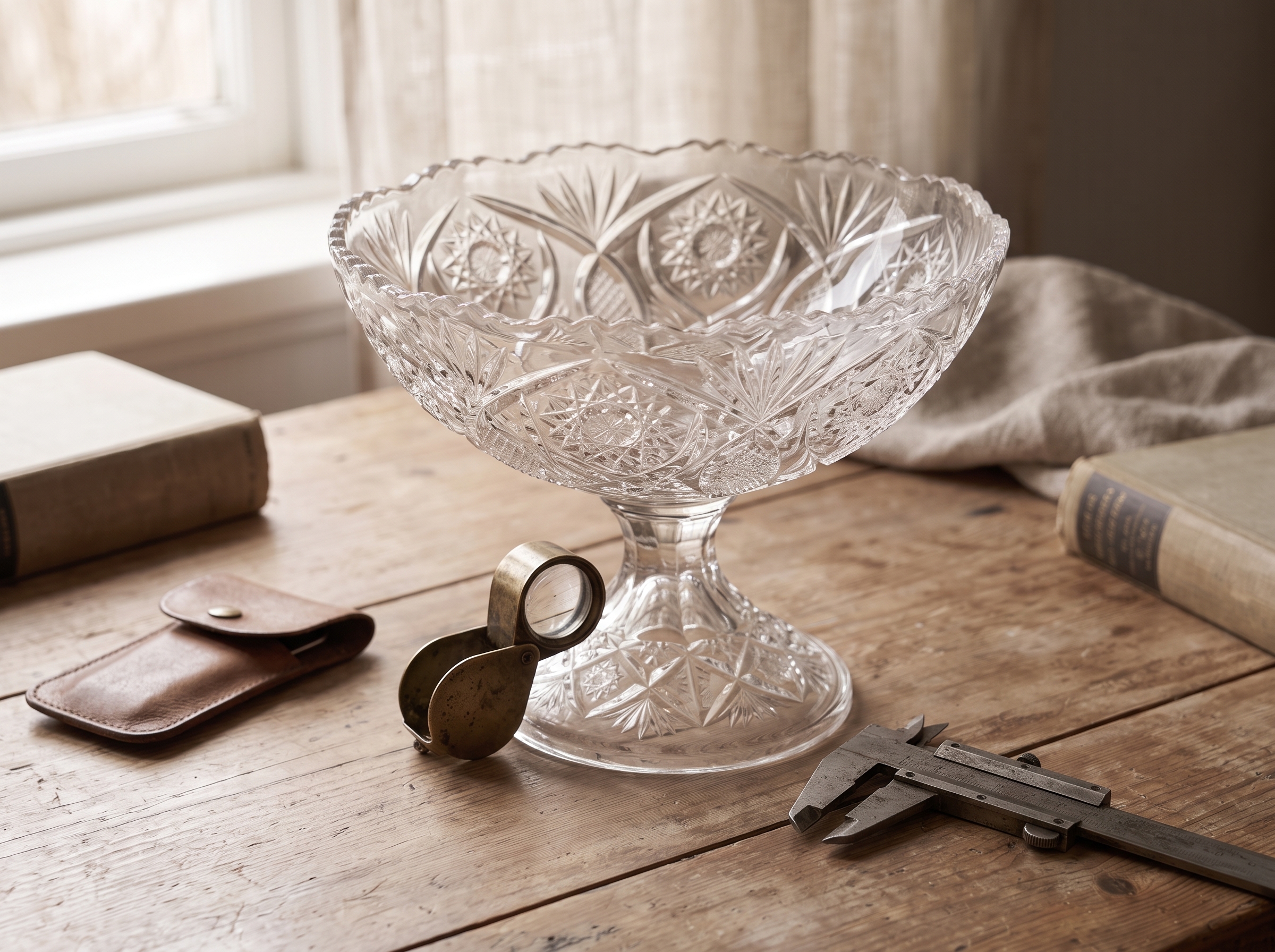
What Photos to Take for Cut Glass Identification
The right photos make cut glass identification faster and more accurate. Focus on capturing the details that distinguish genuine hand-cut pieces from pressed glass and that reveal pattern and maker clues.
Overall view in natural light: A straight-on shot of the entire piece in diffused natural light shows the form, proportions, and overall pattern layout. Avoid direct sun, which can cause glare and wash out detail.
Close-ups of pattern motifs: Zoom in on individual motifs—hobstars, fans, crosshatch fields. Capture the crispness of the cuts and the way light refracts through them. These shots reveal whether edges are sharp or rounded, and whether depth varies or stays uniform.
Raking light across the surface: Position a light source at a low angle to create shadows that emphasize depth and dimension. This technique makes shallow pressed patterns obvious and highlights the hand-cut variation in authentic pieces.
Base and rim thickness: Photograph the base from the side to show blank thickness. Rim shots show how much material was there to begin with. Thick, heavy blanks point toward quality cut glass.
Any marks, signatures, or labels: Capture the base in good light, using a flashlight at an angle if needed to make faint acid-etched signatures visible. Photograph any paper labels or remnants, even if damaged.
Pattern transitions and edges: Where one motif meets another, photograph the transition. Hand-cut glass shows precise, intentional alignment. Pressed glass may reveal mold seams or slight pattern drift.
These photos give enough information to distinguish cut from pressed, identify specific patterns, and narrow down makers and time periods.
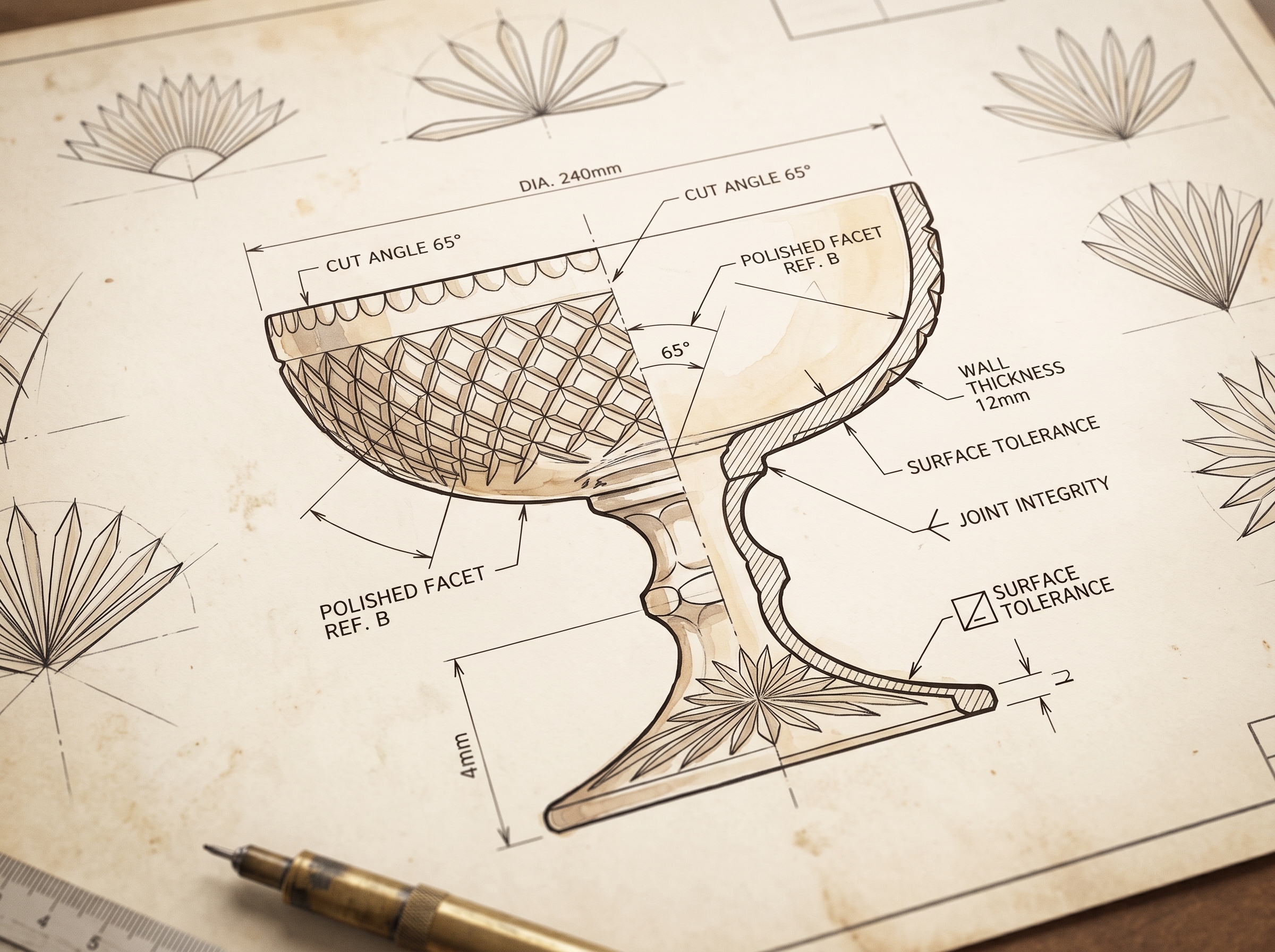
Common Misidentifications in Cut Glass
Cut glass identification trips up even experienced collectors when certain details get misread or context gets lost.
Pressed glass sold as cut glass
This is the most frequent mistake. Pressed glass patterns from companies like Imperial, Fostoria, and others deliberately mimicked expensive cut glass. The giveaway is in the edges: rounded, soft, uniform. Weight is another clue—pressed glass feels light for its size. If every single cut has the exact same depth and the piece feels too light, it's likely pressed.
European cut glass assumed to be American Brilliant Period
Waterford, Baccarat, and Bohemian cut glass are valuable and beautiful, but they're not American Brilliant Period unless they were made during that era by American firms. European cutting styles differ—often more delicate, with different motif preferences. Blank shapes and signatures help sort this out. Don't assume all high-quality cut glass is ABP.
Acid-polished vs. hand-polished
Early cut glass was hand-polished after cutting, a labor-intensive process that left slight irregularities and a warmer luster. Later pieces, especially post-1920, often used acid polishing, which is faster and creates a more uniform, sometimes slightly duller finish. The difference affects value and era dating, but it's subtle in photos. Look for uniformity of shine and surface texture.
Pattern names and attribution without marks
Pattern books and collector resources help identify unmarked pieces, but many patterns were used by multiple makers or were regional standards. Without a signature, attributing a piece to a specific maker is often uncertain. Be cautious about definitive claims unless the pattern is rare and well-documented to one source.
Reproductions and fantasy pieces
Some cut glass reproductions are made with care and can fool the unwary. Fantasy pieces—patterns or forms that never existed in the original period—also circulate. Cross-referencing pattern details with period catalogs and reputable references reduces this risk. Weight, blank quality, and wear patterns (or lack thereof) help spot reproductions.
What Tocuro Can Help Resolve
Cut glass identification benefits from pattern recognition and comparative analysis, both of which Tocuro handles well when you upload clear, well-lit photos.
Tocuro identifies cut glass patterns from images, drawing on market data and visual databases to suggest likely makers, eras, and pattern names. The platform can distinguish between pressed glass and genuine cut glass based on visual cues like edge sharpness, blank weight (when indicated), and motif complexity. When you photograph a maker's mark or signature, Tocuro cross-references it with known manufacturers, narrowing attribution quickly.
Because glassware identification relies on subtle details, Tocuro's ability to compare your piece against thousands of documented examples helps you avoid common misidentifications. The platform provides estimated value ranges based on current market signals, giving you a practical sense of what similar pieces have sold for—not a formal appraisal, but a useful reference point for making decisions.
Tocuro offers 7 free identifications per day, and the count resets daily, so you can work through a collection or confirm suspicions about multiple pieces without commitment.
Start Identifying Your Cut Glass
Cut glass identification rewards attention to detail and good photography. Focus on sharpness, weight, pattern complexity, and maker marks. Capture the right photos—close-ups, raking light, base shots—and avoid the common traps of pressed glass imitations and unsupported attributions.
When you're ready to identify your cut glass, upload your photos to Tocuro and get results based on pattern recognition and market data. Whether you're identifying a single piece or working through an estate collection, you'll have the tools to move forward with confidence.
Photo identification
Identify Your Glassware
Use Tocuro to identify your item from a photo and get an estimated value range when market data is available.