
Glassware Identification: How to Identify Glass by Photo
Identifying glassware from photos requires capturing color, pontil marks, mold seams, and pattern details. This guide walks you through the visual clues that reveal maker, era, and technique—and explains what a photo-based identification tool can resolve.
What Clues Matter Most When You Identify Glass by Photo
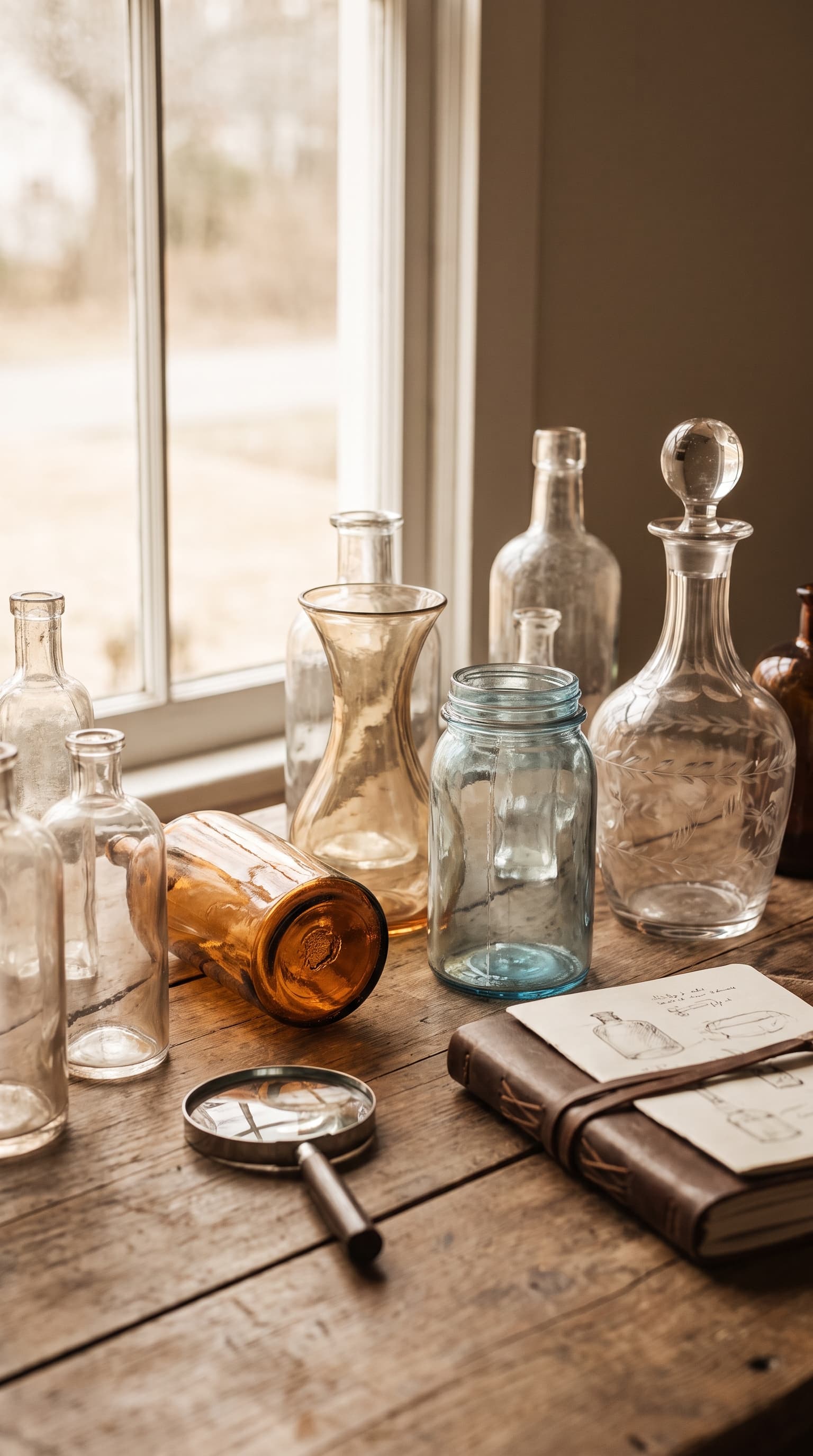
Glassware identification relies on details that photos can capture well when you know where to look. Unlike furniture with joinery or ceramics with clay color, glass reveals its story through color, surface texture, manufacturing marks, and pattern.
Color and Clarity
Glass color often signals era and maker. Depression glass in pink, green, or amber dates to the 1920s–1940s. Vaseline glass glows yellow-green under UV light and contains uranium oxide. Carnival glass shows an iridescent rainbow sheen. Milk glass appears opaque white. Clear "crystal" glass can be lead or non-lead, affecting weight and brilliance.
Hold the piece near natural light when photographing. Color shifts under artificial bulbs. If you suspect uranium content or lead, note the weight and how light passes through—denser glass bends light differently.
Pontil Marks and Base Features
The base tells you how the piece was made. A pontil mark is a rough or polished scar where the glassblower's rod (pontil) attached. Hand-blown pieces made before the 1860s often show an unpolished pontil—a jagged circle or rough bump. After that, manufacturers ground pontils smooth.
Machine-made glass (common after 1900) shows mold seams that run through the base or a valve mark—a small circular scar from automatic bottle machines. No pontil usually means machine production, though some studio glass and reproductions mimic older techniques.
Mold Seams and Manufacturing Marks
Mold seams run vertically on pressed or molded glass. On older hand-finished pieces, seams stop below the rim because the top was fire-polished. Seams that run over the rim indicate machine production, typically post-1920.
Look for:
- •Pattern sharpness: Early pressed glass (1840s–1880s) has crisp, detailed patterns. Later reproductions can feel softer or less defined.
- •Texture variation: Hand-pressed glass may show slight asymmetry. Machine-pressed glass repeats exactly.
- •Maker marks: Some companies—Fenton, Westmoreland, Anchor Hocking—stamped logos on the base. Others used paper labels that wore off.
Pattern and Design Elements
Patterns help narrow makers and eras. Lacy glass, popular in the 1830s–1850s, shows intricate stippled backgrounds. EAPG (Early American Pattern Glass) from the 1850s–1910s includes thousands of named patterns like "Thumbprint" or "Daisy and Button." Depression glass patterns—"Cherry Blossom," "Cameo," "Mayfair"—are well documented.
Cut glass features deep, sharp grooves made by grinding wheels. Brilliant Period cut glass (1880s–1915) has intricate motifs and high lead content. Etched or engraved glass shows frosted designs created by acid or wheel cutting.
Photographing pattern requires close focus and even lighting to show depth and detail.
What Photos to Take for Glassware Identification
Good photos make or break photo-based identification. Capture these angles:
Overall shape, full view: Stand the piece on a plain background. Natural light works best—avoid harsh shadows. Show the full silhouette: stemware height, bowl curve, handle placement.
Base and pontil area: Flip the piece over. Photograph the center and edges of the base. Capture any pontil mark, mold seams, maker stamps, or roughness. If the base is concave or domed, angle the shot to show depth.
Pattern and texture closeup: Focus on the most detailed area—pressed pattern, cut motifs, etched design. Use a macro setting or move close. Even lighting reveals whether the pattern is molded, cut, or painted.
Color in natural light: Photograph near a window during daylight. If the glass has iridescence, tilt it to show the color shift. For vaseline or uranium glass, a UV flashlight photo can confirm fluorescence, though not all identifications require it.
Mold seams and rim: Capture any vertical seams and where they stop. Photograph the rim edge to show if it's ground, fire-polished, or molded.
Any marks or labels: Zoom in on signatures, stamps, stickers, or engraved names. Even a faint mark can identify the maker.
When you identify glass by photo, these angles give the clearest information about age, technique, and origin.
Common Misidentifications in Glassware
Collectors and sellers often confuse reproductions, similar patterns, and manufacturing methods.
Depression Glass vs. Reproductions
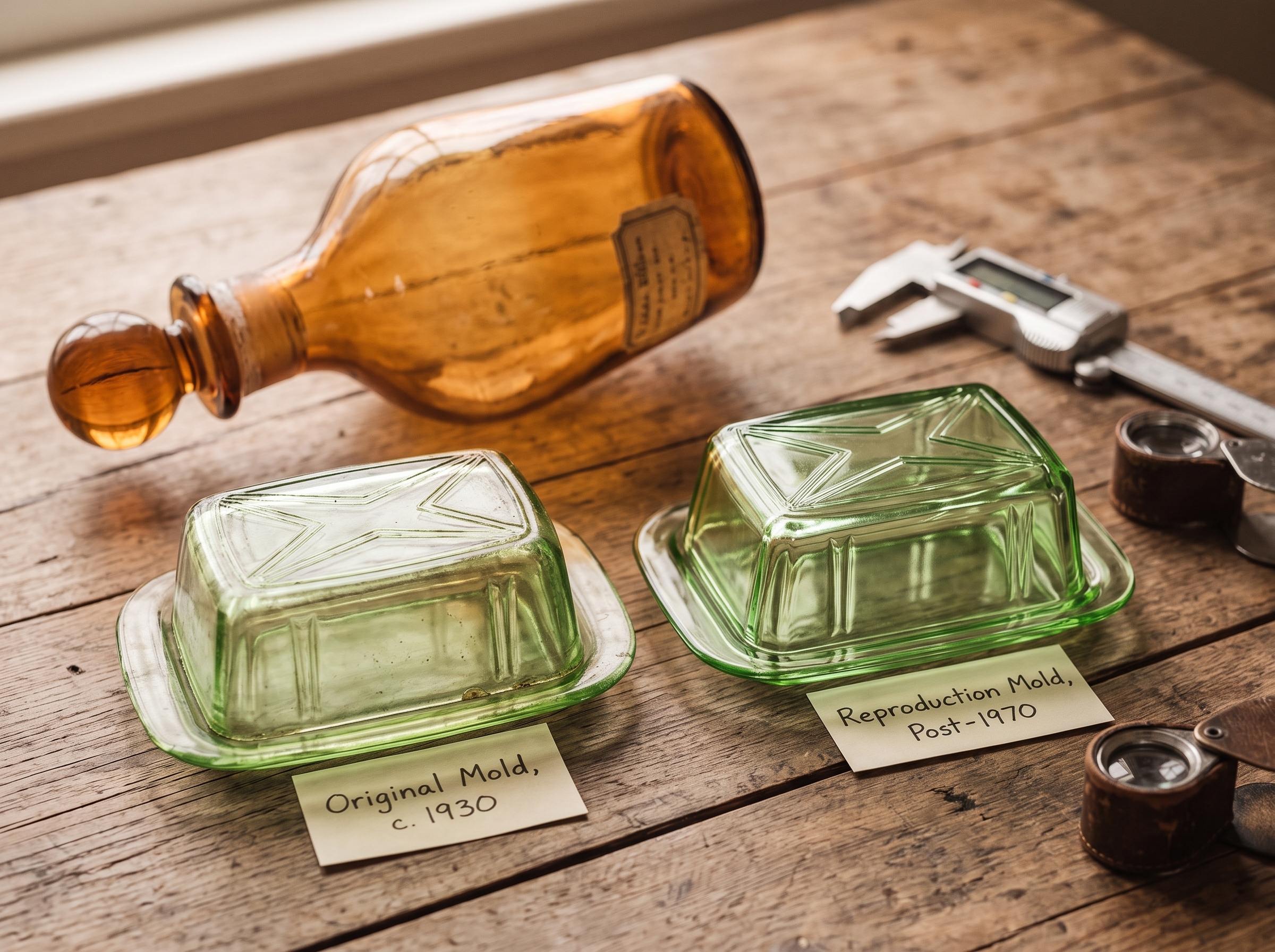
Depression glass has been widely reproduced since the 1960s. New pieces often feel lighter, show mold seams over the rim, and lack the subtlety of vintage color. Original pink or green depression glass may have slight color variation within a batch—reproductions are more uniform. Compare pattern sharpness and weight when possible.
Cut Glass vs. Pressed Imitations
True cut glass is heavy, has sharp edges, and shows tool marks inside grooves. Pressed "near-cut" glass mimics the look but feels lighter and smoother. Run your finger across the pattern—cut glass edges are crisp and can catch a fingernail. Pressed glass feels rounded.
Hand-Blown vs. Mold-Blown
Both techniques leave pontil marks, but hand-blown glass shows asymmetry—uneven walls, slight wobble, tool marks. Mold-blown glass (common after 1820) uses molds to shape the glass before finishing by hand. Look for mold seams even on older pieces with pontils.
Carnival Glass vs. Iridescent Reproductions
Authentic carnival glass (1905–1930s) has a distinct spray-on iridescence with rich color. Reproductions often appear too shiny, lack depth, or show modern mold marks. Base shape, pattern name, and weight help confirm age. Companies like Fenton, Northwood, and Imperial marked many pieces—new carnival glass also carries marks, but online pattern databases can help distinguish.
Milk Glass Age
Milk glass was made from the 1800s through today. Older milk glass is often heavier, more opaque, and has a bluer or warmer white tone. Newer milk glass can appear stark white or slightly translucent. Pattern, weight, and base finish help date pieces.
What Tocuro Can Help Resolve
Identifying glass by photo becomes much faster when you have access to pattern libraries, maker databases, and visual matching.
Tocuro uses photo analysis to help you identify glassware details that are hard to research manually. Upload a clear image of your piece—especially the base, pattern, and overall shape—and Tocuro can help identify maker, pattern name, era, and estimated value range based on current market signals.
Some questions Tocuro helps answer:
- •What pattern is this? Thousands of pressed glass, depression glass, and cut glass patterns exist. Photos of the design help narrow matches.
- •Is this hand-blown or machine-made? Mold seams, pontil style, and symmetry provide clues.
- •What era and maker? Color, pattern, base marks, and manufacturing details point to specific companies and decades.
- •What's the value range? Market signals show what similar pieces are selling for. This is an estimated range, not a formal appraisal, but it gives you a realistic sense of current demand.
Tocuro offers 7 free identifications per day, with the count resetting daily. For collectors working through estates or larger collections, higher-volume usage requires payment. The tool works for more than just glassware—bowls, bottles, lamps, and other items can all be identified from photos.
Ready to Identify Your Glass?
Whether you're sorting through an inherited collection, evaluating a flea market find, or cataloging your own pieces, glassware identification starts with knowing which details matter. Color, pontil marks, mold seams, and pattern all tell part of the story—and good photos capture them.
Tocuro helps you move from guesswork to answers. Upload your photos and get identification help based on visual details and market data.
Identify Your Item with Tocuro and see what your glassware reveals.
Photo identification
Identify Your Glassware
Use Tocuro to identify your item from a photo and get an estimated value range when market data is available.