
What app can identify antique furniture from a photo?
Tocuro can suggest a furniture type, style or period from photos and explain the visible clues. Photograph the whole piece, construction, marks and condition; check any value range against the available market evidence.
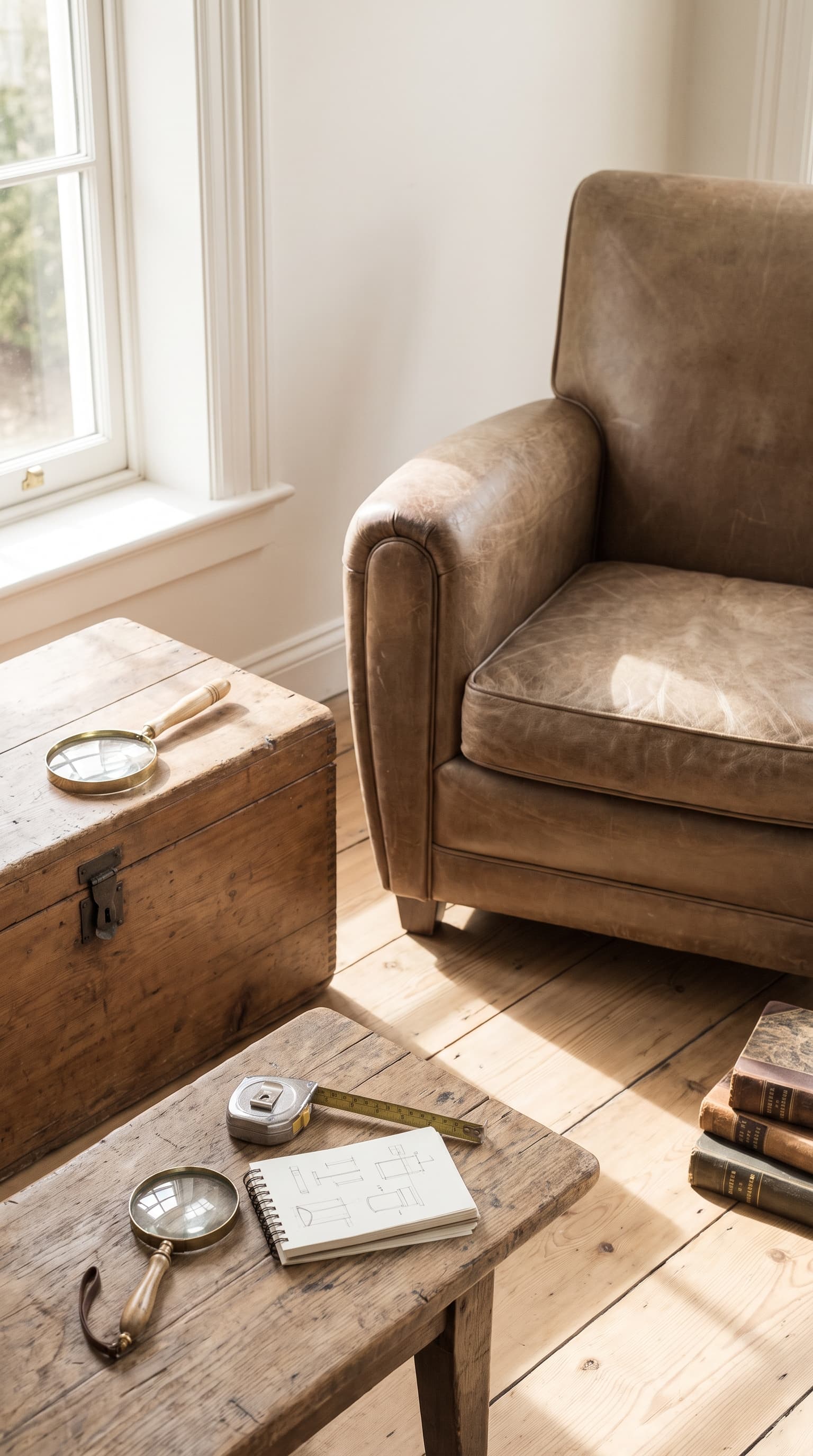
Tocuro can help identify an unfamiliar chair, table, dresser, cabinet, or desk from photos and explain what the visible details suggest. A result can provide a likely style or period, maker clues when supported, an approximate age range, and an estimated value range when market evidence is available.
The result is a practical research lead. It is not authentication, a condition report, or a formal appraisal.
What photos help identify antique furniture?
Take one clear overall photograph, then add close views of the details that carry evidence. A useful set usually includes:
- •the whole piece, straight on and in good light;
- •joinery, such as drawer corners, table aprons, or visible mortise-and-tenon work;
- •hardware and fasteners, including pulls, hinges, screws, and nails;
- •labels, stamps, signatures, or other maker marks;
- •unfinished or interior wood, such as drawer sides, backs, and bottoms; and
- •damage, repairs, refinishing, replaced hardware, or missing parts.
These views answer different questions. The overall photograph shows proportion and form. Joinery and fasteners can narrow an age or construction hypothesis. A label can point to a maker. Interior wood can show how the piece was built. Condition photographs help keep a value discussion grounded.
Do not rely on a single distant room photograph. Glare, dark shadows, cropped corners, and soft focus can hide the clues that separate a plausible identification from a guess. If the first result is too broad, keep the original overview and reshoot the clue that the explanation says is missing.
What can Tocuro tell you from furniture photos?
Tocuro considers form, construction, visible marks, materials, and condition together. These clues can give you a useful name to research, explain why a style seems plausible, or identify the next photograph to take.
For a value question, check the comparison evidence, including whether prices are asking prices or completed sales. Our guide to estimating furniture value from photos shows how to make that distinction.
What a result can include
Depending on the visible evidence and available market data, a result can include:
- •Style, period, and maker information (when determinable)
- •Age estimate
- •An estimated value range when market evidence is available
- •Notes on condition factors that affect value
If you are sorting several unfamiliar objects, keep the photographs and notes for each piece together. Start with the items whose marks, construction, or condition need closer attention.
Real furniture identification examples
Five-drawer dresser: form and hardware clues
Here is a photo-to-clue example from an anonymous Tocuro identification. The single front photograph shows a tall wooden dresser with five drawers, a slightly overhanging top drawer, round wooden pulls, center keyholes, pronounced figured grain, scrolled or bracket feet, and a flaking, crazed, worn finish.
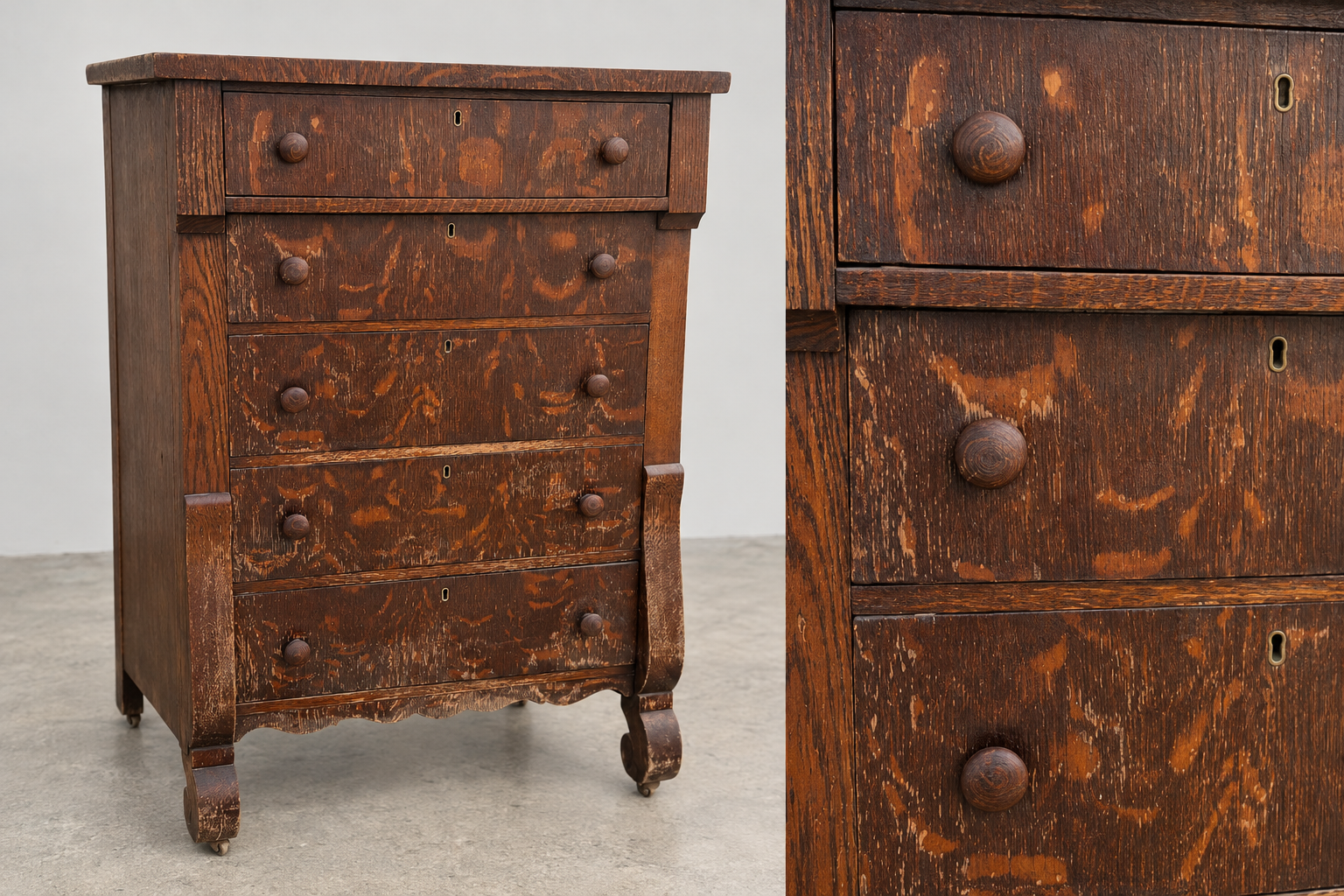
Tocuro suggested American Empire Style Highboy Dresser, tiger oak, possible United States origin, and a date range in the 1890s–1900s. The visible form and grain provide research clues, but the wood, date, origin, and maker remain unconfirmed. An Empire-style description does not by itself establish an early-19th-century piece.
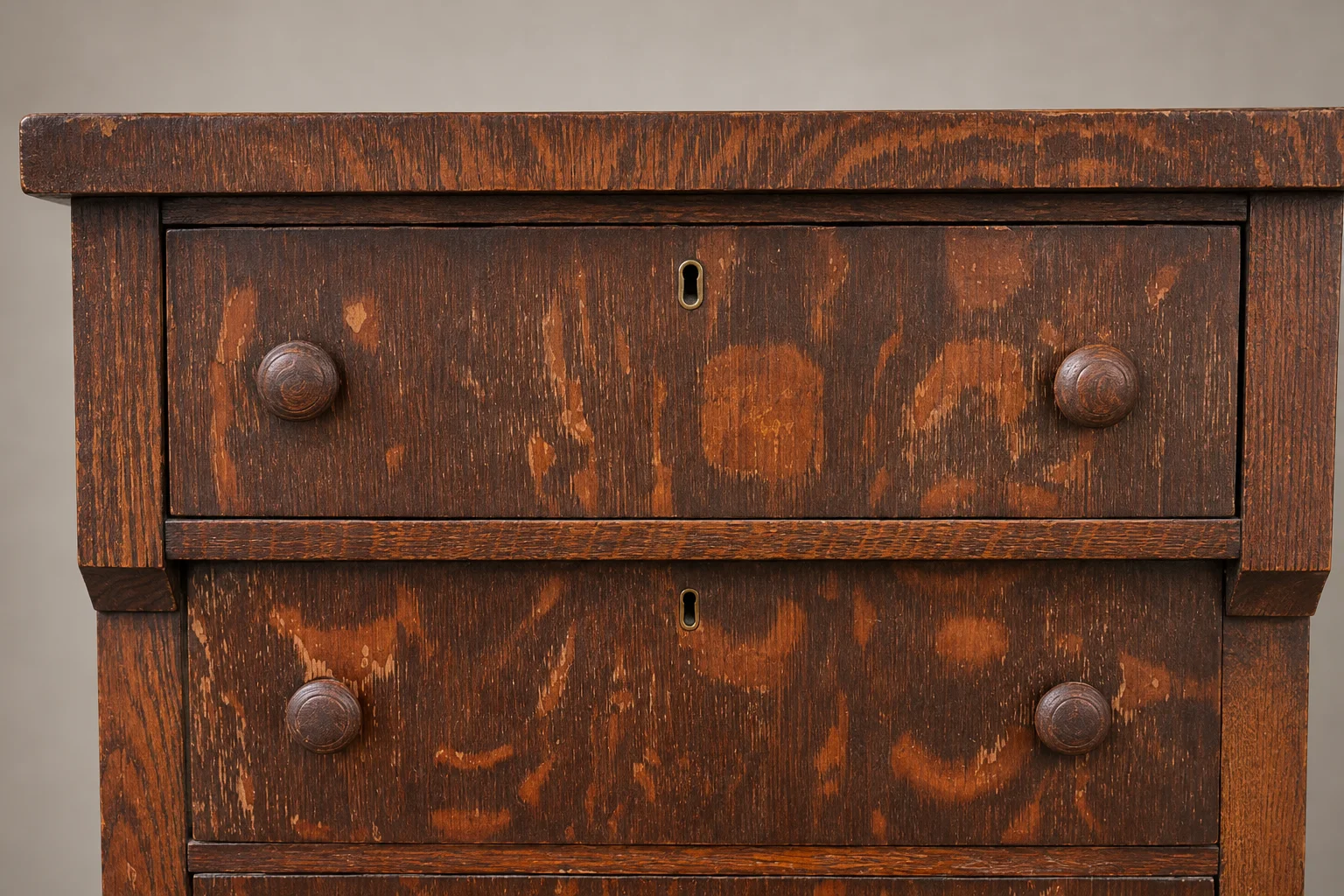
The round pulls, keyholes, and grain can be described from the front. The photograph does not show an open drawer, joinery, a maker label, or the back. For a closer look at dating clues, see how to identify antique dressers.
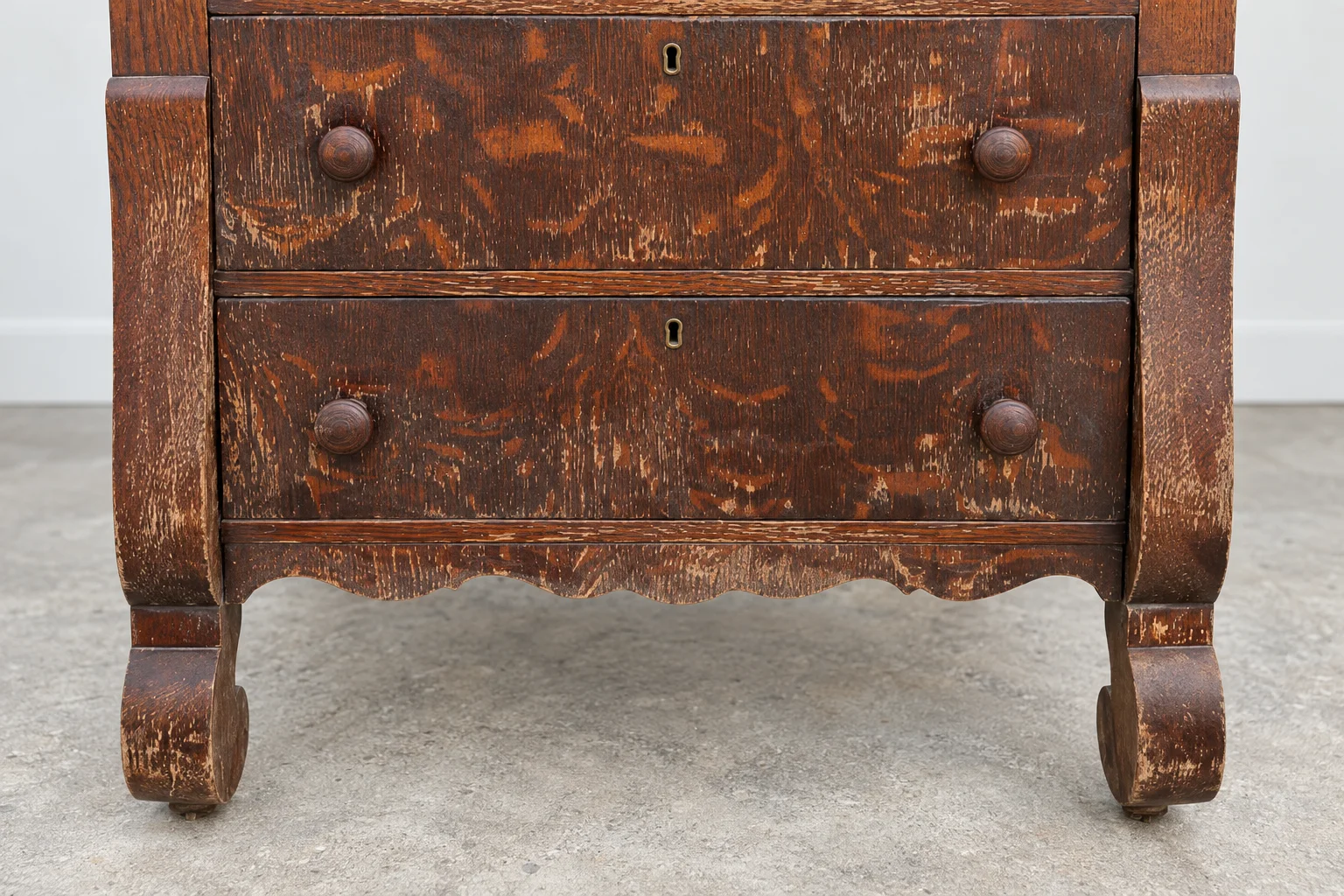
No price is included in this example because the comparable review did not support a value claim. The next useful photos would show any label, the back, and a drawer corner. Those views could add evidence about maker, construction, and date.
Pressed-back chair: decoration and construction
A second Tocuro case showed a dining side chair with an ornate pressed decorative crest, six turned back spindles, a grey patterned upholstered inset seat, and turned legs and stretchers.
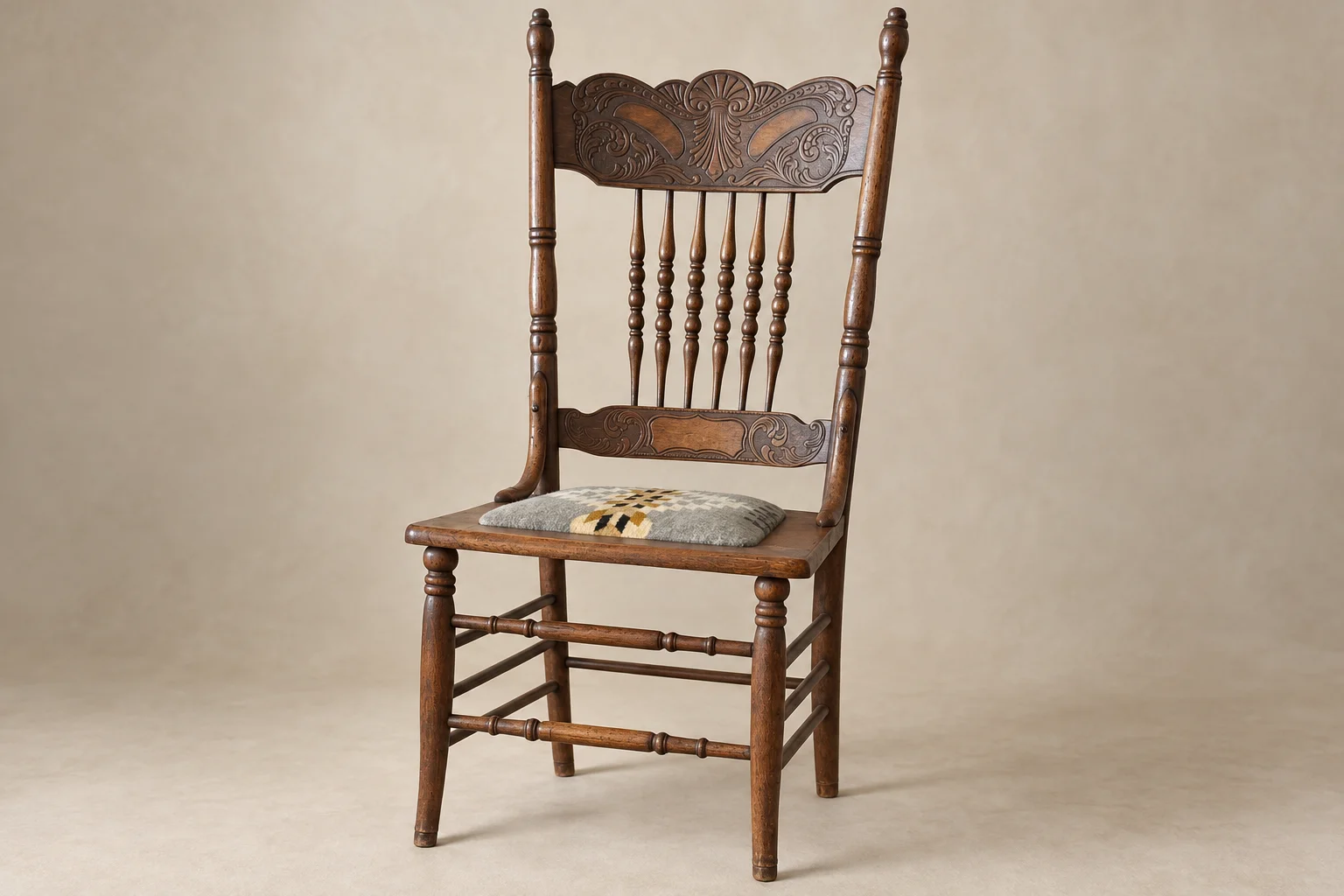
Tocuro suggested Antique Pressed-Back Oak Dining Side Chair. The pressed crest, spindle count, upholstery, legs, and stretchers are useful search terms. The photograph does not authenticate the suggested material or date, and no maker is established.
Woven side table: shape and materials
Another case showed a pale blue side table with a round woven top, a lower round shelf, and four dark, slender metal legs.
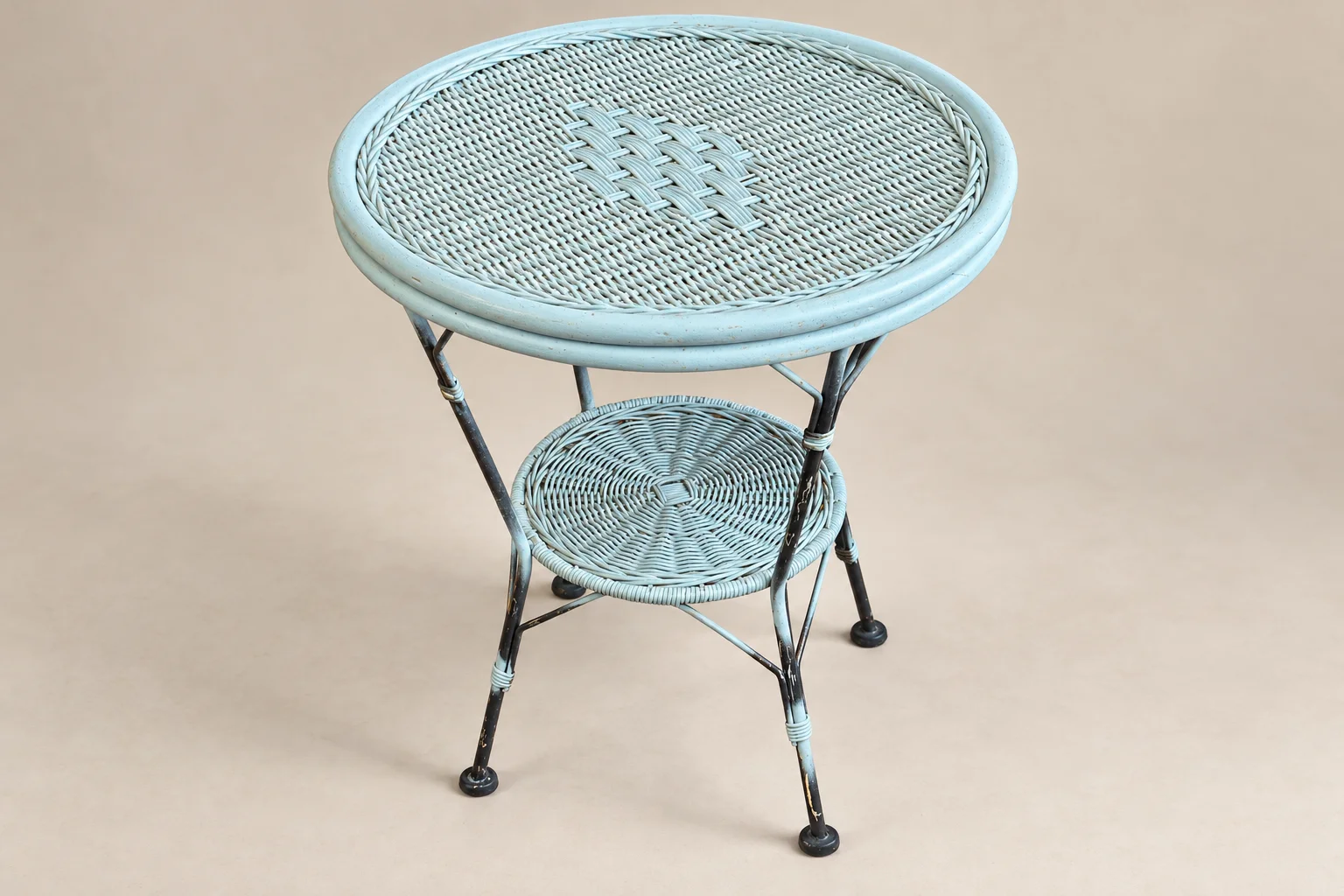
Tocuro suggested Vintage Wicker Side Table. Here the two-tier round form, woven surfaces, and metal frame are the strongest visible clues. No mark was seen, so a maker and exact date remain open questions.
When a photo-based answer is not enough
Ask for a formal expert review when you need written documentation for an estate division, insurance claim, donation tax deduction, or similar decision. Seek a specialist when the piece may be rare or museum quality, the attribution is contested, the provenance is important, or the condition includes structural damage, active wood rot, extensive restoration, or reconstructed elements.
An app can also be limited by the object itself. Heavy refinishing, replaced hardware, missing labels, altered construction, and incomplete views can remove the evidence needed to distinguish an original piece from a later reproduction or repair. A confident-sounding label does not solve that evidence gap.
Try it with your furniture
Start with the overall form, then photograph joinery, hardware, marks, interior wood, and condition. Start with Tocuro for a structured first explanation and, when market evidence is available, an estimated value range. Tocuro offers free daily scans. Keep the photographs and notes with the object, and use an in-person specialist when the decision requires formal judgment.
Photo identification
Identify Your Furniture
Use Tocuro to identify your item from a photo and get an estimated value range when market data is available.