
How to Identify Antique Dressers: A Collector's Guide to Dating and Valuing Your Piece
Identifying antique dressers requires examining construction methods, hardware styles, wood types, and maker's marks. True antiques (100+ years old) show hand-cut dovetails, wood-on-wood drawer glides, and period-appropriate hardware. The dresser's style—Victorian, Eastlake, Federal, or Arts & Crafts—can help narrow the dating range. Value depends on authenticity, condition, maker, and regional demand.
How to Identify Antique Dressers: A Collector's Guide to Dating and Valuing Your Piece
You've inherited a dresser from your grandmother, or you spotted a heavy, ornate piece at an estate sale. It looks old—but is it genuinely antique, or just vintage? And more importantly, how can you tell without being a furniture historian? Learning how to identify antique dressers doesn't require a degree in decorative arts. It just takes knowing where to look and what clues matter most.
TL;DR — Quick Summary
To identify an antique dresser, examine these key features:
- •Construction: Hand-cut dovetails, wood-on-wood drawer glides, square nails, and irregular saw marks indicate pre-1900 craftsmanship
- •Hardware: Original pulls, escutcheons, and locks should match the dresser's style period
- •Wood and finish: Solid hardwoods like walnut, mahogany, or oak; shellac or milk paint finishes
- •Style: Victorian, Eastlake, Federal, Empire, or Arts & Crafts designs help narrow the date range
- •Maker's marks: Stamps, labels, or signatures can confirm age and origin
True antiques are 100+ years old. If your dresser dates between 1920–1990, it's likely vintage, not antique—still collectible, but valued differently.
Construction Clues That Reveal a Dresser's Age
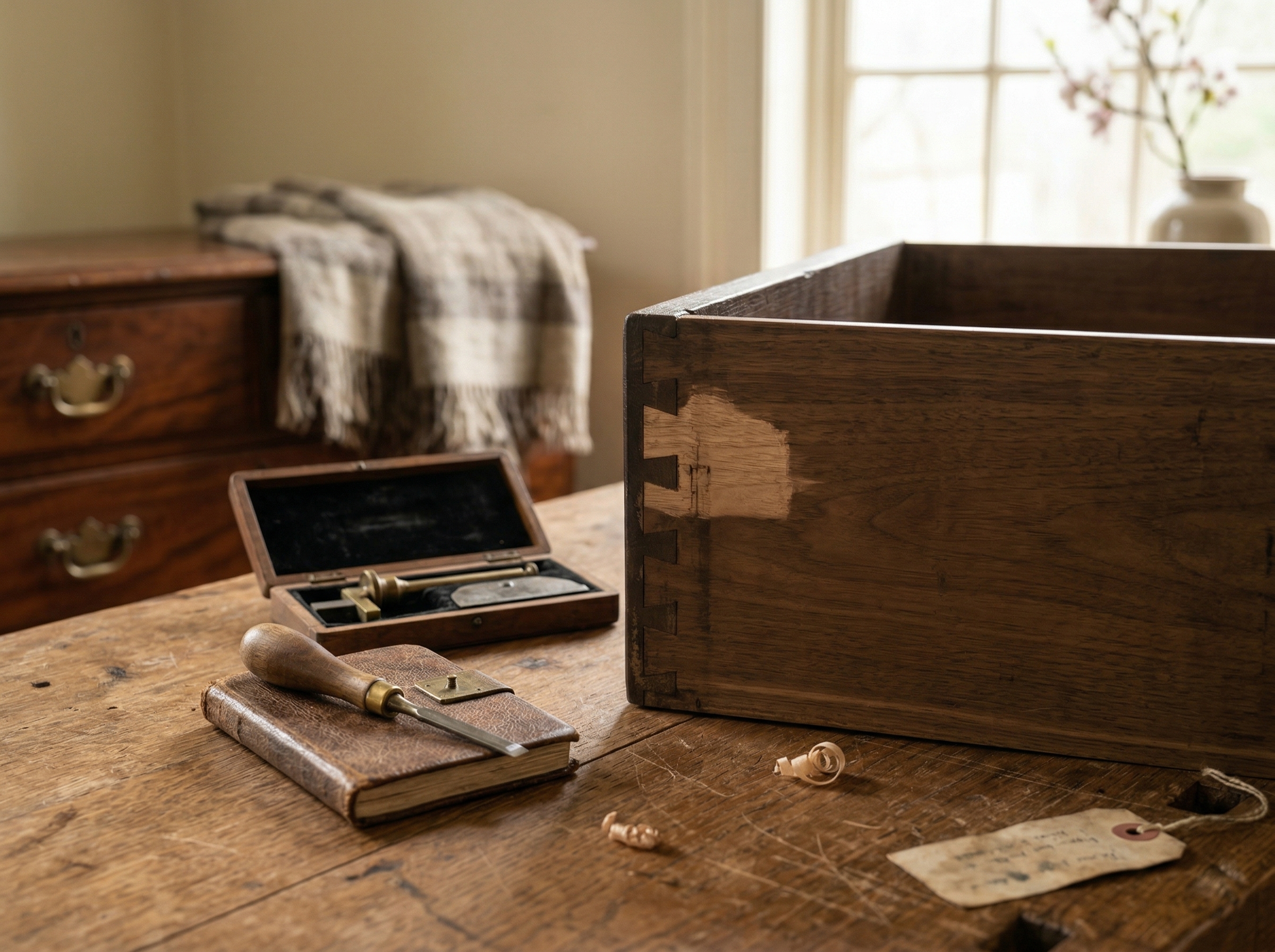
The best place to start when learning how to identify antique dressers is inside the drawers. Pull them out completely and flip them over. This is where makers left behind the most honest evidence of age.
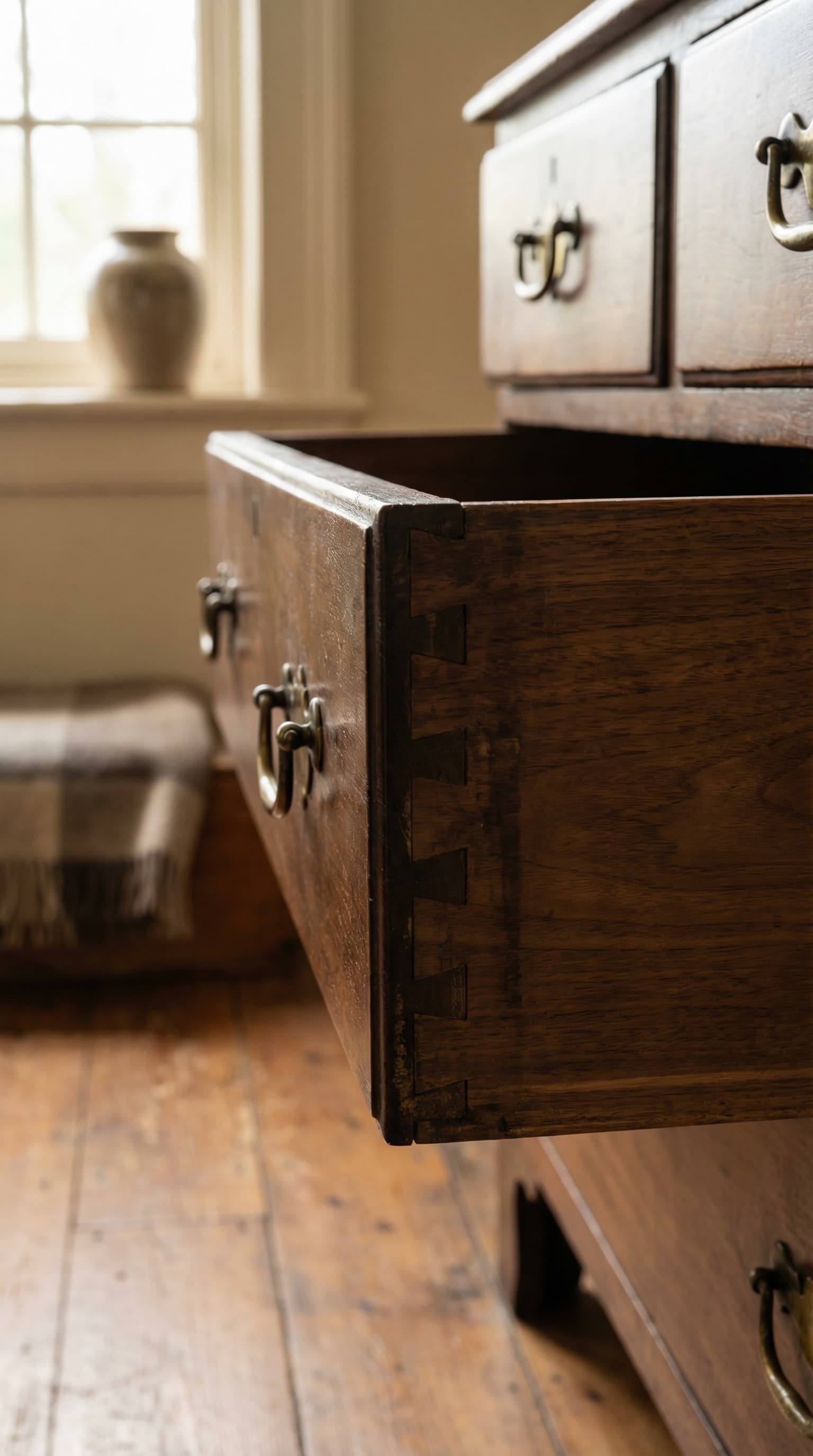
Dovetail joints are the telltale sign. Hand-cut dovetails—irregular, uneven, with varying spacing—indicate pre-1890 construction. They're beautiful in an imperfect way. Machine-cut dovetails arrived in the 1890s and became standard by 1900. They're uniform, precise, and evenly spaced. Both can appear in antique pieces, but hand-cut dovetails suggest earlier craftsmanship.
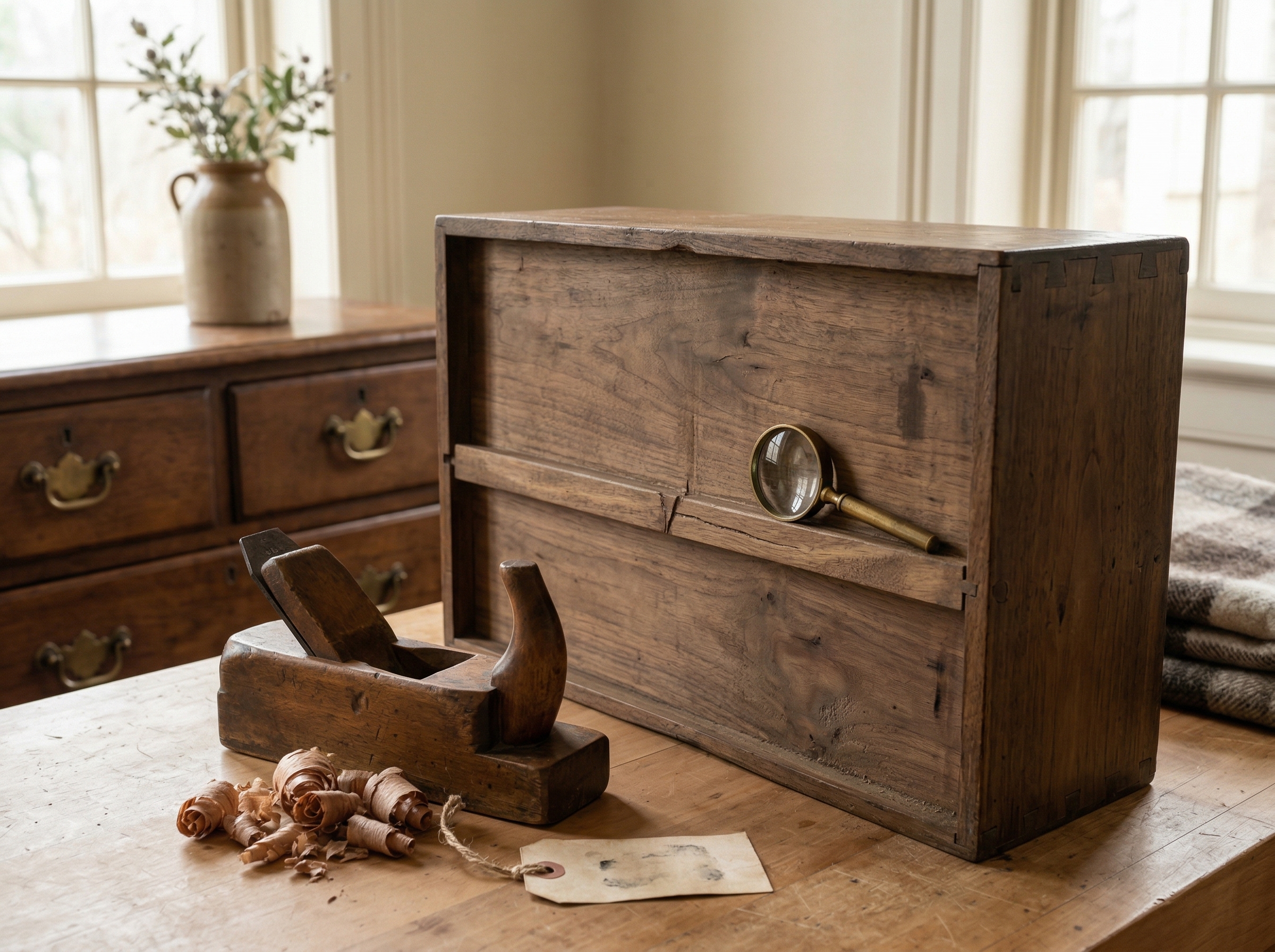
Check the drawer bottoms. In genuine antiques, drawer bottoms slide into grooves and are typically made from a single wide board or a few boards running front-to-back. They're not glued or nailed flush. If you see plywood or particle board, you're looking at a 20th-century reproduction.
Look at the drawer glides—the parts that allow drawers to slide in and out. Antique dressers use wood-on-wood glides. Metal tracks and ball-bearing runners didn't become common until the mid-20th century.
Finally, examine nails and screws. Square-headed nails suggest pre-1890 construction. Round wire nails became standard after 1900. Flat-head screws with off-center slots and irregular threading point to hand-made hardware from the 1800s.
For a deeper dive into dating methods across furniture types, see how to date antique furniture.
Identifying Style Periods and Design Elements
Once you've confirmed your dresser shows signs of age, the next step in learning how to identify antique dressers is pinpointing the style period. Dresser designs shifted dramatically across the 19th and early 20th centuries.
Federal (1780–1820): Clean lines, inlaid veneers, oval brass pulls, tapered legs. Often made in mahogany or cherry.
Empire (1820–1840): Bold, heavy forms with pillar-and-scroll carvings, dark mahogany or rosewood, large turned feet, and ornate brass hardware.
Victorian (1840–1900): This is a broad category with several substyles—Gothic Revival, Rococo Revival, and Renaissance Revival. Expect elaborate carvings, marble tops, serpentine drawer fronts, and deeply figured walnut.
Eastlake (1870–1890): A reaction against Victorian excess. Geometric incised carvings, rectilinear forms, burled panels, and spoon-carved drawer pulls. Often in walnut or ash.
Arts & Crafts / Mission (1900–1920): Simple, rectilinear designs, quarter-sawn oak, visible joinery, hand-hammered copper or iron hardware. Think Stickley or Limbert.
Each style has recognizable silhouettes and details. If you're unsure, comparing your piece to documented examples can help. Our guide on how to identify antique furniture styles walks through visual cues across major periods.
Hardware, Wood, and Maker's Marks
Hardware can make or break an antique dresser's value. Original pulls, escutcheons (keyhole surrounds), and locks should align with the dresser's period. Victorian dressers often feature ornate cast-brass pulls. Eastlake pieces use simpler, geometric designs. Arts & Crafts dressers show hammered metal or wood knobs.
If the hardware has been replaced, it doesn't disqualify a piece—but it does affect value. Look for extra holes, mismatched finishes, or pulls that don't suit the style.
Wood type offers clues, too. American antique dressers are commonly made from walnut (especially 1850–1890), mahogany (Federal and Empire), oak (Mission and Golden Oak), or cherry (Federal and Shaker). Pine and poplar were often used for secondary woods—drawer sides, backs, and interior framing.
Run your hand over unfinished areas. Antique wood feels dense and develops a patina over time. If the backboards are rough-sawn with irregular thickness, that's a good sign.
Maker's marks are the ultimate confirmation. Turn the dresser around and check the back, inside drawers, or underneath for stamps, labels, or branded marks. Renowned makers like Berkey & Gay, R.J. Horner, or Stickley significantly increase value. Even lesser-known regional makers can help establish provenance.
Not sure how to read what you find? Check out how to read furniture stamps and furniture makers marks for decoding help.
Key Factors That Affect Dresser Value
Once you've identified your dresser's age and style, the next question is value. Not all antique dressers are worth a fortune, and not all valuable dressers are antique. Here's what matters most:
Maker and provenance
- •High-value indicators: Signed pieces from Stickley, Herter Brothers, Berkey & Gay, or documented regional makers
- •What collectors pay for: Name recognition, craftsmanship reputation, and original labels or signatures
Condition and originality
- •High-value indicators: Original finish, intact hardware, no structural damage, minimal veneer loss
- •What collectors pay for: Pieces that haven't been over-restored or "improved" with modern paint
Style and rarity
- •High-value indicators: Unusual forms (serpentine fronts, marble tops, burled panels), rare regional styles, documented limited production
- •What collectors pay for: Distinctive design that stands out in the market
Size and practicality
- •High-value indicators: Standard dresser height (30–40 inches), functional drawers, versatile styling
- •What collectors pay for: Pieces that fit modern homes without major compromise
If you're trying to gauge whether your piece is worth pursuing further, our guide on is my furniture valuable covers quick diagnostic checks.
Frequently Asked Questions
How can I tell if my dresser is solid wood or veneer?
Look at the edges, corners, and any unfinished areas. Solid wood shows consistent grain running through the entire thickness. Veneer reveals a thin decorative layer over a secondary wood core. Both can be antique—veneering has been used since the 1700s—but construction quality and wood type matter more than veneer presence.
What's the difference between antique and vintage dressers?
Antique dressers are at least 100 years old (pre-1924 as of now). Vintage dressers are typically 20–99 years old. The distinction affects market value and collector interest. For a full breakdown, see antique vs vintage furniture.
Can I identify an antique dresser from a photo?
Sometimes. Clear photos of joinery, hardware, wood grain, and any marks or labels can reveal a lot. But hands-on inspection—feeling the wood, checking drawer construction, smelling the finish—often confirms what photos suggest. If you're trying to identify a piece remotely, focus on getting sharp, well-lit images of drawer interiors, back panels, and hardware details.
Get Help Identifying Your Dresser
Learning how to identify antique dressers takes practice, but you don't have to go it alone. Whether you're trying to date a family heirloom or evaluate a flea market find, Tocuro connects you with experienced collectors and experts who can help you identify, date, and value your piece. Snap a photo, share the details, and get real answers from people who know furniture inside and out.
Start identifying your dresser today at tocuro.app/signup.
Photo identification
Identify Your Item
Use Tocuro to identify your item from a photo and get an estimated value range when market data is available.