
What Is This Furniture? How to Identify Mystery Pieces From Photos
When you inherit a mysterious cabinet, find a curious table at an estate sale, or stumble upon an unusual chair in the attic, the hardest part is often knowing where to start. This guide walks you through the visual clues that matter most, the photos that help identification tools work best, and the common pitfalls that lead collectors astray.
What Is This Furniture? How to Identify Mystery Pieces From Photos
You've got a piece of furniture that's unfamiliar. Maybe it's something you inherited, picked up at an estate sale, or discovered in a storage unit. You're not sure what it's called, when it was made, or even what it was originally used for. The question "what is this furniture?" is where every identification journey begins—and the right photos can answer it faster than hours of guessing.
Unlike named pieces where you're confirming details, mystery furniture requires you to capture the full story in images. The shape, the joinery, the wear patterns, the hardware—all of these visual signals help experts and identification tools narrow down what you're looking at.
What Clues Matter Most
When you can't name a piece, certain visual details carry more weight than others. These clues help distinguish a plant stand from a side table, a hall tree from a coat rack, or a commode from a washstand.
Overall shape and proportion tell you the piece's likely function. A tall, narrow cabinet with shelves probably served a different purpose than a low, wide chest with drawers. Photograph the entire piece from multiple angles so the proportions are clear.
Hardware and hinges reveal both age and regional origin. Rosehead nails, hand-forged hinges, and wooden pegs suggest pre-industrial construction. Machine-cut screws, stamped brass pulls, and plated hardware point to later eras. Close-ups of each hardware element help establish a timeline.
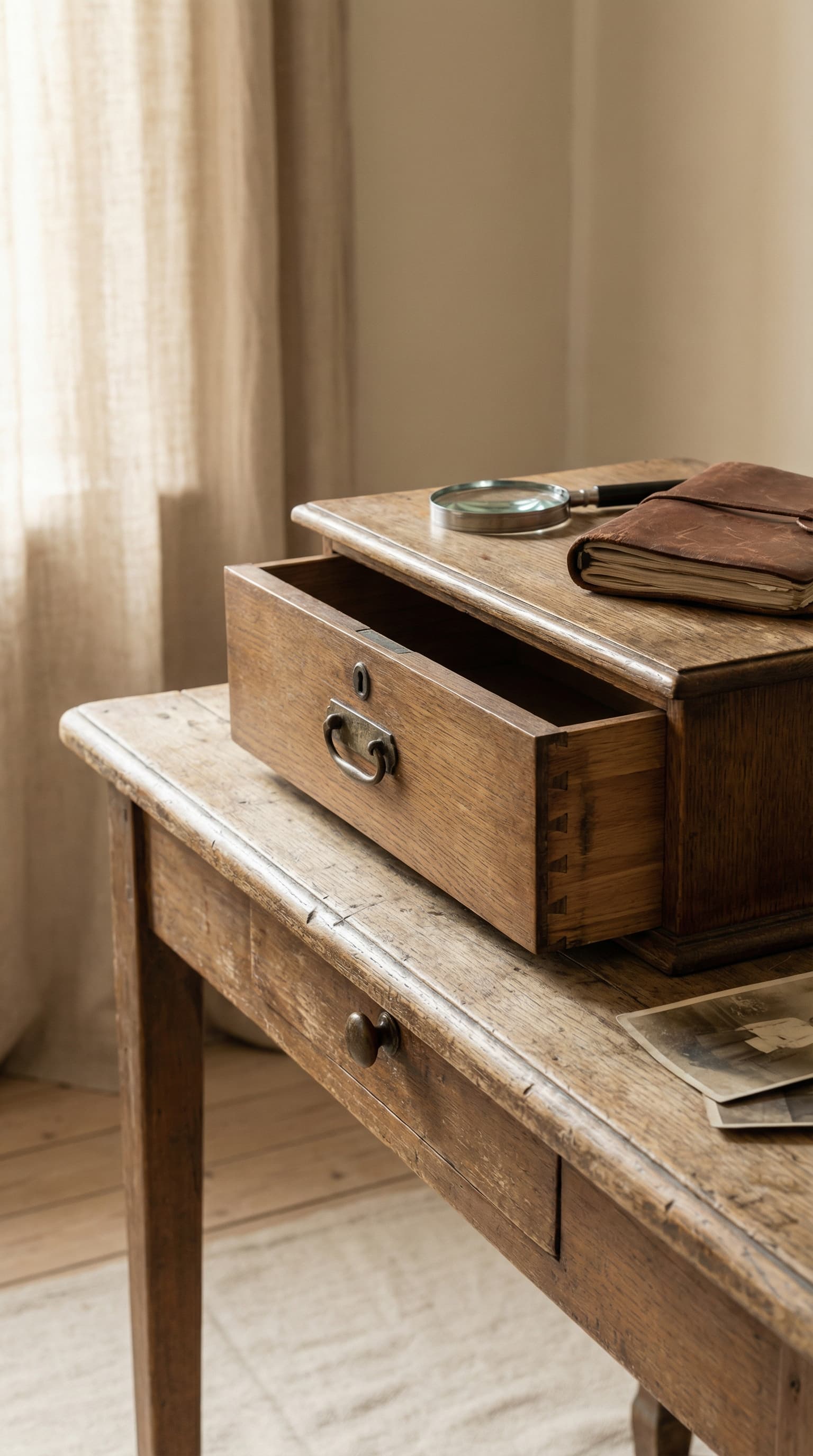
Joinery is one of the most reliable dating tools. Dovetails that are irregular and hand-cut indicate different periods than machine-cut dovetails with uniform spacing. Mortise-and-tenon joints, dowels, and glue blocks each have their own stories. Get clear shots of joints where drawers meet sides, where legs attach to frames, and where panels join together.
Wood species and finish narrow down origin and value. Tiger maple, bird's-eye maple, and figured walnut were prized in certain periods. Original finish, even if worn, can reveal age better than a refinished surface. Photograph the wood grain in good light, and capture any areas where the finish is intact.
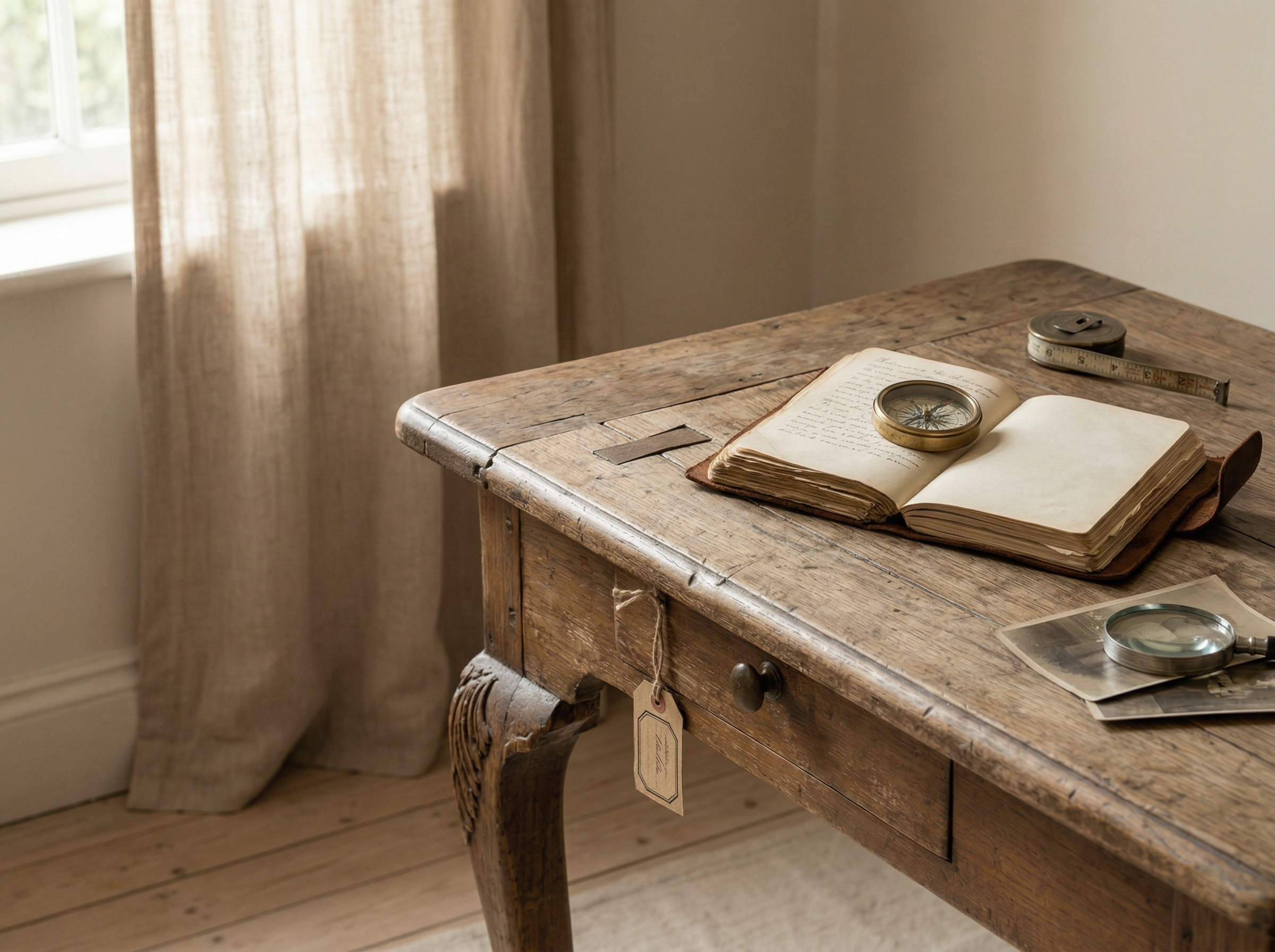
Maker's marks, labels, or stamps are the holy grail of identification, but they're not always present. Check the backs of drawers, undersides of tabletops, interior cabinet walls, and the back panels. Even a partial label can unlock the full story.
Wear patterns show how a piece was actually used. A table with consistent wear on one edge might have stood against a wall. A chair with uneven leg wear likely sat on an uneven floor for decades. Drawer runners show friction patterns that confirm age and authenticity.
What Photos to Take for "What Is This Furniture" Questions
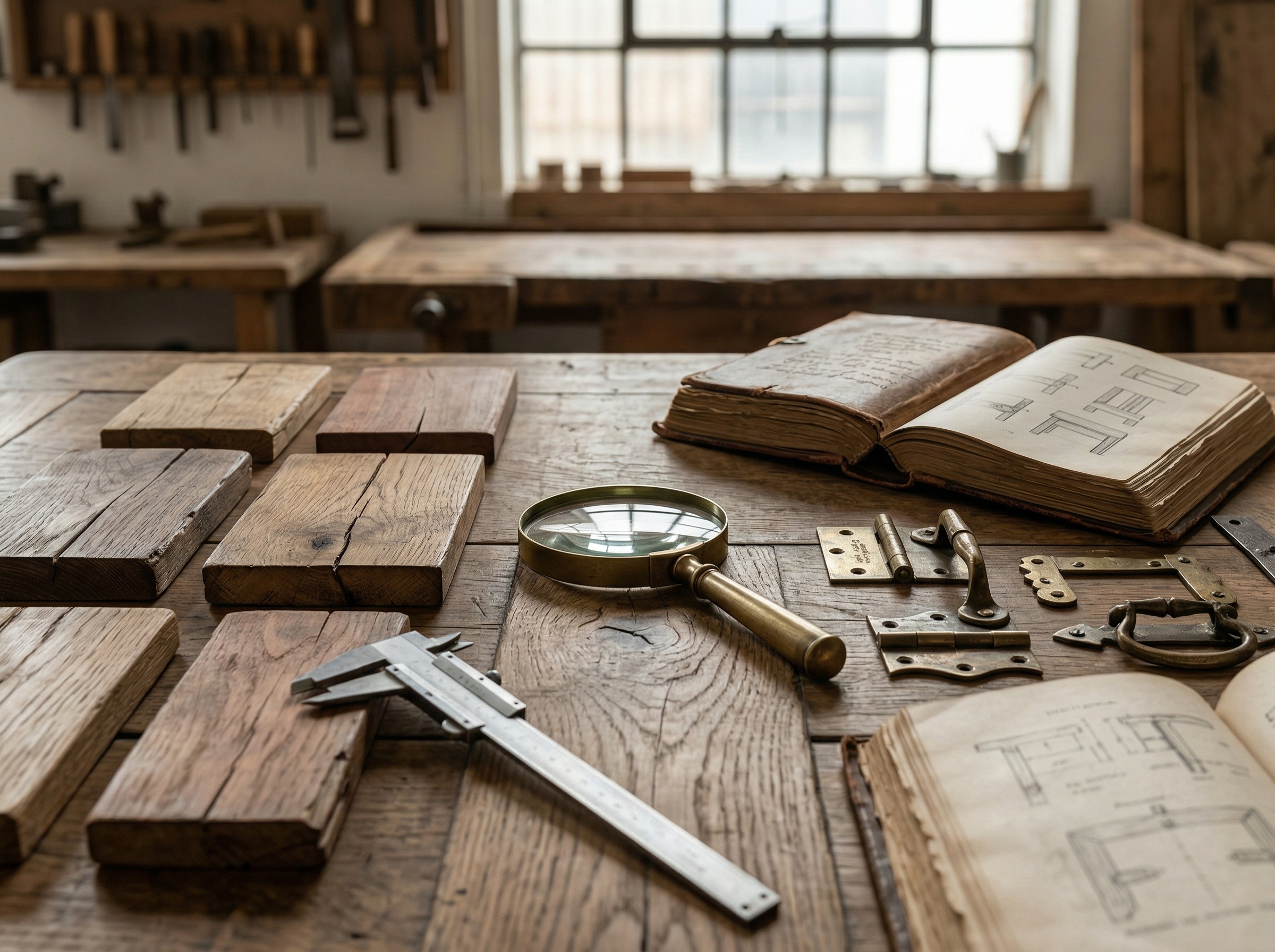
When you're starting from zero, your photo set needs to be comprehensive. Unlike identifying furniture you can already name, mystery pieces require a visual inventory.
Start with the full piece in context. Stand back and photograph it straight-on from the front, both sides, and the back. These establish the form and help rule out similar-looking pieces.
Capture the underside and interior. Flip tables and chairs to photograph the undercarriage. Open all drawers and doors to shoot the interior construction. This is where you'll find maker's marks, construction details, and secondary wood species that help date the piece.
Get close-ups of joinery and hardware. Focus on dovetail corners, hinge attachments, drawer pulls, locks, and keyhole escutcheons. These details often reveal more than the overall form.
Photograph any labels, stamps, or writing. Even faint pencil marks, chalk inscriptions, or partial labels matter. Shoot these at an angle to catch the light and make faint text more legible.
Document damage and repairs honestly. Cracks, missing veneer, replaced hardware, and old repairs all help establish authenticity and age. Don't hide them—they're part of the identification puzzle.
Use natural light when possible. Overhead lighting creates harsh shadows that obscure joinery and wood grain. Window light or outdoor shade gives more even illumination and truer color.
Common Misidentifications and How to Avoid Them
Certain furniture types get confused constantly, especially when you're working from general searches or asking online forums.
Washstands versus commodes. Both are small, low pieces with storage, but washstands have open tops or recessed areas for basins, while commodes have enclosed tops with drawers or doors. Look for evidence of water damage or cutouts for bowls.
Plant stands versus side tables. Plant stands often have pierced galleries, decorative fretwork, or shaped tops designed to hold pots. Side tables have flat, functional surfaces. The proportions differ, too—plant stands tend to be taller and narrower.
Bookcases versus china cabinets. Both have glass doors and shelves, but china cabinets typically have deeper lower sections with solid doors and shallower upper display areas. Bookcases have more uniform depth throughout.
Fainting couches versus recamiers versus chaise longues. These terms get used interchangeably, but they describe distinct forms. Fainting couches have one raised end and no back. Recamiers have two scrolled ends of equal height. Chaise longues have a back along one side. The profile tells the story.
Secretary desks versus drop-front desks versus bureau bookcases. All have hinged writing surfaces, but the proportions and arrangements differ. Secretaries are tall with a bookcase top. Drop-fronts are compact with a fold-down surface. Bureau bookcases combine a chest of drawers with an upper cabinet.
Reproduction versus period pieces. This is the trickiest misidentification of all. Reproductions made in the early 20th century can look convincingly old today. Look for signs of artificial aging—distress marks that are too uniform, wear patterns that don't match the piece's form, or modern materials mixed with period hardware.
What Tocuro Can Help Resolve
When you've taken your photos and still can't pin down what you're looking at, tools like Tocuro bridge the gap between guesswork and expert knowledge. Instead of scrolling through hundreds of furniture types or asking strangers in forums, you upload your images and get specific answers.
Tocuro identifies mystery furniture from photos by analyzing the same clues you'd look for manually—joinery, hardware, proportions, wood species—but with access to a much broader reference library. It can distinguish between similar forms that often get confused and provide period-appropriate terminology.
The tool also provides estimated value ranges based on current market signals, so you're not just learning what you have—you're understanding what it might be worth. That's especially useful if you're deciding whether to keep, sell, or restore a mystery piece.
For pieces that stump even experienced collectors, Tocuro's photo-based approach removes the need to transport heavy furniture to an appraiser or wait for auction house evaluations. You get answers from home, which is particularly helpful when you're dealing with inherited estates or storage-unit finds where time matters.
Ready to Identify Your Mystery Furniture?
The question "what is this furniture?" doesn't have to remain unanswered. With the right photos and attention to the clues that matter most, you can move from complete mystery to confident identification.
Identify your furniture with Tocuro and get clear answers from photos in minutes. Upload images of your mystery piece and let photo-based identification resolve what hours of searching couldn't.
Frequently Asked Questions
Can I identify furniture without any markings?
Yes. Most furniture identification relies on construction details, wood species, hardware, and form rather than maker's marks. Even unmarked pieces can be dated and attributed to regions or periods based on these visual clues.
What if my furniture is a mix of old and new parts?
That's extremely common. Document both original and replaced elements separately. The original parts help date the piece, while repairs and additions tell the story of how it was used and valued over time.
How do I know if my furniture is a reproduction?
Look for construction methods that don't match the style. Machine-cut dovetails on a piece with hand-forged hardware, plywood backing on an "18th-century" cabinet, or wear patterns that don't align with the piece's form are all red flags. When in doubt, compare your photos with authenticated examples through photo-based identification tools.
Do I need to clean my furniture before taking photos?
No. Light dusting is fine, but don't refinish, polish, or scrub before identification. Original finish and natural patina are important clues. Clean photos are helpful, but authentic condition matters more.
What if I inherit a whole house full of mystery furniture?
Start with the pieces that seem most unusual or valuable. Photograph each one systematically using the approach outlined above, then work through them individually. Tools like Tocuro can handle multiple pieces efficiently, which is far faster than researching each one manually or hiring an appraiser to evaluate an entire estate.
Photo identification
Identify Your Furniture
Use Tocuro to identify your item from a photo and get an estimated value range when market data is available.