
Watch Marks Identification: How to Read Case and Movement Stamps
Watch marks identification requires finding stamps on both case and movement. This guide shows where marks appear, what they reveal about maker and materials, common mistakes collectors make reading them, and why sharp macro photos matter.
Watch Marks Identification: How to Read Case and Movement Stamps
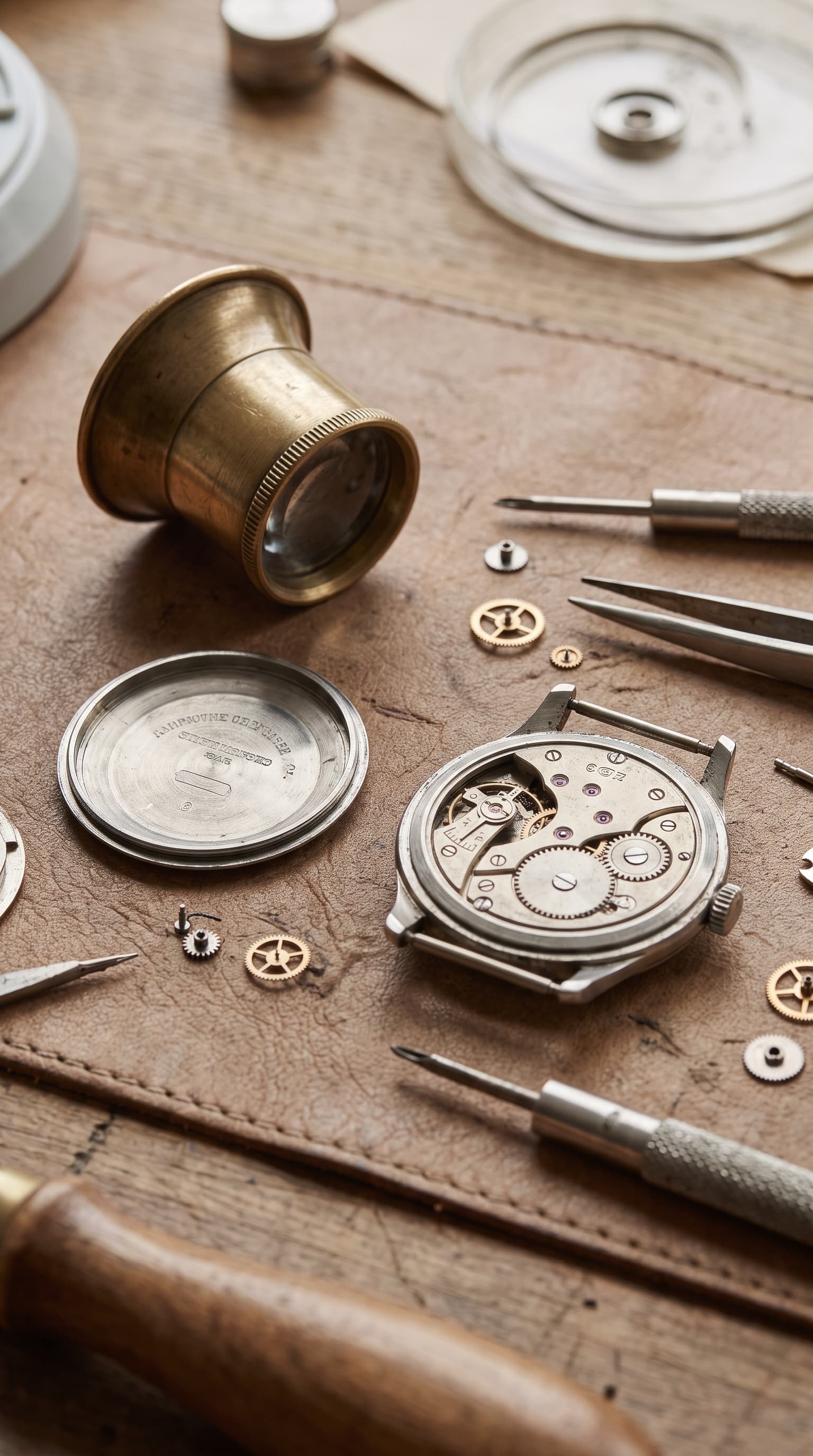
Watch marks identification starts with understanding that timepieces carry two separate sets of information: case marks on the exterior metal housing and movement marks inside the mechanism. Both tell different stories, and confusing the two leads to most identification errors. Whether you're examining a pocket watch inherited from a grandparent or a wristwatch found at an estate sale, knowing where to look and what you're actually seeing makes the difference between accurate identification and wishful thinking.
Where to Find Watch Marks
Watch marks appear in predictable locations, but accessing them requires different approaches depending on the watch type.
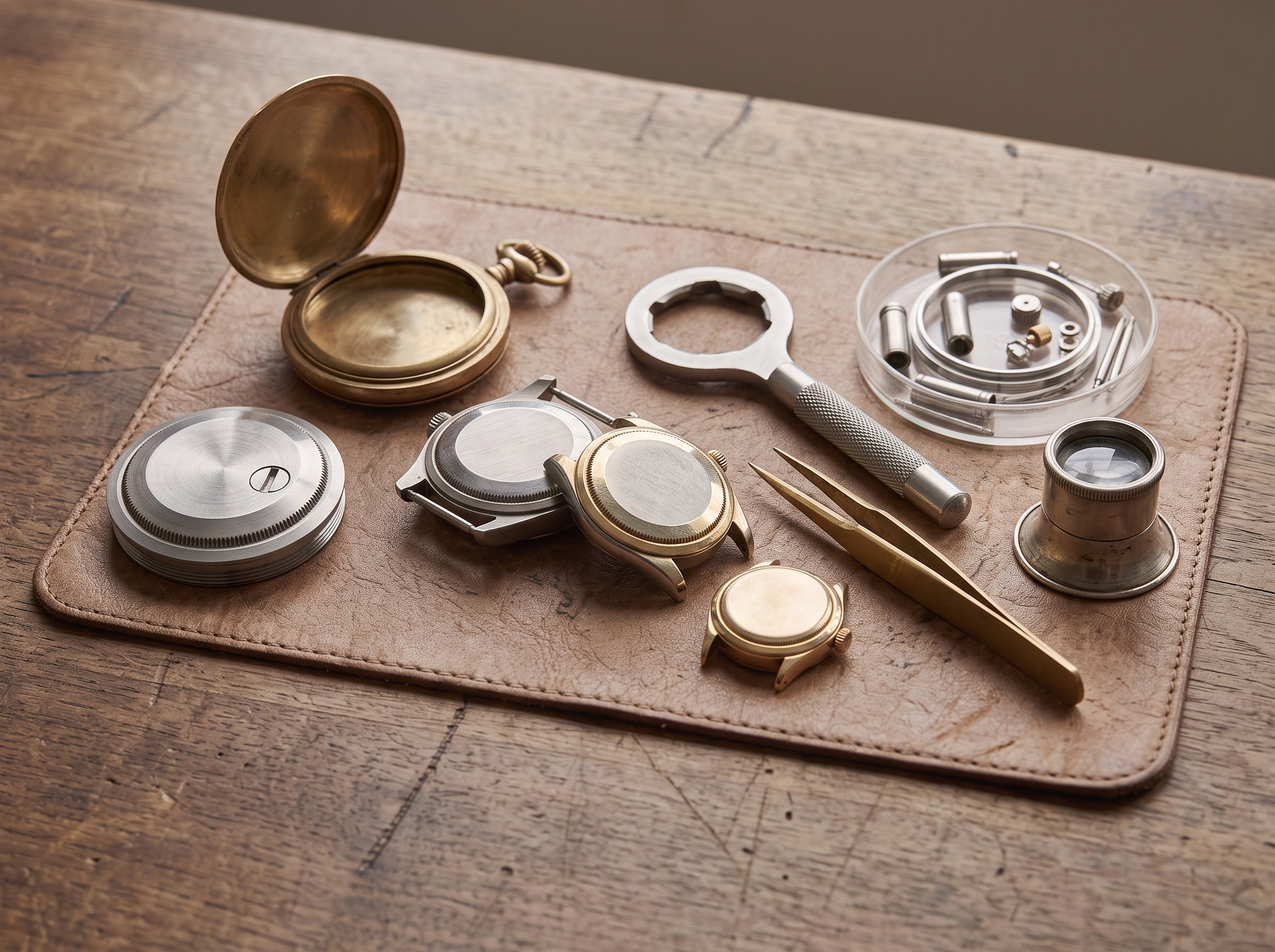
Case marks typically stamp into the inner side of case backs. On pocket watches, flip open the hinged back or unscrew the snap-back cover. Most case backs show a series of numbers or symbols near the hinge or edge. Look for hallmarks indicating metal content (14K, 18K, 925 for sterling), maker's marks, patent dates, and serial numbers. Some manufacturers placed additional marks inside the front bezel or on the cuvette—the inner dust cover protecting the movement.
Wristwatch cases follow similar patterns. Screw-back cases require a case wrench or jeweler's tool to open safely. Snap-back cases pry open with a case knife, though this risks scratching. Between the lugs—where the strap attaches—you'll sometimes find additional reference numbers stamped into the case edge. These numbers often indicate model rather than maker.
Movement marks appear on the mechanism itself, visible once you remove the case back. The movement plate—the largest flat component—usually carries the most information. Manufacturer names, model numbers, jewel counts, patent dates, and serial numbers stamp or engrave directly onto the metal. Swiss movements often show adjusted position marks indicating regulation quality. American movements frequently display elaborate decorative engravings alongside technical specifications.
Some movements hide marks under the balance cock—the decorative bridge covering the balance wheel. You'll need to remove this component to see them, which requires watchmaking tools and experience. Don't attempt this on valuable pieces without proper knowledge.
What Watch Marks Can and Cannot Tell You
Case marks reveal metal content and case manufacturer. A "14K" stamp tells you gold purity. Hallmarks like a crown for Rolex or "Wadsworth" for a common American case maker identify who made the housing. Case serial numbers sometimes date manufacture, though you need manufacturer records for accurate dating.
Case marks cannot reliably identify the watch movement inside. Many case manufacturers supplied housings to multiple watch companies. A Keystone case might hold a Waltham, Elgin, or Hamilton movement. The case maker and movement maker were often completely separate businesses.
Movement marks identify who made the mechanism, when, and to what grade. Serial numbers cross-reference to production databases for many American manufacturers like Waltham, Elgin, and Hamilton. Swiss makers like Omega, Longines, and IWC maintained similar records. Grade names indicate quality level—a "Crescent Street" Waltham ranks higher than a "PS Bartlett."
Movement marks cannot tell you if the case is original or if parts were swapped. Movements migrated between cases throughout their lives as owners upgraded housings or replaced damaged cases. A solid gold case might hold a modest-grade movement. A railroad-grade movement might sit in a nickel case. The watch collecting community calls these "marriages"—technically correct assemblies that don't reflect original factory configuration.
Neither case nor movement marks guarantee condition, functionality, or completeness. A clearly marked movement might have broken parts, replacement components, or amateur repairs that devastate value.
Common Watch Marks Misreads
Collectors constantly confuse case maker with movement maker. Finding "Crescent" stamped inside a case back doesn't mean you own a valuable Waltham Crescent Street movement. Crescent was primarily a case manufacturer. You must open the watch and read the movement itself.
Patent dates aren't manufacture dates. A case stamped "Pat. May 5, 1896" wasn't necessarily made in 1896—that's when the design received patent protection. The case might have been manufactured any time in the following 20-30 years using that patent.
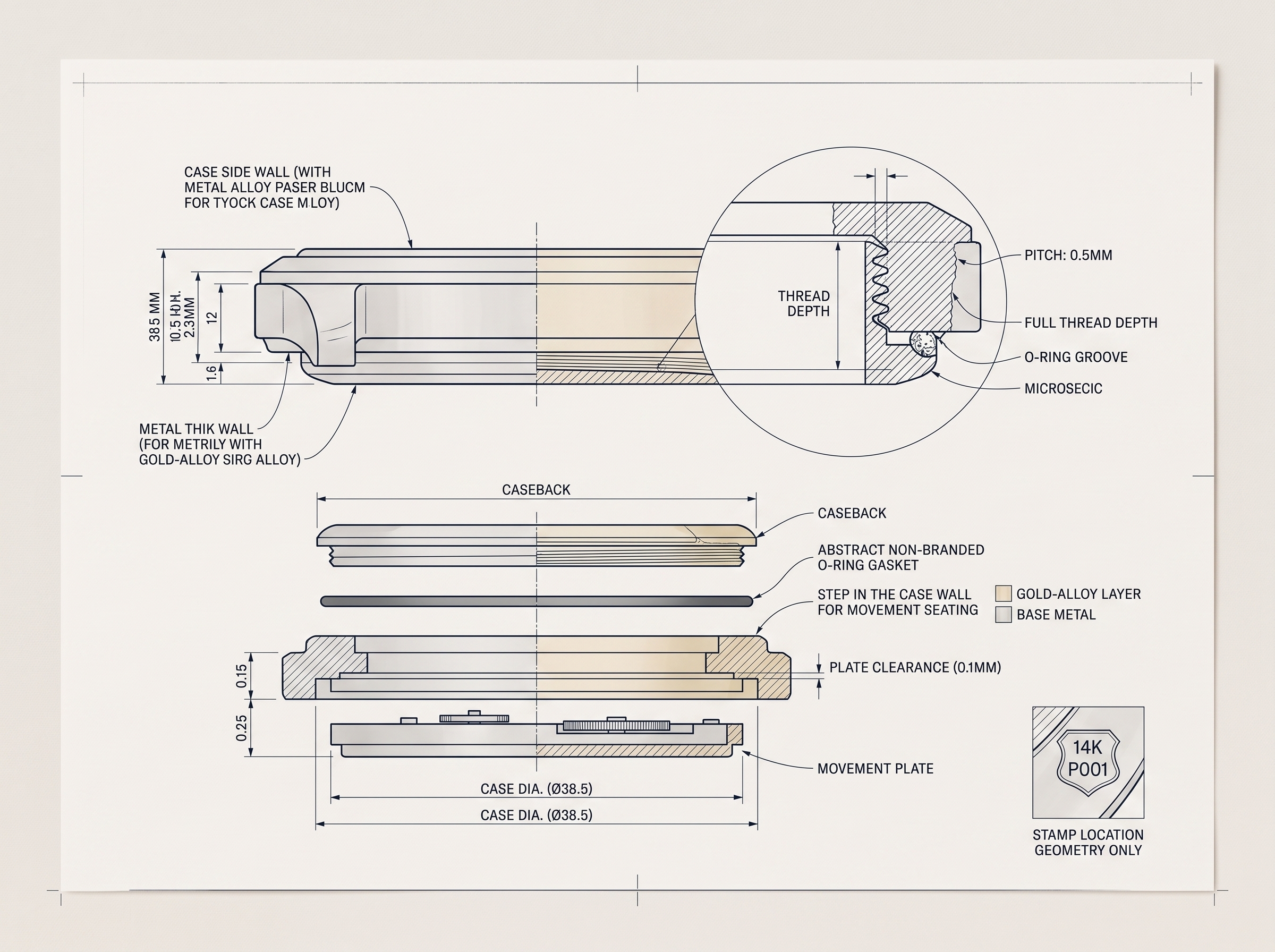
Gold-filled isn't gold-plated. Cases marked "Gold Filled," "G.F.," or with fraction stamps like "1/10 12K G.F." have a thicker gold layer than plating, bonded to base metal. This matters for value. Gold-filled cases hold more worth than plated but far less than solid gold.
Model numbers aren't serial numbers. A "ref. 1016" stamped between Rolex lugs identifies the model (in this case, an Explorer). The serial number—which dates the watch—appears elsewhere on the case. Mixing these up makes accurate dating impossible.
Jewel counts can mislead. A movement stamped "23 Jewels" sounds impressive, but jewel count alone doesn't indicate quality. Manufacturers added non-functional jewels to inflate counts during certain periods. A 17-jewel railroad grade often outperforms a 23-jewel department store watch.
Similar to jewelry marks identification, watch marks require understanding the hierarchy and context of different stamps rather than reading them in isolation.
How Photos of Watch Marks Improve Identification Results
Clear, focused photos of both case and movement marks dramatically improve identification accuracy—particularly when using photo-based identification tools. Here's what helps most:
Macro focus on marks beats wide shots every time. Get close enough that individual letters and numbers fill the frame. Modern smartphone cameras have macro modes specifically for this purpose. Use them.
Natural or bright LED lighting at an angle reveals shallow stamps better than direct flash. The slight shadow from angled light makes stamped letters and numbers pop visually. Flash tends to wash out shallow marks completely.
Multiple angles catch marks that don't photograph well straight-on. If a hallmark or serial number isn't reading clearly, rotate 15-20 degrees and shoot again. One angle will usually show better definition.
The whole movement plate in one shot provides context. A detailed shot of the serial number is essential, but also capture the full movement showing decoration, jeweling, and overall layout. These visual elements help confirm maker and grade.
Both sides of the movement matter on pocket watches. The plate side shows most marks, but the dial side might reveal additional numbers or signatures.
Between-the-lugs stamps on wristwatches require specific positioning. Remove the strap if possible. Angle the camera to shoot straight down into the narrow space. These reference numbers often clinch identification when case marks alone create ambiguity.
Just as silver hallmarks benefit from careful photography, watch marks need the same attention to lighting and focus. The difference between a blurry photo and a sharp macro shot is often the difference between "possibly a Waltham" and "confirmed 1907 Waltham Vanguard, 23J, up/down indicator."
Get Your Watch Identified from Photos
Watch marks identification combines detective work with database cross-referencing—and sometimes the rabbit hole goes deeper than expected when case and movement tell different stories. If you're looking at a watch and wondering exactly what you have, Tocuro identifies timepieces from photos of both case and movement marks. The app provides estimated value ranges based on current market signals, though these estimates aren't formal appraisals. You get 7 free identifications per day, with the count resetting daily, so you can check multiple watches or photograph the same watch from different angles to capture all relevant marks.
The more detail you can photograph—case marks, movement marks, serial numbers, maker's signatures—the more accurately identification tools can work. And unlike most vintage items, watches reward the effort because both halves of the story matter equally.
Photo identification
Identify Your Watch Mark
Use Tocuro to identify your item from a photo and get an estimated value range when market data is available.