
Watch Identification App: Identify Timepieces from Photos in Seconds
A watch identification app helps you identify vintage and antique watches from photos, revealing maker information, production era, and estimated values without searching through reference books or forums.
The Challenge of Identifying Watches
You've found a watch—inherited from family, discovered at an estate sale, or tucked away in a drawer. The dial may show a maker's name, or it might be worn smooth. The case back could have hallmarks, serial numbers, or nothing at all. Traditional identification means hours comparing details across reference books, collector forums, and auction archives, piecing together clues about maker, model, age, and what it might be worth.
A watch identification app changes that process. Instead of manual research, you photograph the watch and receive identification results in seconds—covering vintage wristwatches, pocket watches, chronographs, and more.
What Tocuro Does for Watch Identification
Tocuro analyzes photos of watches to identify maker, model, approximate era, and estimated value range. The app recognizes dial signatures, case shapes, hand styles, movement characteristics visible through case backs, and other details that distinguish one timepiece from another.
When you upload a clear photo, Tocuro compares visual elements against market data, auction results, and collector references. You'll receive:
- •Maker and model identification when dial signatures or case markings are visible
- •Production era estimates based on case style, dial design, and movement type
- •Value ranges drawn from recent sales of comparable pieces
- •Context about the watch including manufacturing history and collectibility factors
The tool works across watch categories: American railroad pocket watches, Swiss wristwatches, vintage chronographs, military-issue timepieces, and modern collectibles. Whether you're sorting through an estate, evaluating a potential purchase, or cataloging a collection, Tocuro handles the identification work.
What You Get Free
Tocuro provides 7 free identifications per day. The count resets daily, so you can identify a small collection over several days without paying anything. Each identification includes maker information, era estimates, and value ranges—the same depth you'd get from paid usage.
This free tier works well for casual collectors, people handling inherited pieces, or anyone who needs occasional watch identification without committing to a subscription. If you're cataloging larger collections or working through estate inventory regularly, higher volumes require payment.
What Photo Quality Works Best for Watch Identification
Watch identification depends heavily on photo clarity. The more detail visible, the more accurately the app can identify your piece.
Dial photos
- •What to capture: Shoot straight-on with even lighting to reveal signatures, subdials, markers, and hand styles
- •Why it matters: Dial details often distinguish models within a maker's catalog and confirm originality
Case back photos
- •What to capture: Photograph any hallmarks, serial numbers, case maker marks, or visible movements through display backs
- •Why it matters: Case markings often reveal maker, gold content, country of origin, and production date codes
Movement photos (if case opens)
- •What to capture: Clear shots of the movement showing jewel count, maker signatures, adjustment marks, and finish
- •Why it matters: Movement details confirm authenticity and can significantly affect value, especially for high-grade pieces
Overall condition
- •What to capture: Photos showing case wear, crystal condition, crown style, and any damage or repairs
- •Why it matters: Condition directly impacts value and helps separate collector-grade pieces from parts watches
Natural daylight works better than flash, which can create glare on crystals and reflective dials. If the watch has a display back or you've opened the case, photograph the movement—those details often provide the most definitive identification.
For watches with indistinct or worn dials, focus on case shape, lug style, crown placement, and any surviving details. Even partial information helps narrow possibilities.
Limitations and When to Seek Expert Help
A watch identification app handles most vintage and antique watch identification effectively, but some situations require specialist expertise:
Refinished or altered dials can mislead photo-based identification. If the dial looks suspiciously pristine on an otherwise aged watch, or if fonts and printing don't match known examples, seek an expert opinion before making purchase decisions.
High-value pieces deserve formal authentication. If identification suggests significant value—rare complications, important makers, historically significant models—have a watchmaker or specialist examine the piece in person. They can verify originality, check for replacement parts, and assess movement condition.
Complex complications like perpetual calendars, minute repeaters, or tourbillons require specialist knowledge to authenticate and value properly. Photo identification provides a starting point, but formal assessment matters for insurance and sale purposes.
Unsigned or generic watches may resist definitive identification. Many vintage watches carried retailer names rather than manufacturer signatures, or came from small makers who left minimal records. The app can often narrow possibilities by era and style, but precise attribution may not be possible.
Custom or modified pieces present identification challenges. If the watch shows non-original parts, case swaps, or amateur repairs, photo analysis may not reflect true value or collectibility.
For estate planning, insurance documentation, or before selling a potentially valuable watch, consider having important pieces examined by a qualified watchmaker or appraiser. The identification app gives you informed context, but formal expertise adds certainty for significant decisions.
Using Watch Identification for Purchase Decisions
Photo-based watch identification proves especially useful when evaluating potential purchases. Before buying at flea markets, online marketplaces, or estate sales, photograph the watch and check identification results.
You'll quickly spot:
- •Misrepresented makers or models when sellers misidentify pieces
- •Value discrepancies between asking price and market range
- •Red flags like incorrect dials, case swaps, or fantasy pieces
- •Promising finds priced below market value
This works similarly to other identification tools—like the jewelry identification app for vintage costume jewelry or the antique glass bottle identification tool—but focuses specifically on horological details that distinguish watch value.
Beyond Wristwatches: Pocket Watches and More
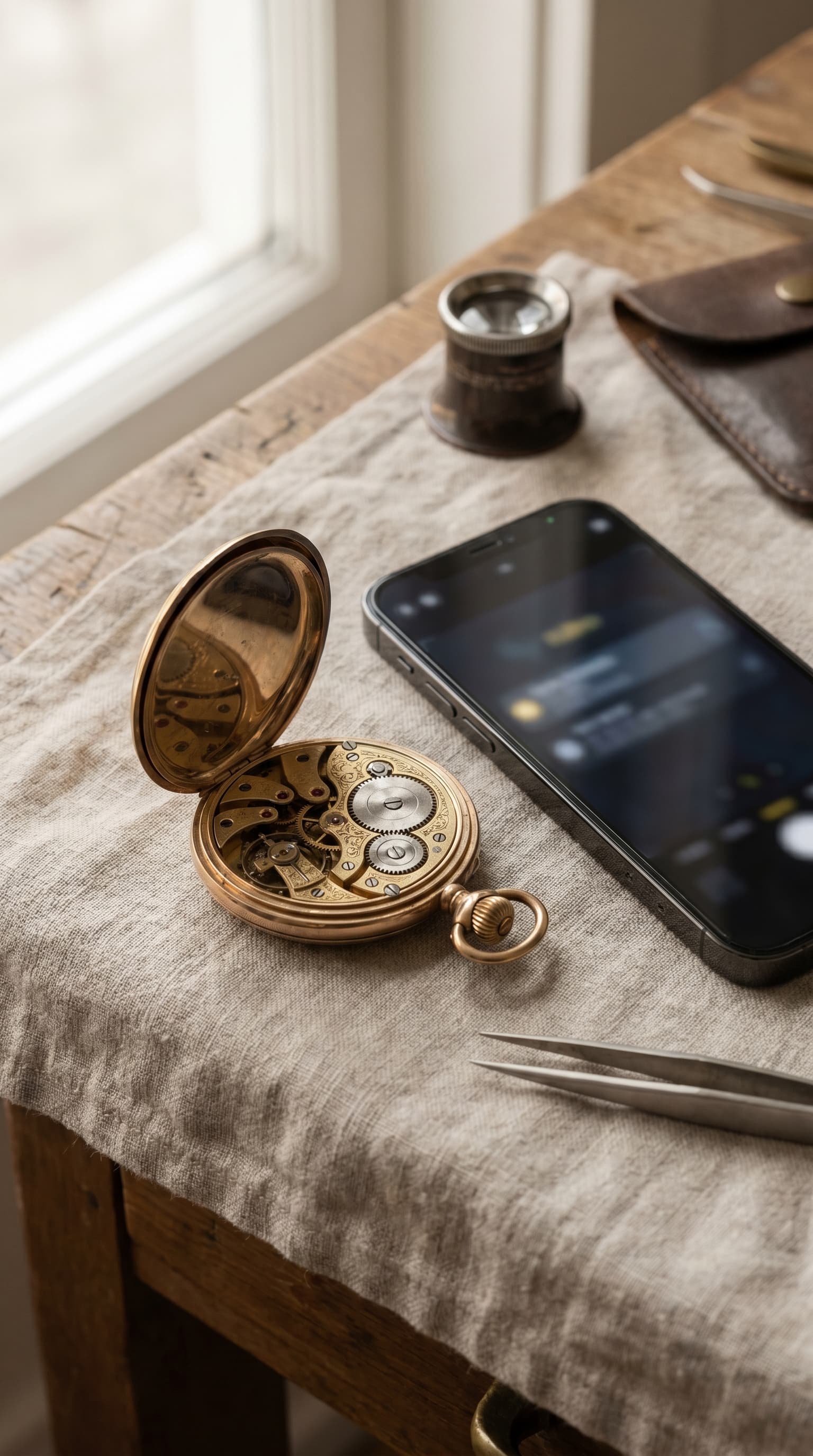
The same watch identification approach works for pocket watches, which often require different knowledge than wristwatches. American railroad-grade pocket watches, Victorian ladies' pendant watches, and European hunter-case pieces all carry distinct markers that photo identification can recognize.
For pocket watches, photograph:
- •The dial and hands to identify maker and model
- •The movement showing jewel count, adjustment marks, and maker signature
- •Case hallmarks revealing gold content and origin
- •Serial numbers on both movement and case
Pocket watch movements often carry more visible maker information than wristwatch movements, making identification more straightforward when you can open the case.
Start Identifying Your Watches
Whether you've inherited a collection, found a single interesting piece, or want to understand what you already own, a watch identification app provides immediate answers. Photograph the dial, case back, and movement if accessible, upload to Tocuro, and you'll have maker, era, and value information in seconds.
Try 7 Free IDs Today and see what your watches reveal.
Photo identification
Identify Your Watch
Use Tocuro to identify your item from a photo and get an estimated value range when market data is available.