
Watch Identification: How to Identify Vintage Watches from Photos
Identifying vintage watches requires the right photos and knowing where to look. This guide covers the specific clues that matter most—case back markings, dial details, and movement signatures—plus the photo angles that capture them clearly.
Watch Identification: How to Identify Vintage Watches from Photos
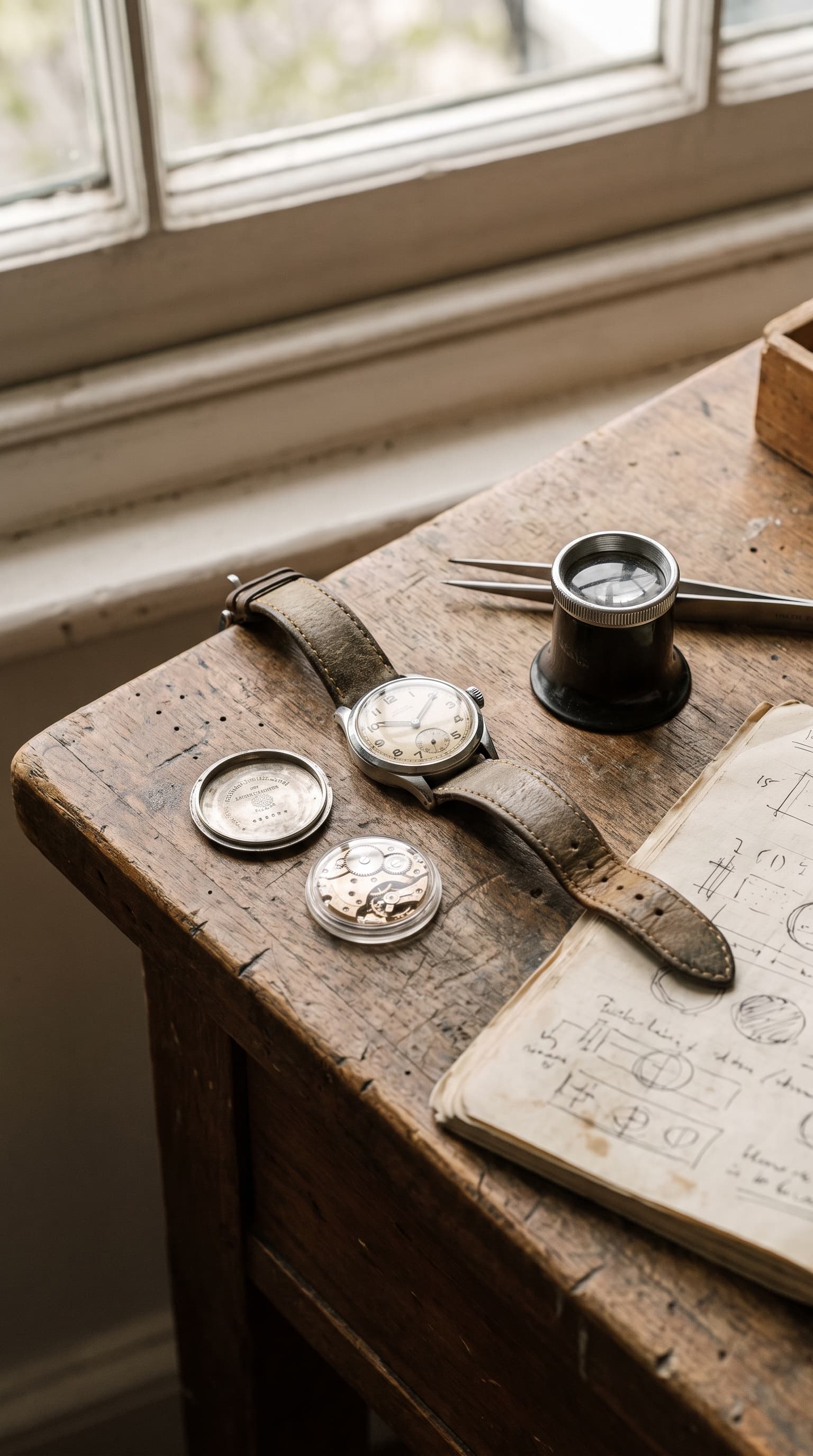
Watch identification starts with three critical views: the case back, the dial, and the movement. Each reveals different pieces of the puzzle, from maker and model to manufacture date and authenticity markers. Get these photos right, and you'll have what you need to identify most vintage watches with confidence.
What Clues Matter Most for Watch Identification
Vintage watches hide their identity in small, specific places. Unlike items marked on the bottom, watches spread their clues across multiple surfaces—some visible, some tucked away.
Case Back Markings
The case back often carries the most direct identification: brand name, model number, reference number, material stamps (14K, STAINLESS STEEL, PLAQUÉ), and serial numbers. Many American watches from Hamilton, Elgin, and Waltham stamped full model names here. Swiss watches tend toward reference numbers—four to six digits that unlock model and production year when cross-referenced.
Look for engraved presentation inscriptions too. While they don't identify the watch itself, they can date it to a specific event or year.
Dial Details
The dial tells you brand and sometimes model at a glance, but the details matter more than the name. Logo style, font choice, and subsidiary dial layout changed across decades. A Rolex Oyster Perpetual with applied gold markers dates differently than one with printed indexes. Patina patterns, discoloration, and dial refinishing all affect identification—and value.
Check for signatures at 6 o'clock ("SWISS MADE" or country of origin), complications (date windows, chronograph subdials, moon phases), and hand styles. Original hands match the era; replacements often don't.
Movement Signatures
The movement is where serious identification happens. If you can open the case back (and you're comfortable doing so), the caliber number, maker's mark, jewel count, and serial number live here. Movements often reveal the true manufacturer—Swiss ébauche makers like ETA and AS supplied movements to dozens of brands, so a "vintage Swiss watch" might be a department store brand built on a quality base movement.
Jewel count (17 jewels, 21 jewels) appears on most movements and hints at quality tier. Decoration—perlage, Côtes de Genève, blued screws—separates utility watches from fine timepieces.
Case Construction
Case shape, lug style, crystal type, and crown design all narrow the identification window. A cushion case with wire lugs suggests 1920s–1930s. An integrated bracelet with angular case points to 1970s. Acrylic crystals appeared mid-century; mineral and sapphire came later.
Case material matters too: gold-filled cases dominated American mid-century watches, while stainless steel gained traction postwar.
What Photos to Take for Watch Identification
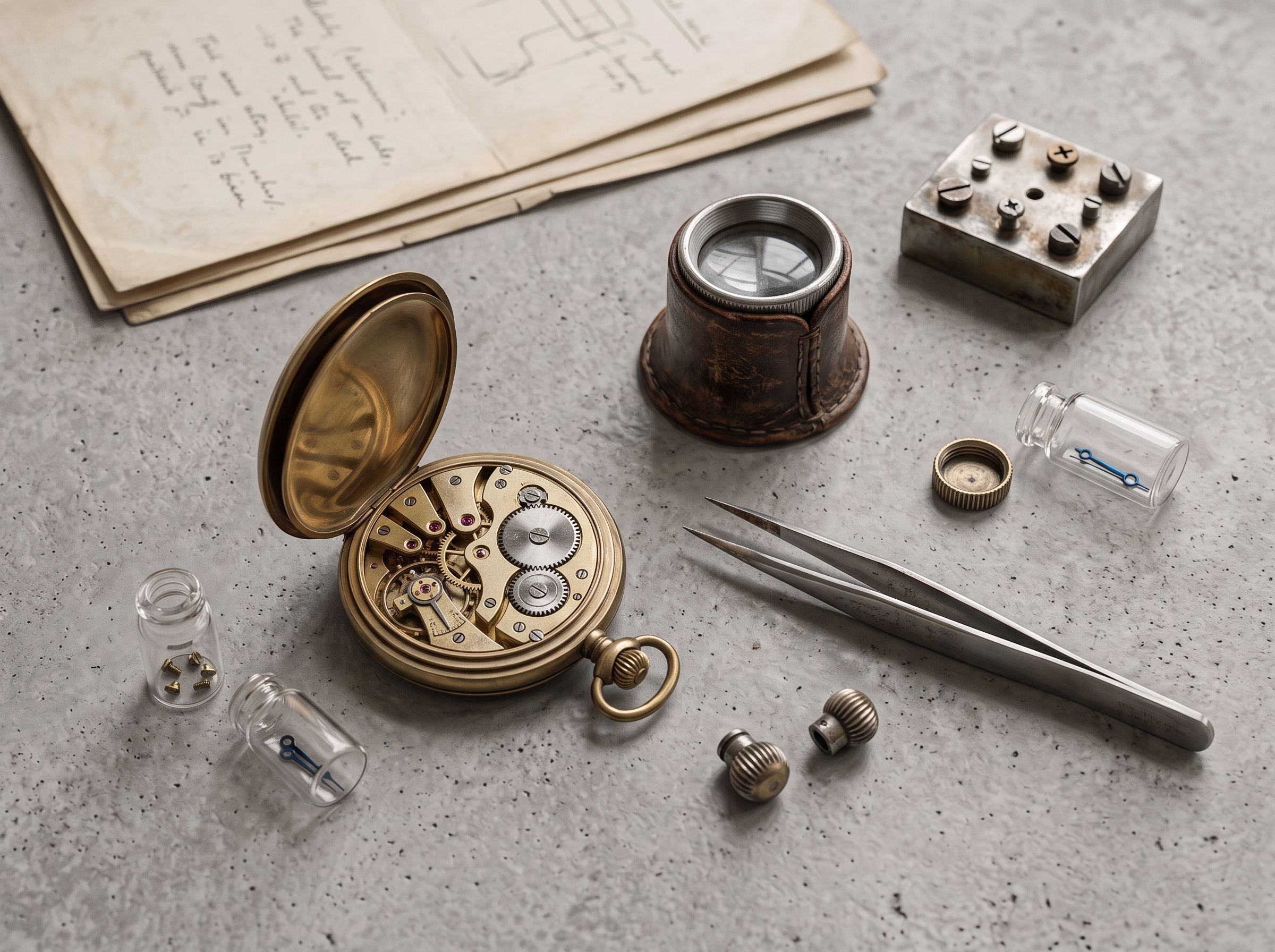
Good watch identification depends on capturing small details clearly. Natural light and a steady hand beat fancy equipment every time.
Case Back Photo
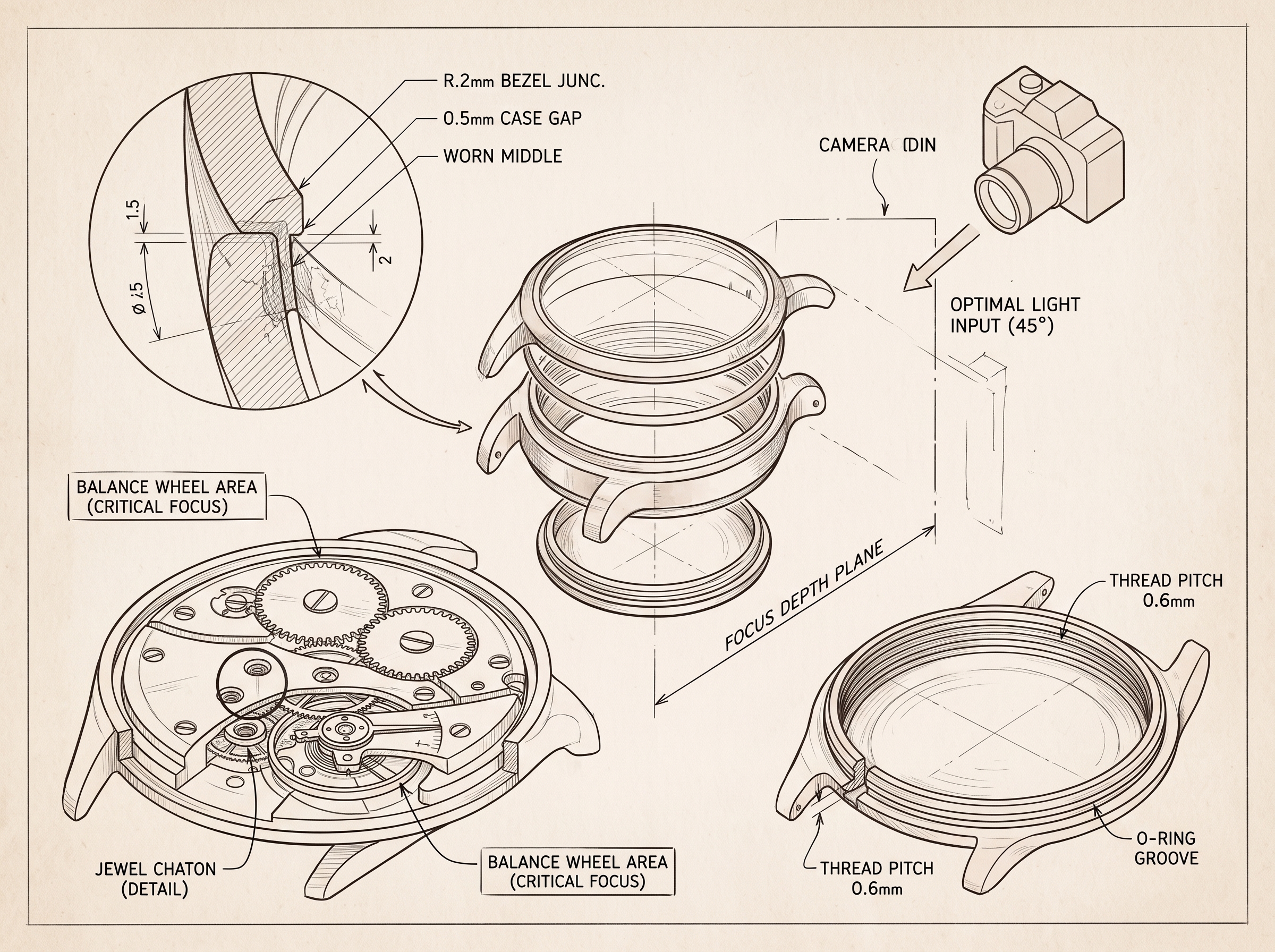
Lay the watch face-down on a neutral surface. Shoot straight down to avoid distortion. If the case back is polished and reflective, angle your light source (window light works well) to minimize glare while keeping text legible. Engravings catch light at an angle—tilt the watch slightly if numbers won't show.
If the case back is snap-on or screw-down and you can open it safely, photograph the movement too. Never force a case back open; damage erases value.
Dial Photo
Shoot the dial straight-on, filling the frame. Avoid shadows across the face—soft, diffused window light is ideal. Capture the full dial including any text at the edges, the seconds track, and all subsidiary dials.
If the crystal is scratched or domed and creating glare, try angling the watch slightly away from your light source. Don't use flash; it blows out details and creates hot spots on glossy dials.
Movement Photo
If you've opened the case back, photograph the movement with even lighting. Capture any text, the balance wheel, jewel settings, and decorative finishes. A second photo focused on the caliber number or serial number ensures legibility.
Don't touch the movement. Oils from skin cause corrosion.
Detail Shots
Close-ups of the crown (showing any logo or symbol), lug attachments, case edges, and hallmarks or stamps on the inside of the case back add valuable context. These small clues often confirm or contradict what the dial suggests.
For more guidance on capturing small marks clearly, see How to Photograph Maker Marks.
Common Watch Identification Mistakes
Watch identification trips up even experienced collectors when assumptions override evidence.
Assuming Brand Equals Value
A dial says "Rolex" or "Omega," and expectations soar. But not all models from prestige brands command high prices. Post-quartz crisis models, ladies' cocktail watches, and service-replacement dials can disappoint. Identification requires model-level specificity, not just brand recognition.
Mistaking Redials for Originals
Refinished dials look crisp and clean—sometimes too clean. Original vintage dials show age-appropriate patina, subtle fading, and period-correct fonts. A 1950s watch with a perfectly white dial and modern printing likely went through a redial service, which significantly affects collector interest.
Confusing Movement Maker with Brand
Many mid-tier vintage Swiss watches used movements from ETA, AS Schild, or Peseux. The brand on the dial might be a jeweler, department store, or small assembler. Identification means recognizing the difference between case brand and movement maker—and understanding that a quality movement in a modest case still has merit.
Overlooking Case Material
Gold-tone doesn't mean gold. Gold-filled, gold-plated, and rolled gold plate all differ from solid gold, and each affects value differently. Case back stamps (10K, 14K, GF, RGP, PLAQUÉ) clarify material, but they're easy to miss in poor photos.
Misreading Reference Numbers
Vintage watch reference numbers don't always follow logic. A single digit difference can separate a common model from a rare variant. Omega Speedmaster references, for example, distinguish manual-wind from automatic, professional from reduced, and commemorative editions from standard production.
What Tocuro Can Help Resolve
Watch identification requires cross-referencing case details, movement specs, and dial characteristics against production records and market data. Tocuro analyzes your photos to identify maker, model, approximate age, and estimated value range—all from the same images.
Upload clear photos of the case back, dial, and movement (if accessible), and Tocuro's identification pulls together the clues. You'll get context on what you're holding, whether it's a common department store watch or a collectible reference, and a value estimate based on current market signals.
The estimated value reflects recent auction results and dealer prices, not a formal appraisal. But it gives you a practical starting point for insurance, sale, or simply understanding what's in your drawer.
For help interpreting specific case back or movement stamps, see Watch Marks Identification: How to Read Case and Movement Stamps.
Tocuro offers 7 free identifications per day, and the count resets daily—plenty of headroom if you're working through an inherited collection or evaluating multiple pieces.
Ready to Identify Your Vintage Watch?
Good photos and attention to detail take the guesswork out of watch identification. Whether you're researching a family heirloom or evaluating a flea market find, the case back, dial, and movement hold the answers.
Identify your watch with Tocuro—upload your photos and get maker, model, and value insights in moments.
Photo identification
Identify Your Watch
Use Tocuro to identify your item from a photo and get an estimated value range when market data is available.