
Vintage Wristwatch Identification: How to Identify by Dial, Case, and Numbers
Identifying vintage wristwatches requires careful examination of dial signatures, case back engravings, reference numbers, and movement details. This guide shows you which clues matter most and how to photograph them for accurate identification.
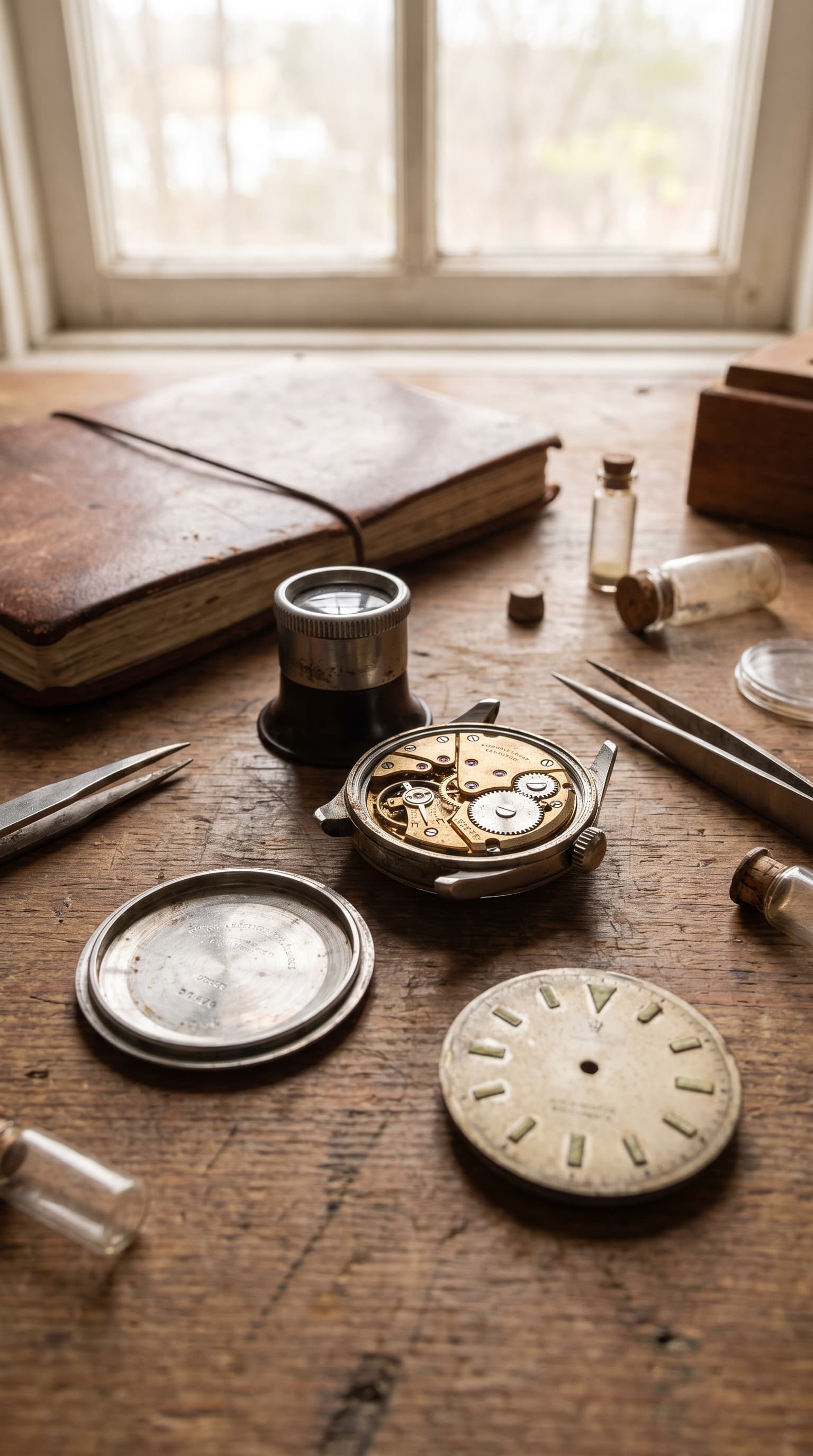
Vintage Wristwatch Identification: How to Identify by Dial, Case, and Numbers
Identifying a vintage wristwatch properly means knowing where to look and what details actually matter. A watch might carry its maker's name proudly on the dial, or hide critical information inside the case back where most people never think to check. The difference between a common timepiece and a collectible often comes down to a few numbers or a specific dial variation.
This guide walks you through the essential clues for vintage wristwatch identification, from visible signatures to hidden reference codes, so you can pin down what you're holding.
What Clues Matter Most for Vintage Wristwatch Identification
Vintage wristwatches tell their story through layered details. Start with what's visible, then work your way to the hidden identifiers.
Dial signatures and logos are your first checkpoint. Most manufacturers signed their dials, but the style, font, and placement changed across decades. A "ROLEX" in serif letters from the 1940s looks nothing like the crown-and-text combo from the 1970s. Sub-dial configurations, date windows, and applied versus printed markers all help narrow the production era.
Case back engravings often hold the most specific information. Look for reference numbers, serial numbers, metal content stamps (14K, 18K, STAINLESS STEEL), and case maker marks. Swiss watches typically separate case maker from movement maker—you might see "Dennison" or "Spillmann" alongside a Longines dial, for example. Reference numbers, usually 3-6 digits, correspond to specific models and help you pinpoint production years.
Movement details are critical if you can access them. The movement—visible by removing the case back—carries its own serial number, caliber number, jewel count, and maker's signature. Omega, for instance, stamped caliber numbers like "30T2" or "321" that correspond to known production periods and complications. Even unsigned movements can often be traced through jewel count and layout.
Crown and pusher signatures matter on certain brands. Rolex crowns carry tiny coronets; Omega signed some vintage crowns with the Greek letter. Chronograph pushers sometimes bear maker marks that help authenticate the watch.
Bracelet and buckle markings provide supporting evidence but shouldn't be relied on alone—straps get swapped constantly. Still, original signed buckles add confidence to an identification, especially on higher-end pieces.
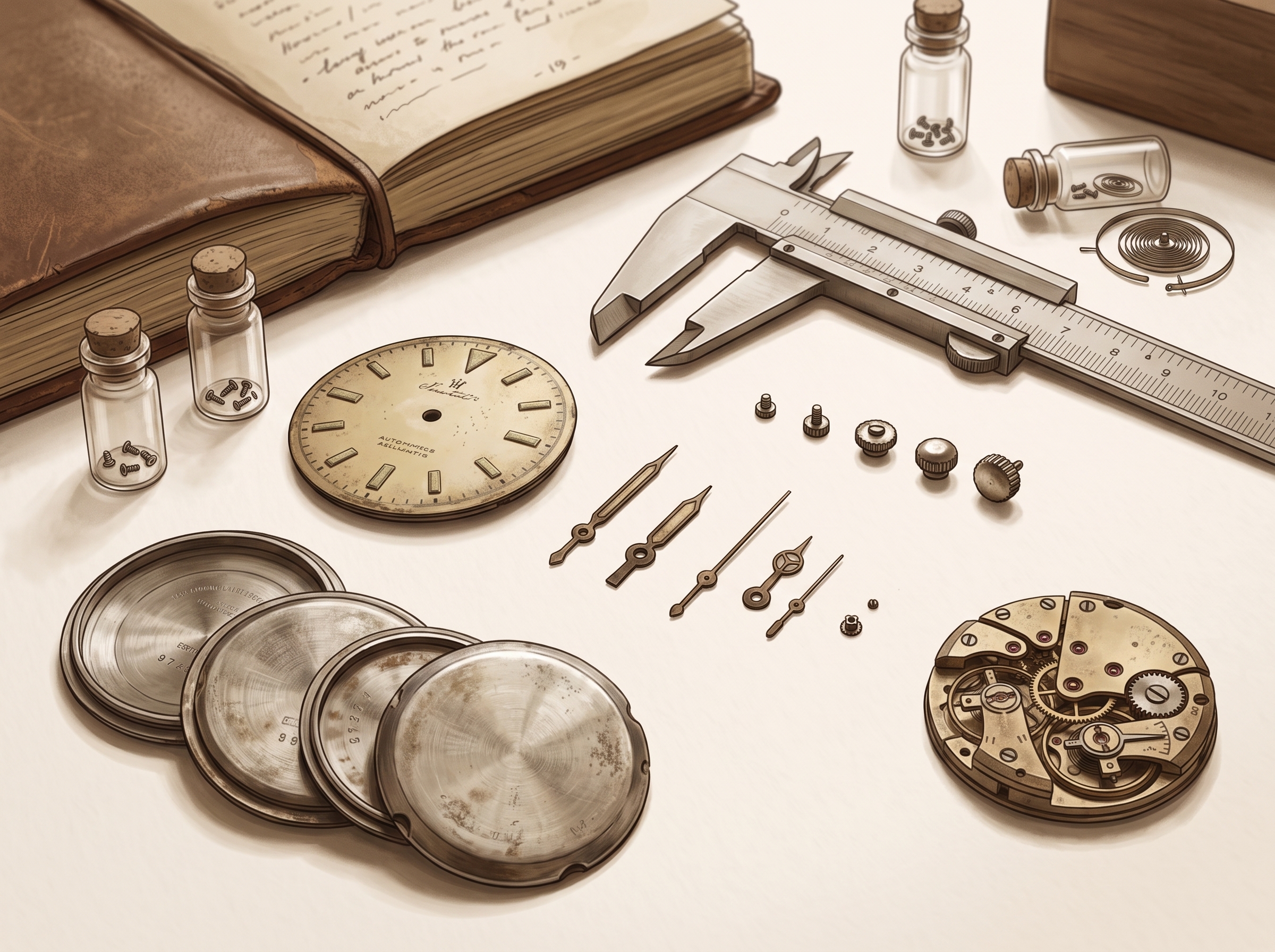
What Photos to Take for Vintage Wristwatch Identification
Good photos unlock accurate identification. Vintage watches pack their clues into tiny spaces, so lighting and angle make all the difference.
Straight-on dial shot in natural light, face parallel to the camera. Capture the entire dial without glare. If the crystal is scratched or domed, try a slight angle to minimize reflections, but keep text legible.
Extreme close-up of dial signature showing the exact font, spacing, and any sub-text like "SWISS MADE" or "AUTOMATIC." If there's a date window or sub-dials, photograph those clearly.
Case back photo, flat and well-lit. If it's engraved, make sure every digit is readable. If it's a snap-back with visible engravings on the inner rim, photograph that too. Many vintage watches have reference numbers stamped between the lugs—you'll need to remove the strap to see them.
Movement photo if you can safely open the case. A clear shot of the movement's bridges, balance wheel, and any engravings or stamps. Don't force a case open—some vintage pieces require special tools, and damage tanks value.
Crown close-up to show any logos or signatures. Also photograph pushers if it's a chronograph.
Lug width and case profile from the side. This helps distinguish similar models with different case constructions.
If you're documenting for identification help, include a photo with a ruler or coin for scale—case diameter matters for model determination.
Common Vintage Wristwatch Identification Mistakes
Misidentification usually stems from assumptions or incomplete information. Here's where people get tripped up.
Assuming a dial signature equals the movement maker. Many vintage watches used "ebauche" movements—blank movements finished and branded by the dial company. A watch signed "Tiffany & Co." on the dial might run on a Longines or Movado movement. The dial tells you who sold it; the movement tells you who made it.
Confusing reference numbers with serial numbers. Reference numbers identify the model; serial numbers identify the individual watch and its production date. They're both useful but serve different purposes. Mixing them up leads to wrong date estimates.
Over-relying on case material as a date marker. Stainless steel cases became common in the 1930s, but gold and gold-filled cases continued for decades. A gold-toned case doesn't automatically mean "old."
Ignoring redials. Plenty of vintage watches have been refinished with new dials that mimic original designs but lack correct fonts, lume plots, or signatures. A suspiciously clean dial on a watch with a worn case is a red flag.
Trusting case back engravings alone. Personalized engravings ("Happy Birthday 1952") can help date ownership but don't confirm manufacturing date. And case backs get swapped—verify that the case matches the movement inside.
Assuming "Swiss Made" means high value. Millions of inexpensive Swiss-made watches flooded the market from the 1950s onward. Origin matters less than maker, model, and condition.
What Tocuro Can Help Resolve
Vintage wristwatch identification often requires cross-referencing obscure reference numbers, recognizing subtle dial variations, and distinguishing authentic pieces from marriages or redials. That's a lot to juggle, especially if you're working from a single watch without comparison examples.
Tocuro's photo-based identification system helps you get past the guesswork. Upload clear images of your watch's dial, case back, and movement, and Tocuro draws on market data and visual recognition to identify the make, model, and production era. You'll also get estimated value ranges based on recent market signals—not a formal appraisal, but a practical sense of what similar pieces are bringing.
You get 7 free identifications per day, and the count resets daily, so you can work through a small collection or compare similar pieces without commitment. Higher-volume research requires a subscription, but for occasional identification work, the free tier handles most needs.
The tool is especially useful when you're dealing with unsigned or obscure brands, faded engravings, or watches with mixed components. It won't replace a hands-on expert for authentication of rare or high-value pieces, but it's a fast, reliable starting point that beats hours of forum searching.
Ready to Identify Your Vintage Wristwatch?
Whether you've inherited a watch, found one at an estate sale, or just want to know what's been sitting in your drawer, accurate identification is the first step. The details are there—on the dial, inside the case, and stamped into the movement—once you know where to look and how to document them.
Start identifying your vintage wristwatch with Tocuro—upload a few clear photos and get the details that matter.
For collectors working with other vintage timepieces, explore our guide to pocket watch identification for tips on navigating case marks and movement signatures in an earlier generation of portable timekeeping.
Photo identification
Identify Your Watch
Use Tocuro to identify your item from a photo and get an estimated value range when market data is available.