
Vintage Stamp Identification: How to Read Decorative and Maker Marks
This guide explains how to locate and interpret stamps on vintage decorative objects, distinguish maker marks from decorative elements, and photograph marks clearly for identification.
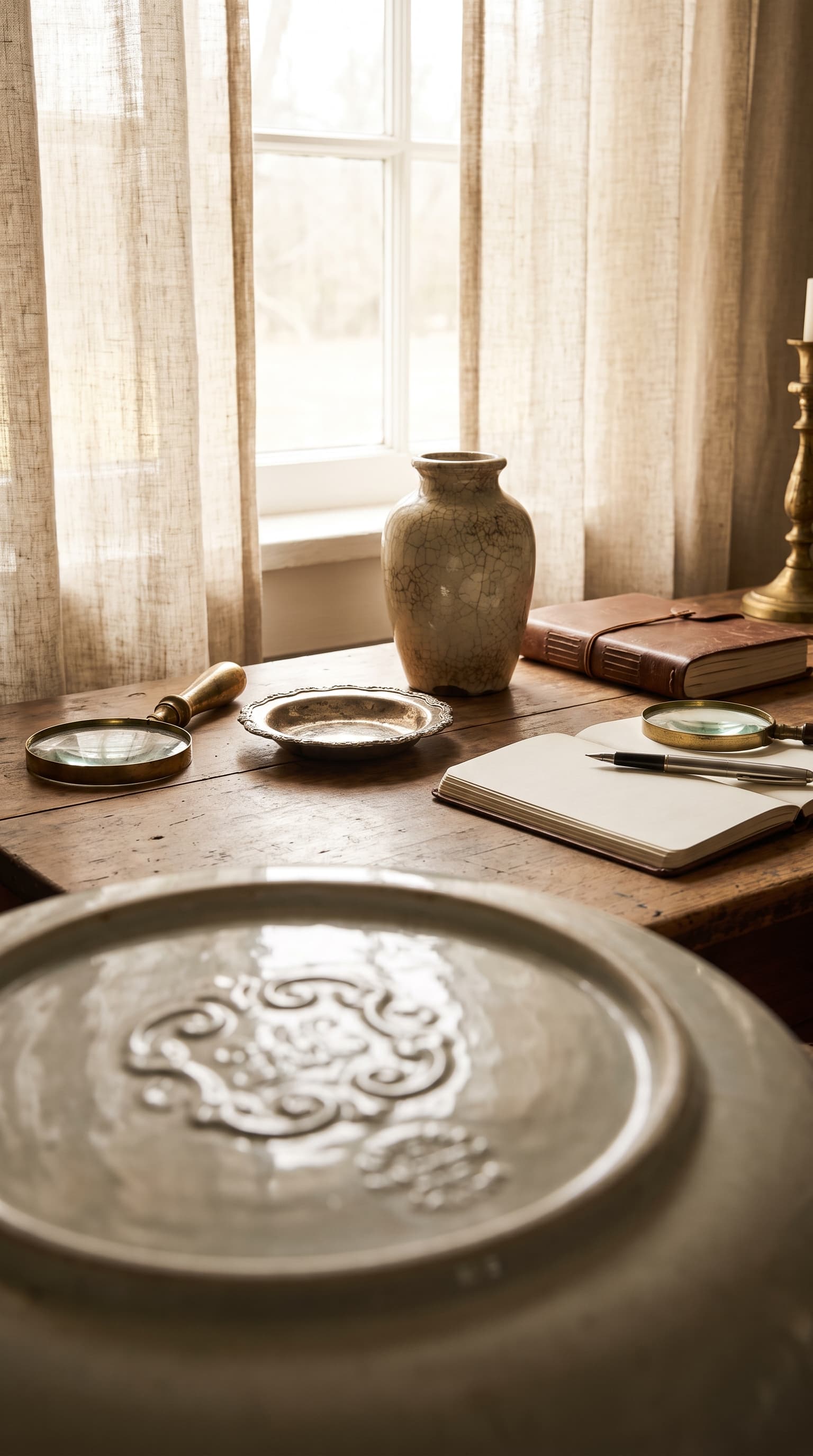
Vintage Stamp Identification: How to Read Decorative and Maker Marks
Vintage stamp identification starts with knowing where to look and what you're actually seeing. Many decorative objects carry stamps that look like maker marks but serve purely ornamental purposes, while genuine production marks often hide in unexpected places. Understanding the difference helps you research an item's origin, age, and manufacturing context—without chasing down decorative flourishes that lead nowhere.
Stamps on vintage items can reveal manufacturer names, patent dates, country of origin, or quality grades. They can also be purely decorative motifs designed to evoke authenticity or heritage. This guide walks through where stamps typically appear on decorative objects, what information they actually convey, common misinterpretations, and how to photograph marks for reliable identification.
Where to Find Vintage Stamp Marks on Decorative Objects
Stamps appear in locations chosen for either visibility or concealment, depending on the manufacturer's intent. Check these areas systematically:
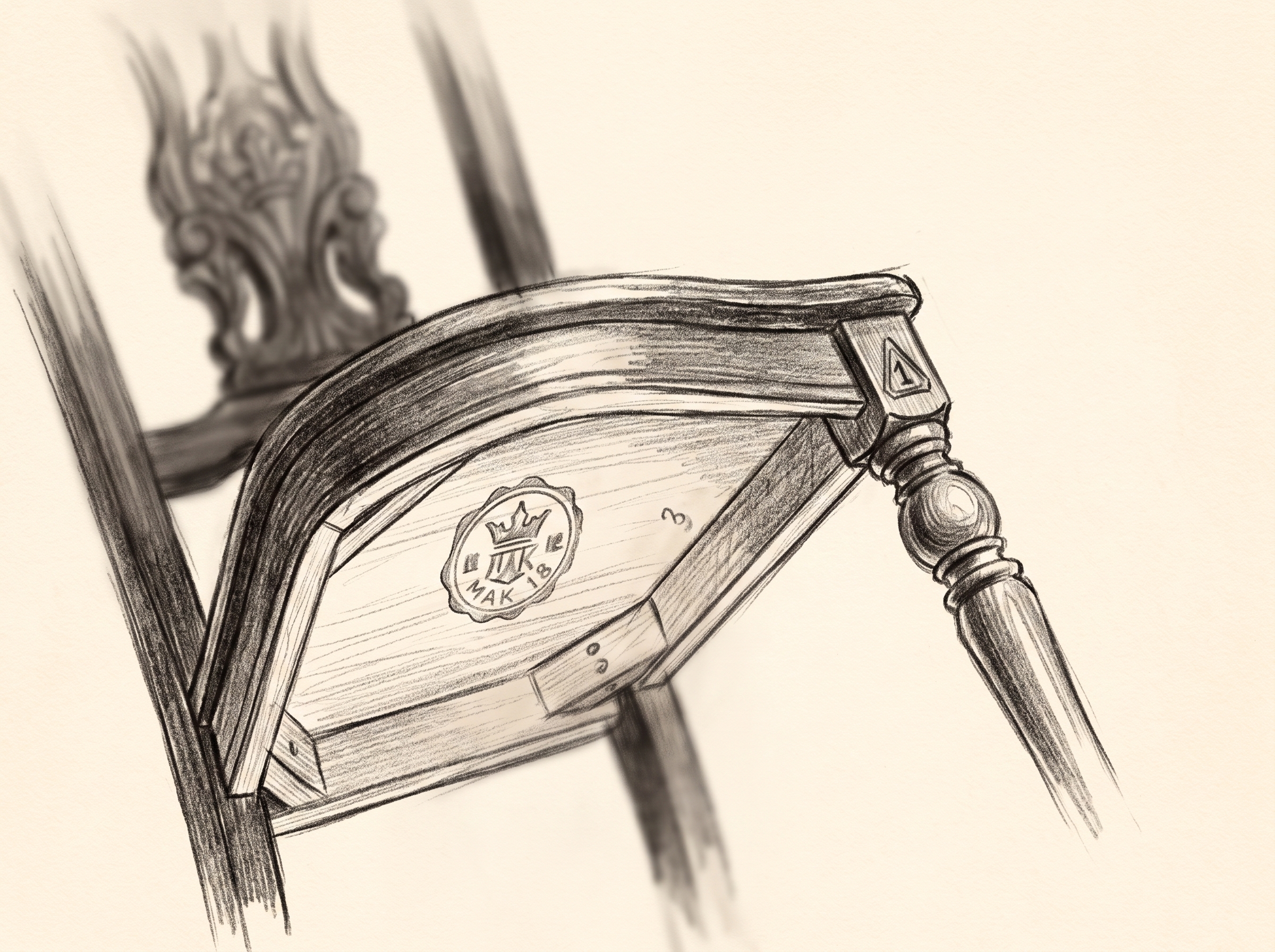
Bases and undersides: Most functional decorative items—trays, boxes, bookends, candlesticks—carry stamps on their bases. Look for impressed letters, raised logos, or inked stamps. Metal bases may show foundry marks or country-of-origin stamps required by import laws.
Backs and hidden surfaces: Wall plaques, mirrors, and framed decorative pieces often have paper labels or metal stamps on the reverse. These surfaces accumulate dust and residue, so clean gently with a soft brush before inspecting.
Edges and rims: Decorative plates, bowls, and shallow vessels sometimes carry stamps along the outer edge or foot rim. Metal items may have stamps tucked under a rim or along a seam where two pieces join.
Hardware and attachments: Hinges, clasps, and mounting hardware occasionally bear separate maker marks, especially on higher-quality pieces. These marks may differ from decorative stamps on the main body.
Interior surfaces: Boxes, containers, and hollow decorative objects sometimes have stamps inside lids or along interior walls. These marks were less visible to consumers and often indicate production details rather than branding.
Some items carry multiple stamps from different stages of production—casting marks, finishing stamps, retailer labels, or import marks added decades apart. Document all of them.
What Vintage Stamp Marks Can and Cannot Tell You
Stamps offer clues, not certainties. Here's what they typically reveal and where they fall short:
Maker and origin information
Genuine maker marks often include company names, city locations, or country-of-origin stamps mandated by import regulations. "Made in Japan" or "Made in Occupied Japan" stamps, for instance, narrow down production to specific post-war years. Company names can lead to manufacturer histories and production timelines.
However, decorative stamps mimicking historical motifs—faux hallmarks, heraldic crests, or stylized initials—reveal nothing about actual origin. These were added to evoke tradition or luxury, not to document production.
Age and production period
Some stamps include patent dates, registration numbers, or dating codes that help establish when a piece was made. Changes in company names, address formats, or required labeling (like "Made in..." stamps introduced in the early 20th century) can bracket production windows.
Stamps alone rarely pinpoint exact years. A patent date marks when a design was registered, not when your specific item was produced. Production often continued for decades after a patent was granted.
Quality and material standards
Stamps sometimes note material composition—"brass," "sterling," "bronze," or alloy percentages. Quality grades like "A1" or "Best" appear on some industrial and decorative metalwork. These marks can indicate intended market positioning but don't always reflect actual material purity without testing.
Decorative stamps imitating hallmarks (crown symbols, pseudo-assay marks) are common on base-metal items and mean nothing about material quality.
Design attribution
Designer initials or artist signatures stamped onto decorative objects are rare and valuable when authentic. Most decorative stamps are factory marks, not artist attributions. Reproductions and later pieces sometimes add faux artist marks to suggest collectibility.
Common Vintage Stamp Identification Mistakes
Misreading stamps leads to misattribution and wasted research time. Here are the most frequent errors:
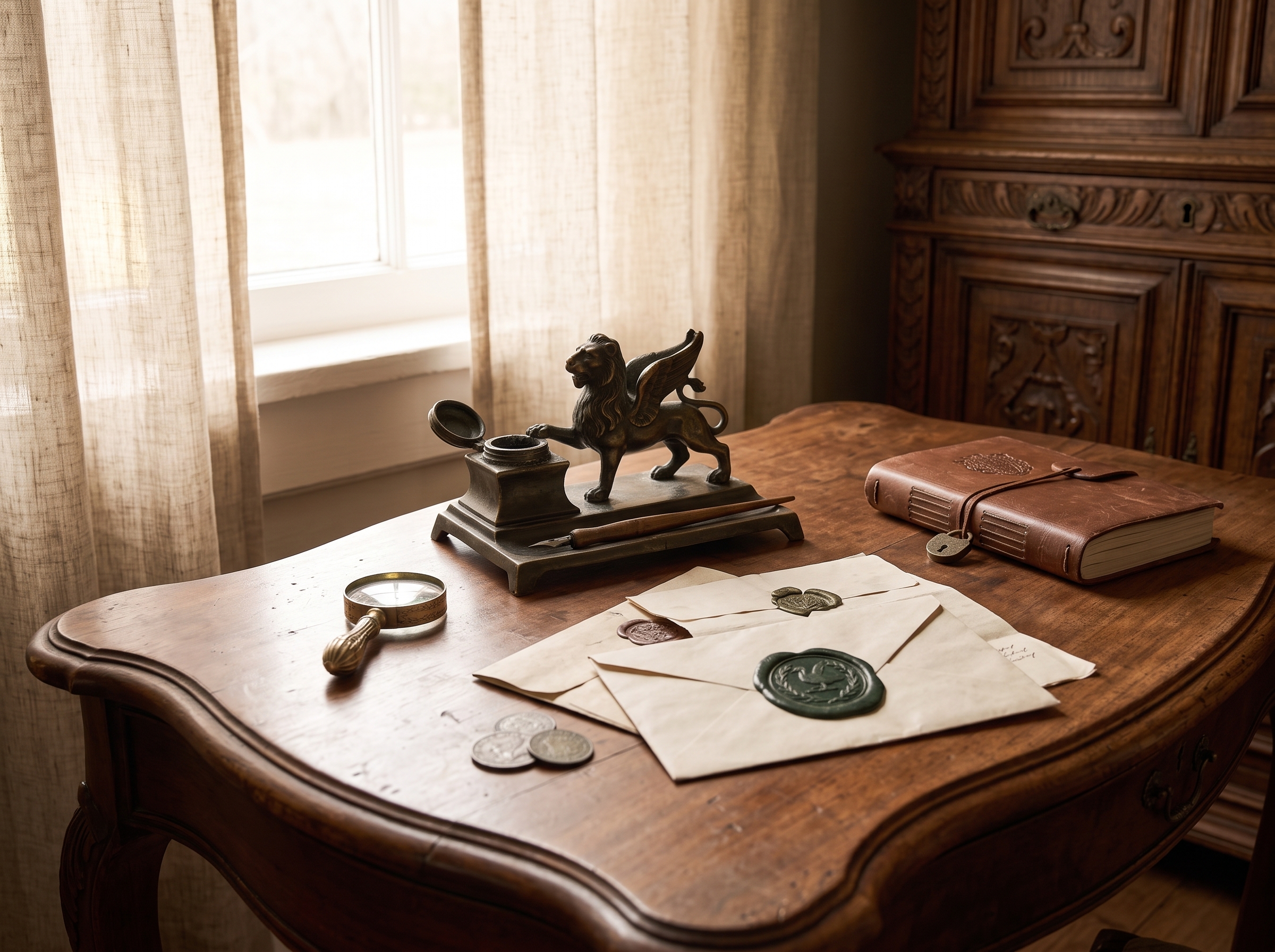
Mistaking decorative motifs for maker marks: Ornamental stamps featuring lions, crowns, shields, or elaborate scrollwork are often purely decorative. They were added to suggest quality or heritage, not to identify the maker. If a stamp looks too elaborate or symbolic to be a simple factory mark, it probably is.
Confusing patent dates with production dates: A stamp reading "Pat. 1923" means the design was patented in 1923, not that your item was made that year. Production may have started later or continued for decades. Patent dates provide a "not before" boundary, not a manufacturing date.
Assuming all numbers are dates: Numbers on stamps can be mold numbers, size codes, worker marks, or batch identifiers. A three- or four-digit number isn't automatically a year unless context supports it (company records, consistent dating systems, accompanying text).
Overlooking country-of-origin requirements: Items marked "Made in [country]" were typically produced after import-marking laws took effect in the early 1900s. Absence of such marks doesn't mean domestic production—it may indicate pre-regulation manufacture or that labels were lost.
Reading partial or worn stamps: Incomplete or damaged stamps invite speculation. A partial letter can look like several different characters. If a stamp is badly worn, acknowledge the uncertainty rather than forcing a reading.
Similar issues arise with jewelry marks and brass foundry stamps, where decorative elements often masquerade as production marks.
How Photos of Stamps Improve Vintage Identification
Clear photos of stamps allow comparison with documented maker marks, import regulations, and production timelines. Here's how to capture marks effectively:
Lighting and angle
Side lighting (raking light) reveals shallow or worn impressions that disappear under direct overhead light. Hold a flashlight at a low angle to the surface so shadows emphasize depth. Photograph from directly above the stamp to avoid distortion.
Focus and resolution
Get close enough that the stamp fills most of the frame, but not so close that focus softens. If your camera struggles, step back slightly and crop the image later. Sharp edges and clear letters matter more than extreme close-ups.
Context and scale
Include at least one wider shot showing where the stamp appears on the object. This context helps identify placement conventions (base stamps, edge marks) and rules out modern reproductions that place marks incorrectly. A ruler or coin in the frame provides scale.
Multiple angles for dimensional stamps
Raised or recessed stamps may need photos from different angles to capture all details. Side views can reveal depth and casting techniques that confirm age or production method.
Full documentation
Photograph every stamp, mark, and label on the item, even if some seem decorative. What looks ornamental to you might be a documented maker flourish. When multiple marks exist, show how they relate spatially—front and back, inside and out.
The same principles apply when photographing figurine base marks or glass maker marks, where lighting and focus dramatically affect legibility.
Get Help Identifying Your Vintage Stamps
If you've photographed a stamp and need help interpreting what it means, Tocuro identifies items from photos and provides context on maker marks, production periods, and estimated value ranges based on current market signals. Upload clear images of any stamps, the full item, and relevant details. You'll receive identification insights drawn from comparable sales and documented marks—not formal appraisals, but practical information to guide your research and decisions.
Vintage stamp identification combines careful observation, context clues, and comparative research. With good photos and an understanding of what stamps can and cannot reveal, you'll spend less time chasing decorative red herrings and more time learning the real story behind your finds.
Photo identification
Identify Your Mark
Use Tocuro to identify your item from a photo and get an estimated value range when market data is available.