
Vintage Furniture Styles Guide: How to Identify Furniture Eras from Visual Clues
A practical guide to recognizing vintage furniture styles across major eras using visual details. Learn what to look for in legs, hardware, proportions, and ornamentation—then use photo identification to pinpoint your piece.
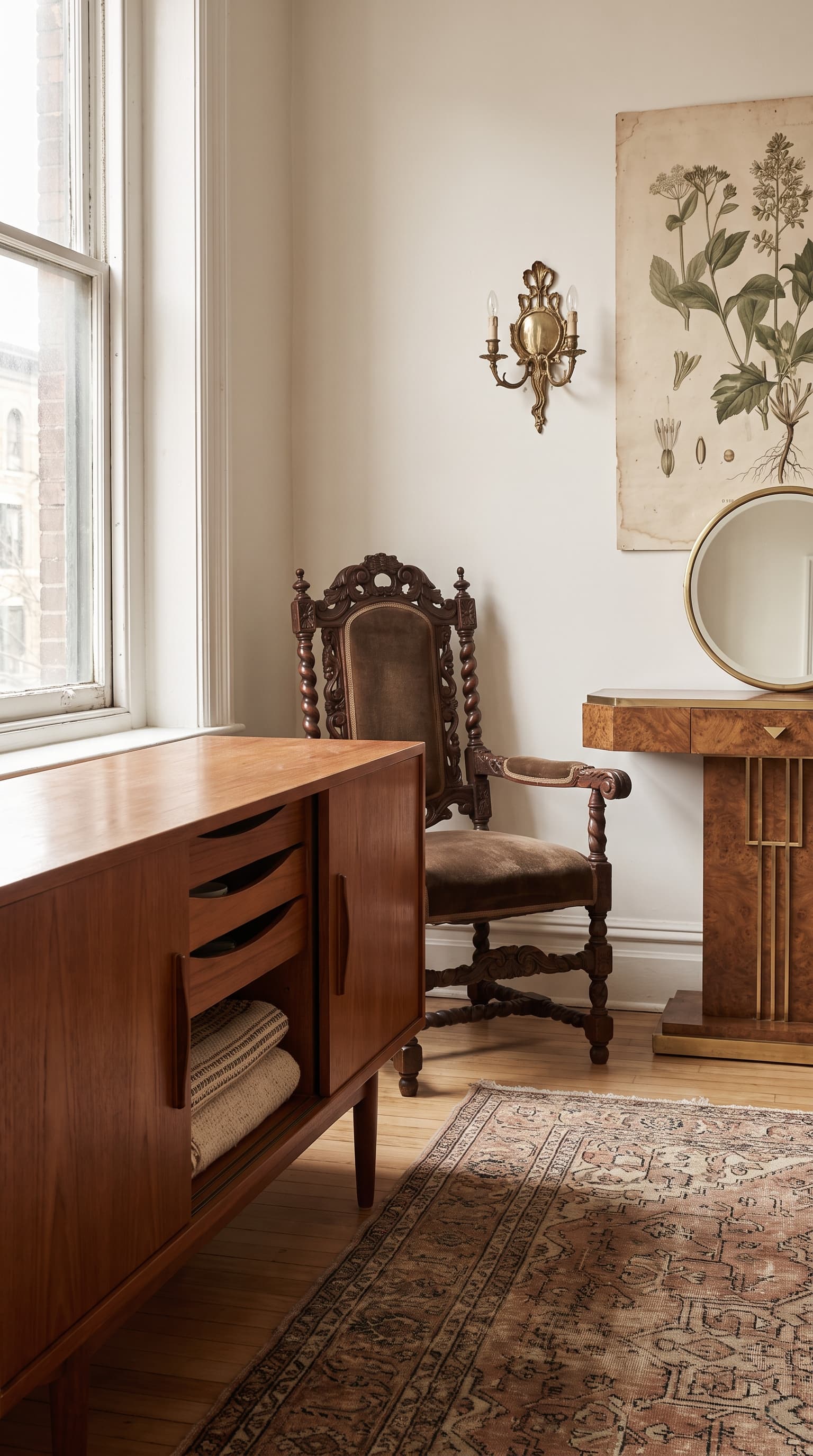
What You're Trying to Name When Dating Vintage Furniture
When you inherit a dresser or spot a sideboard at an estate sale, the first question is usually "What style is this?" Understanding vintage furniture styles isn't about memorizing academic labels—it's about learning to read the visual language of legs, hardware, proportions, and decoration that signals when and where a piece was made.
Most collectors are trying to distinguish between a handful of major eras: Victorian (roughly 1830s–1900), Arts & Crafts (1880s–1920), Art Deco (1920s–1940s), and Mid-Century Modern (1940s–1970s). Each period speaks through distinct design choices that show up in photographs and across furniture forms—chairs, tables, cabinets, and beds all share the same stylistic DNA within an era.
This vintage furniture styles guide walks you through the visual markers that matter, the common mix-ups that trip up even experienced collectors, and how photo identification tools can help you narrow down exactly what you own.
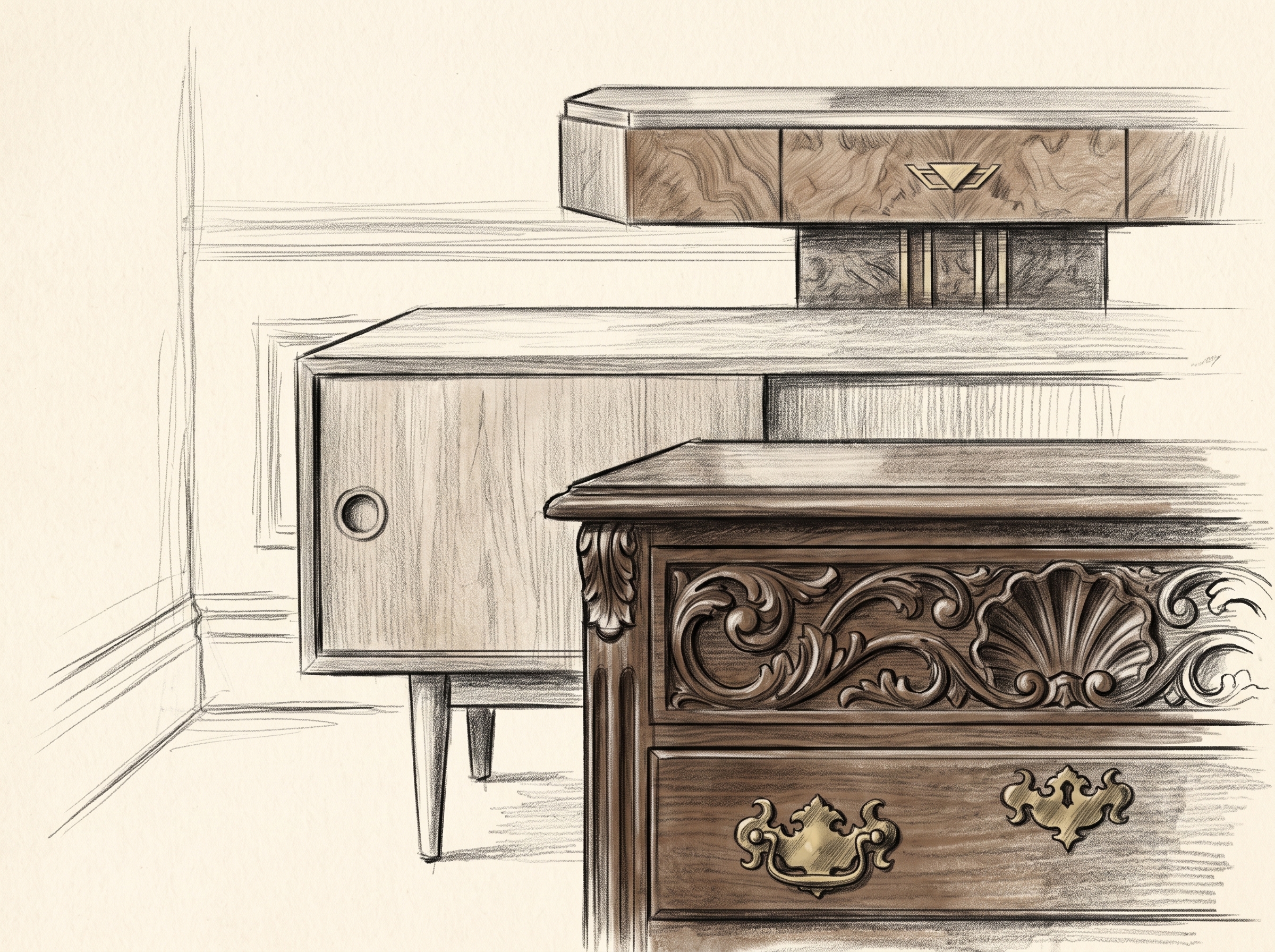
Visual Classification Checklist for Vintage Furniture Styles
Start with these high-signal details visible in most furniture photos:
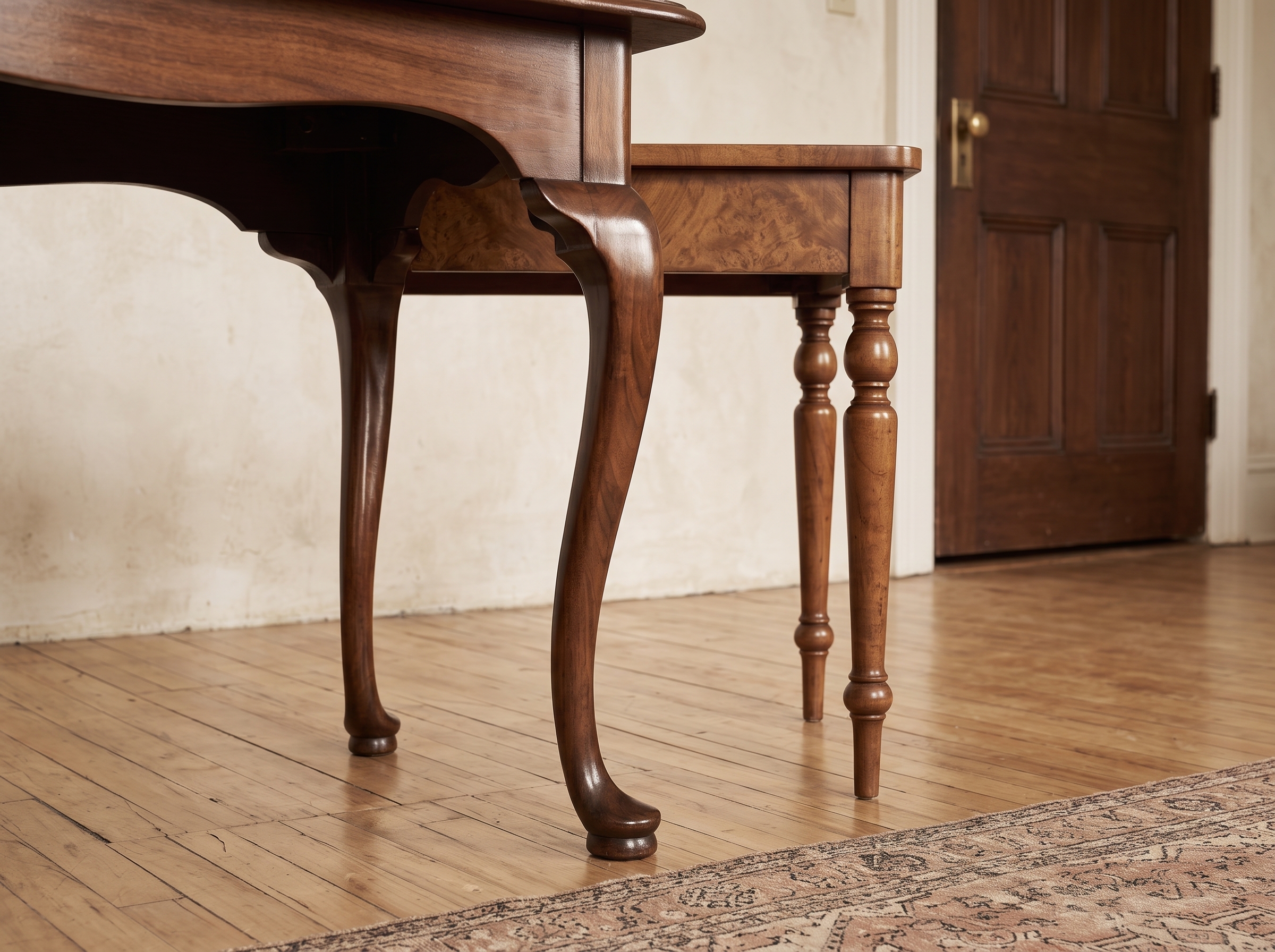
Leg shape and turning: Cabriole legs with carved knees point to Queen Anne or Chippendale influence (18th century revival styles popular in Victorian times). Tapered legs suggest Federal or Sheraton. Chunky, square legs often mean Arts & Crafts or Mission. Slim, angled legs with minimal decoration scream Mid-Century Modern.
Hardware and pulls: Ornate brass pulls with backplates are typical Victorian. Hammered copper or iron pulls indicate Arts & Crafts. Geometric chrome or Bakelite pulls suggest Art Deco. Simple wooden knobs or recessed pulls mean Mid-Century.
Overall proportions: Victorian pieces tend tall and vertical with lots of surface area for carving. Arts & Crafts furniture sits low and heavy with visible joinery. Art Deco goes sleek and streamlined with horizontal emphasis. Mid-Century balances light frames with bold angles.
Ornamentation level: Heavy carving, applied moldings, and dark finishes dominate Victorian. Arts & Crafts stripped decoration down to exposed joinery and wood grain. Art Deco added geometric inlays and exotic veneers. Mid-Century favored clean lines with occasional sculptural curves.
Wood and finish: Dark walnut or mahogany stains are Victorian staples. Quarter-sawn oak with natural finish is the Arts & Crafts signature. Exotic veneers like zebrawood or burled walnut show up in Art Deco. Teak, rosewood, and blonde woods define Mid-Century.
Construction clues: Dovetails, mortise-and-tenon joints, and hand-planed surfaces suggest earlier eras or high-quality Arts & Crafts work. Machine-cut precision and plywood construction usually mean post-1920s. Molded plywood or fiberglass point to Mid-Century innovation.
Common Vintage Furniture Style Confusions
Even experienced collectors hit these traps:
Victorian Revival vs. Original Victorian: A 1920s Colonial Revival piece can look confusingly similar to an 1880s Victorian original. Look for too-perfect symmetry, thinner wood stock, and period-appropriate hardware. Revivals often simplify details that originals rendered in full complexity.
Mission vs. Generic Oak: Not every chunky oak piece is Gustav Stickley. True Arts & Crafts furniture shows through-tenon joinery, hand-hammered hardware, and carefully proportioned lines. Generic "golden oak" furniture from the same era mimics the style with machine shortcuts and lacks the movement's design rigor.
Art Deco vs. Streamline Moderne: Both appear in the 1930s–40s, but Art Deco leans geometric and decorative with zigzags and sunbursts, while Streamline Moderne goes curvier and more industrial with chrome accents and rounded edges. They're cousins, not twins.
Mid-Century Modern vs. 1970s–80s Imitations: A lot of furniture labeled "retro" or "vintage" is actually 1980s reproductions of 1950s design. Look for construction quality, wood species, and proportions. True Mid-Century pieces often carry maker's marks and show period-appropriate joinery.
Danish Modern vs. American Mid-Century: Both fall under the Mid-Century umbrella, but Danish pieces (Wegner, Juhl) tend toward organic curves and exposed joinery, while American designs (Eames, Nelson) often embrace industrial materials and geometric forms. The Scandinavian aesthetic is warmer; American pieces can feel more experimental.
How Photo Identification Narrows Down Vintage Furniture Styles
Once you've eyeballed the basics, photos help you move from "probably Victorian" to a confident style assignment and potential maker.
What photos reveal best
- •Leg and foot detail: Close-ups of turnings, carving, and joinery show craftsmanship level and period techniques that separate quality originals from mass-market copies.
- •Hardware in context: Photographing pulls, hinges, and escutcheons reveals mounting style, patina, and whether hardware is original or replaced—a key dating clue.
What you can't always see
- •Interior construction: Drawer dovetails, glue blocks, and secondary wood choices often require opening drawers or tipping furniture. These confirm age but aren't always photo-friendly.
- •Finish history: Refinishing can mask original surface clues. Photos show current appearance but may not reveal whether a piece has been stripped, stained, or painted over.
Multi-angle shots unlock style certainty
Capture the full piece from eye level, then add close-ups of legs, hardware, joinery, and any carved or inlaid details. Side views reveal proportions and silhouette. Top-down shots on tables and case pieces show veneer patterns and edge treatments. These combined angles give identification tools—and experienced collectors—the context needed to assign a style and spot maker signatures.
For example, a mid-century chair might share similar proportions with a Danish modern dining chair, but leg angle and arm attachment reveal the difference. An antique desk could be Federal, Victorian, or Colonial Revival depending on hardware and leg taper—all visible in good photos.
Let Tocuro Read the Visual Clues for You
You don't need to memorize every furniture period to identify what you own. Tocuro analyzes photos of your furniture and matches visual details—leg style, hardware, proportions, wood—against known examples to identify the era, style, and often the maker. You'll get an estimated value range based on current market signals, helping you understand not just what you have, but what it's worth.
Whether you're sorting an estate, furnishing with vintage finds, or just curious about a family heirloom, photo identification turns guesswork into clarity. Upload your images, let the platform do the detective work, and get the vintage furniture style answers you need.
Identify Your Item and discover which era your furniture belongs to.
Photo identification
Identify Your Furniture
Use Tocuro to identify your item from a photo and get an estimated value range when market data is available.