
Vintage Dinnerware Identification: How to Identify Patterns from Photos
A practical guide to identifying vintage dinnerware patterns using photos. Learn which visual clues matter most, what photos to capture, common pattern misidentifications, and how to match designs across plates, bowls, and serving pieces.
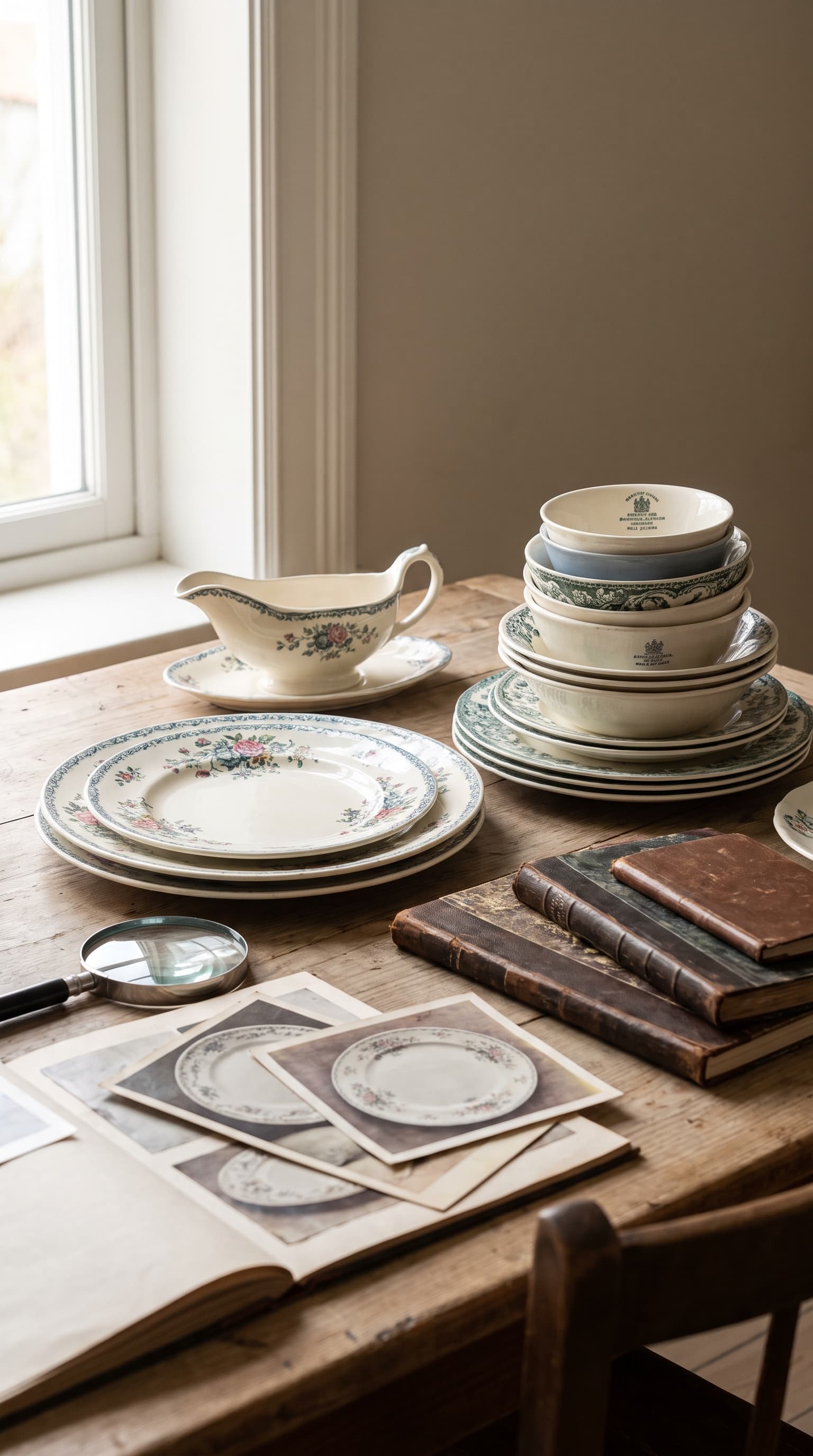
Vintage Dinnerware Identification: How to Identify Patterns from Photos
Identifying vintage dinnerware patterns requires matching visual details across multiple pieces—often when you only have partial information. Unlike identifying individual plates or bowls, vintage dinnerware identification means recognizing complete patterns that span dinner plates, salad plates, serving platters, and coordinating pieces. The pattern name, maker, and era all influence value and collectibility.
Most collectors start with pieces inherited from relatives or found at estate sales, often with no original packaging or documentation. The right photos can unlock the pattern's identity—and help you complete a partial set or understand what you own.
What Clues Matter Most for Vintage Dinnerware Identification
The backstamp or maker's mark
Turn every piece over. The mark on the underside tells you the manufacturer, and often the pattern name, country of origin, and production date range. Look for complete backstamps that include text, logos, or pattern numbers. Marks change over time, so a backstamp's style can narrow dating to specific decades. Some marks include the pattern name directly; others use cryptic codes.
Pattern motifs and color palette
Study the decorative elements: floral arrangements, geometric borders, color combinations, gold or platinum trim, and whether the design covers the entire surface or sits within a border. Vintage dinnerware patterns are astonishingly diverse, but manufacturers often repeated signature motifs—specific rose styles, leaf shapes, or border treatments—across multiple pattern lines. Note whether decoration is transfer-printed, hand-painted, or applied with decals.
Body material and finish
Different manufacturers favored different materials: fine porcelain, semi-porcelain, earthenware, bone china, or stoneware. Hold a piece up to light—translucency indicates porcelain or bone china. Check the glaze finish: is it glossy, matte, or crackled? The weight and ring when tapped gently also vary by material and quality tier.
Shape and edge treatments
The plate or bowl's shape—round, scalloped, square, coupe-style (no rim), or traditional rimmed—is part of the pattern's identity. Edge treatments like embossed details, beading, or scalloping often appear across the entire line. Manufacturers sometimes reused the same blank shapes across many patterns, but each pattern assigns its own decorative vocabulary to that form.
Consistency across pieces
Patterns are designed as coordinated sets. Check whether serving pieces, cups, saucers, and different plate sizes share the same motifs and color treatments. Sometimes border patterns change scale between large and small pieces, but the overall visual language remains consistent.
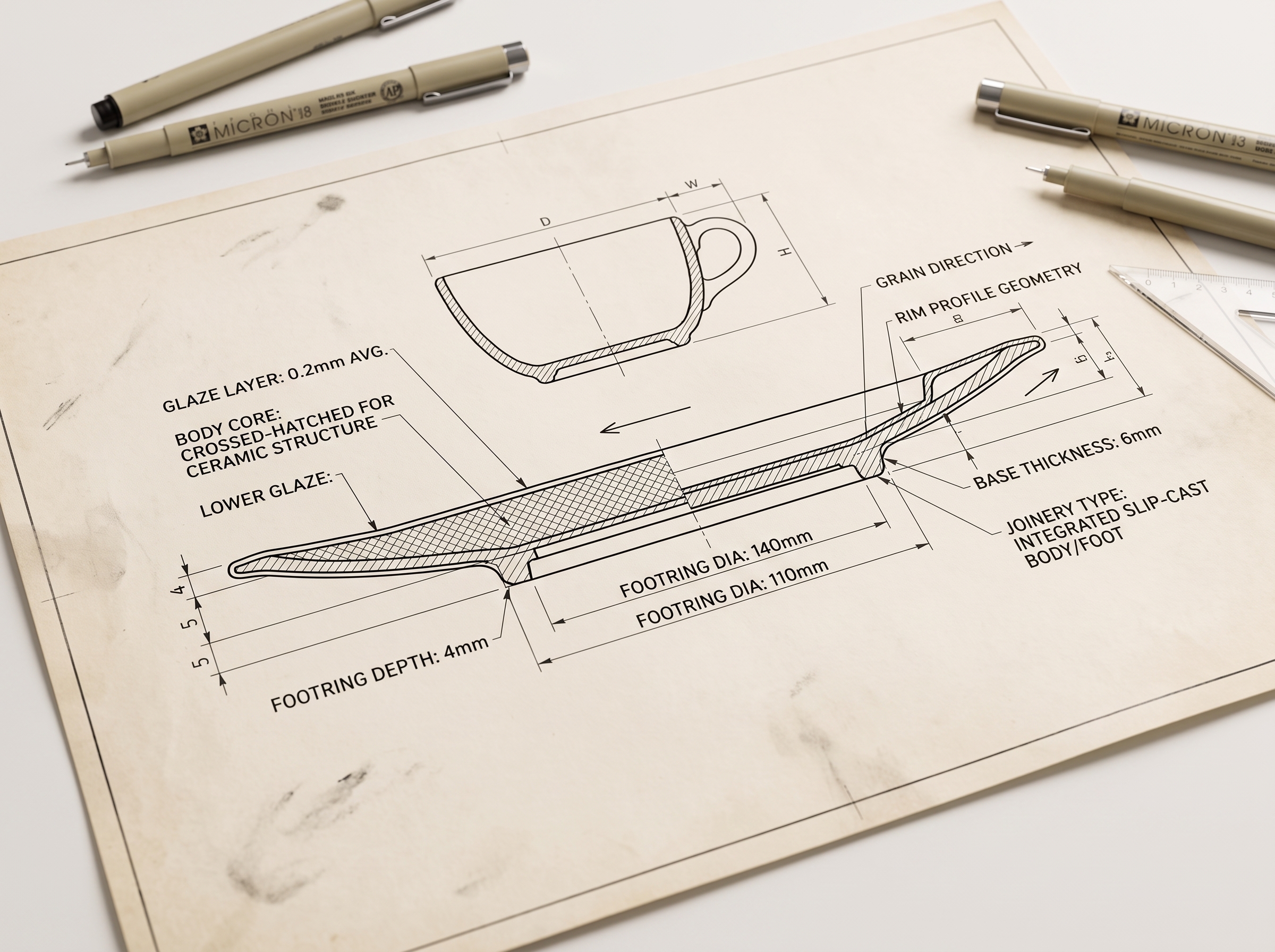
What Photos to Take for Vintage Dinnerware Identification
Good photos make pattern matching possible, especially when comparing your pieces to online databases or asking for help.
Full view of the face: Photograph the decorated surface straight-on in even lighting, capturing the entire design. This is the primary identification photo. Include the rim or border completely.
Backstamp detail: Flip the piece and photograph the mark clearly. Use natural light and hold the camera directly above to avoid distortion. Capture any text, logos, pattern numbers, or country-of-origin stamps. If the mark is faint, try angling light from the side to increase contrast.
Close-up of decorative details: Zoom in on distinctive motifs—flower centers, specific leaves, border patterns, or gold trim. These details help distinguish between similar patterns from the same maker.
Edge and profile: A side-view photo shows the shape, any embossing on the rim, and whether the piece has a flange or coupe edge.
Multiple pieces together: If you're identifying a set, photograph several pieces side by side to show consistency and variation across the pattern line. Include different sizes if available—dinner plate, salad plate, cup and saucer.
Glaze and finish texture: Close-up shots in good light can reveal crazing, glaze quality, or hand-painted brushwork that helps with dating and authenticity.
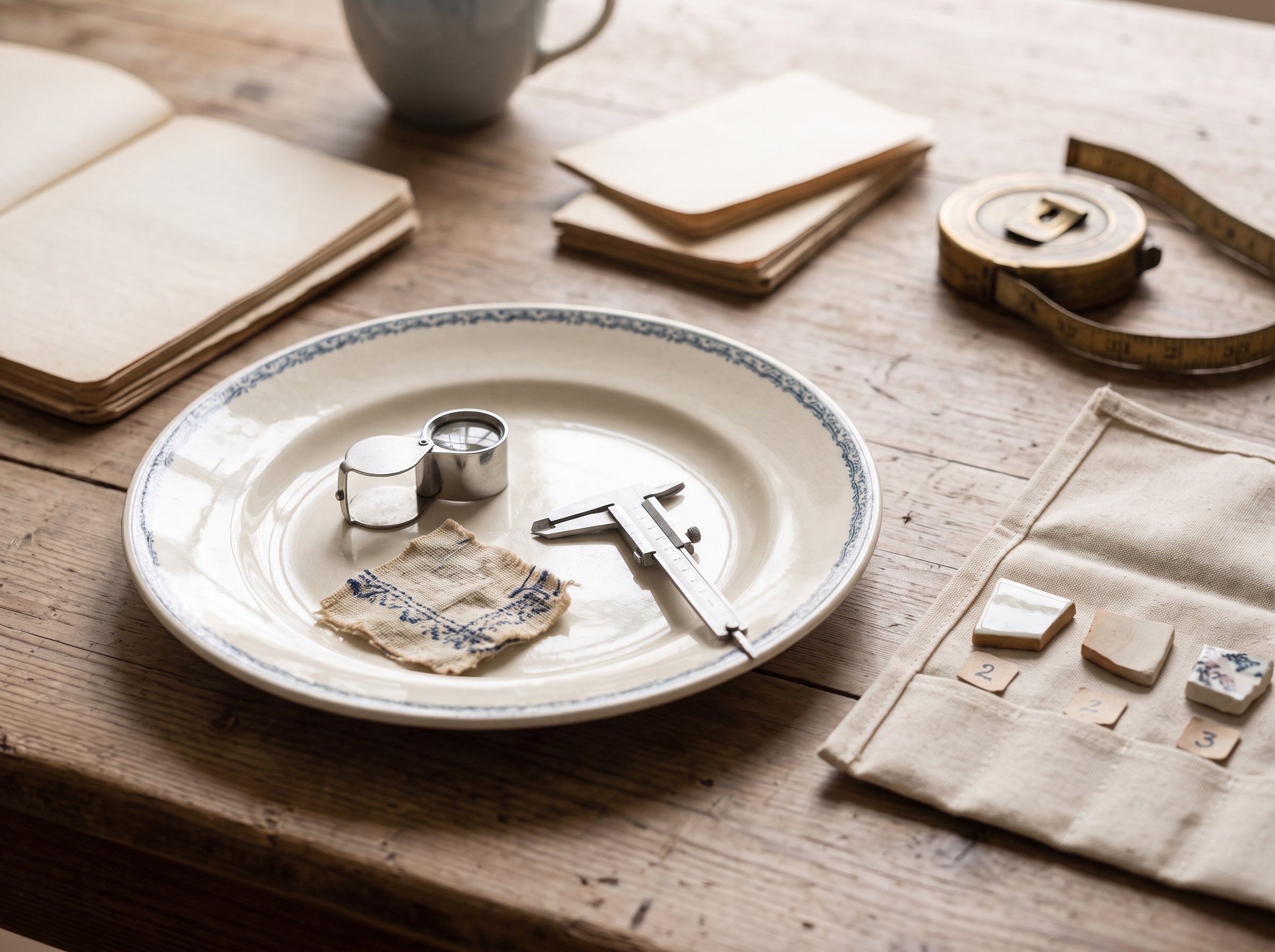
Common Misidentifications in Vintage Dinnerware Patterns
Confusing similar floral motifs
Rose patterns are everywhere in mid-century dinnerware, and many look nearly identical at first glance. Makers like Johann Haviland, Noritake, and Royal Albert all produced rose-themed patterns. The number of petals, leaf arrangement, and whether roses appear as sprays or single blooms matter. Border treatments and background color often differentiate otherwise similar designs.
Assuming all gold trim means "fine china"
Gold or platinum trim appears on everything from high-end porcelain to budget earthenware. Trim style, quality, and how it's applied (fired-on versus overglaze) vary widely. Gold trim alone doesn't confirm manufacturer or value—you need the backstamp and body material to assess quality tier.
Mixing up manufacturer and retailer names
Some dinnerware was made by one company and sold under a retailer's brand—common with department store house brands. You might see marks that say "Warranted 22K Gold" or a store name, but no manufacturer listed. These pieces can be harder to trace without additional clues from shape and decoration style.
Mistaking reproduction for vintage
Popular vintage patterns have been reproduced, sometimes decades after the original run. Backstamps on reproductions may look similar but include updated country names (like "China" instead of specific maker marks used in earlier eras), modern production codes, or materials that didn't exist in the original period. Compare glaze quality, weight, and print sharpness to known authentic examples.
Overlooking pattern variations
Manufacturers released some patterns in multiple colorways or with minor motif changes over decades of production. What looks like two different patterns might be the same design in different colors, or an early versus late version. Check whether shape, border, and overall layout match, even if colors differ.
What Tocuro Can Help Resolve
When you're staring at a china set with a faint backstamp or no mark at all, matching the pattern manually can take hours of searching through online databases and collector forums. You're comparing your pieces to thousands of documented patterns, each with subtle variations.
Tocuro identifies vintage dinnerware patterns from photos. Upload clear images of the pattern's face and the backstamp, and Tocuro matches visual details—motifs, colors, borders, shapes—against known patterns and makers. The app recognizes decorative styles across eras and manufacturers, helping you identify partial sets, mix-and-match pieces, or mystery patterns inherited without documentation.
You get 7 free identifications per day, and the count resets daily—plenty of room to photograph multiple pieces and confirm a match across your set.
Ready to Identify Your Vintage Dinnerware?
Identifying vintage dinnerware patterns means connecting visual clues across pieces, comparing backstamps, and recognizing the design language that defines a manufacturer's work. The right photos—clear shots of decoration, marks, and details—make pattern matching faster and more accurate.
Upload your photos to Tocuro and let the app match your dinnerware to known patterns, makers, and eras. Whether you're completing a set, researching an inheritance, or just curious about the plates in your cabinet, start with a clear photo and see what your pieces reveal.
Photo identification
Identify Your Item
Use Tocuro to identify your item from a photo and get an estimated value range when market data is available.