
Victorian Furniture Characteristics: How to Recognize the Style
Victorian furniture spans 1837–1901 and includes multiple sub-styles, but all share recognizable traits: heavy proportions, dark woods, ornate carving, and rich upholstery. This guide teaches you the visual markers that set Victorian pieces apart from earlier Georgian or later Arts and Crafts furniture.
What You're Looking At
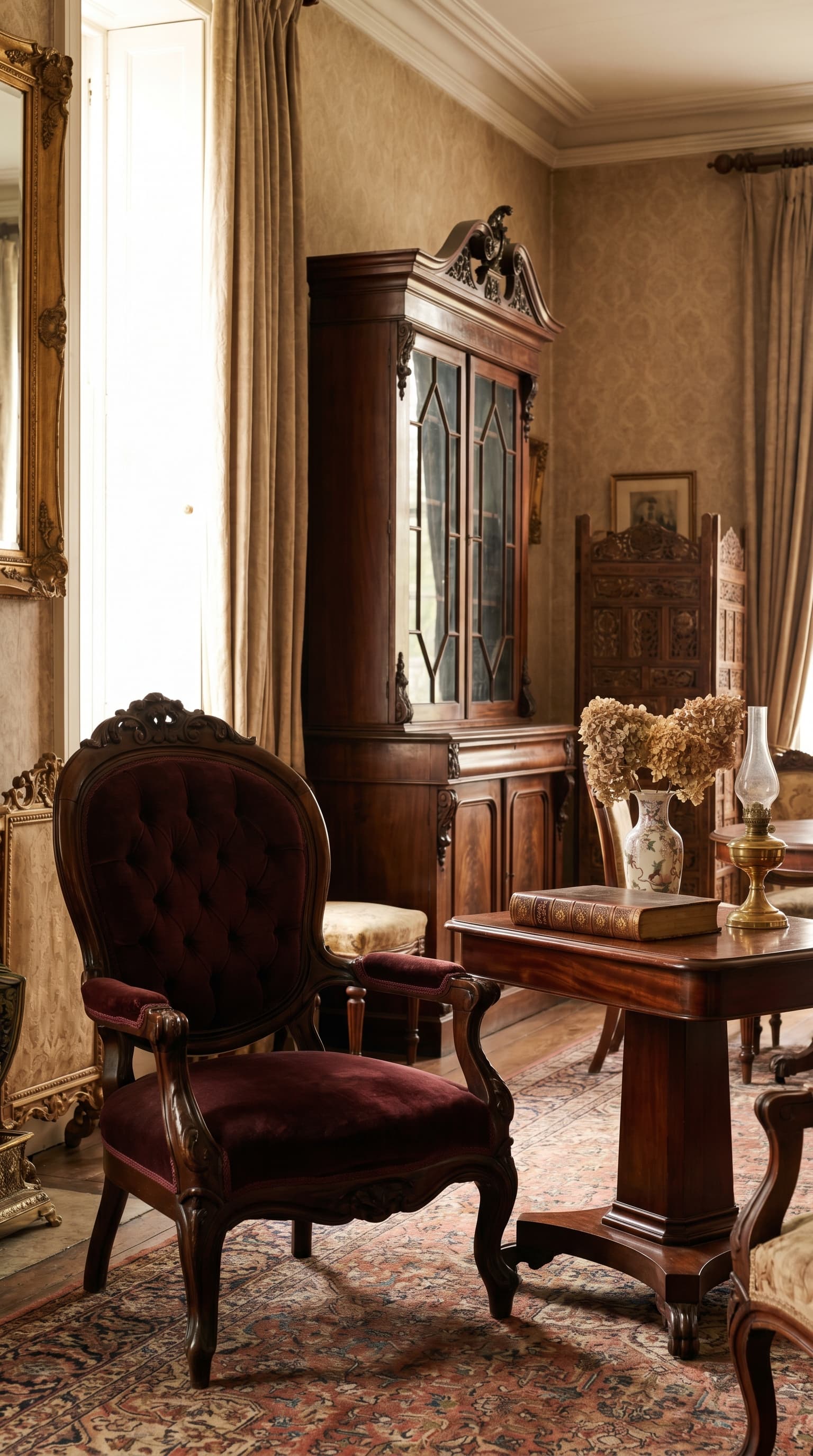
When someone says "Victorian furniture," they're describing pieces made during Queen Victoria's reign (1837–1901)—a sprawling 64-year period that produced everything from Gothic Revival sideboards to lighter Eastlake chairs. The era's furniture reflects the Industrial Revolution's mass production capabilities combined with a desire for status, ornamentation, and comfort.
Victorian furniture characteristics evolved across multiple sub-styles, but certain visual traits unite most pieces from this period. If you're trying to determine whether your inherited table or estate-sale find qualifies as Victorian, you need to know what features to look for—and what separates Victorian from the Georgian furniture that came before it or the cleaner-lined Arts and Crafts pieces that followed.
Visual Classification Checklist for Victorian Furniture Characteristics
Dark, Heavy Woods
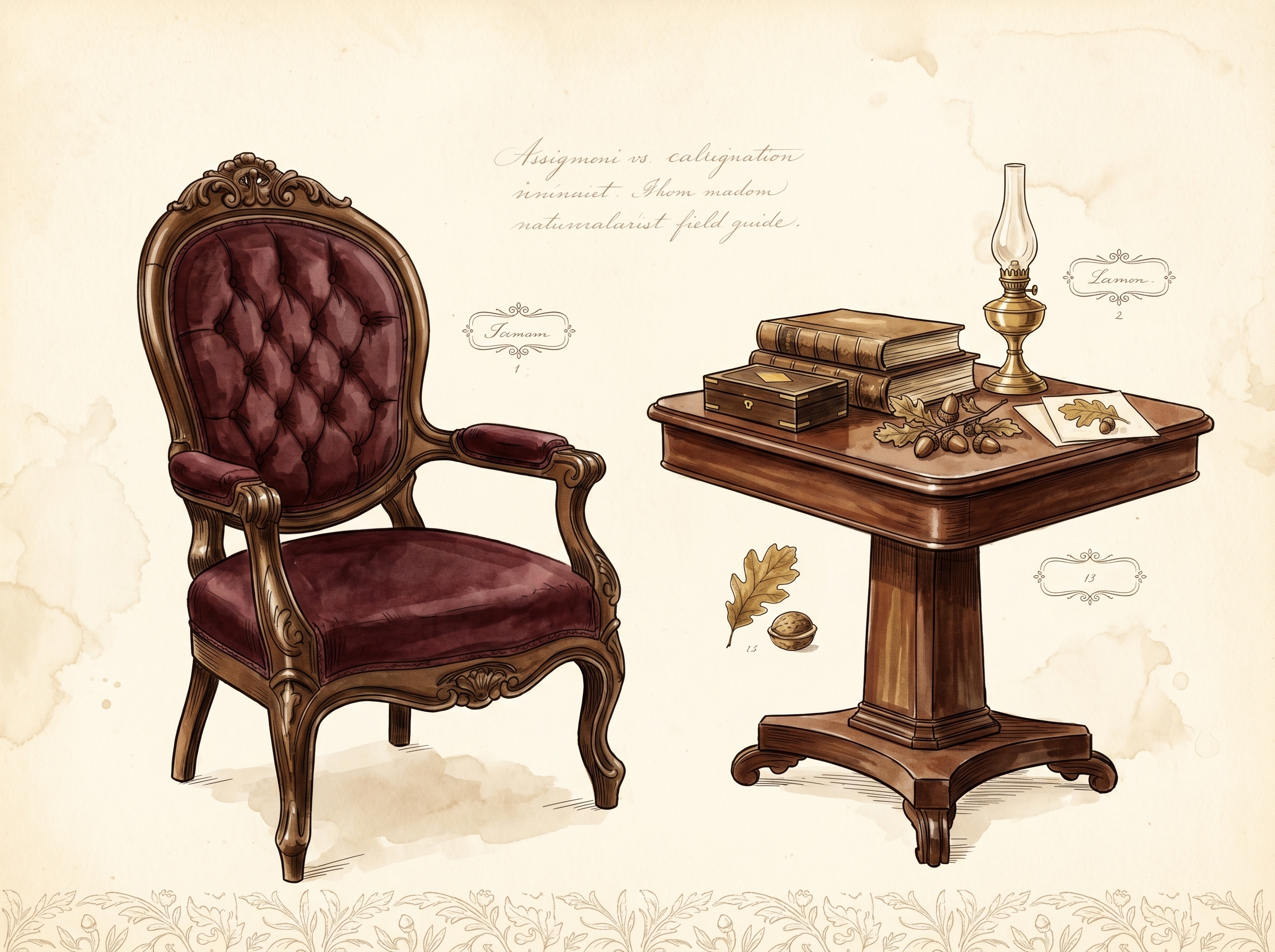
Victorian makers favored mahogany, walnut, rosewood, and oak—usually finished dark. Even when lighter woods appeared underneath, they were often stained to look richer and more substantial. The overall effect should feel weighty, both visually and physically.
Ornate Carving and Applied Decoration
Look for deeply carved details: florals, fruits, scrolls, acanthus leaves, and cartouches. Machine carving became common mid-century, making elaborate decoration affordable. Earlier Victorian pieces show hand-carved work; later pieces often combine hand and machine methods. Applied moldings, medallions, and turned spindles add layers of visual complexity.
Curved and Substantial Forms
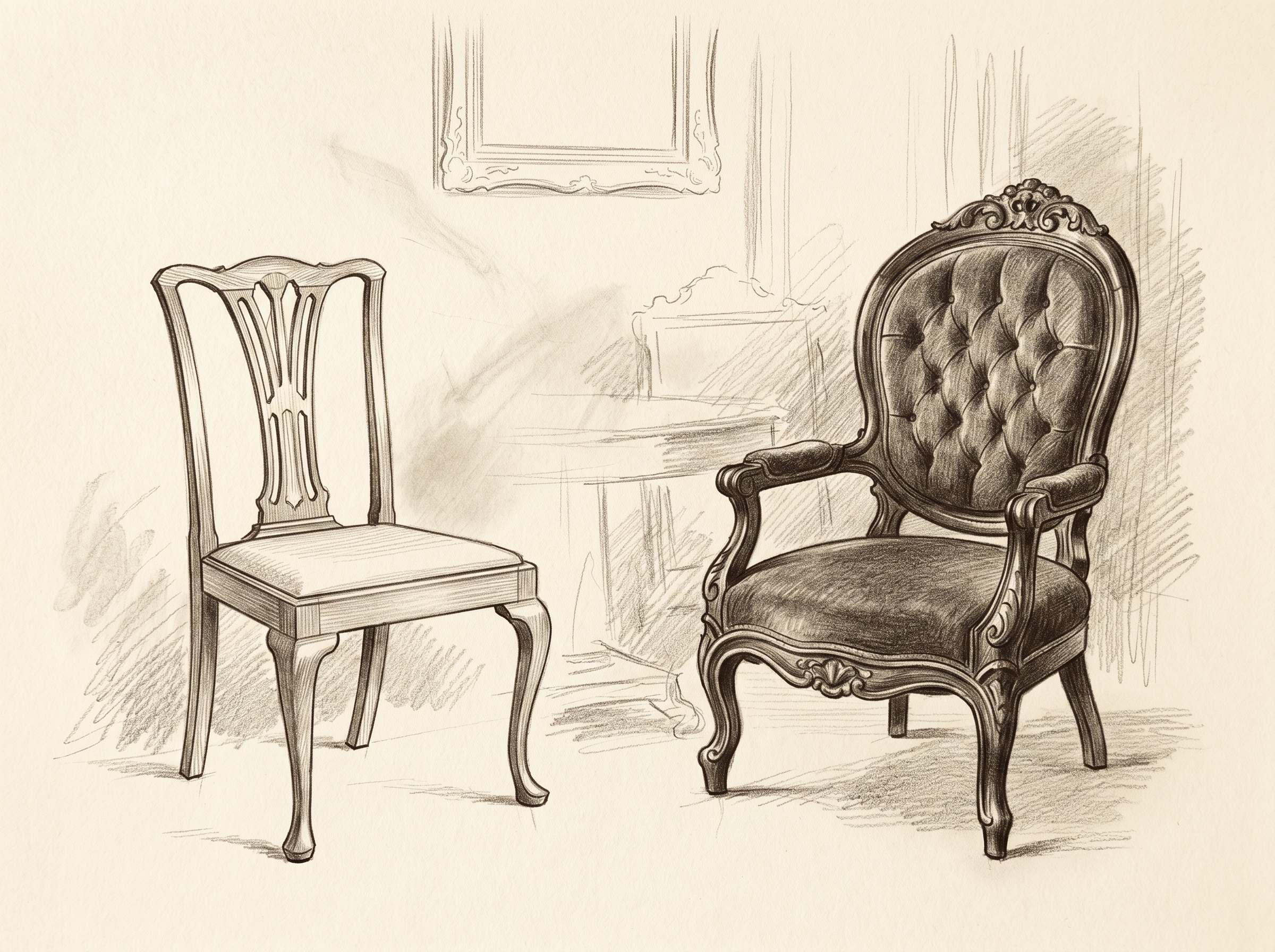
Victorian furniture tends toward curves rather than straight lines. Cabriole legs, serpentine drawer fronts, rounded chair backs, and balloon-back dining chairs all reflect the period's love of organic, flowing shapes. Proportions run large—these pieces were built to fill the high-ceilinged rooms of Victorian homes.
Rich Upholstery and Tufting
Seating pieces typically feature thick padding, deep tufting (especially button tufting), and luxurious fabrics: velvet, damask, brocade, or leather. Coil springs, introduced in the 1830s, allowed for much deeper, more comfortable cushioning than earlier furniture offered. If you see a chair or sofa with elaborate tufting and generous padding, it's likely Victorian or later.
Marble Tops and Inlays
Many Victorian tables, washstands, and dressers feature marble tops—usually white or gray marble set into wooden frames. Inlay work appears too: contrasting wood veneers, mother-of-pearl, or brass details that add visual interest to flat surfaces.
Eclecticism and Revival Styles
Victorian furniture borrowed freely from earlier periods. You'll see Gothic arches, Renaissance motifs, Rococo curves, and even Egyptian or Asian influences. This eclecticism is itself a Victorian furniture characteristic—earlier Georgian pieces were more restrained and unified in style.
Common Style Confusions
Victorian vs. Georgian
Georgian furniture (roughly 1714–1830) generally shows more restraint: cleaner lines, less carving, lighter proportions. Georgian chairs have simpler backs; Georgian case pieces rely on wood grain and proportion rather than applied decoration. If a piece feels understated and balanced, it's likely Georgian. If it feels ornate and substantial, think Victorian.
Victorian vs. Edwardian
Edwardian furniture (1901–1910) lightened up. You'll see more delicate proportions, lighter woods like satinwood and mahogany with lighter finishes, and less heavy carving. Edwardian pieces often incorporate inlay and painted decoration rather than deep relief carving. The transition can be subtle, but Edwardian work generally feels less imposing.
Victorian vs. Arts and Crafts
Arts and Crafts furniture emerged as a reaction against Victorian excess. Where Victorian pieces embrace ornamentation, Arts and Crafts celebrates visible joinery, simple lines, and honest construction. If you see exposed mortise-and-tenon joints, quartersawn oak, and minimal decoration, you're looking at Arts and Crafts, not Victorian.
Sub-Styles Within Victorian
The Victorian era itself contained multiple distinct styles:
- •Early Victorian / Gothic Revival (1837–1860s): Medieval-inspired pointed arches, tracery, and ecclesiastical motifs
- •Rococo Revival (1850s–1870s): Exuberant curves, floral carving, and feminine forms
- •Renaissance Revival (1860s–1880s): Architectural elements, pediments, and Classical references
- •Eastlake (1870s–1890s): Geometric incised carving, lighter proportions, angular forms—named after designer Charles Eastlake
All share Victorian furniture characteristics but express them differently. If you're trying to date a piece more precisely, identifying the sub-style helps narrow the window. Our Furniture Era Guide: How to Place Your Pieces in Time walks through how these sub-styles fit into the broader timeline.
How to Use Photo Identification to Narrow It Down
Photos reveal Victorian furniture characteristics more clearly than descriptions ever can. When documenting a piece, capture these critical angles:
Overall Form and Proportion
Take a full-frame photo from straight on. This shows whether the piece has Victorian curves, heavy proportions, and substantial visual weight. Step back far enough to include the entire piece—context matters.
Carving and Decoration Details
Get close-ups of any carved or applied elements. Good lighting from the side will cast shadows that reveal depth and technique. Machine carving typically shows more uniform, repetitive patterns; hand carving has slight irregularities that add character.
Hardware and Mounts
Original Victorian hardware tends to be ornate: cast brass pulls, decorative escutcheons, and elaborate hinges. Photograph these straight on and in profile. Replaced hardware can muddy dating, but original mounts are strong indicators.
Joinery and Construction
If you can safely access the underside or back, photograph the joinery. Victorian pieces often combine traditional hand methods with newer machine techniques. Dovetails may be hand-cut or machine-cut; saw marks can indicate circular saws (introduced mid-century) rather than earlier hand-sawing.
Upholstery and Fabric
If the piece has original or period upholstery, photograph the fabric pattern, tufting method, and any visible springs or padding. Even if the fabric has been replaced, the underlying structure often reveals Victorian construction techniques.
Once you've captured these angles, tools like Tocuro can analyze your photos and compare visual markers against known Victorian furniture characteristics. Tocuro identifies items from photos and provides estimated value ranges based on market signals, helping you understand both what you have and what it might be worth. You get 7 free identifications per day, and the count resets daily, so you can document multiple pieces or angles without commitment.
What Victorian Characteristics Mean for You
Recognizing Victorian furniture characteristics helps you in several practical ways:
Buying and Selling: Victorian pieces vary wildly in value depending on sub-style, condition, and maker. A Rococo Revival rosewood parlor set can command thousands; a late Eastlake side table might bring only a few hundred. Knowing what you're looking at prevents overpaying or underselling.
Restoration Decisions: Victorian furniture was built to be refinished and reupholstered repeatedly. If you're considering restoration, understanding original Victorian characteristics helps you preserve authentic details rather than stripping away period features. For more on research before buying, see Antique Furniture Research: What to Check Before You Buy.
Decorating: Victorian pieces make bold statements. Their substantial size and ornate detail can anchor a room or overwhelm a small space. Knowing the style helps you integrate pieces appropriately rather than fighting their inherent character.
Authenticity: Reproductions abound. Understanding true Victorian construction—dovetail types, carving methods, wood choices—helps you spot later copies. Our guide on How to Tell If Furniture Is Authentic: What Photos Reveal About Reproductions covers what to look for.
Ready to Identify Your Piece?
Victorian furniture characteristics are distinctive once you know what to look for, but pinning down exact dates, sub-styles, and value ranges takes more than a visual checklist. Photos of your piece—showing form, carving, hardware, and construction—give you the information you need to move forward confidently.
Upload your photos to Tocuro and get identification help based on the visual markers that matter. You'll receive an estimated value range drawn from market signals, not a formal appraisal, but enough to guide your next decision. Whether you're buying, selling, or simply curious about what's been sitting in your dining room for decades, knowing what you have changes everything.
Photo identification
Identify Your Furniture
Use Tocuro to identify your item from a photo and get an estimated value range when market data is available.