
Transferware Identification: How to Identify Patterns and Colors
Transferware identification starts with recognizing transfer print colors, border patterns, and central motifs. This guide shows you what to look for in photos to identify and date your transferware pottery and china.
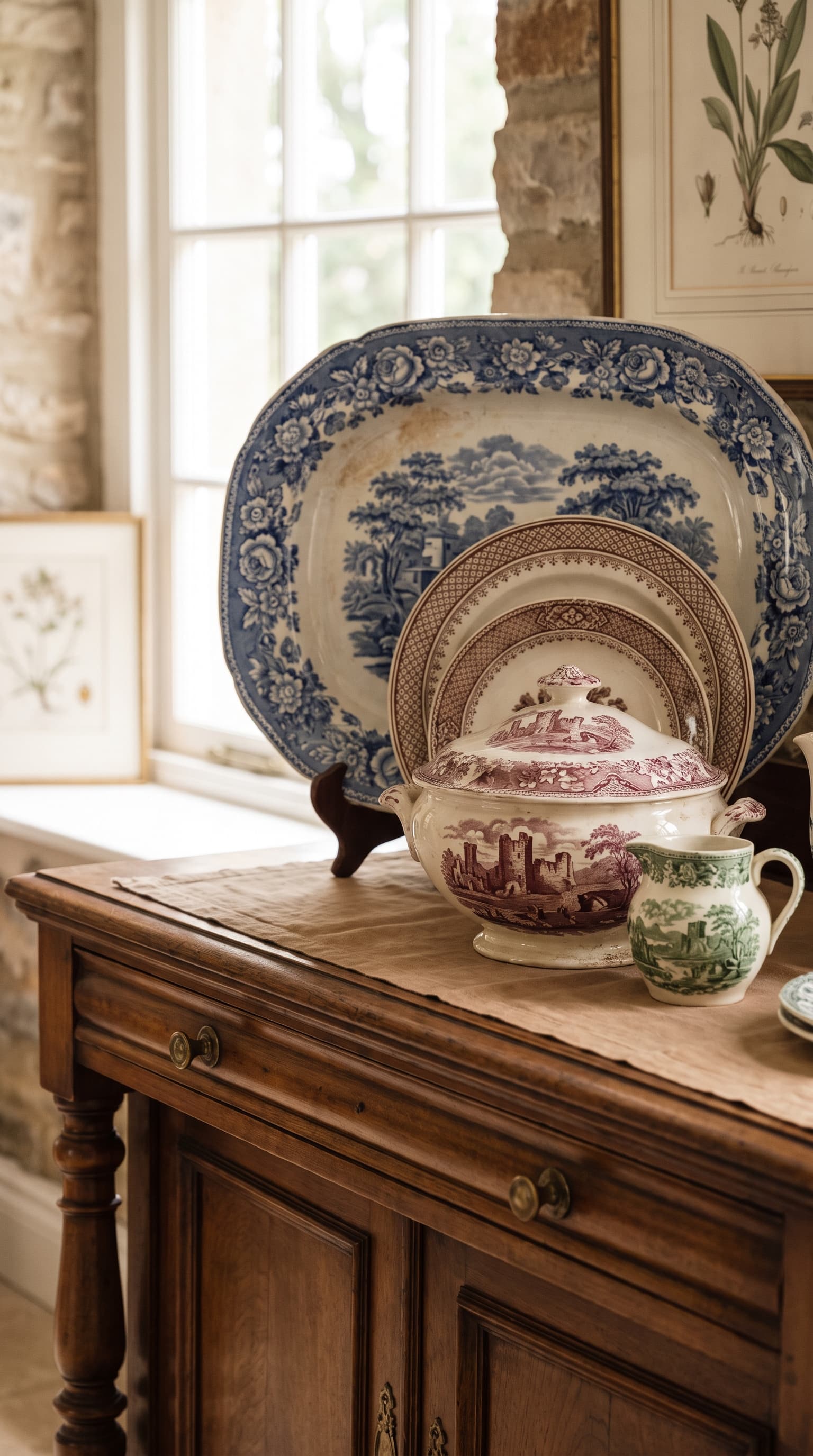
Transferware Identification: How to Identify Patterns and Colors
Transferware identification is all about recognizing the printed decoration on ceramics that were mass-produced using engraved copper plates. Unlike hand-painted china, transferware shows crisp, repeatable patterns—usually scenes, florals, or geometric borders—transferred onto pottery or porcelain. Most collectors want to know the pattern name, the manufacturer, and whether their piece is early 19th-century Staffordshire or mid-20th-century commemorative ware. The trick is learning what details actually matter in a photo.
What You're Really Trying to Name
When you say you're trying to identify transferware, you're usually after three things: the color of the transfer print, the pattern name, and the maker. Color comes first because it's the most visible characteristic and often indicates age. Blue transfer printing dominated the early 1800s, while mulberry, brown, green, and polychrome (multicolor) prints became popular later.
The pattern name is what most collectors hunt for—"Willow," "Italian," "Asiatic Pheasants," "Wild Rose." Some patterns were produced by multiple potteries over decades, so you might have a "Willow" plate from 1820 or 1920. That's where the maker mark matters, but many early pieces have no mark at all. Instead, you rely on border details, the quality of the print, and the body of the ceramic itself.
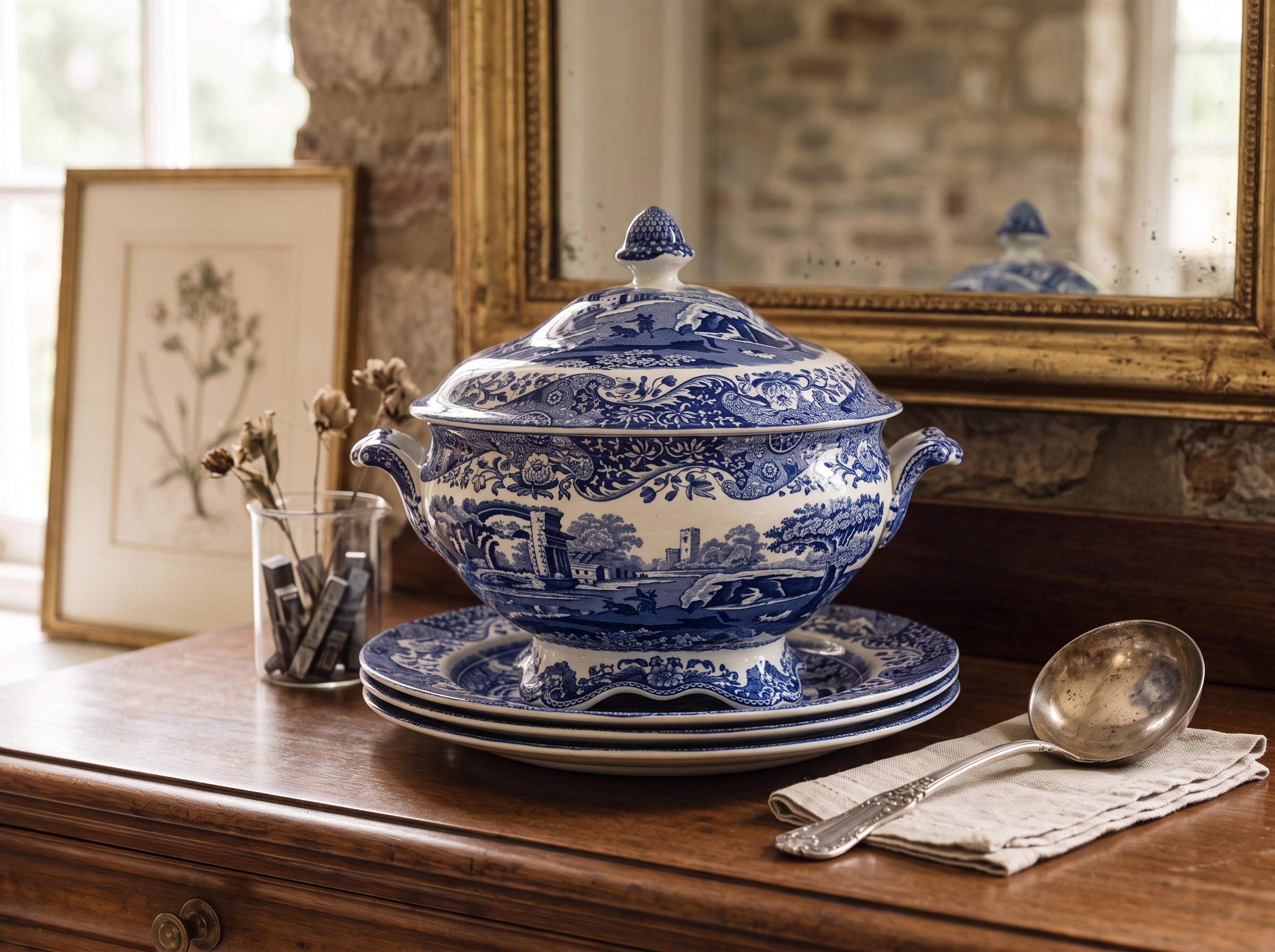
Visual Classification Checklist for Transferware Identification
Start with these visual cues when examining your transferware:
Transfer print color: Blue is classic and most common, especially dark "flow blue" where the cobalt bleeds into the glaze. Brown, black, red, pink, green, and purple also appear. Mulberry (a purplish-brown) was popular in the 1830s-1850s. Polychrome transferware uses multiple colors and generally dates later, from the 1840s onward.
Border pattern: The border often identifies the pattern more reliably than the center scene. Look for repeating motifs—scrolls, shells, flowers, geometric bands. Some borders are narrow and simple; others are wide and intricate. Photograph the border clearly because it's a key identifier.
Central scene or motif: Romantic ruins, pastoral landscapes, Oriental scenes, florals, and animals all appear. Chinese-inspired designs (pagodas, bridges, willow trees) were hugely popular. American historical scenes—cities, famous buildings, heroes—are their own category and often more valuable.
Print quality: Sharp, fine lines suggest early or high-quality work. Blurry or smudged prints can indicate later, cheaper production or a technique called "flow" where the design intentionally blurs. Check if the print wraps cleanly around curves or if there are gaps and overlaps.
Ceramic body: Is it earthenware (opaque, heavier, often creamware or pearlware) or porcelain (translucent, lighter, finer)? Most classic Staffordshire transferware is earthenware. Hold a plate to a light source—if light passes through, it's likely porcelain.
Backstamp or maker's mark: Many early pieces have no mark. When present, marks can include the pottery name, pattern name, registry marks, or "England" (post-1891). Photograph any mark clearly, even if it's faint or partial.
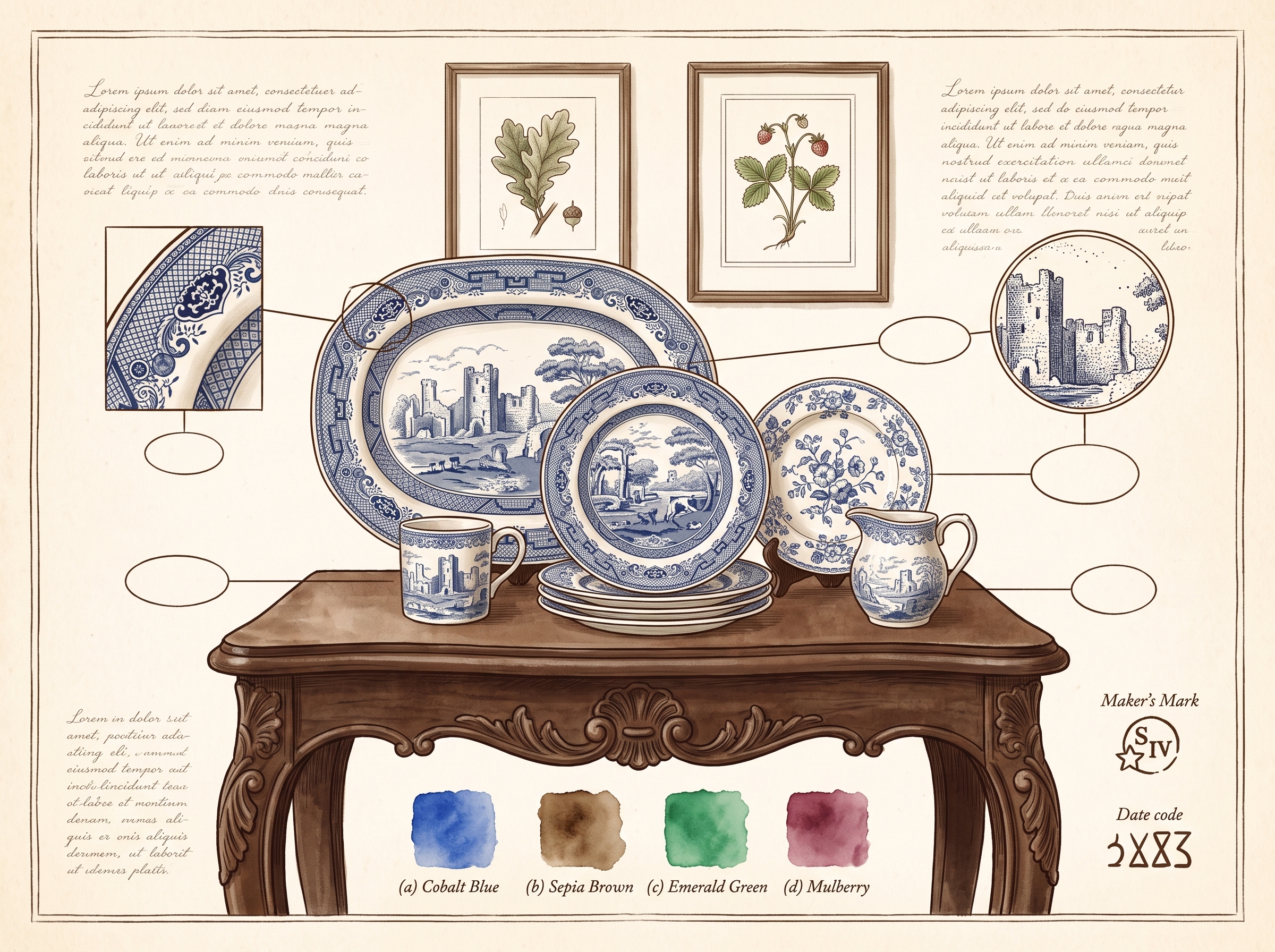
Common Transferware Identification Confusions
One of the biggest mix-ups is assuming all blue-and-white china is transferware. Hand-painted delftware, flow blue, and even modern printed china can look similar at a glance. True transferware has a printed image from an engraved plate, so you'll see fine, engraved lines—not brushstrokes. Under magnification, you may notice tiny dots or cross-hatching from the engraving process.
"Willow" vs. other Oriental patterns: Everyone knows Blue Willow, but dozens of other Chinese-inspired patterns exist—"Pagoda," "Nankin," "Broseley," "Bamboo." The Willow pattern specifically includes a bridge with three figures, a willow tree, a pagoda, a boat, and two birds. If your piece is missing any of these elements, it's not traditional Willow.
Flow blue vs. crisp transferware: Flow blue is a subset of transferware where the cobalt intentionally blurs into the glaze, creating a soft, romantic look. It was fashionable from the 1840s-1900s. If your print looks deliberately fuzzy, it's likely flow blue, not a poorly executed crisp transfer.
English vs. American makers: English Staffordshire potteries made the vast majority of 19th-century transferware, but American potteries also produced it—especially historical and patriotic scenes. American pieces can be more valuable to U.S. collectors, but English Staffordshire remains the gold standard for early transferware.
Age and reproduction: Transferware patterns have been reproduced for well over a century. A "Willow" plate could be 1820 or 2020. Look at the body, the glaze quality, the weight, and any marks. Modern reproductions often feel lighter, have brighter glazes, and show crisp backstamps. Old pieces may show crazing (fine cracks in the glaze), staining, or wear consistent with age.
How to Use Photo Identification to Narrow It Down
Photographing transferware for identification is straightforward if you know what to capture. Start with the full face of the piece—plate, platter, tureen, whatever it is—in even, natural light. This shows the overall design and color.
Next, shoot a close-up of the border. Fill the frame with the repeating border pattern. This is often the single most useful image for pattern identification, especially if the central scene is generic.
Then photograph the central scene or motif in detail. If it's a landscape, get close enough to see individual buildings, trees, or figures. If it's floral, show the flower types and how they're arranged.
Flip the piece over and photograph the back and any marks. Even if there's no obvious stamp, photograph the base. The foot rim, glaze pooling, and any impressed marks or numbers can help date the piece. If there is a mark, shoot it straight-on with good light. A blurry or angled mark photo is nearly useless.
If the print color is unusual or if you're not sure whether it's mulberry, brown, or purple, take a photo in natural daylight. Indoor lighting can shift colors and make identification harder.
Finally, if there's any damage, crazing, or staining, capture that too. It won't identify the pattern, but it affects value and can sometimes help confirm age.
With these photos, you can compare against transferware pattern books, online databases, or—much faster—use a tool that identifies ceramics from images. Tocuro can analyze your transferware photos and provide pattern names, maker information, and estimated value ranges based on current market signals, giving you a practical starting point without the guesswork.
From Pattern to Value
Once you know your transferware pattern and maker, you're in a much better position to understand its value. Rarity, condition, form (platters and tureens often bring more than plates), and subject matter all matter. Historical views, especially American scenes, tend to command premiums. Common patterns like Willow or Asiatic Pheasants are lovely but abundant, so condition and age become more critical.
If you're serious about building a transferware collection, focus on a color, a maker, or a theme—like animals, botanicals, or a specific pottery. That focus makes identification easier and helps you spot good deals. And remember, the more you handle and photograph transferware, the faster you'll recognize border patterns and print styles just from a glance.
For more guidance on identifying other types of pottery and porcelain, explore our guides on porcelain identification, majolica identification, and antique china identification.
Ready to Identify Your Transferware?
If you've got transferware you're trying to name, the fastest route is a good set of photos and a tool built for the job. Tocuro identifies ceramics from images, matching your transferware to known patterns and makers, and provides estimated value ranges drawn from real market data. It's practical, fast, and designed for collectors who want answers, not academic essays. Upload your photos and see what you've got.
Photo identification
Identify Your China
Use Tocuro to identify your item from a photo and get an estimated value range when market data is available.