
Thrift Store Identification Tips: Spot Valuable Items Fast While Shopping
Develop a consistent thrift store identification routine that helps you spot valuable items quickly. This guide covers what to check in-store, what's worth researching later, and how to build identification habits that work across categories.
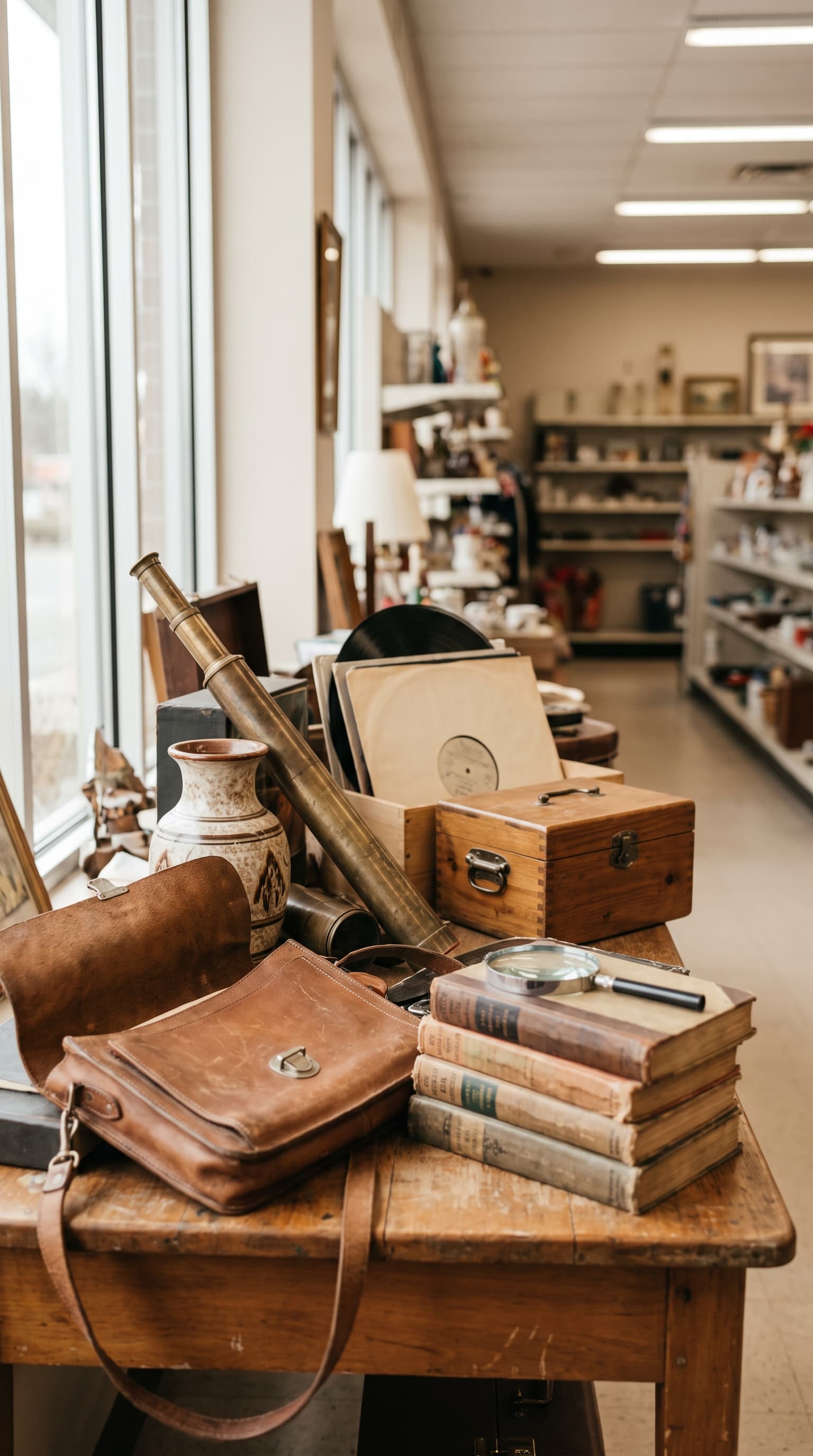
Build a Thrift Store Identification Routine That Actually Works
Walking into a thrift store can feel overwhelming. Racks of clothing, shelves of dishes, furniture tucked into corners, and bins of random objects all competing for attention. Successful thrifters develop thrift store identification tips they can apply consistently, creating a mental checklist that helps them move through a store efficiently without missing the good stuff.
Unlike estate sales or flea markets where you might have time to research, thrift stores require faster decision-making. Items get snatched up quickly, and you often can't take an hour to Google every interesting piece. The key is knowing what deserves immediate attention, what can wait for later research, and what you can confidently pass by.
What to Check Fast: Your In-Store Identification Checklist
Speed matters when thrifting. These quick checks help you decide whether something deserves a closer look or a spot in your cart.
Look for maker's marks and labels first
Flip ceramics over, check the back of frames, examine furniture undersides, and look inside drawers. Marks, stamps, labels, and signatures tell you who made something. Even if you don't recognize the name immediately, a clear mark gives you something concrete to research. No mark doesn't mean no value, but a good mark can shortcut your identification process significantly.
Check construction and materials
Solid wood versus particle board, hand-stitching versus machine seams, weighted versus hollow metal—these material clues often separate interesting pieces from mass-produced items. Run your hand along joints in furniture. Lift ceramics to feel their weight. Check fabric for natural versus synthetic fibers. Quality materials usually signal that someone cared enough to make something worth keeping.
Scan for condition issues that matter
A few scratches on furniture rarely matter. A crack through the bottom of a vase does. Spend ten seconds identifying deal-breakers: major structural damage, missing parts that can't be replaced, stains that won't come out, or repairs that would cost more than the item's worth. Everything else can often be worked with.
Notice what feels different
Your eye gets trained over time. When something looks odd, heavier than expected, or constructed in an unusual way, pay attention. That instinct often points to older pieces, limited productions, or higher-quality items that stand out from typical thrift store inventory.
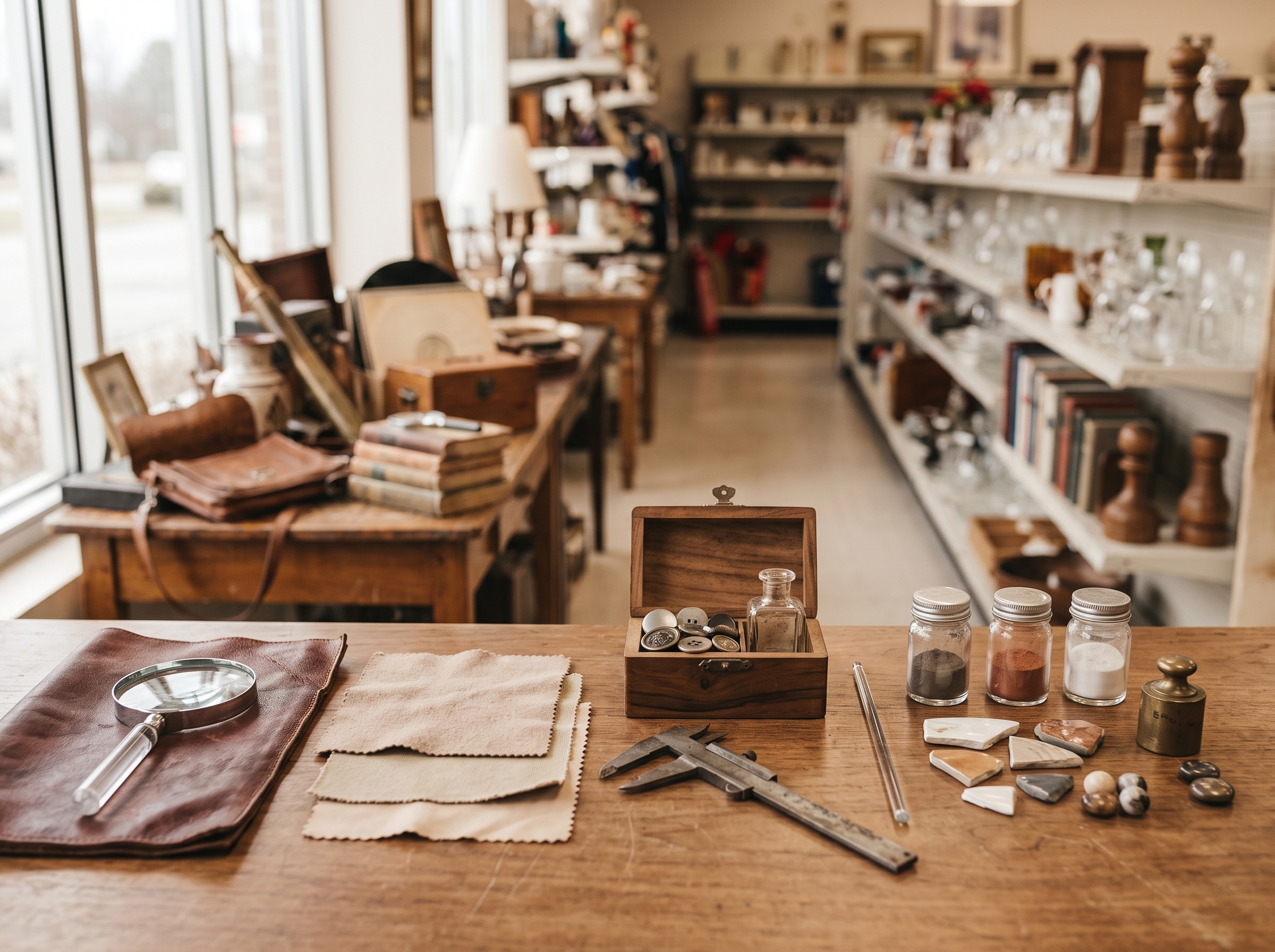
Thrift Store Identification Tips: What's Worth Researching Later
You can't research everything in the moment, so develop a system for what deserves follow-up.
Items with unfamiliar but clear marks
If you spot a mark you don't recognize but can photograph clearly, that's worth researching. Maker's marks are searchable, and even obscure manufacturers often have collector communities online. Buy it if the price is right and the condition is acceptable, then identify it properly at home.
Pieces in categories you're learning
Maybe you're getting into mid-century ceramics or vintage textiles. When you spot something that might fit your collecting interest but you're not certain, the best education is hands-on. Buy the piece, research it thoroughly at home, and you'll remember those identification details forever. That's how expertise builds.
Things that look commercial but feel unusual
Sometimes mass-produced items turn out to have interesting stories—limited editions, promotional pieces, or short production runs that make them collectible. If something seems ordinary but has odd details, it might be worth investigating further.
Furniture with potential beyond its current state
A solid wood dresser under terrible paint might be worth refinishing. A well-constructed chair with blown upholstery might have good bones. These decisions depend on your skills and interests, but identifying the underlying quality matters more than the current cosmetics. If you're interested in furniture refresh projects, learning to spot structural value helps you find great project pieces.
Build Your Thrift Store Identification Habits Across Categories
Consistent identification gets easier when you develop category-specific instincts.
For ceramics and pottery
Always check bottoms for marks, but also notice glaze quality, weight, and decoration style. Hand-painted details, unusual glazing techniques, and artistic signatures separate art pottery from commercial dinnerware. Chips on the rim matter more than base scratches for resale value.
For furniture
Examine joinery first—dovetails, mortise-and-tenon joints, and quality hardware indicate better construction. Check drawer bottoms and furniture backs where manufacturers often skipped details on cheaper pieces. Real wood veneer over solid wood is fine; vinyl woodgrain over particle board is usually pass-worthy unless you need it purely functional.
For glassware
Weight, clarity, and decoration tell the story. Quality glass feels substantial. Look for pontil marks on the bottom (showing hand-blown construction), cut or pressed patterns, and maker's marks when present. Condition matters tremendously with glass since damage can't be repaired invisibly.
For textiles and clothing
Fabric content labels, union labels, and designer tags guide identification. Natural fibers generally age better than synthetics. Construction quality shows in seam finishing, button quality, and how patterns match at seams. Vintage textiles often have distinctive weave patterns or printing techniques worth learning.
For small collectibles
This category is enormous—from toys to tools to advertising items. Focus on learning one subcategory well rather than trying to know everything. Whether it's vintage kitchen tools, old cameras, or mid-century barware, depth of knowledge in one area serves you better than shallow familiarity with dozens.
How Tocuro Fits Into Your Thrifting Workflow
Even experienced collectors encounter unfamiliar items. That's when having identification tools in your pocket changes everything.
When you spot something interesting but unfamiliar at a thrift store, snap a few clear photos with your phone. Tocuro identifies items from photos and provides estimated value ranges based on current market signals. The identification happens in seconds, giving you the information you need while you're still in the store deciding whether to buy.
This approach works especially well when you're outside your comfort zone. Maybe you usually collect mid-century furniture but you've stumbled across some interesting pottery. Or you know vintage kitchen tools but there's a piece of Art Deco metalwork you can't quite place. Quick photo-based identification helps you make informed decisions without missing opportunities.
Tocuro gives you 7 free identifications per day, and the count resets daily, so you can check multiple items during a productive thrift store session without hesitation.
Make Thrift Store Identification Part of Your Collecting Practice
The best thrift store identification tips become habits you don't think about. You automatically flip things over for marks, check construction quality, and notice condition issues. You develop instincts for what's worth photographing for later research versus what you can identify immediately.
Build your knowledge systematically. Each shopping trip teaches you something new—whether it's recognizing a pottery mark you've seen before, noticing joinery techniques that indicate quality furniture, or understanding which condition issues matter for specific categories.
Keep a running note on your phone of marks, names, and details worth remembering. Review your research after each thrifting session. This active learning approach turns every store visit into an education that compounds over time.
The collectors who consistently find great thrift store pieces aren't just lucky—they've trained themselves to identify quality and value quickly, make fast decisions with confidence, and know when to research deeper. With practice and the right identification tools, you develop the same instincts.
Ready to Identify Your Next Find?
Next time you're at a thrift store holding something interesting but unfamiliar, take a clear photo and identify it with Tocuro. Get instant insights on what you're looking at and whether that price tag makes sense. Building your identification skills happens one piece at a time.
For more guidance on building identification habits at different venues, check out our tips on identifying flea market finds fast and spotting estate sale treasures.
Photo identification
Identify Your Item
Use Tocuro to identify your item from a photo and get an estimated value range when market data is available.