
Teacup Identification: How to Identify Vintage Teacups from Photos
Identifying vintage teacups requires examining backstamps on the saucer, cup shape and size, handle attachment, and decorative details. This guide shows collectors which clues matter most and how to photograph teacups for accurate identification.
What Clues Matter Most for Teacup Identification
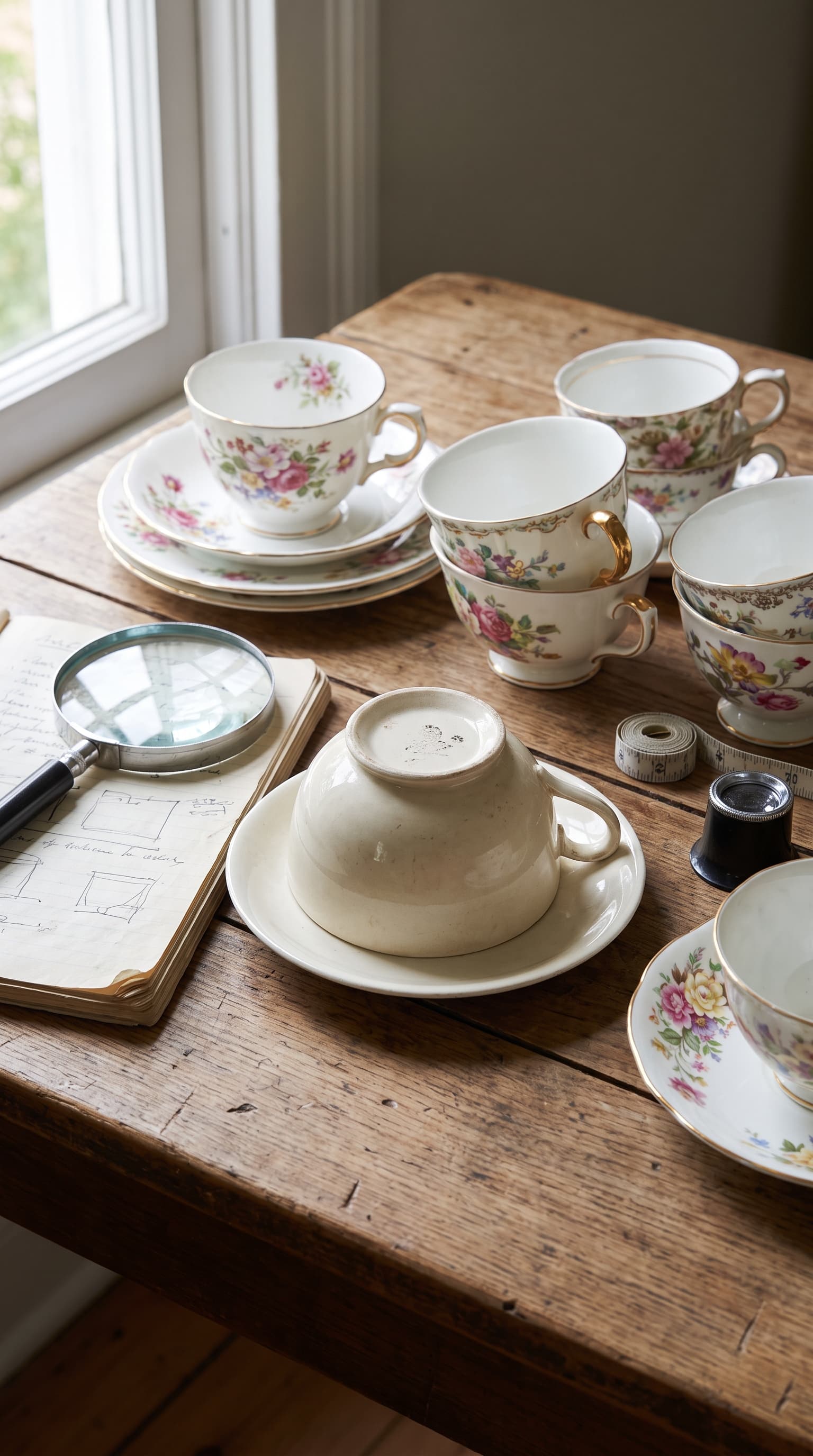
Teacup identification starts with the backstamp on the saucer—not the cup itself. Most manufacturers marked only the saucer base, and that mark tells you the maker, country of origin, and often a date range. Without the saucer, you lose your best identification anchor.
Cup shape reveals era and origin. Pre-1830 cups tend to be handleless and bowl-shaped. Victorian cups grew taller with ornate handles. Art Deco designs from the 1920s-30s feature geometric shapes and straight sides. Post-war cups are often lighter, with thinner walls and simpler profiles.
Handle style and attachment matter more than many collectors realize. Early handles were applied with visible seams and hand-finishing marks. Mid-century mass production created cleaner joints. The angle, curve, and finger rest all point to specific periods and makers.
Foot rim construction—the small ring on the cup base—changed with manufacturing technology. Hand-thrown or press-molded cups show tooling marks inside the foot. Transfer-molded cups have uniform thickness. Late 19th-century bone china often has a ground foot rim, smoothed on a wheel after firing.
Gilding quality separates premium from everyday pieces. Coin gold (real gold mixed with mercury) creates a rich, permanent finish that doesn't wear. Liquid gold, introduced around 1860, is thinner and can fade. Modern gold paint chips and peels. Check handle edges and rim wear to assess quality.
What Photos to Take for Teacup Identification
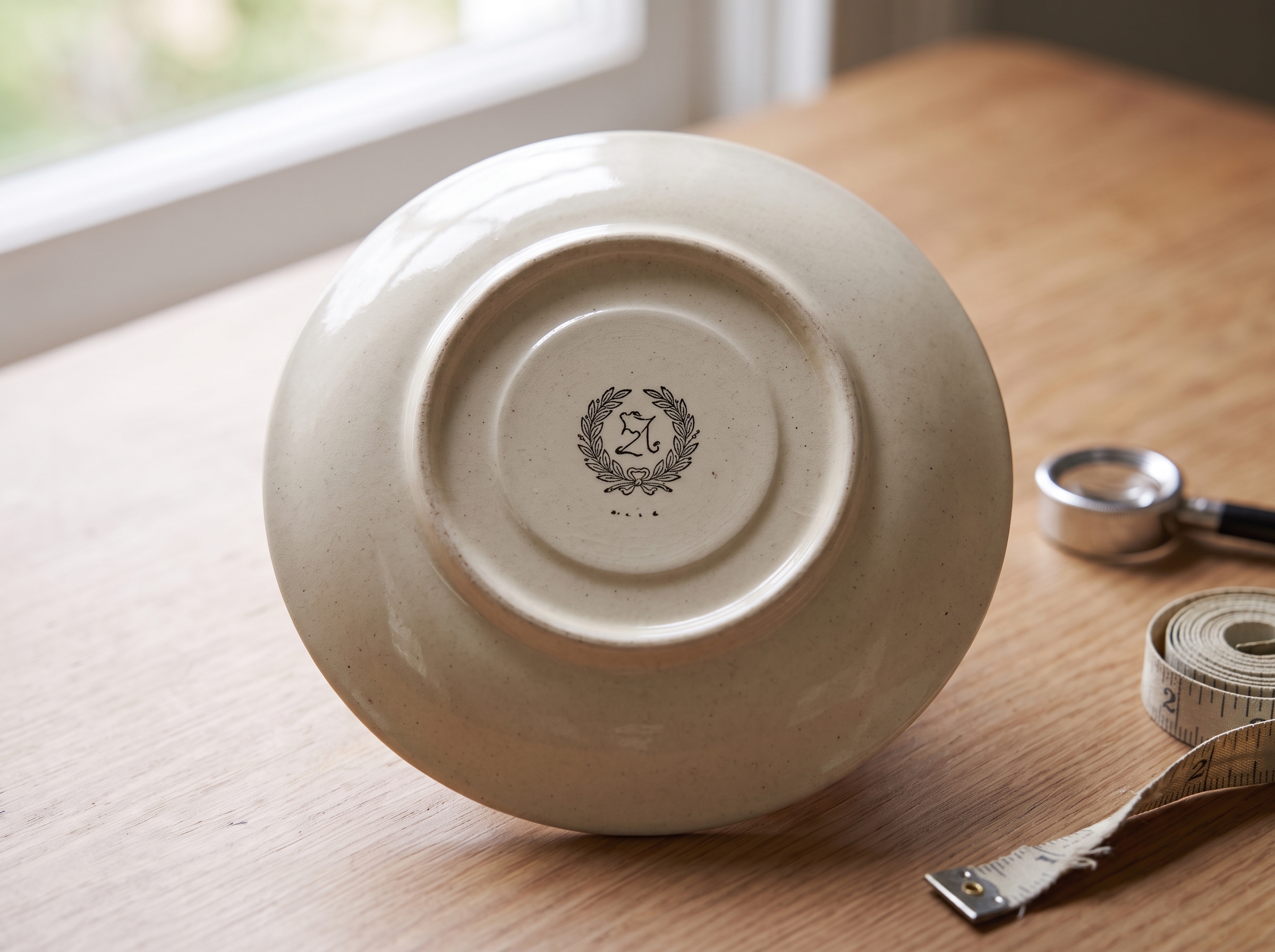
Start with the saucer backstamp. Flip the saucer over and photograph the mark straight-on with even lighting. Get close enough to read every word, number, and symbol. Backstamps often include multiple elements—maker name, pattern number, country designation, and date codes—and you need them all visible.
Capture the cup profile from the side. This angle shows the bowl shape, handle curve, and foot rim proportion. Natural window light works best, avoiding harsh shadows that hide details. Include the full silhouette from rim to base.
Photograph the handle attachment from both inside and outside the cup. Look for seam lines, hand-finishing marks, or mold lines. This close-up reveals whether the handle was applied separately or molded as one piece.
Shoot the interior, especially the bottom. Some makers placed marks inside the cup, and glaze color often differs from the exterior. Interior crazing, staining, or gilt wear also helps with dating and authenticity checks.
Take an overhead shot of the cup and saucer together. This shows the size relationship, which varied by region—British teacups are often smaller than American ones, and demitasse cups are smaller still. Pattern alignment between cup and saucer also matters for identification.
Capture any decoration details: hand-painting versus transfer prints, enamel work, lithography, or decals. Get close enough to see brushstrokes, dot patterns from transfer screens, or the sharp edges of decals. Lighting at a slight angle can reveal surface texture that distinguishes techniques.
Common Teacup Misidentifications
Collectors often mistake coffee cups for teacups. Coffee cups are typically taller and narrower, with straighter sides. Teacups have wider bowls and gentler curves. Demitasse cups, for espresso, are smaller than either. Without seeing the saucer diameter and cup proportions together, it's easy to misidentify function.
Transfer-printed patterns are frequently called hand-painted. Real hand-painting shows brushstroke variation, color bleeding, and artist inconsistencies. Transfer prints repeat perfectly, with tiny dots visible under magnification where the design was pressed on. Many Victorian and Edwardian cups mix both techniques—printed outlines with hand-painted color fills.
Backstamp dating can mislead when marks span decades. Many manufacturers used the same backstamp for 20-40 years, changing only minor details. A crown mark doesn't guarantee Victorian age—some companies still use crown symbols today. Pattern numbers, typographic style, and "Made in [Country]" wording narrow the date range more reliably than the logo alone.
"Bone china" gets misapplied to any white porcelain. True bone china contains bone ash, creating a warm translucent quality when held to light. Porcelain is cooler-toned and less translucent. Earthenware and semi-porcelain are heavier and opaque. The material affects both value and identification, and photos should include a backlit shot when bone china is suspected.
Replacements and marriages create confusion. Some teacups and saucers weren't originally paired—collectors mix orphaned pieces with similar patterns. Slight variations in backstamp style, glaze tone, or pattern scale reveal these marriages. Matched sets should have identical marks and glaze chemistry.
Japanese copies of European designs fool even experienced collectors. Mid-century Japanese makers produced excellent reproductions of Meissen, Royal Doulton, and other premium brands. Look for "Nippon," "Made in Occupied Japan," or small Japanese characters mixed with European-style marks. These pieces have their own collectible value but aren't what they appear.
What Tocuro Can Help Resolve
When you're stuck on teacup identification, photo-based analysis cuts through the guesswork. Backstamp databases can't show every maker variation, regional export mark, or short-lived pattern number. Tocuro's identification system looks at the whole picture—backstamp, form, decoration, and era clues—to pin down maker and period.
Pattern matching across manufacturers becomes manageable with visual search. Similar floral designs appeared from dozens of potteries, and small differences in color palette, stem style, or border treatment identify the actual maker. Uploading clear photos of your cup and saucer helps distinguish between look-alikes.
Handles and feet tell stories that marks alone can't. When a backstamp is worn, missing, or generic, construction details become your primary clues. Photo analysis spots the subtle manufacturing signatures—mold seams, attachment methods, foot rim grinding—that point to specific factories and date ranges.
Mixed sets and replacement pieces get sorted out when you can compare multiple photos side-by-side. If you suspect your cup and saucer didn't start together, uploading separate backstamp photos reveals whether the marks match. Even small discrepancies in font weight or spacing matter.
Tocuro also provides context that bare identification lacks—production periods, typical decoration methods, and related patterns from the same maker. This background helps you understand what you have and how it fits into the bigger picture of ceramic history.
Identify Your Vintage Teacup
Ready to solve your teacup mystery? Upload photos to Tocuro and get identification help based on backstamps, shapes, and decoration details. You'll receive seven free identifications per day, with your count resetting daily. Focus on clear shots of the saucer mark, cup profile, and any decoration—those photos matter most.
For collectors building or cataloging tea sets, visual identification beats hours of manual research. Once you know your maker, pattern, and era, you can track down matching pieces, assess condition fairly, and make informed decisions about your collection. Whether you inherited a mystery cup or found an intriguing piece at an estate sale, start with the photos that reveal the most: backstamp, shape, and construction details.
Looking to identify other tableware pieces? Check out our guides for vintage dinnerware identification, antique china identification, and plate identification.
Photo identification
Identify Your Item
Use Tocuro to identify your item from a photo and get an estimated value range when market data is available.