
Tableware Maker Marks: How to Find and Read Dinnerware Backstamps
Tableware maker marks appear on the underside of plates, bowls, and serving pieces as stamps, transfers, or impressed designs. These dinnerware backstamps reveal manufacturer identity and sometimes production era, but they require careful reading and context to interpret accurately.
Tableware Maker Marks: How to Find and Read Dinnerware Backstamps
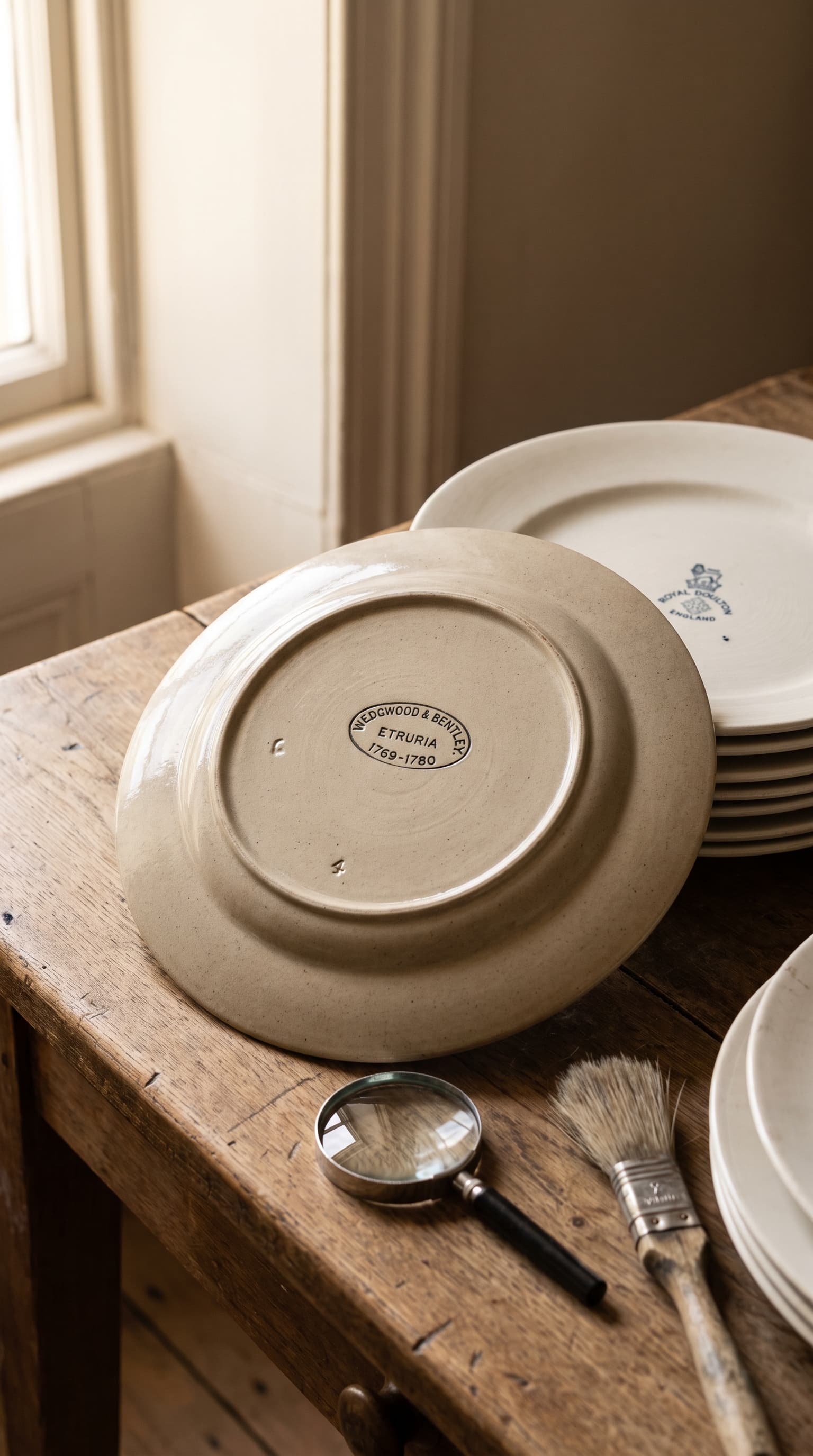
Every experienced collector knows that the story of a dish begins on its bottom. Tableware maker marks—the stamps, transfers, and impressed designs found on plates, bowls, and serving pieces—unlock manufacturer identity and often point toward production periods. But these dinnerware backstamps don't always speak plainly. You need to know where to look, what you're actually seeing, and which details matter most.
Where to Find Tableware Maker Marks
Most tableware carries its marks on the underside, though the exact location and presentation varies by manufacturer and era.
Base center: The majority of plates, saucers, and shallow bowls show their backstamp in the center of the foot rim or base. Turn the piece over and look for printed, stamped, or impressed text and designs.
Interior rim: Some older porcelain and earthenware pieces carry small marks inside the foot rim rather than on the flat base. Check the vertical edge where the base meets the body.
Under the glaze or over: Marks applied before glazing sit beneath a smooth surface and feel flush to the touch. Overglaze marks (decals or transfers applied after firing) often feel slightly raised and can show wear or fading.
Multiple marks: Don't stop at the first mark you find. Pattern names, date codes, mold numbers, and retailer stamps often appear alongside the main manufacturer backstamp. A plate might show a maker's mark, a pattern number, and a "Made in England" stamp all in different locations on the base.
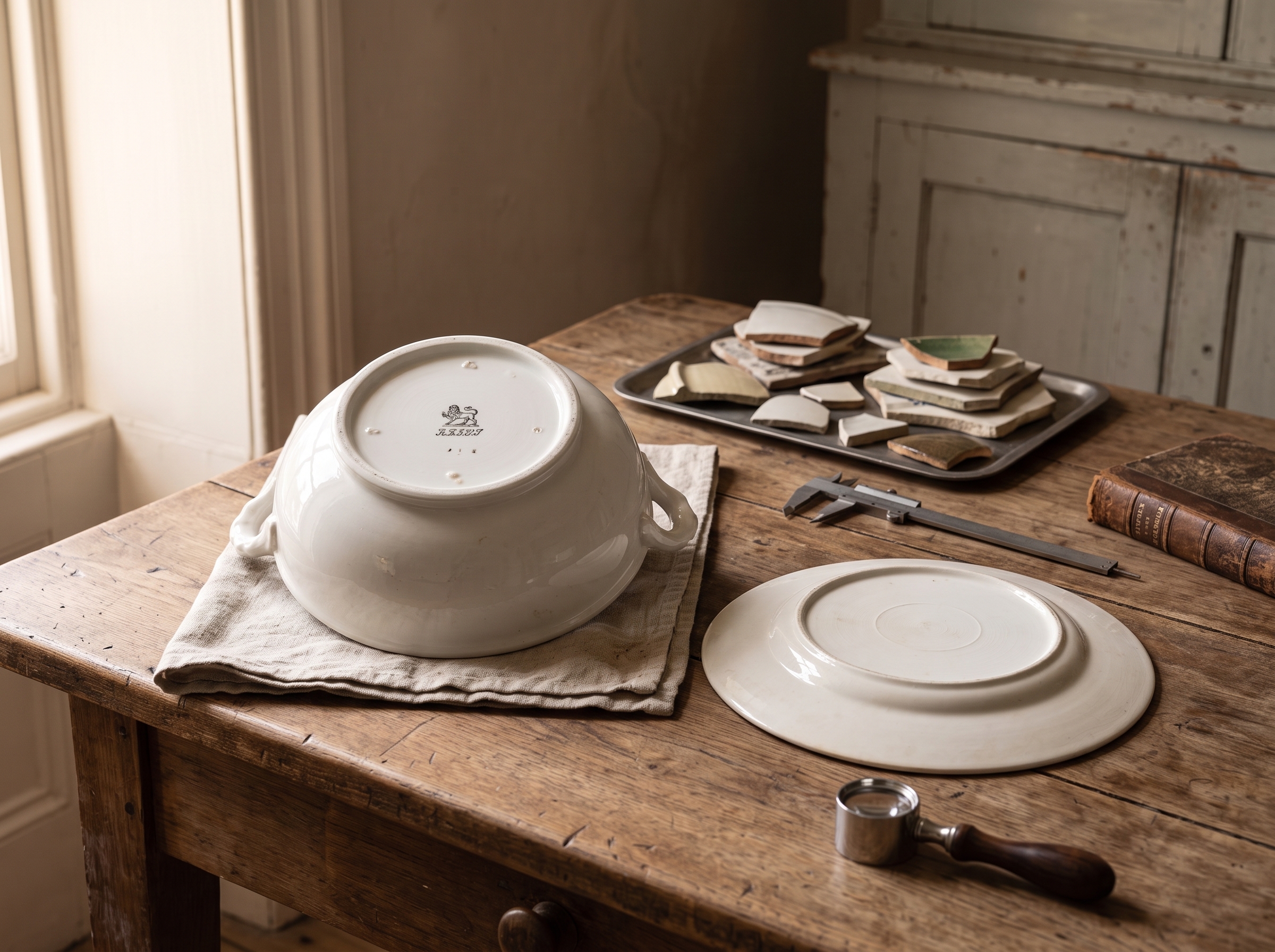
Serving pieces: Larger items like platters, tureens, and covered dishes sometimes carry marks on handles, lids, or interior surfaces in addition to the base.
What Tableware Maker Marks Can and Cannot Tell You
Manufacturer identity
Backstamps reliably identify which company produced the piece—when you can read them clearly. Major manufacturers like Royal Doulton, Wedgwood, Lenox, and Homer Laughlin used distinctive logos and text layouts that help narrow attribution even when marks are worn.
Production era
Many companies changed their marks over time, making backstamp design a useful dating tool. Wedgwood's mark variations span centuries with documented changes that experts can date to specific decades. But this only works when you know the manufacturer's mark history and can see the design details clearly.
Pattern names
Pattern stamps appear alongside maker marks on many pieces from the mid-19th century forward. These names—"Autumn," "Blue Willow," "Moss Rose"—help identify specific designs, though many companies reused popular pattern names.
What marks don't reveal
Maker marks alone rarely provide precise production dates. A mark style might span 20-40 years of production. They don't tell you about rarity, condition issues not visible in the mark itself, or whether your "limited edition" pattern was actually limited to 50 pieces or 50,000.
Value depends on pattern desirability, condition, completeness of sets, and current market demand—not just the name stamped on the bottom. Two pieces with identical marks can have vastly different values based on pattern and condition.
Common Misreads of Dinnerware Backstamps
Registry numbers mistaken for dates
British registry marks (Rd or Rd No numbers) indicate design registration dates, not production dates. A piece marked "Rd 12345" might have been manufactured decades after the design was registered. These numbers point toward possible production eras but don't tell you when your specific piece was made.
Crowned marks assumed to be royal
Crowns appear in hundreds of tableware marks as decorative elements. Most don't indicate royal warrants or special prestige—they're simply design choices. Research the specific mark rather than assuming a crown means royal provenance.
"England" vs "Made in England"
The difference matters for dating. "England" alone typically indicates production between 1891 and 1921, when the McKinley Tariff required country names on imports to the US. "Made in England" suggests production after 1921. But these aren't absolute rules—manufacturers sometimes used both simultaneously or made exceptions.
Pattern names confused with makers
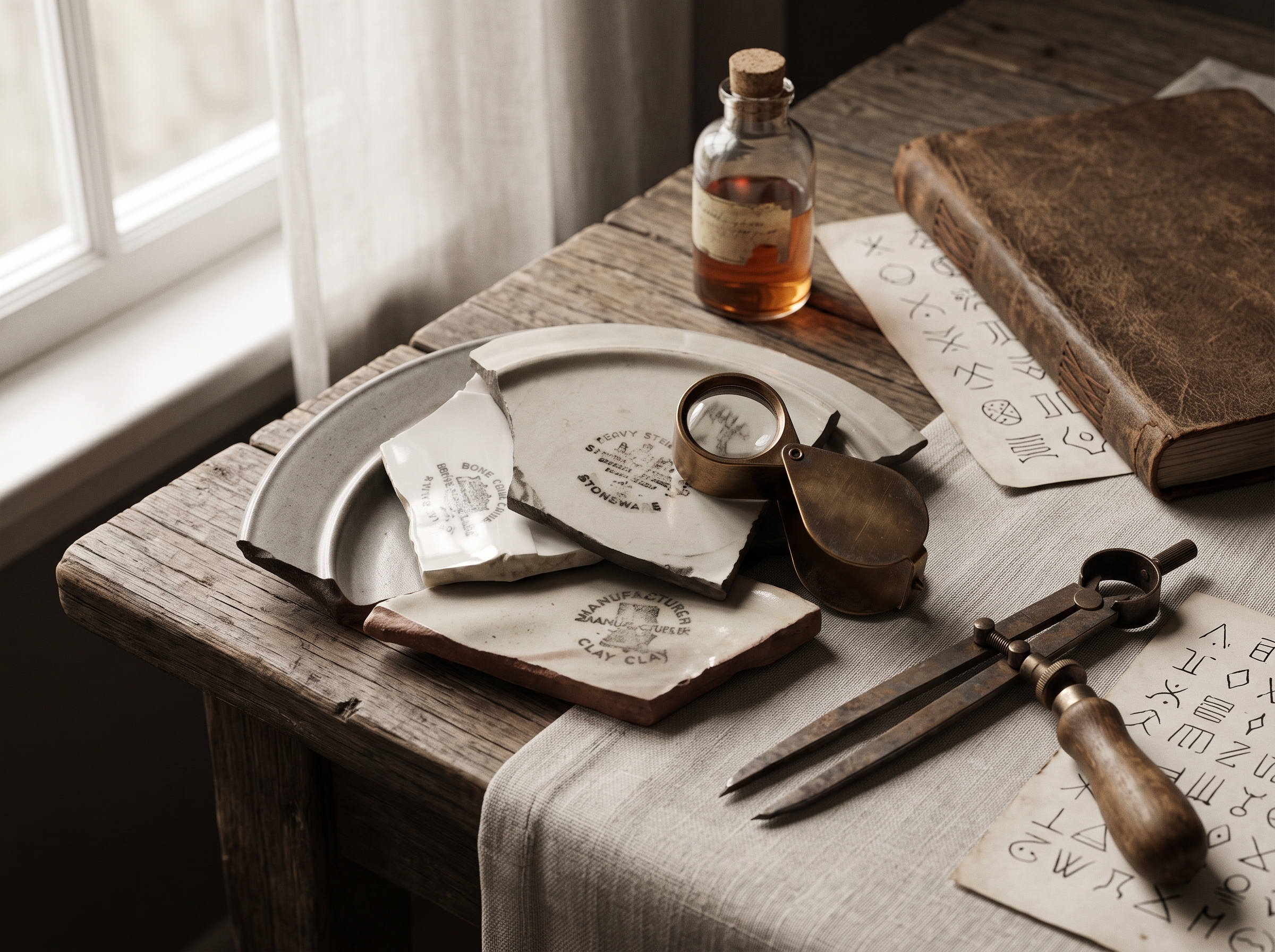
Seeing "Willow" on a plate doesn't mean it's made by Willow china. Pattern names appear separately from maker marks. Don't assume the largest or most prominent text is the manufacturer's name.
Retailer marks mistaken for makers
Department stores and importers often added their own marks to pieces made by others. Finding "Tiffany & Co" on a plate means Tiffany sold it, not that they manufactured it. Look for the actual maker's mark elsewhere on the base.
How Photos of Tableware Maker Marks Improve Results
Clear photos transform mark identification from guesswork to reliable attribution. The right images capture details that matter.
Lighting angle: Position your light source at a 45-degree angle to the mark surface. This creates shadows that reveal impressed marks and shows the texture difference between underglazing and overglazing transfers. Flat overhead lighting often washes out crucial details.
Full context shot: Take one photo showing the entire base with all marks visible in frame. Multiple marks in relation to each other help establish production periods and authenticity.
Close detail: Follow with a tight shot of the primary maker's mark, filling your frame with the design. Capture any small text, symbols, or decorative elements within the mark itself.
Worn marks: If your mark shows wear or fading, take multiple photos at different angles. Sometimes a mark invisible in one lighting direction becomes legible under angled light.
Pattern context: Include a photo of the front showing the decoration pattern. Pattern style helps date pieces when marks are ambiguous, and seeing both mark and pattern together speeds identification.
When you photograph tableware marks clearly, digital identification tools can compare your images against reference databases much more effectively than trying to describe a mark in words. Tocuro analyzes photos of maker marks alongside pattern details to identify manufacturers and estimate value ranges based on current market signals.
Reading Marks You Already Own
Start with what you can see without magnification, then work closer. Note the mark's color—cobalt blue underglazing marks typically indicate older production than black overglazing transfers. Check whether text appears printed, stamped, or hand-painted.
Compare your mark to reference materials, but remember that slight variations in mark details can indicate different production periods. A crown that's slightly larger, text that's repositioned, or an added "Ltd" all signal mark evolution.
Similar marks appear on other ceramic and glass items. If you're exploring other pieces in your collection, glass maker marks and porcelain marks follow comparable identification principles with medium-specific variations.
Dinnerware backstamps reward patient observation. The more pieces you examine, the faster you'll spot pattern families, recognize major makers, and know which details deserve closer investigation. But when you need certain identification, clear photos tell the full story.
Photo identification
Identify Your Mark
Use Tocuro to identify your item from a photo and get an estimated value range when market data is available.