
Stoneware Crock Identification: How to Identify Crocks by Photo
Identifying stoneware crocks requires examining salt glaze surfaces, capacity numbers, cobalt blue decorations, and maker marks. This guide shows you which details matter most and how to photograph your crock for accurate identification.
Stoneware Crock Identification: How to Identify Crocks by Photo
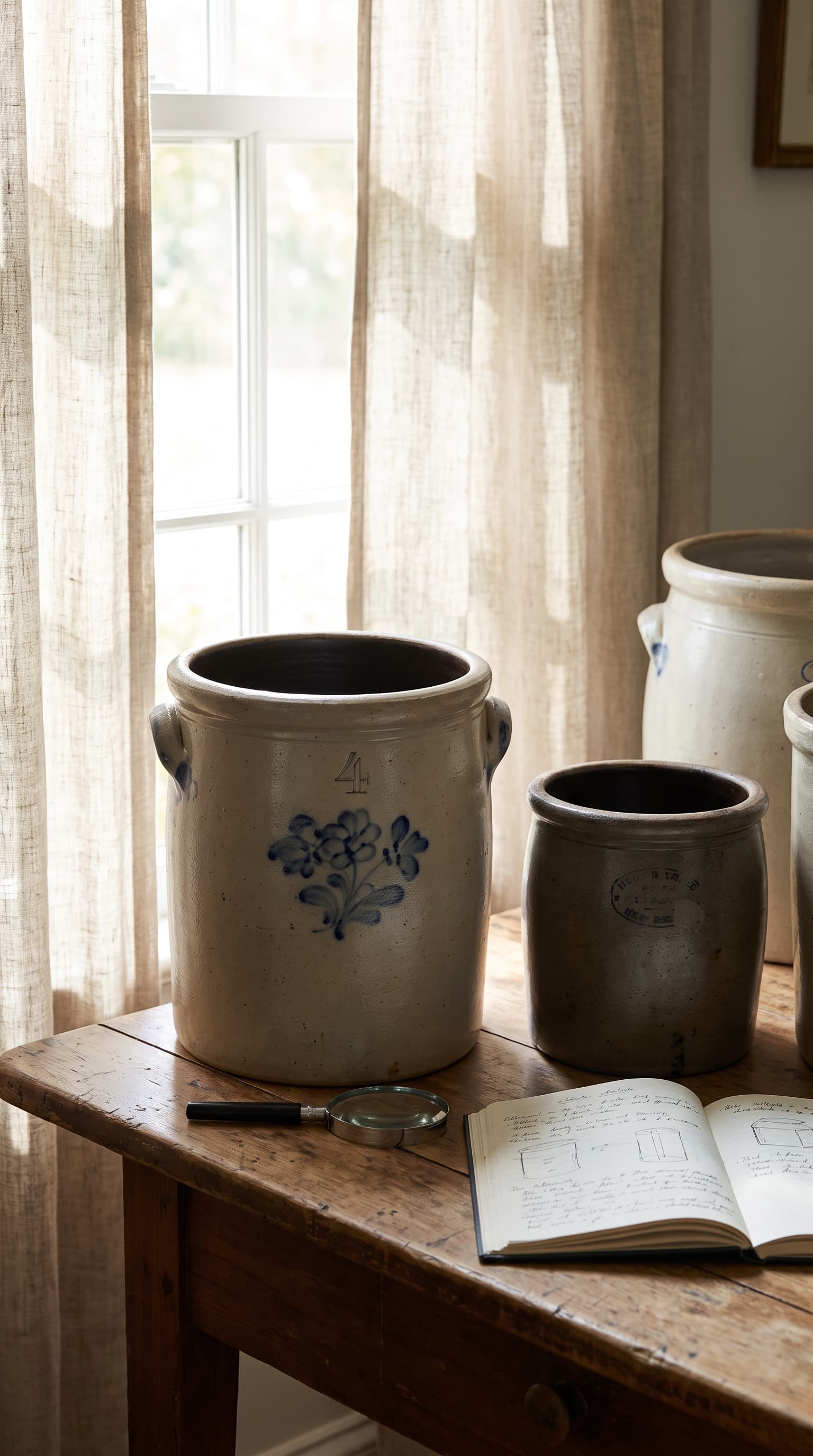
Stoneware crocks show up in basements, barns, and antique shops across North America, and many look remarkably similar at first glance. But the difference between a common farmhouse storage jar and a valuable piece from a noted pottery can hinge on a single maker's mark or the quality of a hand-painted cobalt decoration. Stoneware crock identification depends on reading the right clues—salt glaze texture, capacity marks, cobalt blue designs, and impressed or stamped maker names.
This guide walks you through what to look for and how to photograph the features that matter most when identifying stoneware crocks.
What Clues Matter for Stoneware Crock Identification
Salt Glaze Surface
Most American stoneware crocks made between 1780 and 1900 carry a salt glaze, created by throwing salt into the kiln during firing. The result is a distinctive orange-peel texture and a glossy, slightly mottled surface. Early pieces often show a grayish or tan body with a thin glaze, while later examples may have a more uniform, glassier finish. Albany slip—a brown glaze—often lines the interior. Changes in glaze technology help narrow the production window.
Capacity Marks
Most crocks are stamped or painted with a number indicating capacity in gallons. A "2" means two gallons, a "5" means five gallons, and so on. These numbers often appear just below the rim or near the maker's mark. Capacity marks help identify function and era—larger crocks (10 gallons and up) were common in commercial settings, while smaller sizes served household storage. The style of the numeral itself can offer clues: stenciled numbers suggest later 19th-century production, while hand-painted cobalt numerals point to mid-century or earlier work.
Cobalt Decorations
Cobalt blue slip was the go-to decorative medium for stoneware potters. Designs range from simple brushstrokes and numerals to elaborate birds, flowers, deer, and human figures. The quality, complexity, and subject matter of cobalt decoration heavily influence desirability and value. A freehand bird or stag can signal a specific pottery or decorator, while stenciled designs suggest mass production. Look for brushwork quality, motif rarity, and whether the decoration wraps around the crock or remains confined to a single panel.
Maker Marks
Impressed or stamped maker marks are your strongest identification tool. Marks typically include the pottery name, town, and sometimes the potter's name. Common examples include "Red Wing Union Stoneware," "Norton & Fenton / Bennington, VT," or "Whites Utica." Marks evolved over time as potteries changed hands, relocated, or merged, so the exact wording and format can pinpoint a production span within a decade or two. Unmarked crocks are harder to attribute but can sometimes be identified by regional clay color, glaze characteristics, or decoration style.
Form and Handle Style
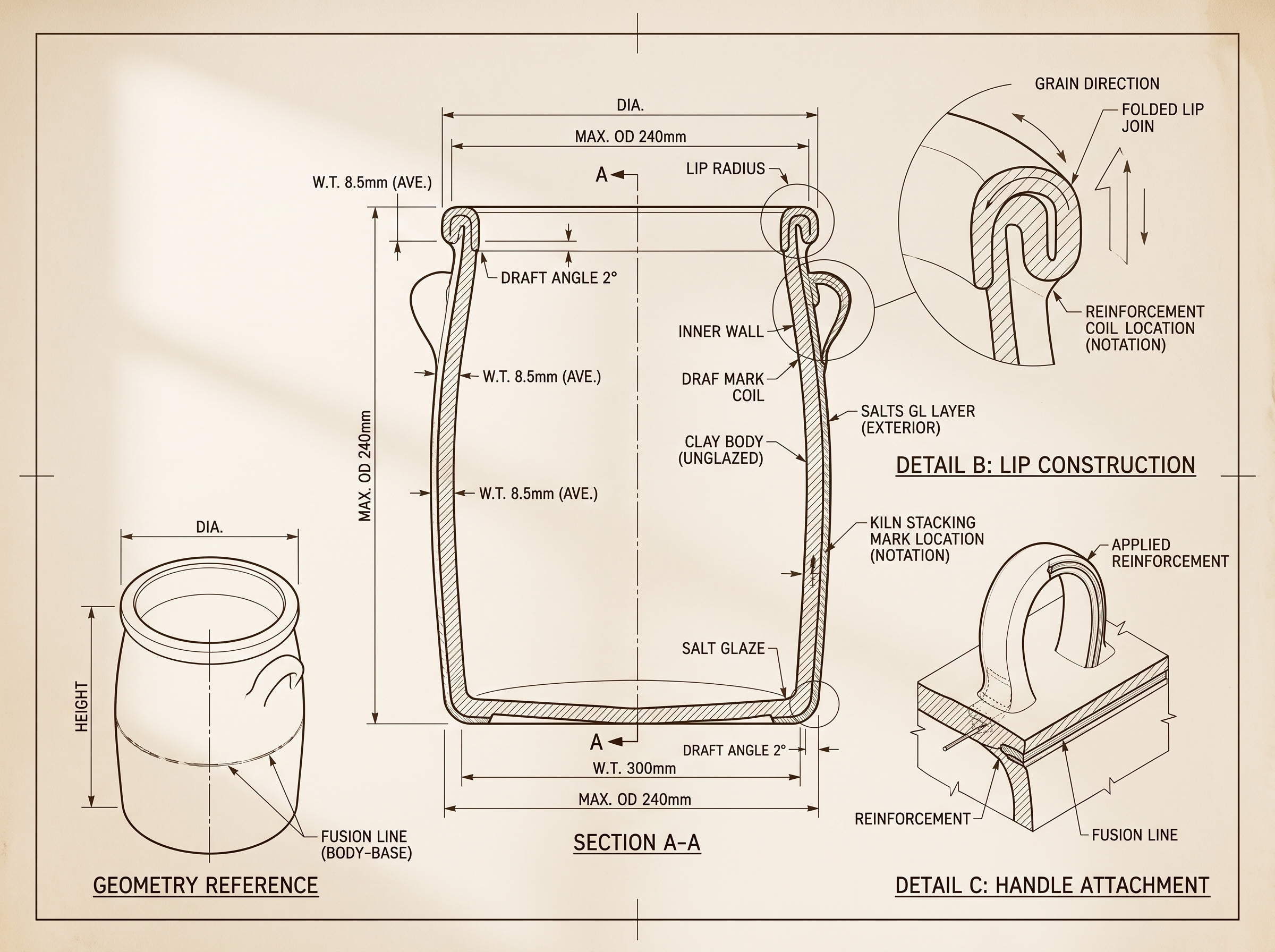
Ear handles (applied lugs) evolved in shape and attachment method. Early handles tend to be thicker, hand-pulled, and irregularly shaped. Later examples are more uniform. The shape of the rim, the presence of a lid groove, and the overall proportions also vary by region and period. Western Pennsylvania crocks often have a different profile than those from New York or Ohio.
What Photos to Take for Stoneware Crock Identification
Good photos dramatically improve identification accuracy. Here's what to capture:
- •Maker's mark or stamp: Photograph straight-on with even lighting. Marks are often faint or partially obscured by glaze pooling, so try angled light to bring out impressed details.
- •Capacity number: Include the full numeral and any surrounding decoration or text.
- •Cobalt decoration: Capture the entire design in one shot, then take close-ups to show brushwork detail and any artist signatures.
- •Surface texture: A side-lit close-up reveals salt glaze texture, glaze color variations, and any crazing or staining.
- •Overall shape: A full-length photo from the side shows proportions, rim style, and handle attachment.
- •Interior glaze: Photograph the inside to show Albany slip or other interior treatment, which can help confirm age and origin.
- •Base: The bottom sometimes carries additional marks, mold numbers, or distinctive clay color.
For more general pottery identification strategies, see our guide on how to identify pottery by photo.
Common Misidentifications in Stoneware Crock Identification
Confusing Reproduction with Antique
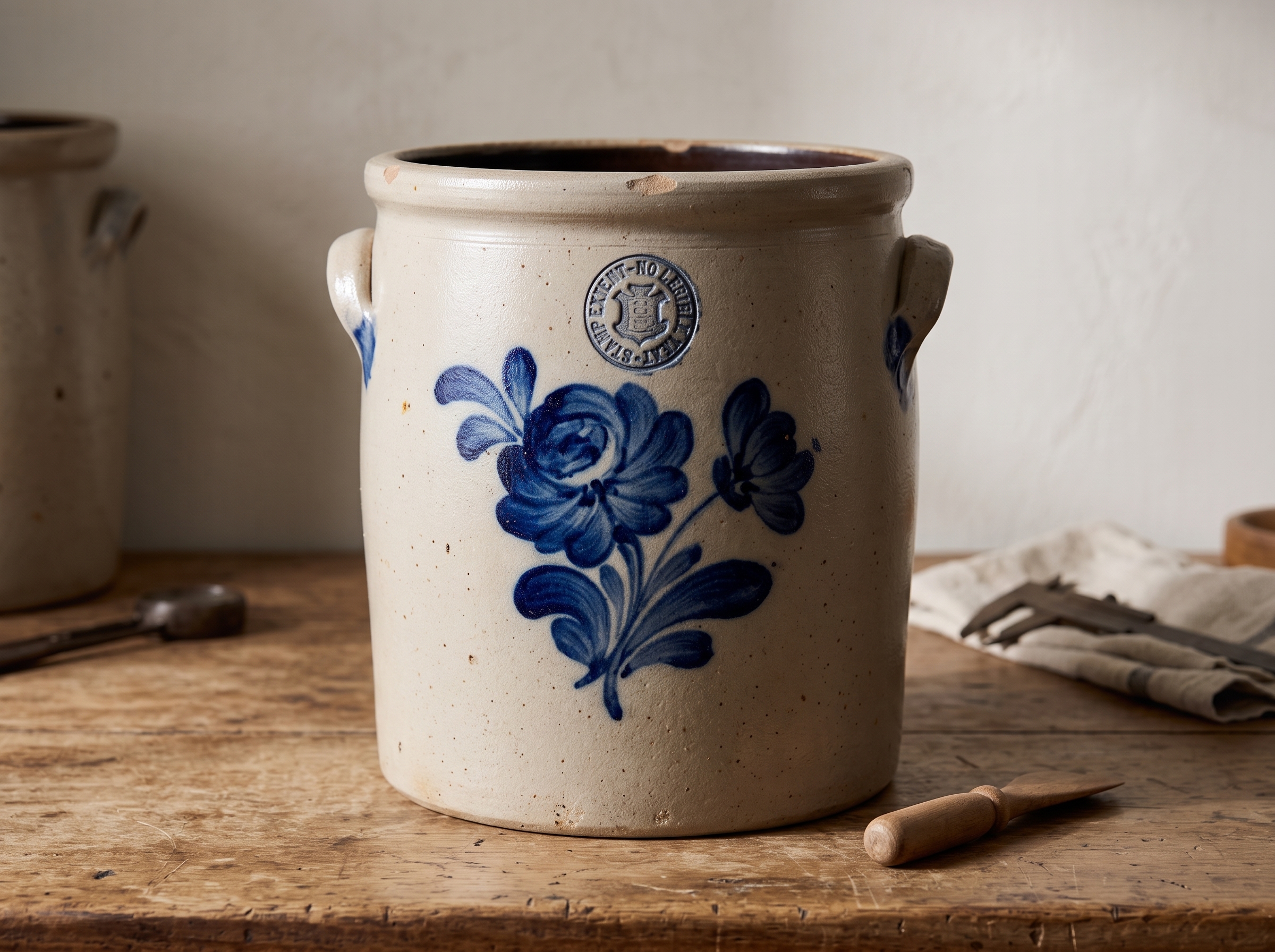
Reproduction stoneware crocks have been made since the 1970s, often copying popular Red Wing or Bennington designs. Reproductions typically lack the wear, staining, and glaze irregularities of genuine pieces. The cobalt tends to be too uniform, and the salt glaze texture may be simulated rather than authentic. Check for modern mold marks, overly crisp stamping, and suspiciously perfect condition.
Assuming All Cobalt Decoration Adds Value
Not all cobalt is created equal. A simple stenciled "2" or a basic swag has modest appeal, while freehand birds, animals, or folk-art scenes command premiums. Collectors often mistake any blue decoration for rare artistry. Context matters: a skilled decorator's work on a well-marked piece from a desirable pottery is worth far more than generic stenciling on an unmarked crock.
Misreading Partial Marks
Many crocks carry partially legible marks due to glaze drips, firing flaws, or wear. A fragment reading "...TON" might be Norton, Fenton, or Hamilton. Jumping to conclusions based on incomplete text leads to misattribution. Cross-reference what you can read with known pottery marks and consider glaze, clay body, and regional style before settling on an ID.
Overlooking Regional Variations
Stoneware production was regional, and potteries in different states used distinct clays, glazes, and decorative styles. A crock from southern Ohio looks different from one made in upstate New York or western Pennsylvania. Collectors sometimes assume all salt-glazed crocks are interchangeable, missing the regional fingerprints that help narrow down origin.
What Tocuro Can Help Resolve
Stoneware crock identification often requires cross-referencing maker marks, glaze types, cobalt motifs, and production timelines—details that can be tricky to piece together on your own. Tocuro lets you upload photos of your crock and receive an identification based on visual analysis of marks, decoration, glaze, and form. You'll get an estimated value range drawn from current market signals, giving you a practical sense of what similar pieces are selling for. This is not a formal appraisal, but it offers a helpful starting point for understanding what you own.
Tocuro gives you 7 free identifications per day, and the count resets daily, so you can work through a small collection or compare multiple crocks without hassle.
Get Your Stoneware Crock Identified
Whether you've inherited a crock from a family farm or picked one up at an estate sale, knowing what you have starts with clear photos and an eye for the details that matter. Focus on the maker's mark, cobalt decoration, salt glaze texture, and capacity number. If you're unsure or want a second opinion, upload your photos to Tocuro and let the platform connect the dots between your crock and comparable examples in the market. You'll walk away with a clearer picture of what you're holding—and what it might be worth.
Photo identification
Identify Your Pottery
Use Tocuro to identify your item from a photo and get an estimated value range when market data is available.