
Sterling Silver Jewelry Identification: How to Read 925 Marks and Hallmarks
Sterling silver jewelry carries specific marks and construction clues that separate it from silver-plated and base metal pieces. This guide covers the hallmarks, stamps, and details to photograph for accurate identification.
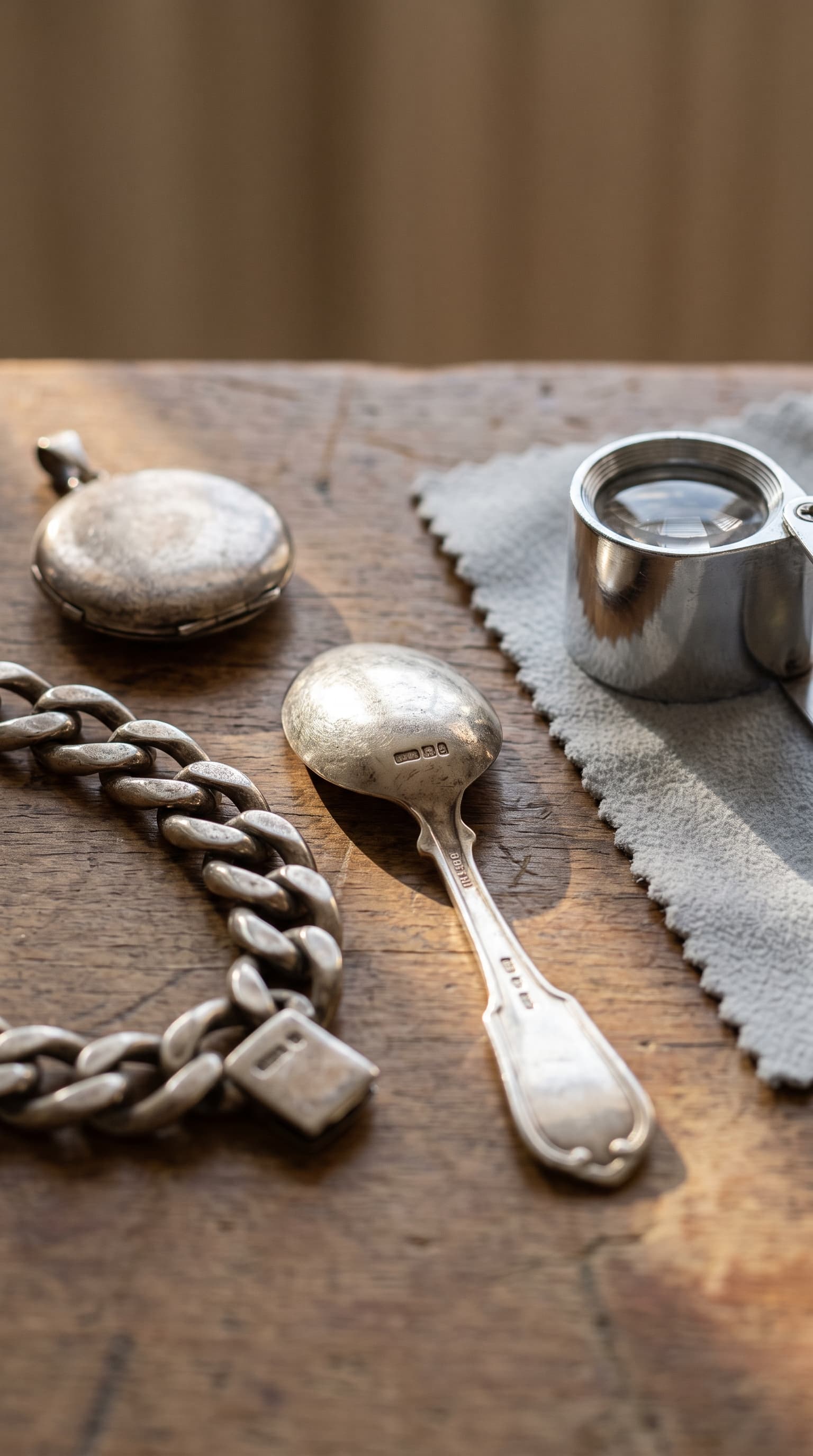
Sterling Silver Jewelry Identification: How to Read 925 Marks and Hallmarks
Sterling silver jewelry identification starts with understanding what marks and construction details confirm authenticity. Whether you've inherited a bracelet, found a necklace at an estate sale, or want to verify a piece in your collection, knowing where to look and what to photograph makes identification straightforward. Sterling silver contains 92.5% pure silver alloyed with other metals for durability, and legitimate pieces almost always carry marks proving their composition.
What Clues Matter for Sterling Silver Jewelry Identification
Authentic sterling silver jewelry leaves a trail of evidence in its marks, construction, and material behavior.
The 925 Mark and Its Variations
The "925" stamp is the international standard for sterling silver, indicating 92.5% silver content. You'll find it stamped on clasps, the inside of rings, the backs of pendants, or earring posts. Variations include "Sterling," "Ster," "STG," or the British lion passant hallmark. Some pieces carry both 925 and a maker's mark.
The stamp location matters. Legitimate manufacturers place marks where they're visible but unobtrusive—never on decorative surfaces where they'd interrupt design elements. Fake marks often appear in odd locations or look freshly stamped on vintage pieces.
Maker's Marks and Country Hallmarks
Beyond the purity mark, many sterling pieces carry a maker's mark identifying the manufacturer or silversmith. These can be initials, symbols, or full names. British pieces made after 1973 include a date letter, assay office mark, and maker's mark alongside the lion passant.
European sterling uses "800" or "835" marks for lower silver content, while Scandinavian pieces often show "830S." Mexican silver jewelry frequently displays "Mexico" alongside the purity mark and an eagle symbol for pieces made after 1948.
Construction and Finish Details
Sterling silver develops a particular patina in crevices and recessed areas. Silver-plated jewelry shows brass or copper underneath if the plating has worn through at edges or high-contact points. Check where a ring touches your finger, where a bracelet clasp connects, or where earring posts meet the backing.
Weight offers another clue. Sterling silver feels substantially heavier than silver-plated brass or base metal pieces of similar size. Hollow sterling pieces still carry more heft than plated costume jewelry.
Seams and solder joints in sterling silver appear as neat, thin lines that match the surrounding metal. Plated pieces sometimes show visible base metal at solder points where heat disrupted the plating during assembly.
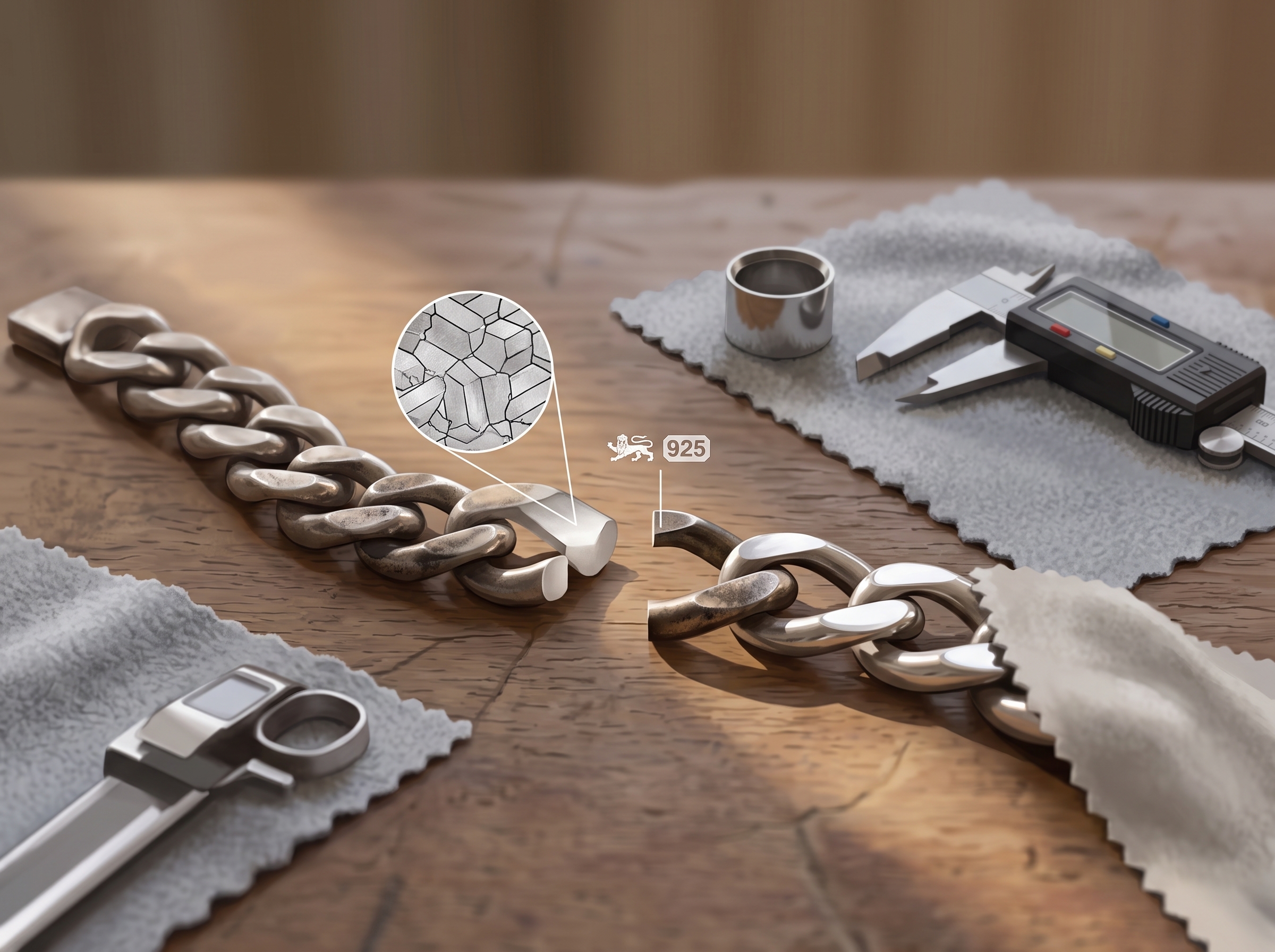
What Photos to Take for Sterling Silver Identification
Clear photographs of specific details make identification possible even when you can't see the piece in person.
Mark Close-Ups
Photograph every mark, stamp, or hallmark on the piece. Use natural light and get close enough that individual numbers and letters are readable. If the mark sits inside a ring band, photograph it straight-on rather than at an angle. For small stamps on clasps or posts, macro mode or a jeweler's loupe helps.
Take multiple angles if the mark is worn or partially obscured. Sometimes light from different directions reveals stamped details that straight-on shots miss.
Material Transition Points
Capture areas where wear would expose base metal if the piece were plated. Inside ring bands, the back of earring posts, areas where chains connect to clasps, and the back of settings where prongs meet metal—these spots tell the material story.
If you see any color difference or darker metal showing through, photograph it clearly. This evidence helps distinguish sterling from plated pieces.
Overall Construction
Shoot the entire piece in good light to show construction quality, design details, and any patina patterns. Include scale by photographing next to a coin or ruler. These context shots help identify periods, styles, and manufacturing methods that correlate with authentic sterling production.
For brooches and vintage jewelry, photograph the clasp mechanism and pin construction—these details often indicate age and authenticity alongside the sterling marks.

Common Sterling Silver Misidentifications
Several scenarios lead collectors to misidentify silver content or miss important details.
"EPNS" and "Silver" Stamps
Pieces marked "EPNS" (Electroplated Nickel Silver), "German Silver," or "Silver Plate" contain no sterling silver. These marks mean silver plating over base metal. The word "Silver" alone, without "Sterling" or "925," usually indicates plating rather than solid silver content.
Nickel silver is a copper-nickel-zinc alloy with no actual silver content despite its name. It was widely used for silverplated flatware and jewelry from the mid-1800s through the mid-1900s.
Worn or Relocated Marks
Some authentic sterling pieces have marks that wore off through decades of polishing or use. Rings sized multiple times may have lost original stamps. This doesn't mean the piece isn't sterling, but it makes identification harder without other evidence.
Occasionally, marks appear in unusual locations because a piece was repaired, resized, or assembled from components. A jeweler might have added a mark when replacing a clasp or resizing a band.
Silver-Colored Base Metals
Stainless steel, pewter, and white bronze all resemble silver visually. Without marks or testing, these metals can pass as silver in photos. Pewter is much lighter and softer than sterling. Stainless steel is harder, doesn't tarnish, and has a cooler, grayer tone.
Some costume jewelry manufacturers used high-quality rhodium plating over base metal that looks remarkably like sterling silver. These pieces feel lighter and eventually show wear at contact points.
International Mark Confusion
British hallmarks include multiple symbols that collectors sometimes misinterpret. A lion passant means sterling standard, but the accompanying marks indicate assay office and date—not silver content grades. European "800" marks represent a different silver standard than American sterling, not a lower quality necessarily.
Scandinavian "three crowns" marks, Italian tower marks, and French boar's head stamps all certify silver content but aren't equivalent to 925 sterling. Understanding these variations prevents undervaluing or misidentifying international pieces.
What Tocuro Can Help Resolve
Sterling silver identification combines mark reading, construction analysis, and style knowledge. When you're looking at a piece with ambiguous marks, unusual stamps, or construction that doesn't match what you expect, Tocuro's photo identification connects your images with market patterns and expert knowledge.
Upload clear photos of all marks, wear patterns, and construction details. Tocuro's system draws on thousands of identified pieces to recognize maker's marks, date hallmarks, and manufacturing characteristics that indicate authentic sterling versus plated pieces. You'll get context on what your marks mean, approximate age ranges, and whether the piece matches known sterling patterns.
The platform also provides estimated value ranges based on current market signals—not formal appraisals, but practical guidance on what similar pieces are selling for. This helps you understand whether a sterling piece is everyday jewelry or something worth insuring separately.
For pieces without visible marks or with ambiguous stamps, Tocuro's analysis considers construction methods, patina patterns, and style elements that correlate with different periods and manufacturing standards. Sometimes the clasp style or chain construction tells as much about authenticity as any mark.
Start Your Sterling Silver Identification
Gather your piece, take detailed photos of every mark and construction detail, and let Tocuro help you understand what you've got. The platform gives you 7 free identifications per day, and that count resets daily, so you can work through a small collection or verify multiple family pieces without commitment.
Identify your sterling silver jewelry and get answers about marks, makers, and market context that help you collect, sell, or simply understand what you own.
Frequently Asked Questions
Can sterling silver have no marks at all?
Some authentic sterling pieces, especially older or handmade items, carry no marks. European regulations required hallmarks, but American makers weren't always consistent before the mid-20th century. Very small items like delicate earrings sometimes went unmarked due to size constraints. Without marks, authentication requires testing or expert examination of construction and patina.
Does "925 Italy" mean lower quality sterling silver?
No—"925 Italy" indicates authentic sterling silver made in Italy. The 925 mark confirms 92.5% silver content regardless of country. Italian sterling jewelry is often well-made and carries the same silver purity as American or British sterling. The country mark simply identifies manufacturing origin.
Why do some sterling pieces also say "Mexico" or show an eagle?
Mexican silver regulations after 1948 required pieces to display "Mexico" alongside purity marks and an eagle symbol representing government assay. Mexican sterling jewelry from Taxco and other silver centers is often high-quality and collectible. These marks confirm authentic Mexican manufacture, not lower silver content.
Can silver-plated jewelry be worth collecting?
Yes, especially pieces with exceptional design, maker significance, or historical importance. High-end manufacturers like Tiffany made silver-plated items alongside sterling pieces. Plated jewelry has lower melt value but can still command prices based on maker, age, and condition. The key is understanding what you're collecting and not paying sterling prices for plated pieces.
Photo identification
Identify Your Silver
Use Tocuro to identify your item from a photo and get an estimated value range when market data is available.