
Silver Identification App: Identify Sterling, Plate, and Hollowware from Photos
Learn how a silver identification app can help you identify sterling silver, silverplate, and hollowware from photos—including what to photograph, which details matter most, and when expert appraisal is worth the investment.
Why Silver Identification Is Harder Than It Looks
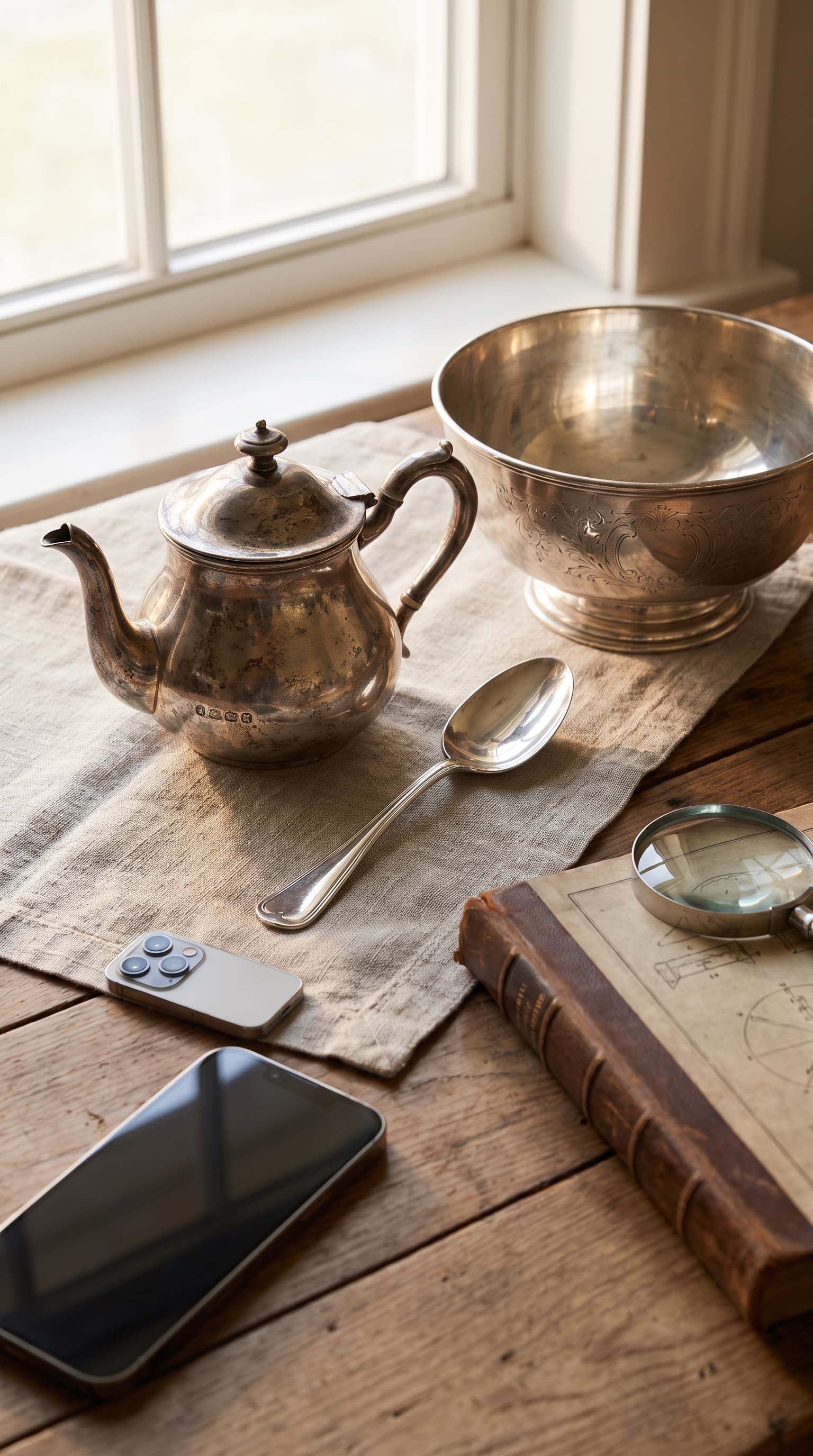
You've inherited a box of silver flatware, found a serving tray at an estate sale, or pulled a tea set from storage. The pieces feel substantial, show intricate patterns, and carry mysterious marks stamped into the metal. But what are they worth? Is it sterling or plate? Who made them, and when?
Silver identification isn't always straightforward. Makers used dozens of marking systems, pattern names disappeared from catalogs decades ago, and distinguishing sterling from quality silverplate often requires more than a magnet test. A silver identification app lets you skip the guesswork by uploading photos and getting actionable information about what you own.
What Tocuro Does for Silver Identification
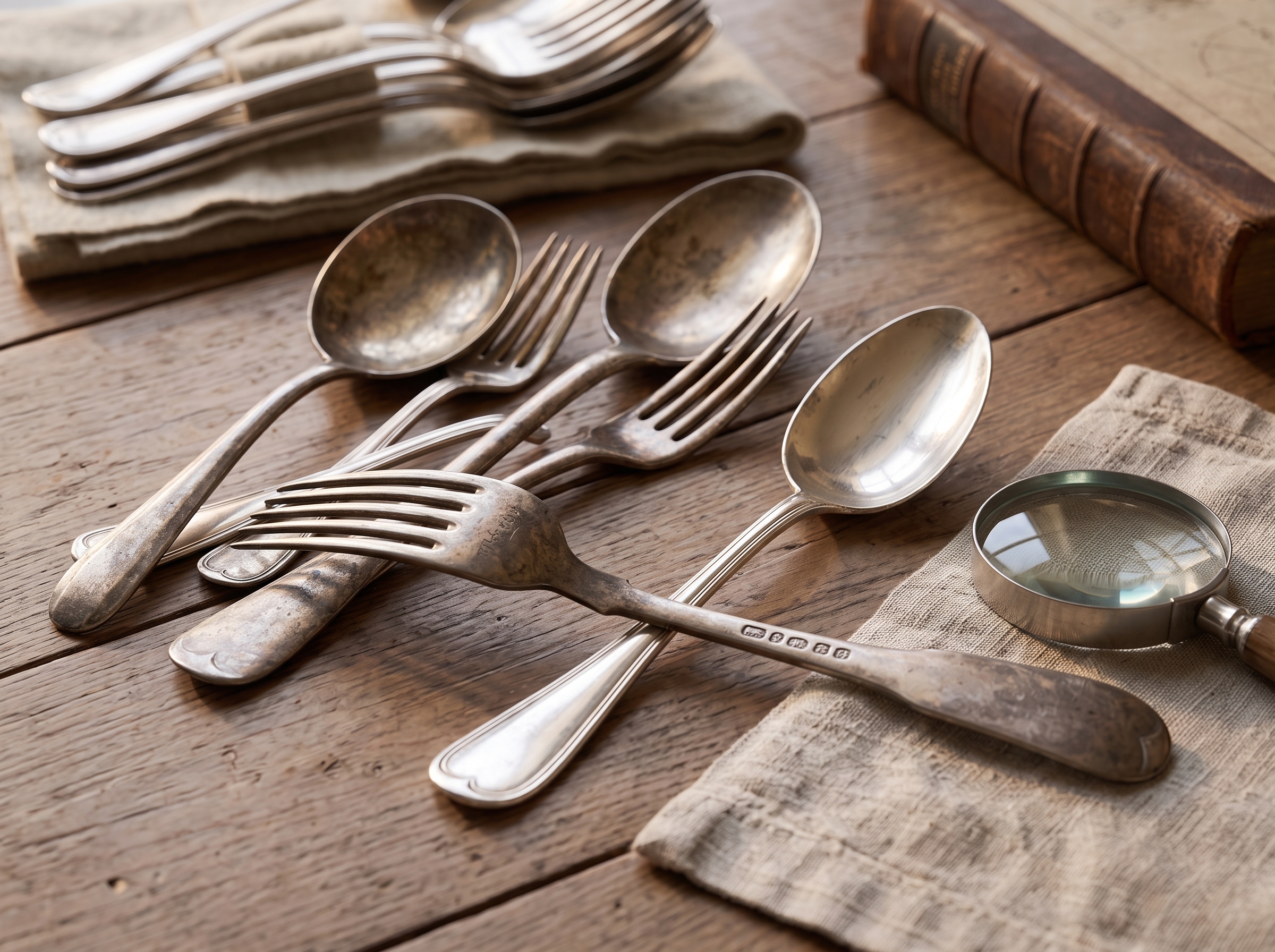
Tocuro identifies silver items from photos you take with your phone. Point your camera at flatware, serving pieces, tea sets, or decorative hollowware, upload the images, and Tocuro analyzes the visual details to provide:
- •Maker identification: Who produced the piece, from major names like Reed & Barton and Gorham to smaller regional workshops
- •Pattern recognition: The specific design name for flatware and serving pieces
- •Material confirmation: Sterling silver vs. silverplate, based on visible hallmarks and construction clues
- •Age and origin: When and where the piece was likely made
- •Estimated value range: Market-based pricing drawn from completed sales, not formal appraisals
The app recognizes American, British, and European silver marks, handles both antique and mid-century pieces, and works with everything from single forks to complete candelabras.
What You Get Free
Tocuro gives you 7 free identifications per day, and that count resets every 24 hours. No credit card required to start. Each identification includes the maker, pattern (when applicable), material type, and an estimated value range based on current market signals—not a certified appraisal, but enough to make informed decisions about insurance, sale, or further research.
For inherited collections or estate cleanouts where you're working through dozens of pieces, you can process a full drawer of flatware over a few days or upgrade for higher-volume access.
Photo Quality That Works Best for Silver Identification
Silver reflects light aggressively, which makes photography tricky. Here's what helps Tocuro deliver accurate results:
Hallmarks and maker's marks
These tiny stamps—often on the back of handles, inside bowl rims, or on hollowware bases—are your most valuable identification tool. Photograph them straight-on in natural light or under a bright lamp. Avoid harsh shadows and glare. If the marks are worn, tilt the piece slightly so the stamps catch the light at an angle.
For detailed guidance on capturing marks, see our Silver Hallmarks Guide.
Pattern details
For flatware, photograph the front and back of a representative piece—usually a dinner fork or tablespoon. The decorative elements on the handle often define the pattern. Capture enough detail that scrollwork, floral motifs, or geometric designs are clearly visible.
Overall shape and condition
For hollowware—teapots, trays, bowls, candelabra—include a full view showing proportions, handles, feet, and any engraving or monograms. These design features help date the piece and narrow the maker.
Context for scale
Place a coin or ruler in the frame when size isn't obvious from the photo. Tocuro can often distinguish between a salt spoon and a serving spoon based on visual cues, but scale confirmation removes ambiguity.
Avoid shooting on reflective surfaces or in direct sunlight that washes out detail. A matte tablecloth or cutting board makes a better backdrop than glass or polished wood.
Limitations and When to Seek Formal Expert Help
A silver identification app handles most everyday identification questions, but some situations call for hands-on evaluation:
- •Unmarked pieces: Without hallmarks, identification depends entirely on style and construction clues, which can yield multiple possibilities rather than a definitive answer
- •Heavily worn or polished marks: If decades of cleaning have erased the stamped details, even good photos may not capture enough information
- •High-value estate decisions: When you're settling an estate, dividing assets, or insuring a collection worth thousands, a certified appraisal from an accredited appraiser provides legal documentation that a photo-based estimate cannot
- •Authenticity concerns with rare makers: If you suspect a piece is an important early American or European work, an in-person expert can test metal content, examine construction methods, and compare it against known examples
- •Complex multi-piece sets: Tea services, flatware sets for twelve, or matched hollowware collections benefit from professional evaluation when sale value depends on completeness and condition grading
Tocuro's estimated value ranges are based on market signals—what similar pieces have sold for recently—but they're not formal appraisals. Use them to make decisions about next steps, not as official documentation for insurance or tax purposes.
How Silver Identification Differs from Other Collectibles
Silver sits at the intersection of material value and decorative art. Unlike figurines or pottery, where identification focuses primarily on maker and artistry, silver carries intrinsic metal value that shifts with commodity markets. Sterling silver (92.5% pure) always has melt value, even when a pattern is out of fashion.
That means two pieces from the same maker and year can have different market values depending on pattern popularity, condition, and whether the piece is sterling or plate. Silverplate—a thin layer of silver over base metal—has minimal melt value, so market price depends almost entirely on decorative appeal and maker reputation.
A good silver identification app accounts for both factors: it tells you what the piece is and gives you value context based on how similar items actually sell, not just what the silver content would fetch at a refinery.
Why Collectors and Sellers Use Photo-Based Identification
Estate buyers work on tight schedules. Collectors encounter silver at flea markets, auctions, and thrift stores where quick decisions matter. Families sorting inherited pieces need to know what's worth keeping before the estate sale company arrives.
A silver identification app fits these real-world timelines. You're not waiting days for an appraiser's schedule or shipping pieces to a service. You're getting answers while you're still standing in the aisle, sitting at the estate table, or unpacking boxes in your dining room.
For high-volume situations—dealers processing estate lots, pickers sourcing inventory—the ability to identify and price dozens of pieces in an afternoon changes the economics of the work.
Getting Started with Silver Identification
If you've got silver pieces you'd like to identify, start by gathering a few representative items. Clean them gently if they're tarnished—mild soap and water works, or a silver polishing cloth—so marks and pattern details show clearly. Take well-lit photos of hallmarks, pattern elements, and overall shape.
Tocuro handles the rest: maker, pattern, material, age, and estimated market value in minutes. You'll know whether that tarnished serving spoon is sterling Gorham or plated Rogers, whether the tea set is worth insuring, and what pattern name to search when you're looking to complete a flatware set.
Try 7 Free IDs Today and see what your silver is really worth.
Photo identification
Identify Your Silver
Use Tocuro to identify your item from a photo and get an estimated value range when market data is available.