
Silver Hallmarks Guide: How to Read and Photograph Marks for Identification
A practical guide to locating and interpreting silver hallmarks, understanding their limits, avoiding common identification mistakes, and capturing clear photos that improve identification accuracy.
Silver Hallmarks Guide: How to Read and Photograph Marks for Identification
Silver hallmarks are the most reliable clues to a piece's origin, age, and purity—but only if you know where to look and what they can actually tell you. Unlike pottery marks or porcelain backstamps, silver hallmarks follow strict regulatory systems that vary dramatically by country and era. This guide shows you how to find silver hallmarks on common objects, interpret what they reveal, and photograph them effectively for identification.
Where to Find Silver Hallmarks
Silver hallmarks appear in predictable locations, but placement varies by object type and maker.
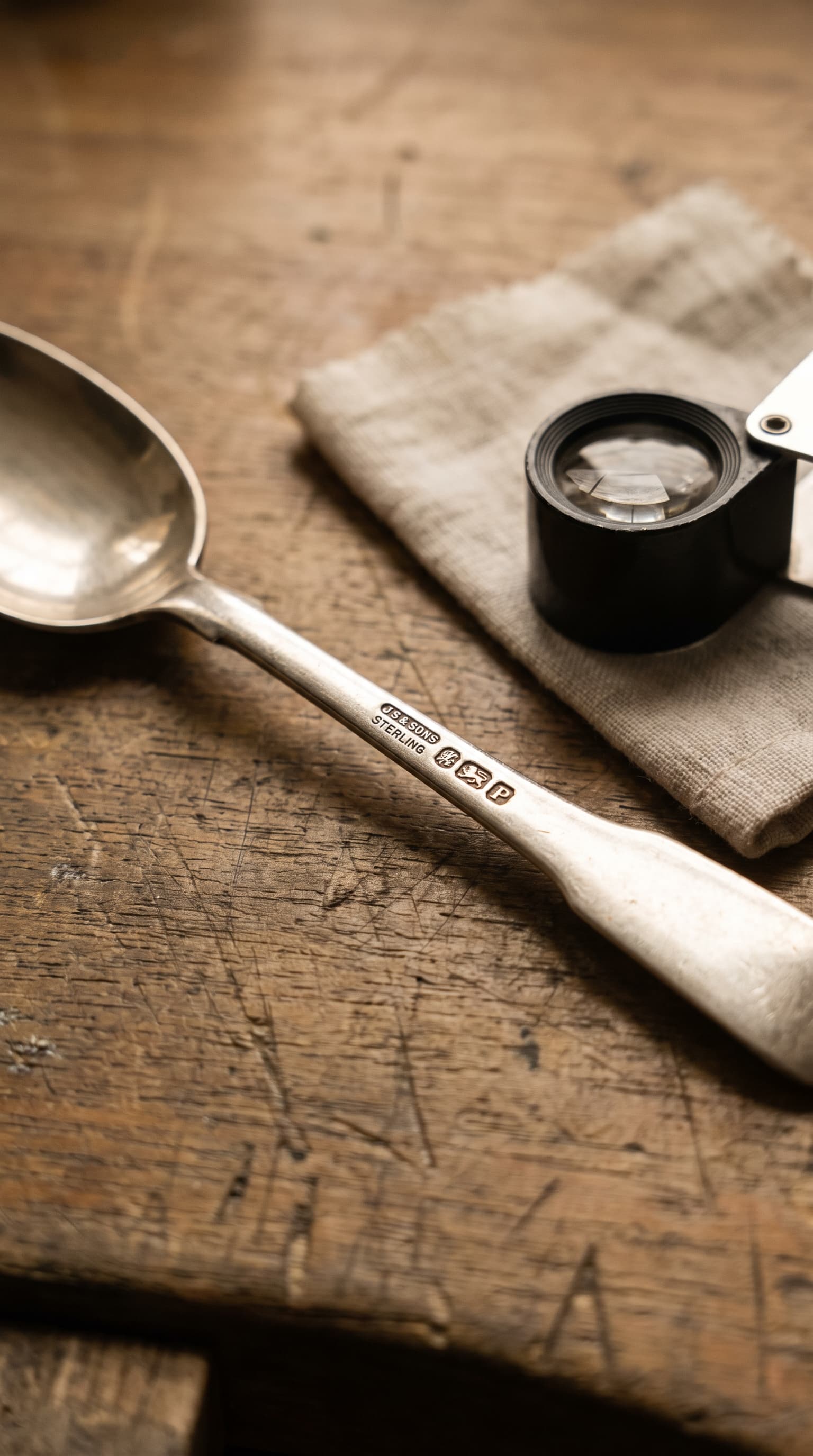
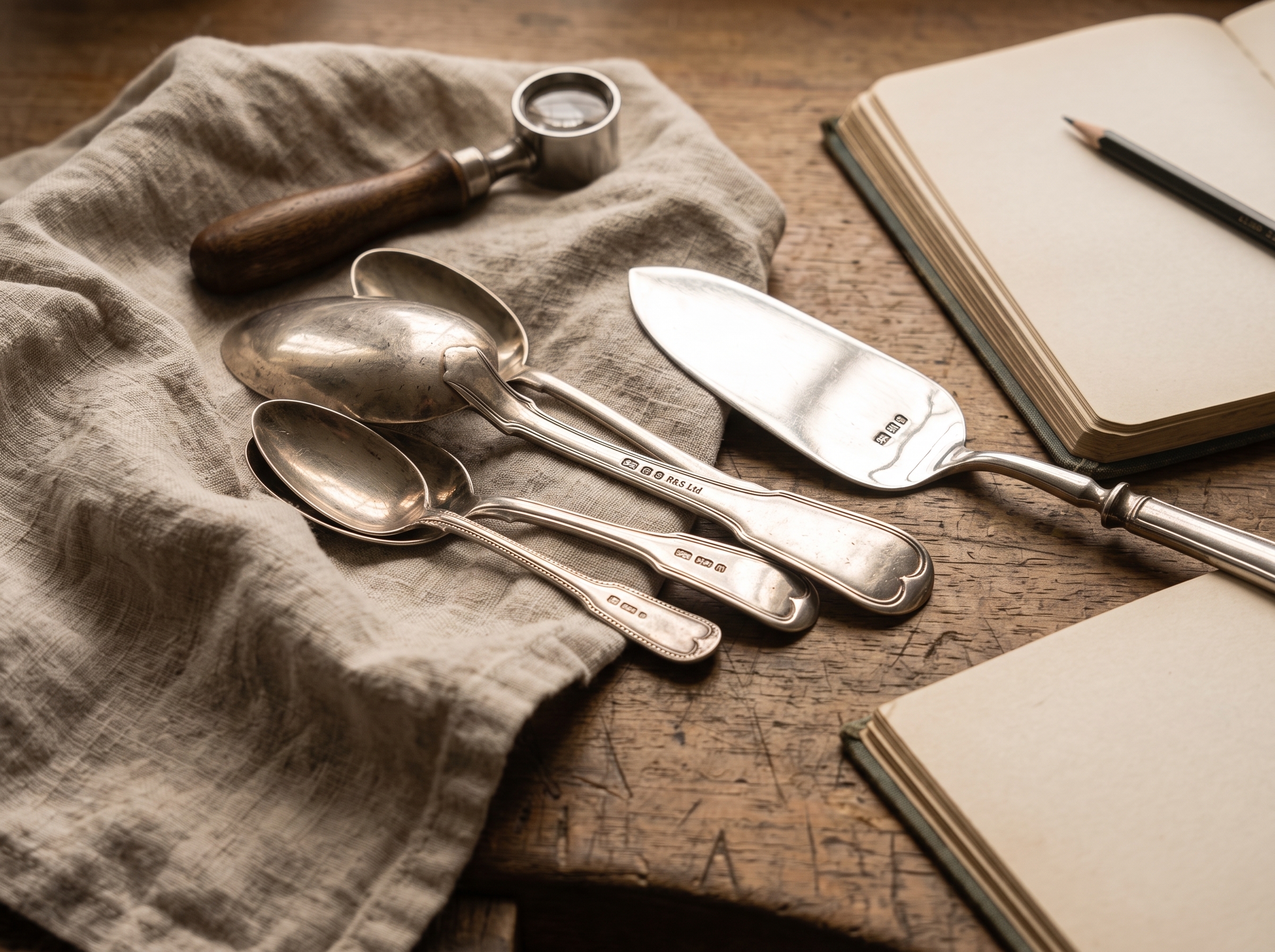
Flatware and serving pieces typically carry marks on the back of handles, near the bowl or tines. Spoons show hallmarks on the reverse side of the handle terminal. Knives often have marks on the blade collar or bolster, not the handle itself (which may be a different material).
Hollowware—teapots, bowls, trays, cups—usually displays marks on the underside of the base. Large pieces may have additional marks inside the rim or on the underside of removable parts like lids. Check both the body and any detachable components; matching marks confirm original assembly.
Jewelry and small objects place hallmarks where they're least visible during wear. Look inside rings, on clasp backs, along chain links, or on the reverse of pendants. Boxes, compacts, and cases often stamp marks on hinges, rims, or hidden interior surfaces.
British silver requires hallmarks in prominent positions, making them easier to spot. American silver sometimes uses smaller, less obvious marks. Continental European pieces may scatter multiple small punches across a single surface.
If you can't locate marks immediately, use a loupe or magnifying glass under strong, angled light. Worn surfaces or decorative engraving can obscure shallow strikes.
What Silver Hallmarks Can and Cannot Tell You
Hallmarks provide specific information, but they're not a complete story.
What hallmarks reveal
Silver hallmarks can identify the purity standard—sterling (92.5% silver), Britannia (95.8%), or coin silver (90%). The fineness mark appears as a number (925, 800) or symbol (lion passant for British sterling).
They often show the maker's mark, typically initials or a symbol registered to a specific silversmith or manufacturer. Combined with other marks, this can pinpoint exactly who made the piece.
Date letters in British and some European systems indicate the assay year. These single letters follow specific fonts and shields that change annually, allowing precise dating when cross-referenced with hallmark tables.
Assay office marks identify where the piece was tested and stamped. British marks use town symbols (leopard's head for London, anchor for Birmingham). French marks use different symbols depending on the period and office.
What hallmarks cannot tell you
Hallmarks don't reveal market value. A properly hallmarked piece might be worth melt value or thousands of dollars—condition, rarity, and maker reputation matter more than marks alone.
They rarely indicate exact maker identity without research. Maker's marks require cross-referencing against databases or reference books. Thousands of silversmiths used similar initials.
Marks don't guarantee authenticity. Forgers stamp fake hallmarks on plated pieces, reproductions, or modern silver. Genuine-looking marks on a poorly made object should raise suspicion.
Hallmarks can't tell you purpose or original context of altered pieces. A hallmarked Georgian cream jug converted to a syrup pitcher in 1920 shows only its original manufacture date, not its modification.
Common Silver Hallmark Misreads
Misinterpreting hallmarks leads to wrong conclusions about age, origin, and value.
Confusing silver plate marks with hallmarks is extremely common. "EPNS" (electroplated nickel silver), "Sheffield Plate," or "Silver Plate" are not purity marks—they indicate plating over base metal. These pieces contain minimal silver and rarely carry genuine hallmarks.
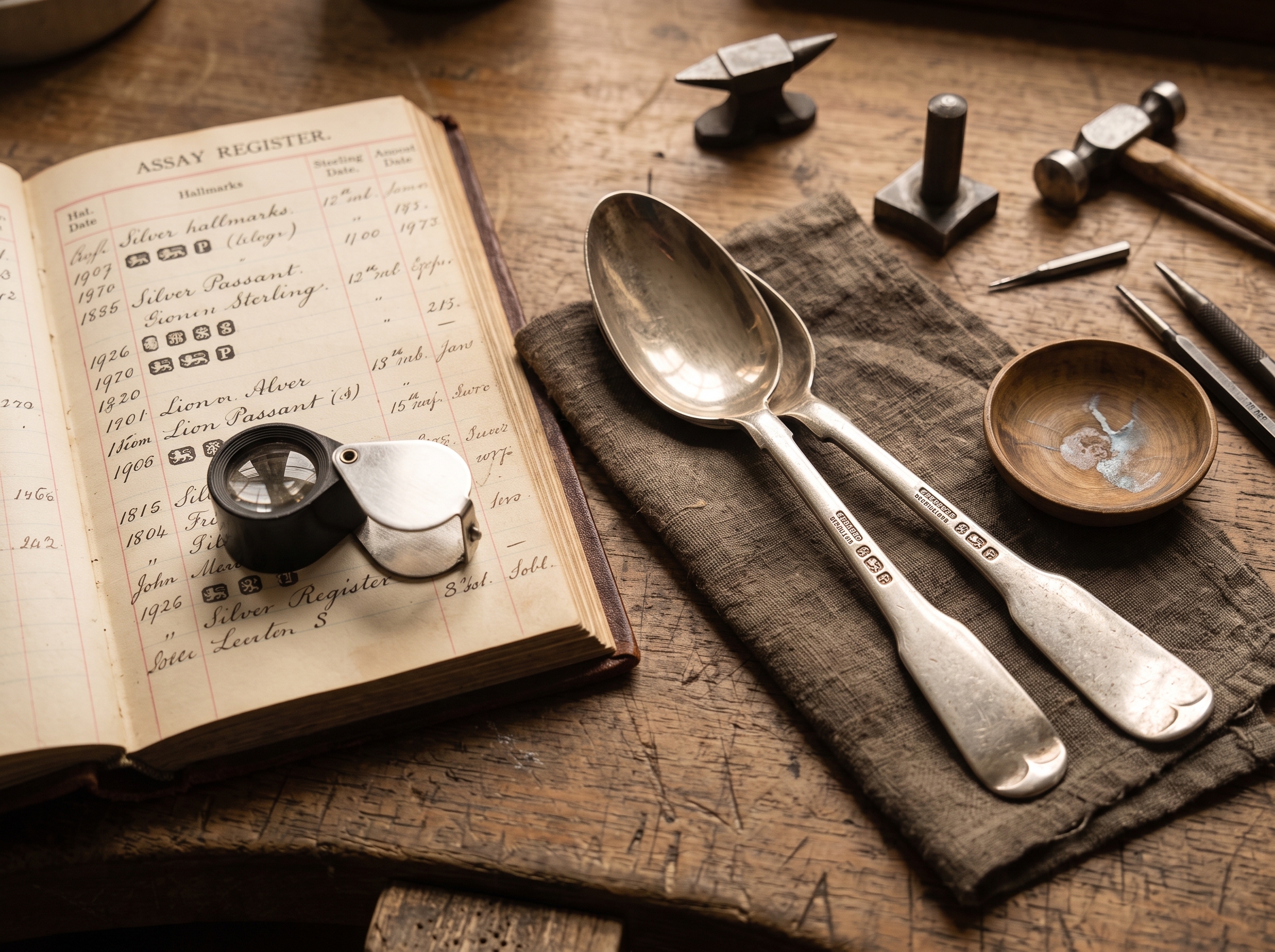
Misreading date letters happens when collectors don't account for font and shield variations. The letter "A" appears in multiple cycles, each in different typefaces within different-shaped shields. Without the complete context, a date letter alone proves nothing.
Assuming all marks are official hallmarks overlooks manufacturer stamps, pattern numbers, and retailer marks. "STERLING" alone is a quality claim, not a regulated hallmark. True hallmarks include multiple punches—purity, maker, assay office, and often a date.
Mixing up national systems creates confusion. A French eagle mark looks nothing like a British lion passant, but both indicate sterling purity. American pieces often use only "STERLING" or "925" without the complex multi-mark systems of European silver.
Overlooking partial or worn marks leads collectors to dismiss genuine pieces. A faint or incomplete strike might preserve enough detail to identify—or it might be impossible to read. Shallow marks on heavily polished areas fade first.
Reading marks upside down or backwards happens with irregular surfaces. Hallmarks punched on curved or angled areas may appear rotated or mirrored depending on viewing angle.
How Photos of Silver Hallmarks Improve Identification Results
Clear hallmark photos dramatically increase identification accuracy, but silver's reflective surface makes this challenging.
Lighting angle matters more than brightness. Direct overhead light creates glare that washes out detail. Use angled light from one side to create shadows inside the stamped impressions. This reveals letter shapes and symbol details invisible under flat lighting.
Multiple photos capture what single images miss. Take one shot with light from the left, another from the right, and a third from above at a slight angle. Different lighting reveals different mark details.
Get close enough to fill the frame. Hallmarks are often tiny—2-3mm tall. A photo showing the entire spoon doesn't capture readable mark detail. Zoom in or use macro mode so individual marks occupy most of the image.
Include context shots. After close-ups, photograph the marks in relation to the object. This shows placement and helps confirm whether you've found all marks present. Some pieces carry marks in multiple locations.
Clean marks gently before photographing. Tarnish and dirt fill stamped impressions, obscuring detail. A soft cloth or gentle soap wash often reveals hidden marks. Never polish aggressively—you might remove the marks themselves.
Avoid extreme angles that distort proportions. While angled lighting helps, photographing from too steep an angle makes letters appear compressed or stretched. Keep the camera roughly perpendicular to the marked surface.
Note the surface condition. Mention if the area is worn, polished, or damaged. This context helps explain why marks appear faint or incomplete.
When you upload photos to Tocuro, the combination of clear hallmark images and contextual shots helps identify maker, date range, and origin more accurately than marks alone. Tocuro provides estimated value ranges based on market signals—not formal appraisals—but knowing exactly what you have is the essential first step toward understanding what it might be worth.
Reading Silver Hallmarks Takes Practice and Context
Silver hallmarks offer more concrete information than most antique marks, but they require careful examination and cross-referencing. The same mark can mean different things depending on surrounding stamps, national origin, and time period. Photos that capture clear, well-lit marks from multiple angles give you—and identification tools—the best chance of accurate results.
Whether you're examining a single spoon or an entire tea service, start with the hallmarks, understand their limits, and photograph them thoroughly. The marks are your starting point, not your complete answer.
Photo identification
Identify a Silver Hallmark
Use Tocuro to identify your item from a photo and get an estimated value range when market data is available.