
Silver Coin Identification: How to Identify Mint, Denomination, and Value
Silver coin identification requires clear photos of both obverse and reverse sides, attention to mint marks and edge details, and understanding which features determine authenticity and value. This guide shows you which clues matter most and how to photograph silver coins for accurate identification.
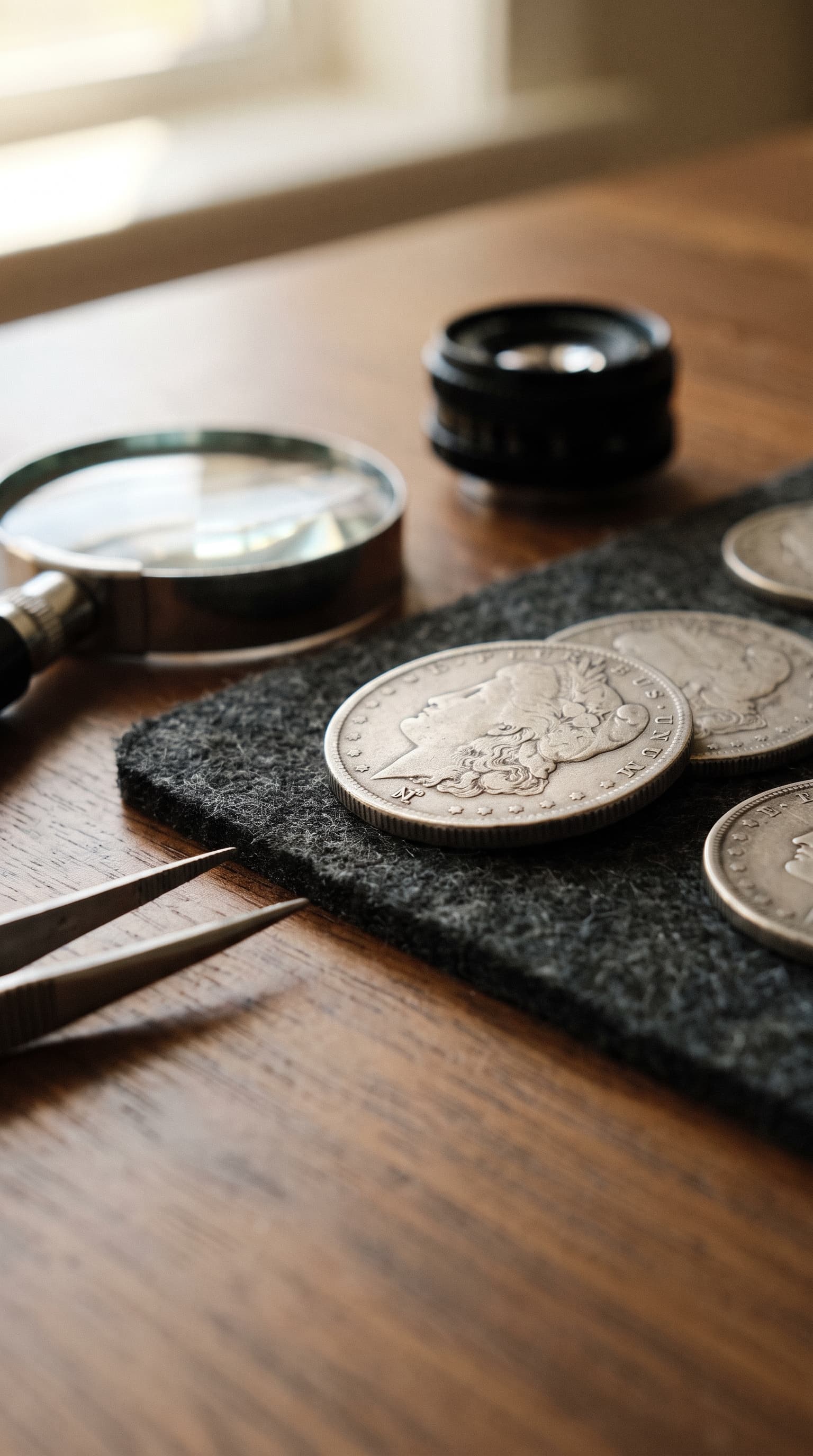
Silver Coin Identification: How to Identify Mint, Denomination, and Value
Silver coin identification starts with reading both sides of the coin carefully. The obverse (heads) and reverse (tails) each carry essential clues—dates, mint marks, denominations, and design details that tell you what country issued it, when, and often what it's worth. Unlike old coin identification that spans many materials and eras, silver coins demand attention to metal content, edge features, and subtle variations that separate common circulation pieces from valuable rarities.
Most collectors inherit or purchase silver coins without documentation. You might have a Morgan dollar, a Mercury dime, or a foreign crown piece—but without knowing the mint, year, and condition grade, you're guessing at value. The good news: silver coins were made to be read. Governments stamped them with identifying marks precisely so merchants and citizens could verify authenticity. Your job is knowing where to look.
What Clues Matter Most for Silver Coin Identification
Date and Mint Mark
The date tells you the year of issue. The mint mark—a small letter near the date or on the reverse—tells you which facility struck the coin. On U.S. coins, "S" means San Francisco, "D" means Denver, "O" means New Orleans, "CC" means Carson City. Some years and mints produced far fewer coins than others, and rarity drives value. A 1921 Morgan dollar from Philadelphia (no mint mark) is common; a 1921-S is less so.
Mint marks are often tiny—sometimes just 1-2 millimeters. They can appear below the date, above the denomination, near the rim, or tucked into the design. On Walking Liberty half dollars, the mint mark hides on the reverse near the eagle's tail feathers. On Mercury dimes, it's on the reverse to the left of the fasces. If you can't find it, you're probably looking at a Philadelphia coin, which often carries no mark.
Denomination and Design Type
The denomination (face value) appears on nearly every coin, but design type matters just as much. U.S. silver coins include dimes, quarters, half dollars, and dollars, but each denomination went through multiple design eras. A silver dollar could be a Morgan, a Peace, an Eisenhower, or a commemorative. Each type has different weight, diameter, and collector demand.
Foreign silver coins add layers of complexity. A British crown, a Mexican peso, and a Canadian dollar all look different and contain varying silver content. The design—portrait, heraldic symbols, inscriptions—quickly narrows the country and era.
Edge Features
Most silver coins have reeded (ridged) edges, but some are smooth or lettered. The edge can confirm authenticity and help identify specific issues. Counterfeiters often miss edge details, so a coin with the wrong edge style raises red flags. True silver coins also have a distinct weight and ring when balanced on a fingertip and tapped—though this test requires experience.
Silver Content Marks
Some coins state their silver content directly: ".925 SILVER," "STERLING," or a fineness number like "0.500." Others rely on the year and denomination to imply content. U.S. dimes, quarters, and half dollars minted before 1965 are 90% silver. Eisenhower dollars from 1971–1974 in circulation are copper-nickel; only special collector editions contain silver. Knowing the transition dates for each country and denomination is critical.
What Photos to Take for Silver Coin Identification
Good photos make identification fast and accurate. Poor lighting or blurry shots hide the very details that separate one coin from another.
Obverse and Reverse, Straight-On
Photograph each side separately, holding the camera directly above the coin. Avoid angles—they distort the shape and make text hard to read. Use natural light or a bright LED. Shadows and glare obscure mint marks and fine details. A plain white or dark background helps the coin stand out.
Close-Up of the Mint Mark Area
If the mint mark is visible, take a close-up. Crop tightly so the letter fills a good portion of the frame. Mint marks can be weak strikes, re-punched, or confused with design elements. A clear photo settles questions fast.
Edge View
Turn the coin on its side and photograph the edge. This confirms reeding, lettering, or smooth finish. It also shows thickness, which can reveal plated fakes or wrong-metal strikes.
Date and Inscription Detail
Zoom in on the date and any inscriptions. Wear, cleaning, or damage can alter digits. A "3" worn down might look like an "8." A clear photo captures what's actually there, not what you hope to see.
Common Misidentifications in Silver Coin Identification
Clad Coins Mistaken for Silver
U.S. quarters and dimes minted after 1964 look silver but are copper-nickel clad. The easiest tell: check the edge. Silver coins show consistent silver-gray metal all the way through. Clad coins show a copper stripe sandwiched between nickel layers. Weight also differs—silver is heavier—but the edge view settles it instantly.
Peace Dollars Confused with Morgan Dollars
Both are large U.S. silver dollars. Both feature Liberty on the obverse. But Peace dollars (1921–1935) show Liberty facing left with a radiant crown and an eagle at rest on the reverse. Morgan dollars (1878–1904, 1921) show Liberty facing left with a coronet and an eagle with spread wings. The reverses are completely different. If you only photograph the obverse, you might mix them up.
Foreign Crowns Assumed to Be Dollars
British crowns, Austrian thalers, and other large foreign silver coins resemble U.S. dollars in size. Collectors unfamiliar with foreign issues sometimes call anything dollar-sized a "silver dollar." The inscriptions and portraits tell the real story. Latin text, non-English denominations, and unfamiliar rulers point to foreign origin. Check both sides.
Cleaned or Damaged Coins Overvalued
Silver coins that have been polished, scrubbed, or harshly cleaned lose much of their collector value. Cleaning removes the natural toning and microscopic surface details that grading services use to assign grades. A coin might be silver, might be old, might be from a desirable mint—but if it's been cleaned, it often sells for little more than its melt value. Photos that show unnatural brightness, scratches, or patchy color suggest cleaning.
Re-Strikes and Replicas
Some silver coins were officially re-struck years after their original date, using the same dies or new ones. Others are modern replicas sold as collectibles or jewelry. A coin marked "COPY," with unusual weight, or lacking mint mark details may not be an original issue. Photos of both sides, the edge, and any additional marks help separate authentic pieces from reproductions.
What Tocuro Can Help Resolve
Silver coin identification can be frustrating when mint marks hide in shadow, foreign inscriptions are unfamiliar, or you simply don't know where to start. Tocuro's photo-based identification cuts through the guesswork. Upload clear images of both sides—obverse, reverse, edge if possible—and Tocuro identifies the mint, denomination, and design type from market signals and visual matching.
Tocuro also provides estimated value ranges based on comparable sales, not formal appraisals. You'll see what similar coins in similar condition have sold for recently, which helps you decide whether to hold, sell, or research further. The platform handles U.S. silver coins, foreign issues, and commemoratives, recognizing design details that separate common dates from key rarities.
You get 7 free identifications per day, and the count resets daily—plenty of runway to work through an inherited collection or confirm a flea market find before committing to a purchase.
Start Identifying Your Silver Coins
Silver coin identification rewards careful observation. Capture both sides in good light, check for mint marks and edge features, and compare what you see against known types. When you're ready for a faster answer—or when a coin stumps you—identify your item with Tocuro. Upload your photos and let the platform do the detective work, so you can move from mystery to confidence in minutes.
Photo identification
Identify Your Coin
Use Tocuro to identify your item from a photo and get an estimated value range when market data is available.