
Serving Platter Identification: How to Identify Antique Platters from Photos
Identifying antique serving platters requires close attention to maker's marks, pattern details, material characteristics, and shape. This guide shows you exactly what clues matter most and which photos help reveal a platter's maker, age, and potential value.
Serving Platter Identification: How to Identify Antique Platters from Photos
Serving platter identification can feel like detective work—especially when you're dealing with an oversized piece covered in intricate patterns, mystery marks, or no marks at all. Unlike smaller dinnerware that often carries clear backstamps, platters present unique challenges: their size makes full-surface photography tricky, marks can be faint or worn from decades of use, and patterns may span multiple coordinating pieces across a set.
Whether you've inherited a hand-painted turkey platter, found a flow blue oval at an estate sale, or uncovered a mid-century modern serving piece, knowing what clues to capture in photos makes all the difference in identifying maker, age, and pattern.
What Clues Matter Most for Serving Platter Identification
Platters reveal their identity through a combination of marks, materials, construction methods, and decorative details. Start with the underside—that's where most of the hard evidence lives.
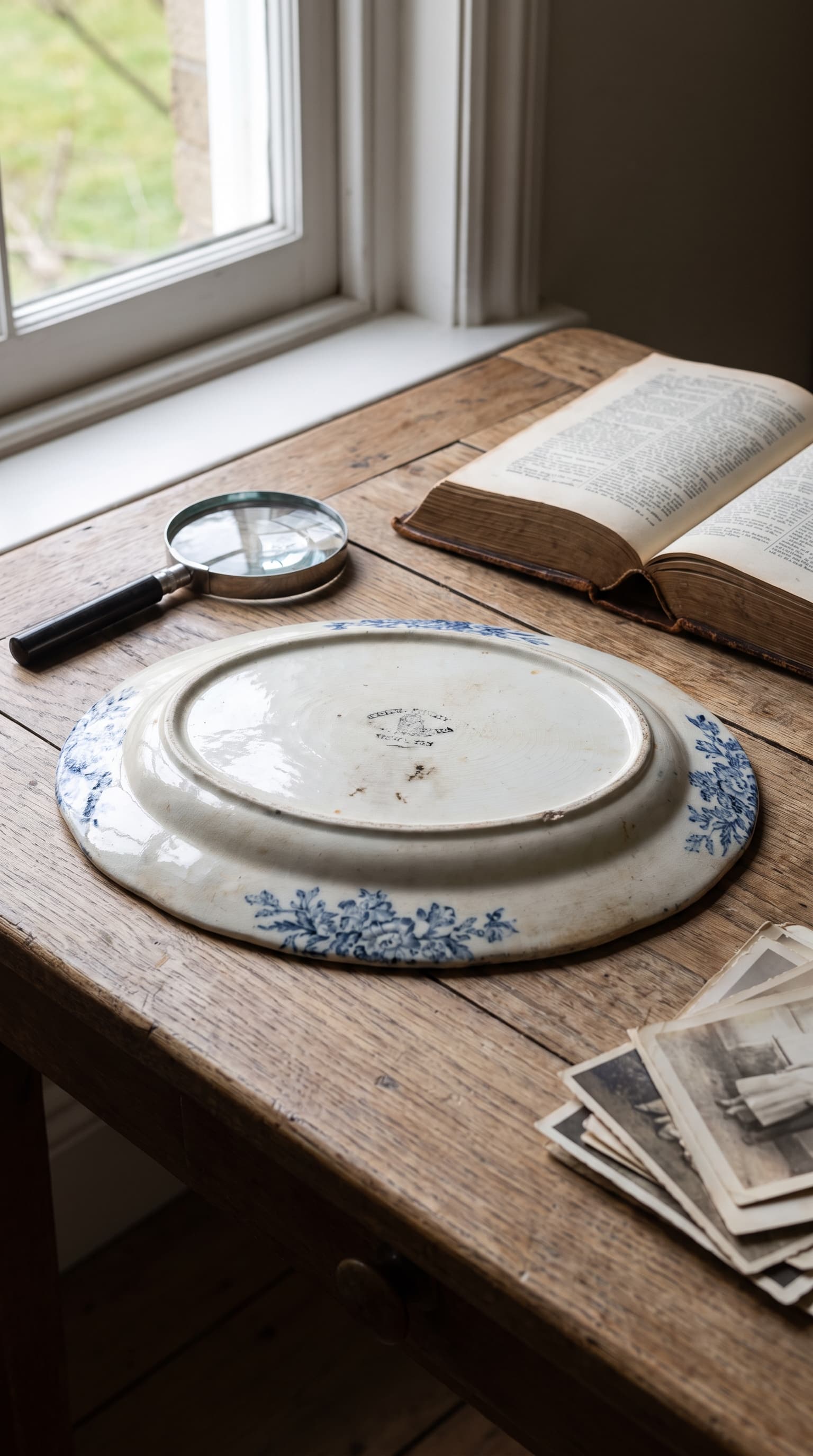
Maker's marks and backstamps are your first stop. Turn the platter over and look for printed, impressed, or painted marks. These can include company names (like "Homer Laughlin" or "Johnson Brothers"), pattern names, country of origin, registration numbers, or symbols. Marks changed frequently as companies evolved, so even subtle differences in font, color, or placement can narrow down a production date by decades. Watch for stacked marks—some platters carry both the pottery mark and a separate retailer's stamp.
Material type shapes every other aspect of identification. Porcelain feels smooth and translucent when held to light. Ironstone is heavy, dense, and opaque. Earthenware is softer and often shows crazing in the glaze. Stoneware has a matte, sturdier feel. Pressed glass platters will show mold seams and pontil marks on the base. Each material corresponds to specific makers, eras, and production methods.
Shape and rim style offer dating clues. Oval platters with scalloped or embossed edges were common in Victorian-era ironstone. Rectangular platters with straight sides gained popularity mid-century. Deep-well platters (with a recessed center) often date to the early 1900s through the 1940s. Tab handles, pierced edges, or unusual silhouettes can point to specific makers or patterns.
Pattern style and application method tell you how and when a platter was decorated. Hand-painted details show brush strokes and slight variations. Transfer prints have crisp, repeating images—look for the telltale stippling or crosshatching under magnification. Decals were used heavily after the 1950s and may show a slightly raised edge where the decal layer sits on top of the glaze. Flow blue, majolica, and spongeware each have distinctive visual signatures that experienced collectors recognize immediately.
Size and weight matter more than you'd think. A 16-inch ironstone platter from the 1880s will feel substantially heavier than a 1950s porcelain piece of the same size. Extremely large platters (18+ inches) were often made for special occasions or commercial use, which can affect both rarity and value.
What Photos to Take for Serving Platter Identification
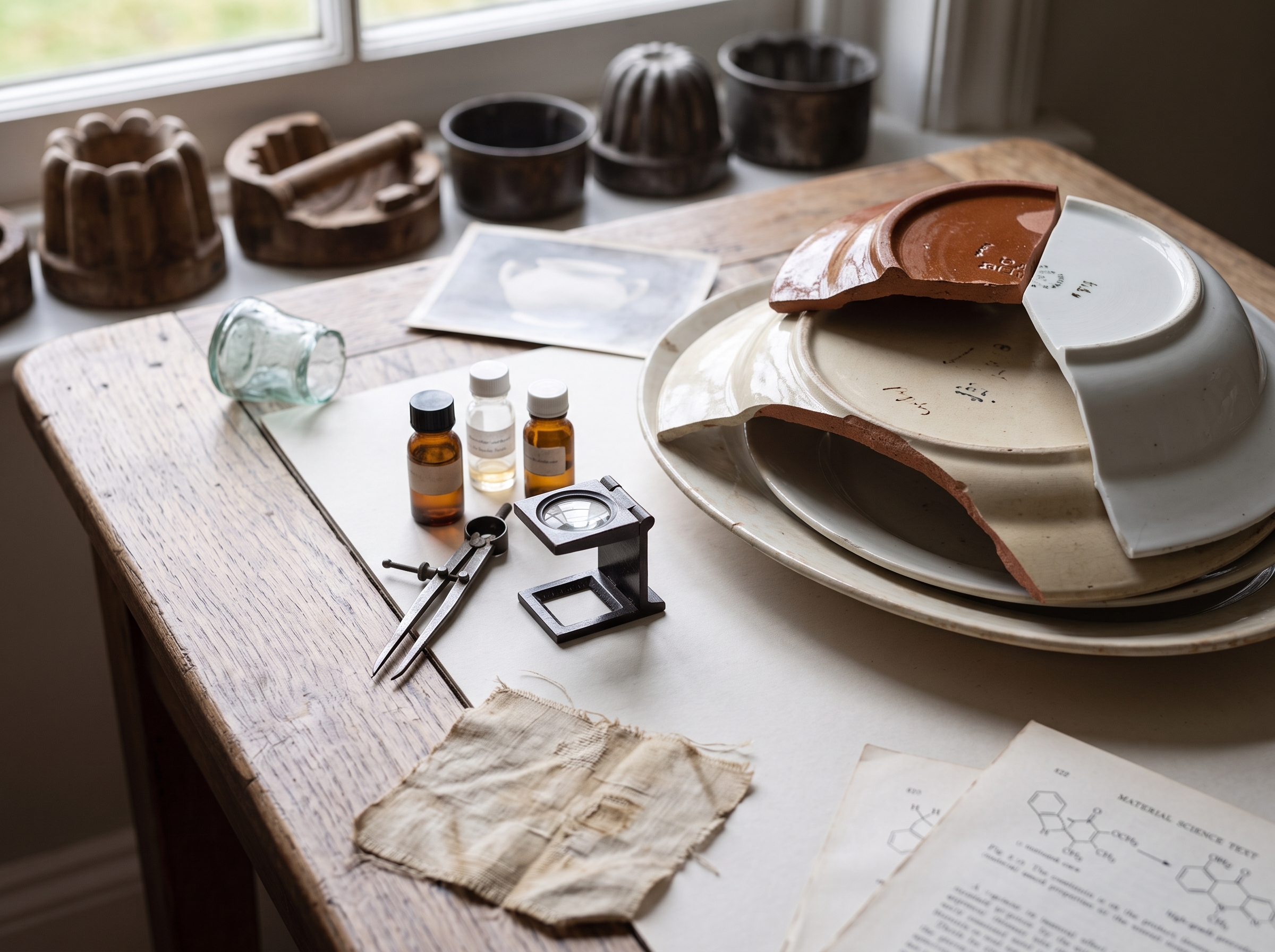
Because platters are large and details can be subtle, you need multiple angles to capture all the identifying information. Plan to take at least five focused shots.
Full backstamp and mark closeup: Flip the platter over and photograph any marks straight-on with even lighting. Avoid shadows cast by your phone or camera. If the mark is faint, try angling light from the side to create contrast. Capture the entire mark area, even if parts seem blank—ghost marks and worn-off sections tell their own story.
Overall top view: Lay the platter flat and photograph the entire decorated surface from directly above. This shows the full pattern, color palette, and any damage or repairs. Make sure the edges are in frame—rim treatments are often key identifiers.
Edge and rim detail: Get close to the edge to show texture, embossing, gilding, or edge decoration. Many patterns have distinctive borders that help distinguish one maker's "Rose" pattern from another's.
Side profile: A side shot reveals the platter's depth, weight, and foot ring style. This angle shows whether the piece is flat, slightly dished, or deep-welled. It also captures any warping, which can indicate age or firing methods.
Specific pattern motifs: If your platter has a central scene, monogram, or unusual decorative element, zoom in on that. These signature details often appear in pattern books and collector references. Close-ups of hand-painted brush strokes or transfer print stippling can help confirm decoration methods.
For oversized platters, shoot in good natural light near a window. Overhead lighting can wash out subtle mark details and glaze colors.
Common Misidentifications in Serving Platter Identification
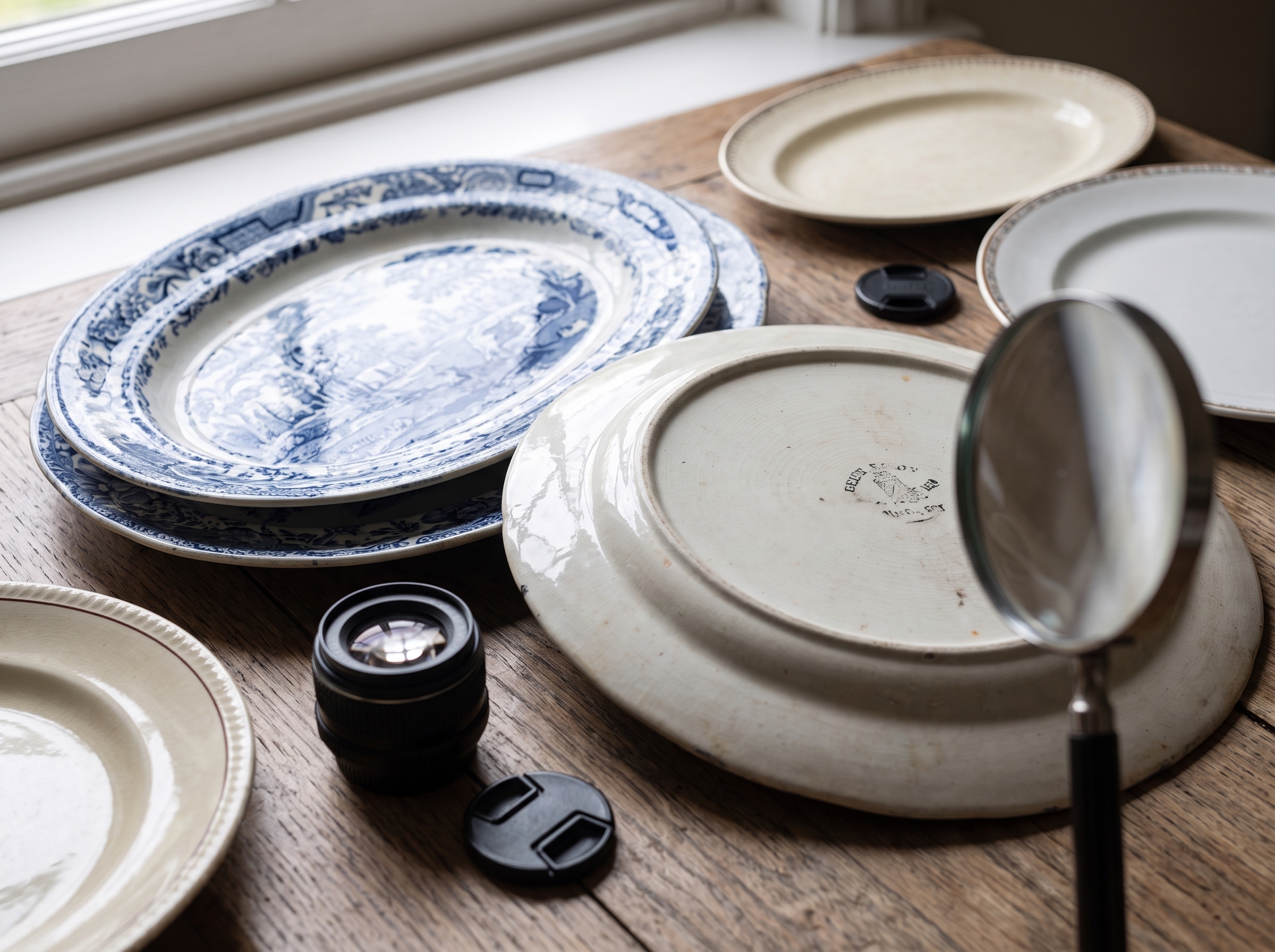
Platters often get mislabeled, and certain assumptions trip up even experienced collectors.
Not all white ironstone is English: American potters like Homer Laughlin, Knowles Taylor Knowles, and Buffalo Pottery produced massive quantities of white ironstone from the 1880s onward. A heavy white platter with no mark is more likely American than English unless other clues confirm otherwise.
Flow blue isn't always old: The distinctive blurred cobalt decoration was reproduced heavily in the 1960s–1980s. Reproductions often lack the depth of color and crazing seen in Victorian-era pieces. Marks can help, but many reproductions carry fake or ambiguous backstamps.
"Hand-painted" claims need verification: Many mid-century platters have decals that were then overpainted or accented by hand. True hand-painted pieces show variation, while decal-based decoration has repeating precision. Both can be collectible, but they're not the same thing.
Pattern names aren't always unique: "Willow," "Rose," "Ivy," and other generic names were used by dozens of makers. Without a maker's mark, pattern name alone won't identify a platter. You need to match the specific border style, central motif, and color palette to narrow down the source.
Registration marks aren't dates: English diamond-shaped registration marks indicate when a design was registered, not necessarily when your specific platter was made. Production could continue for decades after registration.
What Tocuro Can Help Resolve
When you're staring at a faint mark, a busy pattern, or a platter with no visible backstamp at all, expert identification tools make a real difference. Tocuro identifies serving platters from photos by analyzing maker's marks, pattern details, material characteristics, and edge treatments across a broad database of historical tableware.
Upload clear photos of your platter's backstamp, pattern, and rim, and Tocuro's identification system compares them against known examples to suggest maker, pattern name, and production era. It's particularly helpful for resolving ambiguous marks, distinguishing between similar patterns from different makers, and identifying unmarked pieces based on shape and decoration style.
Tocuro also provides estimated value ranges based on current market signals, so you'll have a practical sense of what similar platters are selling for. These estimates aren't formal appraisals, but they give you a grounded starting point whether you're cataloging a collection, preparing for a sale, or just curious about a family piece.
You get 7 free identifications per day, and the count resets daily—plenty of room to work through a full set of tableware or compare multiple estate sale finds. For related dinnerware, check out our guides on vintage dinnerware identification, plate identification, and antique china identification.
Ready to Identify Your Serving Platter?
Grab your platter, flip it over, and start with the mark. Capture clear photos of the backstamp, pattern, and edges, then upload them to Tocuro to get an identification and value estimate. Whether you're tracking down a family heirloom's origins or pricing estate finds, the right photos and tools make serving platter identification straightforward.
Photo identification
Identify Your Item
Use Tocuro to identify your item from a photo and get an estimated value range when market data is available.