
Ring Identification: How to Identify Vintage Rings from Photos
Identifying vintage rings requires close attention to metal marks, setting construction, and period-specific design details. This guide shows you which clues matter most and how to photograph them clearly for accurate ring identification.
Ring Identification: How to Identify Vintage Rings from Photos
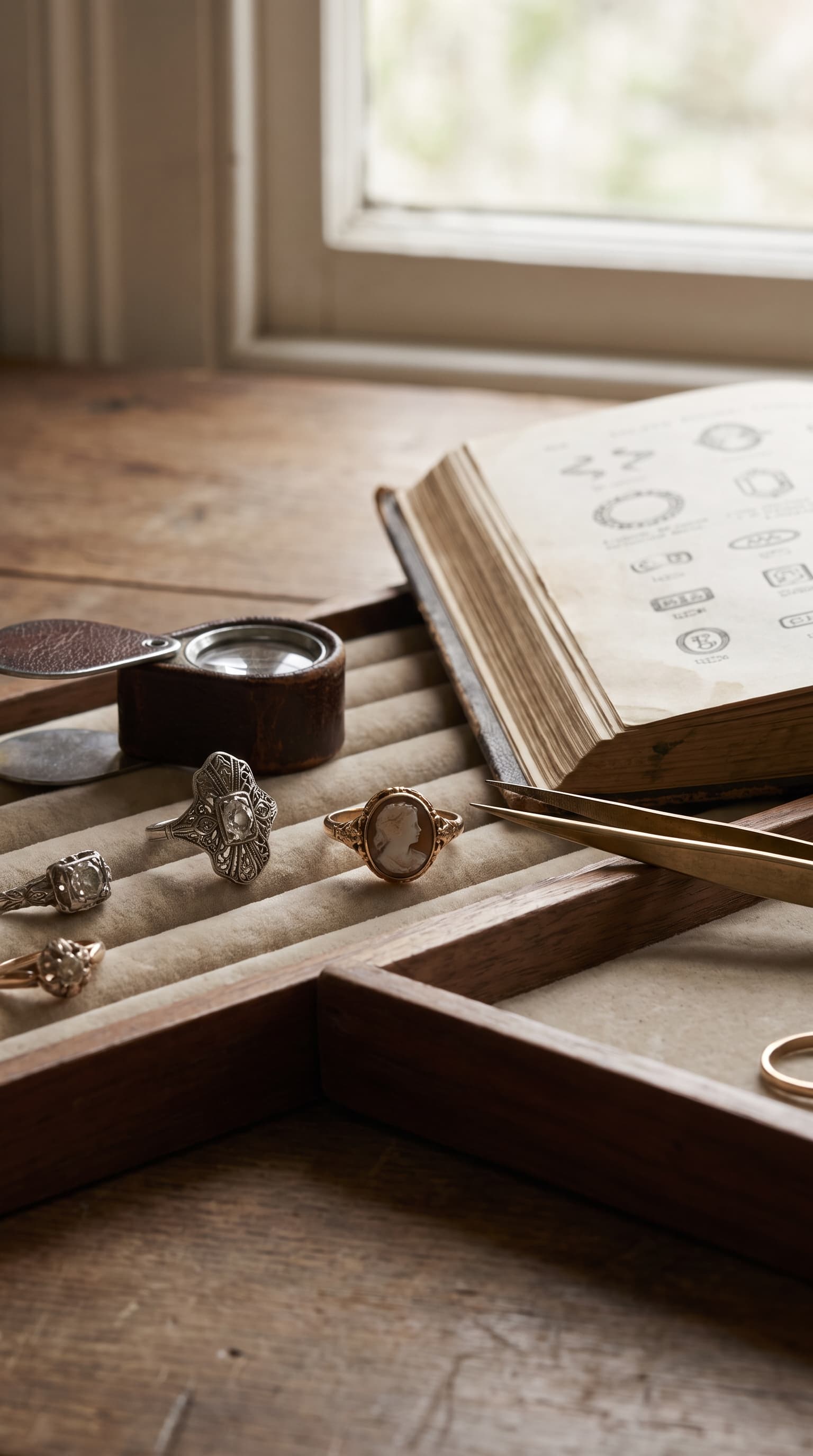
When you inherit a ring or find one at an estate sale, the questions come fast: What metal is this? How old is it? Who made it? Ring identification starts with understanding which physical clues matter most—metal hallmarks, setting style, construction methods, and design details that point to specific eras. Unlike other jewelry, rings pack a lot of information into a small surface, and knowing where to look makes all the difference.
What Clues Matter Most for Ring Identification
Rings tell their stories through details that are easy to miss if you don't know what to look for.
Metal Marks and Hallmarks
The inside shank is where most rings carry their identification stamps. Look for purity marks like "14K," "585," "925," or "PLAT." Maker's marks—small symbols, initials, or names—often appear next to these metal stamps. European rings may show multiple hallmarks including date letters, assay office marks, and maker symbols. These marks can narrow down country of origin, time period, and sometimes the exact manufacturer.
Not all vintage rings are marked, especially those made before the 20th century or by small independent jewelers. Unmarked doesn't mean worthless or fake—it just means you'll need to rely more heavily on construction and style clues.
Setting Construction and Technique
How a stone is held in place reveals a lot about when and how a ring was made. Prong settings with hand-formed claws suggest older handwork, while uniform machine-made prongs point to later production. Bezel settings—where metal wraps completely around the stone—were popular in different forms across many eras, from Georgian through Art Deco.
Look at the underside of the setting. Open backs that let light through became common in the late 1800s. Earlier Georgian and some Victorian rings often have closed backs, sometimes with foil backing to enhance gemstone color. The quality and style of milgrain (tiny beaded edging), engraving, and filigree work also point to specific periods and production methods.
Shank Shape and Wear Patterns
The band itself offers clues. Hand-forged shanks from earlier periods may show slight irregularities. Machine-made shanks from the 20th century forward tend to be more uniform. The shank's shape—flat, rounded, knife-edge, or half-round—can suggest era and style.
Wear patterns matter too. A ring worn for decades develops specific thinning on the underside of the shank. New rings artificially aged won't show this natural wear in the right places.
Design and Stone Cut
Certain design elements cluster in specific periods. Art Deco rings (1920s-1930s) favor geometric patterns, platinum settings, and calibré-cut stones. Victorian rings (1837-1901) often feature romantic motifs, colored stones, and intricate gold work. Retro-era rings (1940s) show bold, chunky designs with large center stones and pink or yellow gold.
Gemstone cuts evolve over time. Old mine cuts, old European cuts, rose cuts, and modern brilliant cuts each belong to different eras. The cut alone won't date a ring definitively—stones get reset—but original settings with period-appropriate cuts strengthen identification.
What Photos to Take for Ring Identification
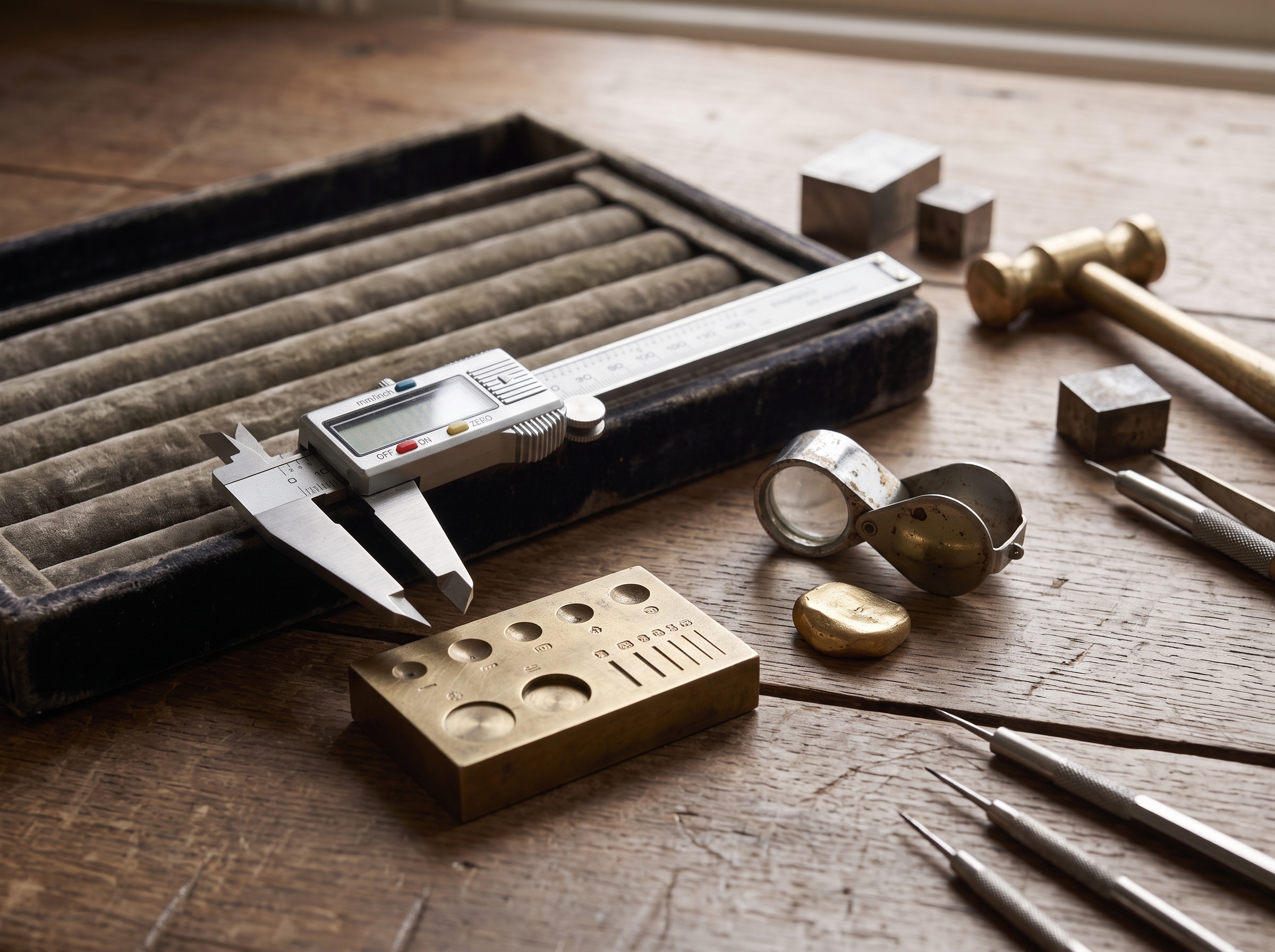
Good photos transform guesswork into solid identification. You need shots that capture both the big picture and the tiny details.
Start with the inside shank. This is where hallmarks and maker's marks live. Use bright, even lighting—natural daylight works best. Hold the camera steady and get close enough that marks fill the frame. Even blurry marks are harder to read than small but sharp ones. If you have a macro lens or macro mode on your phone, use it. For more guidance on capturing clear marks, see our guide on how to photograph maker marks.
Shoot the top view showing the entire face of the ring. This captures the overall setting style, stone arrangement, and design motifs. Keep the ring flat and level so the photo doesn't distort proportions.
Capture the side profile from both sides. This shows how the setting sits above the shank, the depth of the mounting, and construction details like prongs, bezels, and gallery work underneath the head.
Photograph the underside of the setting if you can angle it properly. This reveals whether the setting has an open or closed back and shows how the jeweler finished the metalwork.
If there's engraving, filigree, or decorative detail, take close-up shots of those areas. These design elements often reflect specific periods and can help narrow down when a ring was made.
For rings with colored stones or unusual materials, photograph them in both natural and indoor light. Some stones shift color depending on lighting, which is itself a clue to identity.
Common Misidentifications in Ring Identification
Certain assumptions trip up even experienced collectors when identifying vintage rings.
Assuming All Old-Looking Rings Are Antique
Reproduction rings styled after Georgian, Victorian, and Art Deco pieces have been made for decades. A ring can look old without being old. Check construction details: modern reproductions often use casting techniques that leave telltale seams and uniform textures. Hand-forged vintage work shows tool marks and slight irregularities that mass production doesn't replicate.
Confusing Plating with Solid Metal
Gold-filled, gold-plated, and vermeil rings can look like solid gold at first glance. Marks like "GF," "GP," or "HGE" (heavy gold electroplate) indicate surface treatments, not solid metal. Wear on high-contact areas may expose base metal underneath. These rings can still have collector value, but they're not solid gold.
Misreading European Marks
European hallmarks use numbers like "585" (14K) or "750" (18K) instead of karat stamps. Country-specific marks—like the French eagle or British lion passant—indicate metal purity and origin. Without understanding the system, it's easy to mistake these symbols for maker's marks or decorative stamps. Our article on jewelry marks identification can help decode these hallmarks.
Trusting Stone Type Over Setting Clues
A genuine old mine cut diamond doesn't guarantee the ring is old—stones get reset constantly. Focus on the setting, metalwork, and construction first. The stone cut and type support the identification but shouldn't drive it alone.
Overlooking Repairs and Alterations
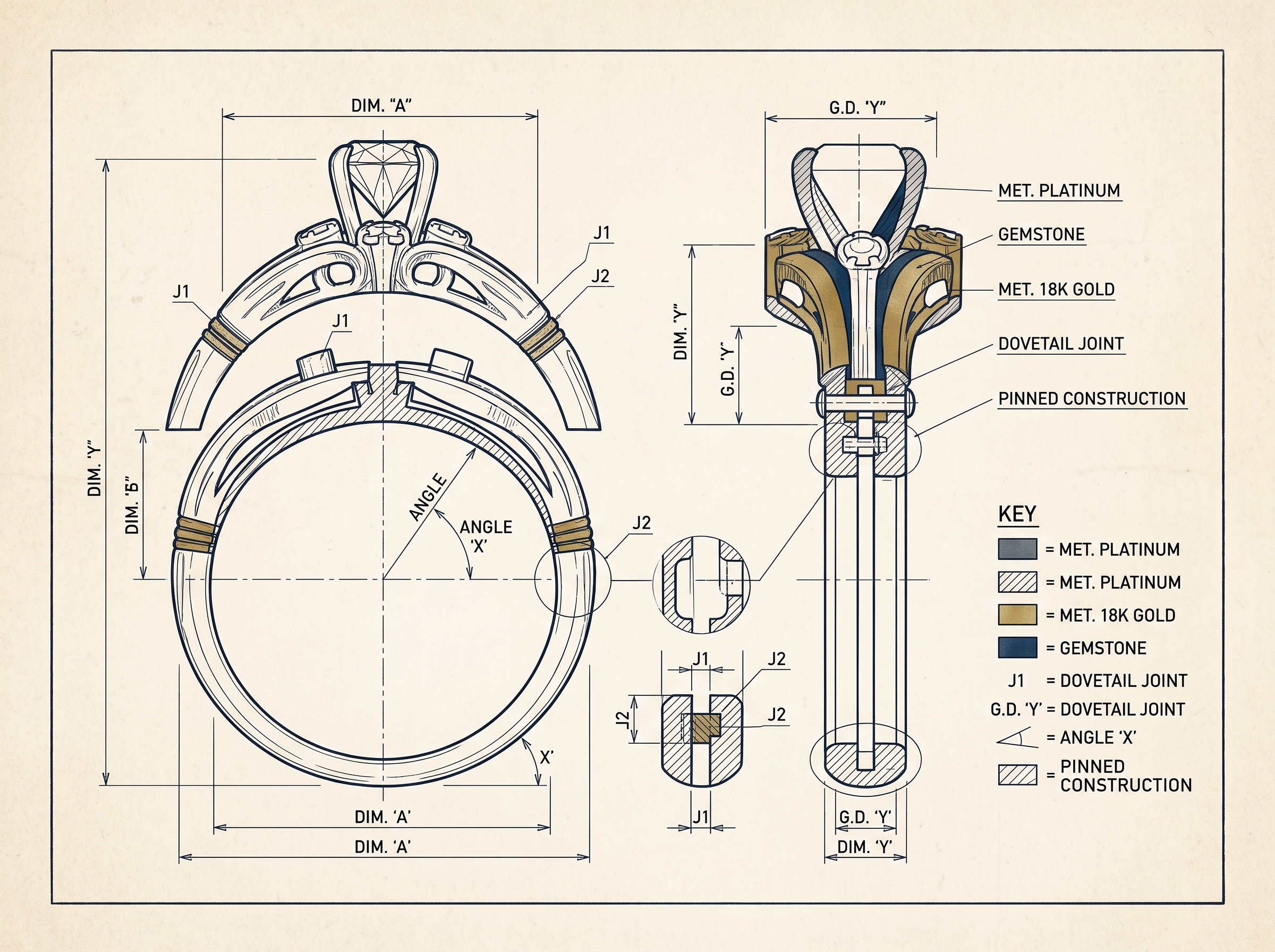
Many vintage rings have been resized, re-shanked, or had stones replaced. A Victorian head on a modern shank is common. Look for solder lines, color mismatches in the metal, and changes in wear patterns that suggest work has been done. These don't ruin a ring's value, but they do affect how you identify and describe it.
What Tocuro Can Help Resolve for Ring Identification
Some identification questions need expert eyes and market context. Tocuro helps you move past uncertainty by analyzing your ring photos and providing identification based on visual clues, hallmark databases, and current market signals.
When you upload clear photos to Tocuro—inside shank marks, top view, profile, and detail shots—the platform examines setting style, metal marks, construction techniques, and design elements. You get an identification that includes likely era, metal type, and style category. Tocuro also provides estimated value ranges based on real market signals, not formal appraisals, so you understand what similar rings are selling for.
This approach works especially well when hallmarks are present but unfamiliar, when design details point to a specific period but you're not sure which, or when you need to understand whether a ring's characteristics support a dealer's description.
Tocuro offers 7 free identifications per day, and the count resets daily, so you can identify multiple pieces over time without commitment.
Ready to Identify Your Vintage Ring?
Gather your ring photos—shank marks, setting views, and detail shots—and let Tocuro help you identify what you have. Upload your images and get clarity on metal, era, and style, plus estimated value ranges based on current market data.
Identify Your Item and discover what your vintage ring reveals.
Photo identification
Identify Your Jewelry
Use Tocuro to identify your item from a photo and get an estimated value range when market data is available.