
Queen Anne Furniture Style: How to Identify Cabriole Legs and Curved Forms
Queen Anne furniture (c. 1700-1755) features flowing cabriole legs, pad or drake feet, and restrained curves. This guide shows you how to spot authentic Queen Anne style details from photos and avoid common confusions with Chippendale and Victorian Revival pieces.
What You're Actually Looking At
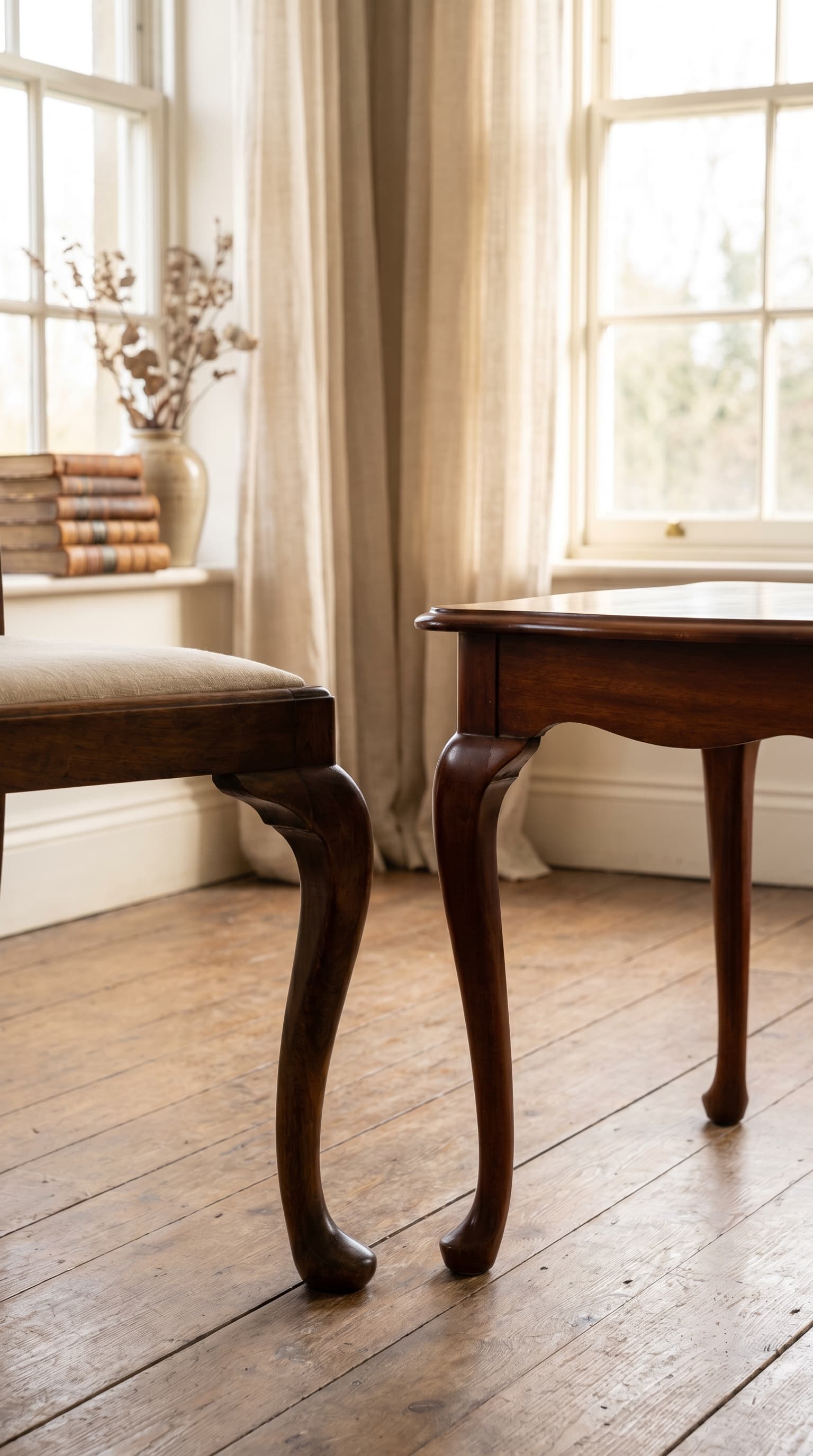
When most people say "Queen Anne furniture," they're describing a specific visual language that dominated early 18th-century design: flowing curves, graceful cabriole legs, and understated elegance. Named after the British monarch who reigned from 1702 to 1714, the Queen Anne furniture style actually flourished from roughly 1700 to 1755, particularly in American furniture-making centers like Boston, Newport, and Philadelphia.
The style represents a dramatic shift away from heavy, carved Baroque forms toward lighter, more organic shapes. If you're looking at a piece with S-curved legs, minimal carving, and gentle proportions, you might have Queen Anne—or one of several later styles that borrowed its vocabulary.
Visual Classification Checklist for Queen Anne Furniture Style
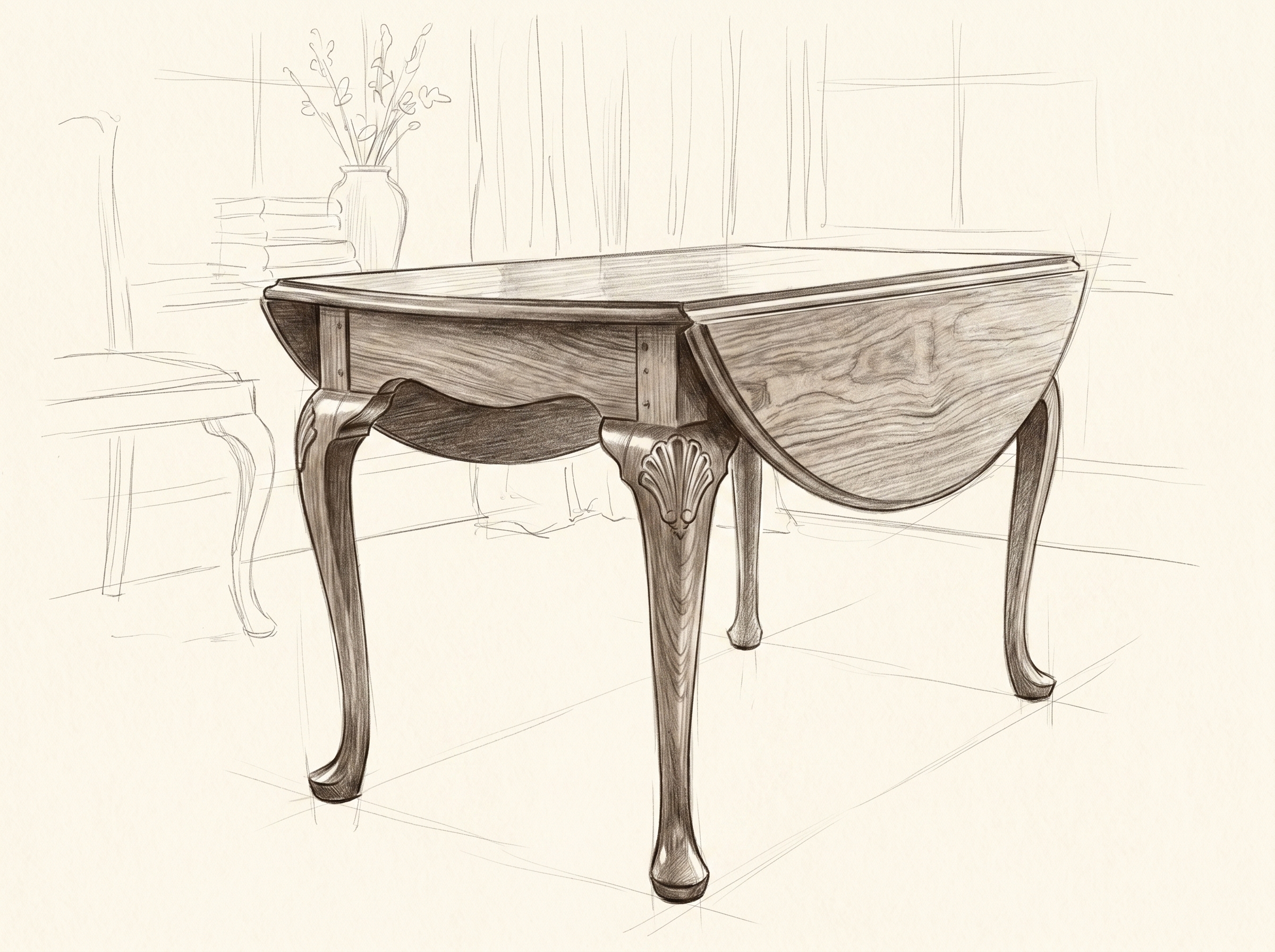
Authentic Queen Anne pieces share a consistent set of visual markers that make them recognizable even in photos:
Cabriole Legs
The defining feature. These graceful S-curved legs flow outward at the knee, then taper inward before ending in a foot. The curve is continuous and sculptural, not abrupt. Original Queen Anne cabriole legs typically lack carving—the beauty comes from the line itself.
Pad or Drake Feet
Most Queen Anne pieces end in simple pad feet (rounded, disc-like platforms) or drake feet (three-toed, resembling a duck's foot). Ball-and-claw feet appear late in the period and signal a transition toward Chippendale style.
Restrained Ornamentation
Unlike heavily carved earlier styles, Queen Anne furniture relies on form rather than decoration. You'll see smooth surfaces, subtle shaping, and minimal applied ornament. When carving appears, it's usually a simple shell motif on knees or crest rails.
Veneered or Solid Wood Construction
Look for walnut, cherry, or maple. Period pieces often feature book-matched veneer on drawer fronts and tabletops, creating symmetrical grain patterns. The wood itself provides the visual interest.
Curved and Shaped Elements
Beyond the legs, Queen Anne embraces curves everywhere: fiddle-back chair splats (shaped like a violin), rounded or "spooned" chair backs that conform to the body, arched aprons on tables, and bonnet tops on case pieces like highboys.
Elevated Proportions
Queen Anne furniture sits higher off the ground than earlier styles. Chairs have taller seats, tables stand on longer legs, and case pieces rise on their cabriole supports, creating an airy, elegant stance.
Joinery Details
In photos of drawers or undersides, look for dovetail joints that show hand-cutting—irregular spacing and pins that don't quite match. Original Queen Anne drawers typically have thick sides and bottoms that run front-to-back.
Common Queen Anne Style Confusions
Queen Anne vs. Chippendale
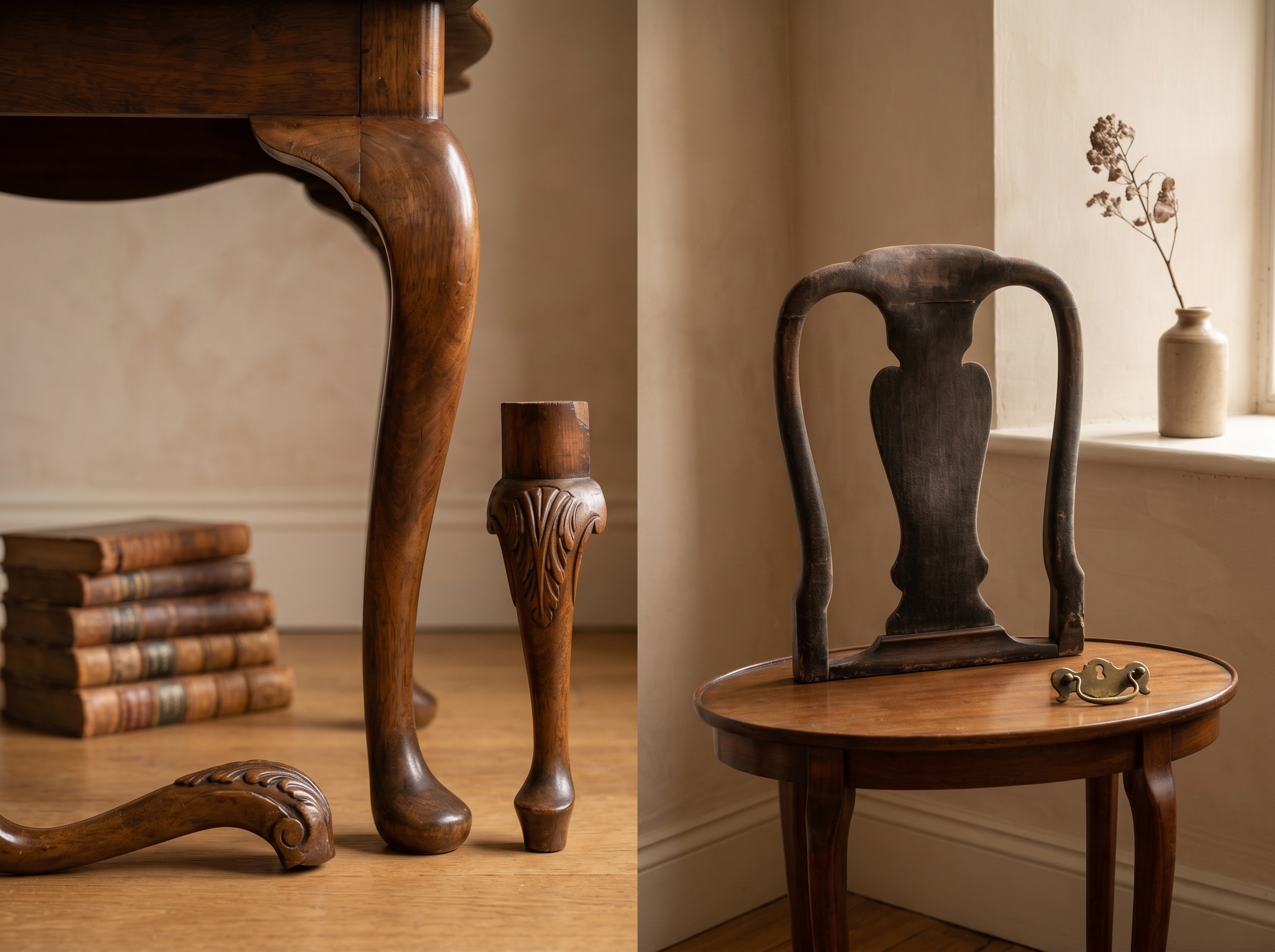
This causes the most confusion because the styles overlap chronologically and Chippendale borrowed the cabriole leg. The key difference: Chippendale adds elaborate carving (acanthus leaves, ribbons, scrolls) and favors ball-and-claw feet. Queen Anne stays simpler. If the leg itself is carved, it's probably Chippendale.
Queen Anne Revival (1870s-1920s)
Victorian-era craftsmen loved reviving earlier styles, and Queen Anne furniture was a favorite. Revival pieces often exaggerate proportions, use machine-cut details, and combine Queen Anne legs with non-period elements like applied medallions or heavy turnings. The wood itself can help date it—if it's oak or golden oak, it's likely Revival rather than period.
Colonial Revival Reproductions
From the 1920s onward, furniture makers produced Queen Anne reproductions for the growing antiques market. These range from faithful copies to loose interpretations. Machine-cut dovetails, uniform wood color, and perfectly symmetrical curves usually signal 20th-century manufacture.
Transitional Pieces
Furniture doesn't change overnight. Some pieces blend Queen Anne and earlier William & Mary elements (Spanish feet, ball turnings) or anticipate Chippendale (early claw feet, Gothic arches). These transitional pieces can be harder to classify but are often interesting in their own right.
How to Use Photo Identification to Narrow Queen Anne Furniture Style Down
When you're working from photos—whether your own snapshots or marketplace listings—focus your camera on the details that matter most:
Leg Profile Close-Ups
- •Most diagnostic feature: The cabriole leg curve
- •What to capture: Side view showing the full S-curve from knee to foot, plus a straight-on view of the foot itself
Foot Detail
- •Critical for dating: Pad vs. drake vs. ball-and-claw
- •What to capture: Bottom angle showing how the foot contacts the ground and any wear patterns
Wood Grain and Color
- •Helps distinguish period from revival: Original patina vs. later finishes
- •What to capture: Unfinished areas (drawer sides, undersides) and any veneer patterns
Construction Points
- •Separates handmade from machine-made: Joinery quality
- •What to capture: Dovetails on drawer corners, how drawer bottoms are attached, any visible tool marks
Back and Underside Views
- •Often overlooked but valuable: Original vs. replaced parts
- •What to capture: Back rails, how tops are attached to bases, any labels or marks
Overall Proportions
- •Confirms authentic style: Balance and stance
- •What to capture: Full piece in context, showing height relative to its footprint
The more angles you photograph, the more confident your identification becomes. Original Queen Anne pieces show consistency across all these details—the same hand-cut quality, the same design vocabulary, the same consideration of materials.
Get Your Queen Anne Furniture Identified
Trying to distinguish period Queen Anne from later revivals, or wondering if that simple cabriole leg is actually Chippendale? Tocuro analyzes your photos to identify furniture styles and provides estimated value ranges based on current market signals. Upload clear images focusing on the legs, feet, joinery, and any carving details.
Identify Your Item with 7 free identifications per day—your count resets daily so you can photograph multiple pieces as you build your understanding of period furniture styles.
For broader context on how Queen Anne fits within furniture history, check out our Furniture Era Guide. Understanding the progression from William & Mary through Queen Anne to Chippendale helps you recognize the evolutionary details that separate authentic pieces from later interpretations.
Photo identification
Identify Your Item
Use Tocuro to identify your item from a photo and get an estimated value range when market data is available.