
Pottery Marks Identification: How to Read Base Marks and Stamps
A practical guide to reading pottery marks, understanding what base stamps reveal about origin and date, avoiding common misreads, and using photos for reliable identification.
Pottery Marks Identification: How to Read Base Marks and Stamps
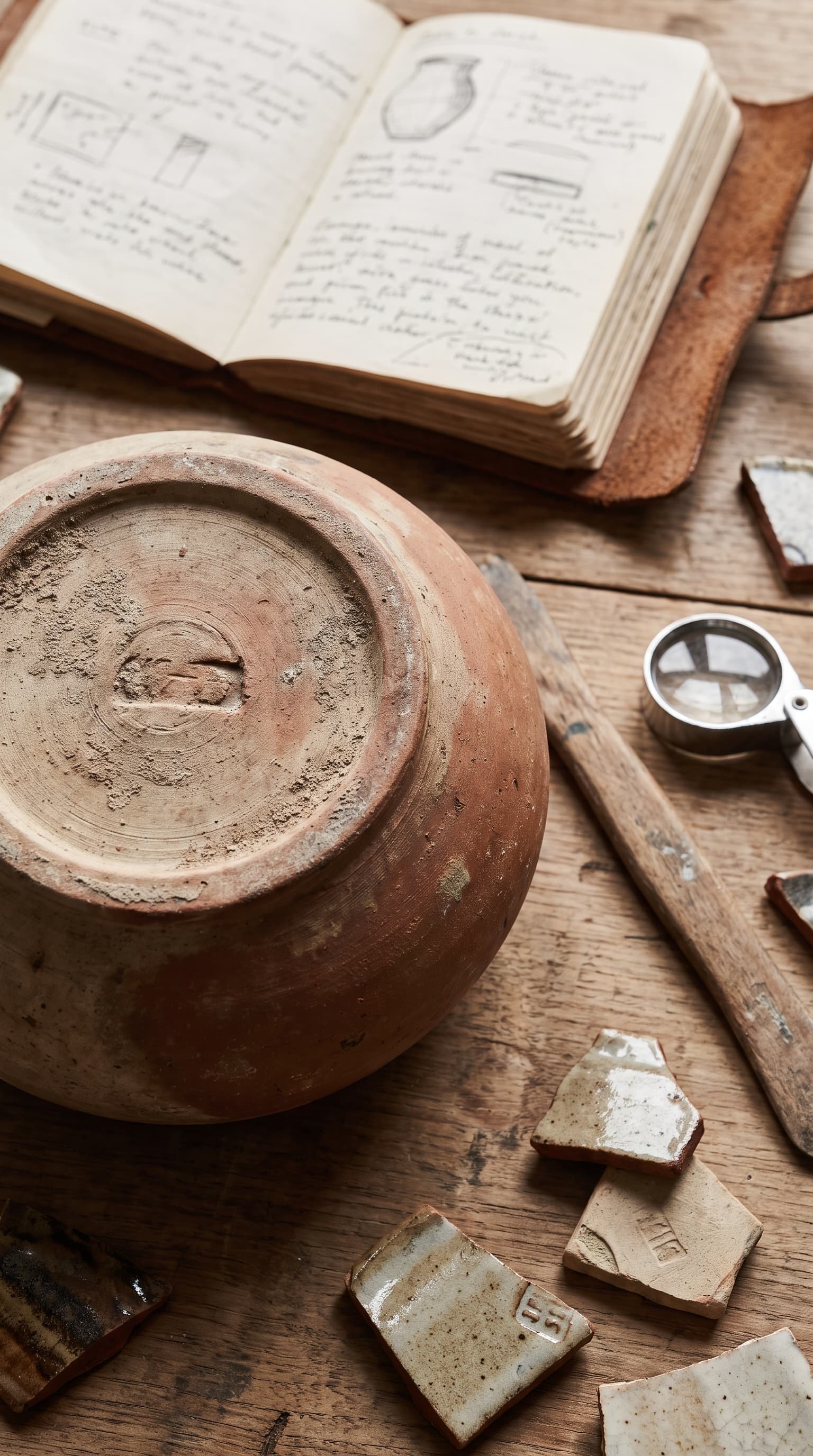
Pottery marks typically appear on the base or underside of pieces, stamped, impressed, painted, or incised into the clay before or after firing. These marks often include the manufacturer's name, initials, country of origin, pattern numbers, or date codes. A clear photo of the mark is the fastest way to narrow down maker, production period, and sometimes the specific pattern or factory location.
Where Pottery Marks Appear and What They Indicate
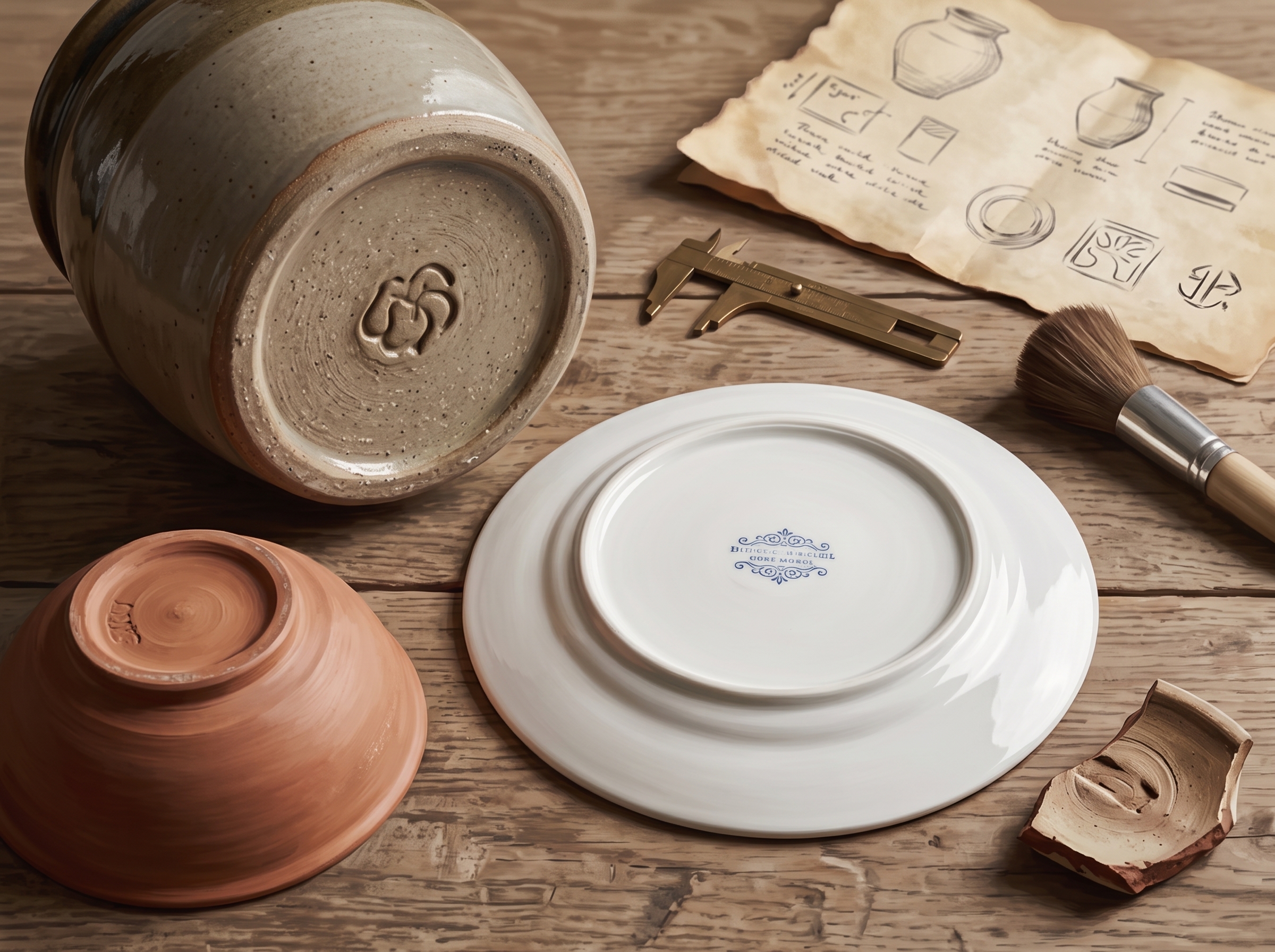
Most pottery marks sit on the flat base, centered or slightly off-center. Some makers placed marks on the rim, inside the foot ring, or along the edge of plates and saucers. British and European manufacturers often stamped country names after 1891 when import laws required "Made in England" or similar phrases. American potteries used impressed logos, initials, or city names.
Marks can tell you:
- •Manufacturer name or logo: Royal Doulton, Homer Laughlin, Wedgwood, McCoy
- •Country of origin: England, Germany, Japan, USA
- •Pattern name or number: Blue Willow, Fiesta, Autumn Leaf
- •Date codes or year marks: Letters, numbers, or symbols tied to production years
- •Factory location: Stoke-on-Trent, East Liverpool, Trenton
Some marks change over decades as companies merged, rebranded, or updated logos. A single pottery might use five different marks across a century.
What Pottery Marks Can and Cannot Tell You
Marks help identify maker and narrow the production window, but they don't answer every question.
Marks can confirm:
- •The manufacturer and sometimes the specific factory
- •Approximate production dates based on mark style and country labels
- •Pattern lines or series names
- •Whether a piece was made for export or domestic sale
Marks cannot always reveal:
- •Exact year of production unless date codes are present
- •Whether a piece is a limited edition or mass-produced line
- •Current market value—condition, rarity, and demand matter more
- •Authenticity if the mark was copied or added later
A mark reading "England" dates the piece to 1891 or later. "Made in England" usually means 1921 onward. But printed backstamps can fade, smudge, or wear off entirely on heavily used dishes. Unmarked pottery is common and not necessarily less valuable—some studio potters never signed their work, and many everyday wares carried no mark at all.
Common Pottery Marks Misreads
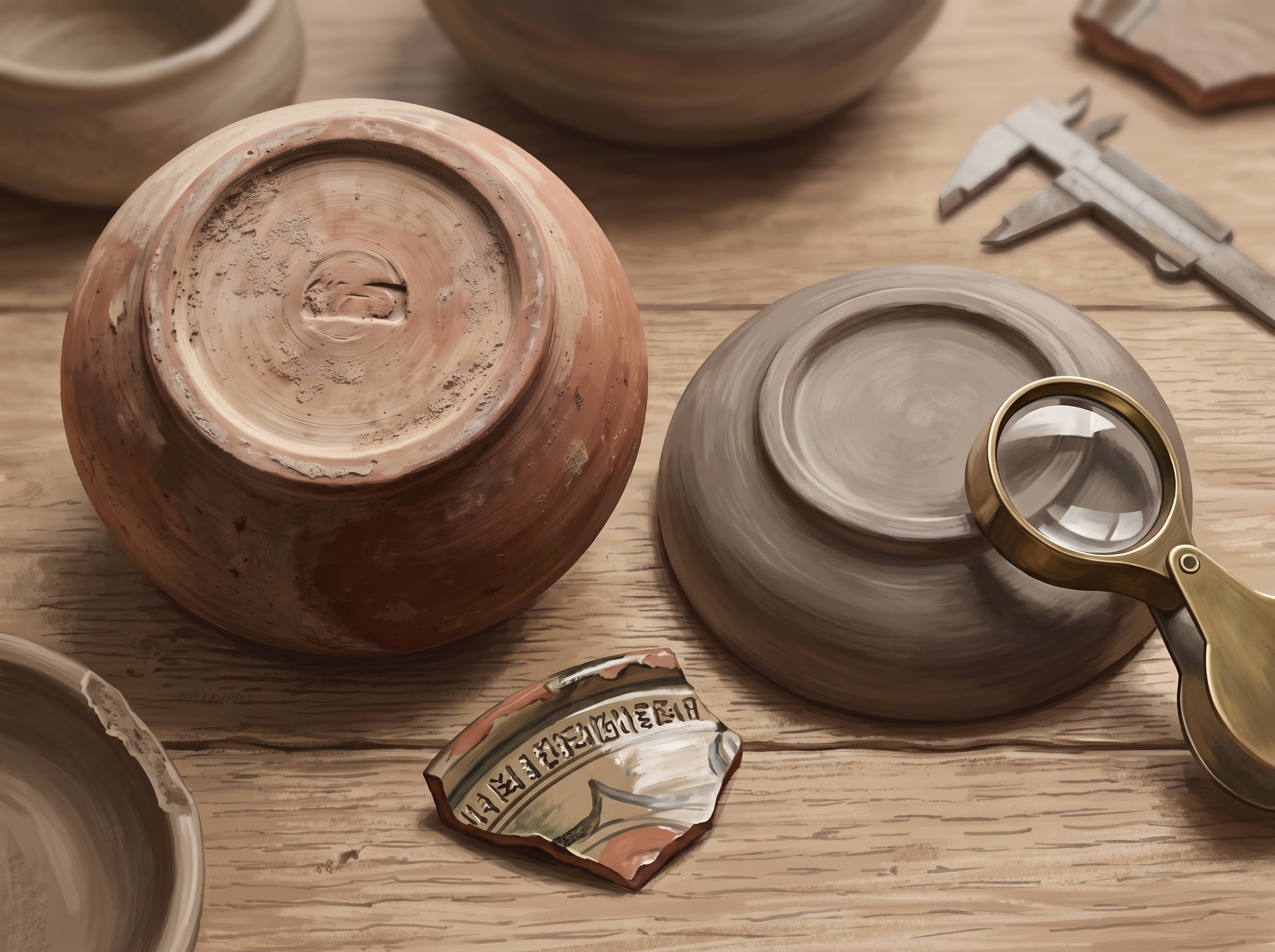
Certain marks trip up even experienced collectors. Here's what to watch for:
Confusing importer marks with maker marks: A piece stamped "Japan" or "Bavaria" might also carry an importer's name like "Lefton" or "Rosenthal." The importer distributed the piece but didn't make it. Look for the factory mark, often smaller or in a different style.
Mistaking pattern numbers for date codes: A number like "D6" or "847" usually refers to a pattern or mold number, not a year. Date codes are often letters or symbols that correspond to a known factory chart.
Reading partial or smudged stamps: Incomplete marks can look like initials when they're fragments of longer words. A blurry "W" might be part of "Wedgwood" or "Wade," and context from the piece's style helps narrow it down.
Assuming "Ltd" or "Co" means a specific date: Terms like "Limited" or "Company" appear across many decades. They're clues about corporate structure but don't pin down a year without other context.
Overlooking impressed marks under glaze: Some marks sit under a thick glaze layer and barely show in normal light. Tilt the piece under strong light or feel for slight indentations with your finger.
How Photos of Pottery Marks Improve Identification Results
A clear, well-lit photo of the base is the single most useful image you can provide. Here's how to capture marks for the best results:
Photograph the entire base in good natural light: Place the piece upside down on a neutral surface—white paper or a clean table—and shoot straight down. Avoid shadows that obscure letters or symbols.
Capture the mark up close: Zoom in or move closer so the stamp, logo, or handwriting fills the frame. Blurry photos make it hard to distinguish "S" from "8" or "Cl" from "O."
Include context shots when the mark is faint: If the mark is worn, take a second photo of the full piece from the side or above. Shape, glaze color, and decorative details help narrow the maker even when the mark is illegible.
Show any secondary marks or numbers: Some pieces carry multiple stamps—one for the maker, one for the decorator, and a third for the retailer. Photograph all of them.
Note translucency and weight: If the piece is translucent when held to light, mention it. Porcelain, bone china, and earthenware all look different under backlighting, and that affects identification.
Photos also help catch reproductions. Fake marks often show crisp, machine-perfect edges while genuine vintage stamps have slight irregularities, bleed, or wear consistent with age.
Reading Initials and Artist Signatures on Pottery Marks
Studio pottery and art pottery often carry hand-painted or incised initials instead of factory stamps. These marks identify individual artists or small workshops. A looping "RP" might be Russel Wright, while a blocky "JB" could be dozens of different potters.
Initials alone rarely provide enough information without other clues—glaze technique, clay body color, form style. Cross-referencing the mark with the piece's aesthetic and regional origin helps narrow possibilities. Some artists used consistent signature styles across decades; others experimented.
If the initials appear with a location—"Taos," "Seagrove," "Cornwall"—that's a strong regional clue. American studio pottery from the mid-20th century often includes town names or state abbreviations.
Country of Origin Marks and What They Mean
Country marks follow legal requirements that shifted over time. Understanding these rules helps date pottery even when the maker is unknown.
- •"England" alone: 1891–1921 (McKinley Tariff Act required country labels)
- •"Made in England": 1921 onward
- •"Occupied Japan": 1947–1952 (items made during Allied occupation)
- •"West Germany": 1949–1990 (divided Germany era)
- •"Czechoslovakia": 1918–1993 (before Czech Republic and Slovakia split)
These labels offer date brackets but don't pinpoint exact years. A "Made in Japan" mark could span 1921 to the present unless other stylistic details narrow it further.
Using Tocuro to Identify Pottery from Marks
When you're facing an unfamiliar mark or a piece with partial stamps, Tocuro's photo identification helps connect the dots. Snap a clear image of the base, and the app scans for maker matches, pattern references, and date clues pulled from market signals and collector data. You'll get an estimated value range based on recent sales, not a formal appraisal, along with details about the maker and production period. It's a practical tool for sorting estate finds, flea market buys, or inherited collections when you need answers quickly.
Photo identification
Identify a Pottery Mark
Use Tocuro to identify your item from a photo and get an estimated value range when market data is available.