
Pottery Identification App: Identify Ceramics and Pottery from Photos
A practical guide to using photo-based pottery identification apps to identify ceramics, determine makers, and estimate values—including what photo details matter most and when expert help is needed.
Pottery Identification App: Identify Ceramics and Pottery from Photos
You inherited a vase with no visible marks. You found a bowl at an estate sale and want to know if it's Roseville or a reproduction. You have a cabinet full of pottery and no idea where to start. Searching "blue vase" or "brown bowl" online gets you nowhere, and tracking down a specialist for every piece isn't practical.
A pottery identification app lets you snap a photo and get an identification in minutes—no specialist appointment, no guesswork, no endless scrolling through auction archives.
What Tocuro Does for Pottery Identification
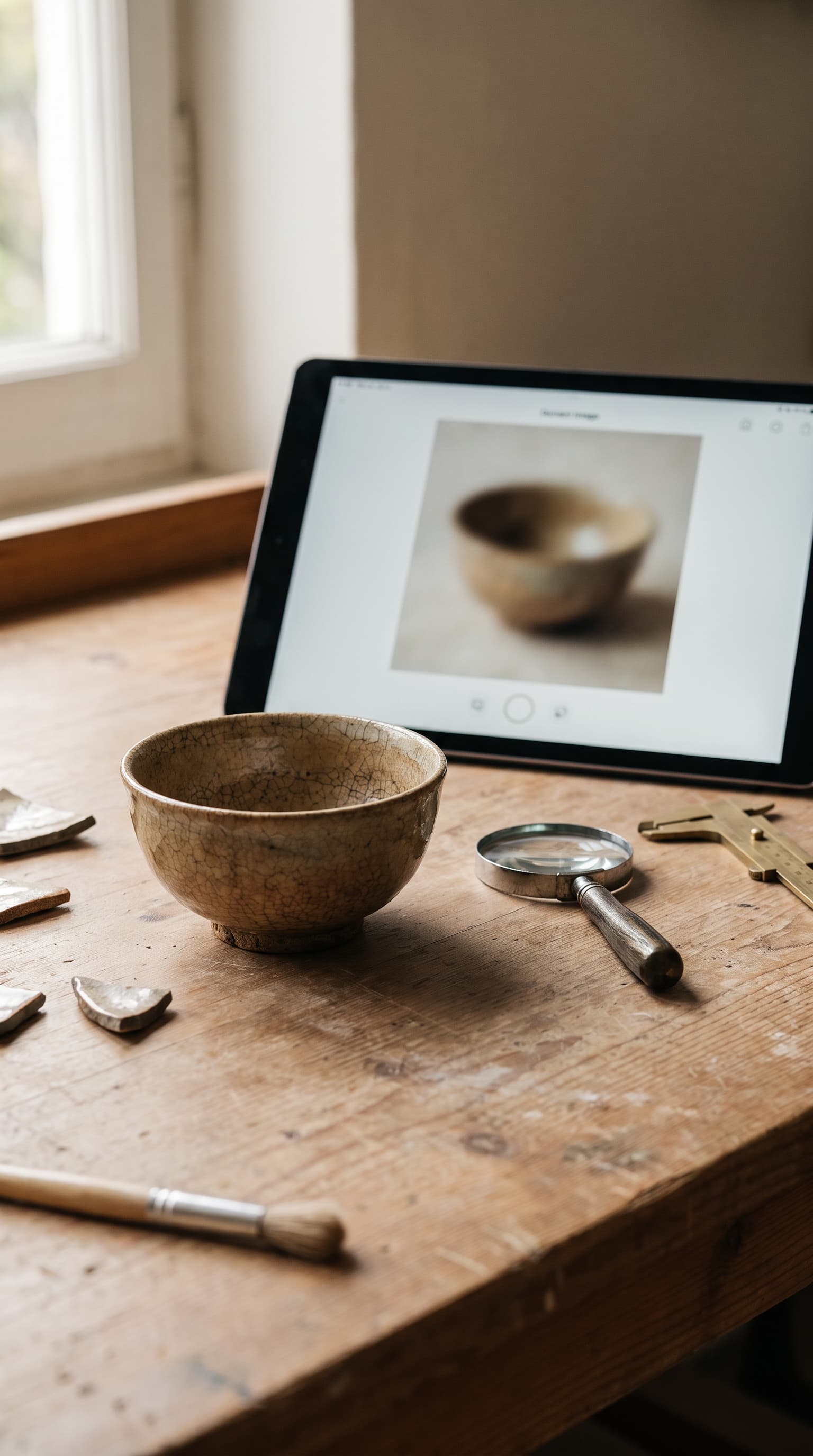
Tocuro identifies pottery, ceramics, and porcelain from photos. You upload an image of your piece, and the app analyzes visual details—form, glaze, decoration, marks—to identify the likely maker, style, and period. You also get an estimated value range based on current market signals.
The system works for American art pottery (Rookwood, Weller, Roseville), European porcelain (Meissen, Royal Doulton, Limoges), Asian ceramics (Imari, Satsuma, celadon), studio pottery, mid-century production ware, and much more. It handles marked and unmarked pieces, though visible marks always improve accuracy.
Estimated value ranges come from market signals, not formal appraisals. They give you a realistic sense of what similar pieces are selling for right now—helpful for insurance documentation, estate planning, or deciding whether to sell.
What You Get Free
Tocuro gives you 7 free identifications per day. The count resets daily, so you can identify pottery regularly without paying upfront. Each identification includes maker or style attribution, period or date range, and an estimated value range.
For most collectors, seven daily IDs is plenty. You can work through a small estate collection over a week, identify thrift finds as you go, or check pieces you've been curious about for years. Higher-volume users—dealers, appraisers, pickers—can upgrade for unlimited access.
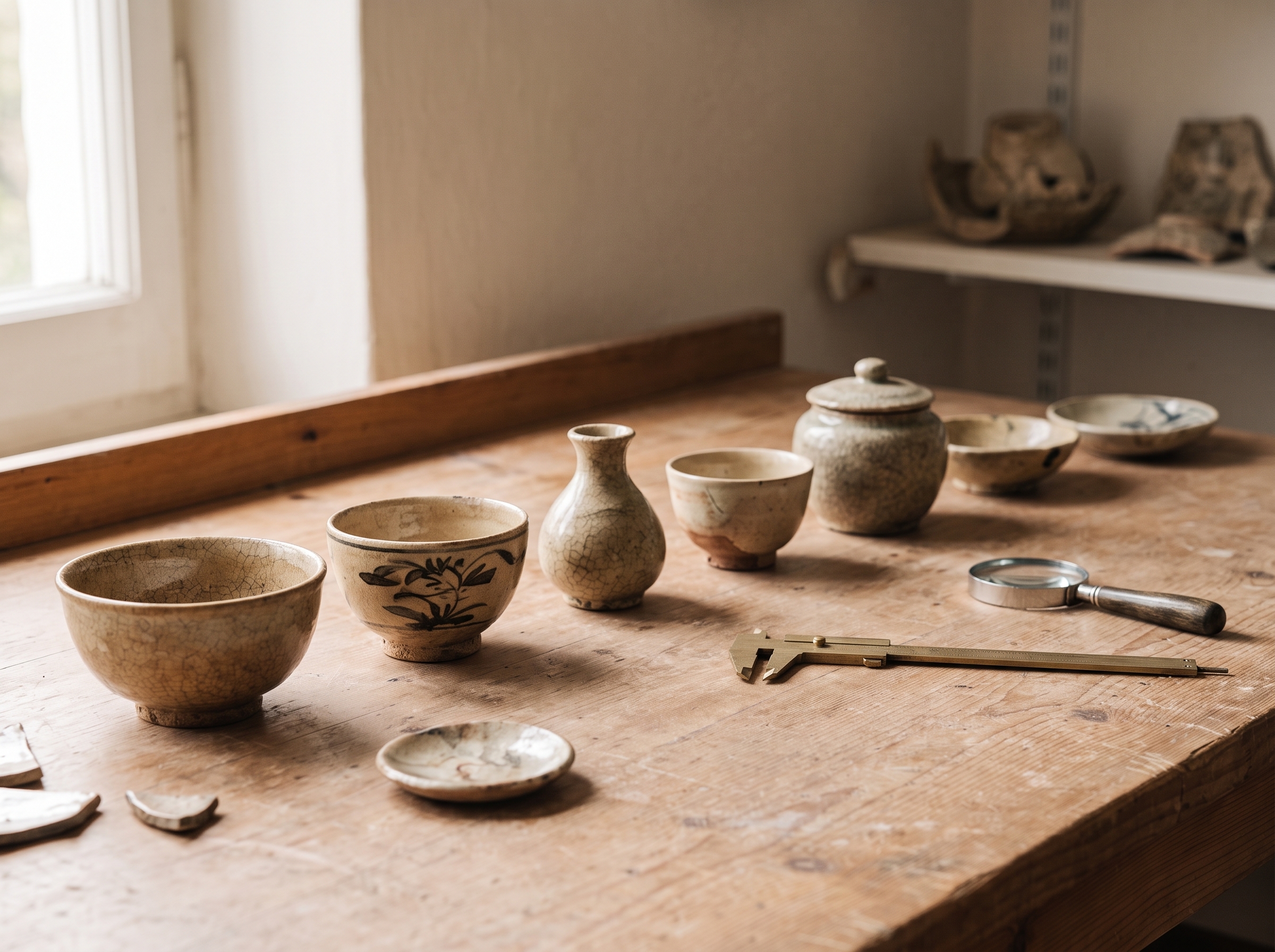
Photo Quality That Works Best for Pottery Identification
Pottery apps rely on visual details. Better photos mean better identifications. Here's what helps most:
Full piece in good light
Photograph the entire piece against a plain background in natural or bright indoor light. Avoid shadows, glare, and busy backgrounds that obscure the form.
Base and bottom marks
Flip the piece over and photograph any marks, stamps, signatures, or impressed logos clearly. Even partial marks or remnants of a paper label can help. If the piece is unmarked, photograph the base anyway—glaze patterns, stilts, and foot rim details often reveal maker clues. For more on reading pottery marks, see our pottery marks identification guide.
Glaze and surface texture
Capture close-ups of the glaze—crackle, drips, color transitions, brush marks, or matte versus glossy finishes. These details narrow down maker, period, and firing methods.
Decoration and details
If your piece has hand-painted designs, transfer prints, relief work, or incised decoration, photograph those clearly. Patterns often identify specific makers or series.
Condition and repairs
Show chips, cracks, crazing, restoration, or wear. Condition affects value, and visible damage helps the app provide a realistic estimate.
Multiple angles always help. One photo might miss a mark or a glaze detail that another captures.
Limitations and When to Seek Expert Help
Pottery identification apps are practical tools, but they can't replace specialist expertise in every case. Here's when you might need more:
Rare or museum-quality pieces: If you have a signed George Ohr vessel, a documented Newcomb College vase, or an early Chinese export piece, get a formal appraisal from a ceramics specialist. Apps provide market estimates, not insurance-grade valuations.
Attribution questions: Apps can suggest likely makers or periods, but they can't authenticate provenance or guarantee attribution. If you're selling a piece described as "attributed to Tiffany Studios" or "possibly Grueby," expect buyers to ask for expert verification.
Unmarked art pottery: Many studio potters and smaller workshops left no marks. Apps can often identify the style or glaze technique, but pinning down a specific maker may require research into regional pottery histories or kiln records.
Reproductions and fakes: The market is full of Roseville reproductions, fake Meissen marks, and modern pieces styled to look old. Apps can flag inconsistencies, but authentication often requires hands-on inspection—examining paste, glaze chemistry, or tool marks.
Damage assessment: Apps can estimate how condition affects value, but professional conservators assess whether restoration is advisable or whether damage compromises structural integrity. Similar considerations apply to other collectibles; our condition grading guide explains how to evaluate wear and repairs.
If your piece has significant value, an unusual backstory, or unclear origins, combine app results with expert consultation.
Start Identifying Your Pottery Collection
Whether you're sorting through an inherited collection, evaluating thrift store finds, or cataloging pieces you've owned for years, a pottery identification app gives you fast, practical answers. Tocuro identifies ceramics, pottery, and porcelain from photos and provides value estimates based on current market signals.
Try 7 Free IDs Today and see what you've been holding.
Photo identification
Identify Your Pottery
Use Tocuro to identify your item from a photo and get an estimated value range when market data is available.