
Porcelain Marks Identification: How to Find and Read Manufacturer Marks
Porcelain marks are the key to identifying makers, dating pieces, and understanding value—but only if you know where to look and how to read them correctly. This guide shows you where manufacturers placed marks, what information they do (and don't) provide, common identification mistakes, and why clear photos of marks matter most.
Porcelain Marks Identification: How to Find and Read Manufacturer Marks
Porcelain marks identification starts with knowing where to look. That elegant vase or delicate teacup likely carries a maker's mark somewhere—a stamp, painted symbol, or impressed design that tells you who made it and often when. But porcelain marks can hide in unexpected places, get misread easily, and sometimes tell you less than you'd hope. Understanding what marks reveal (and what they don't) helps you identify pieces accurately and estimate their value with confidence.
Where to Find Porcelain Marks
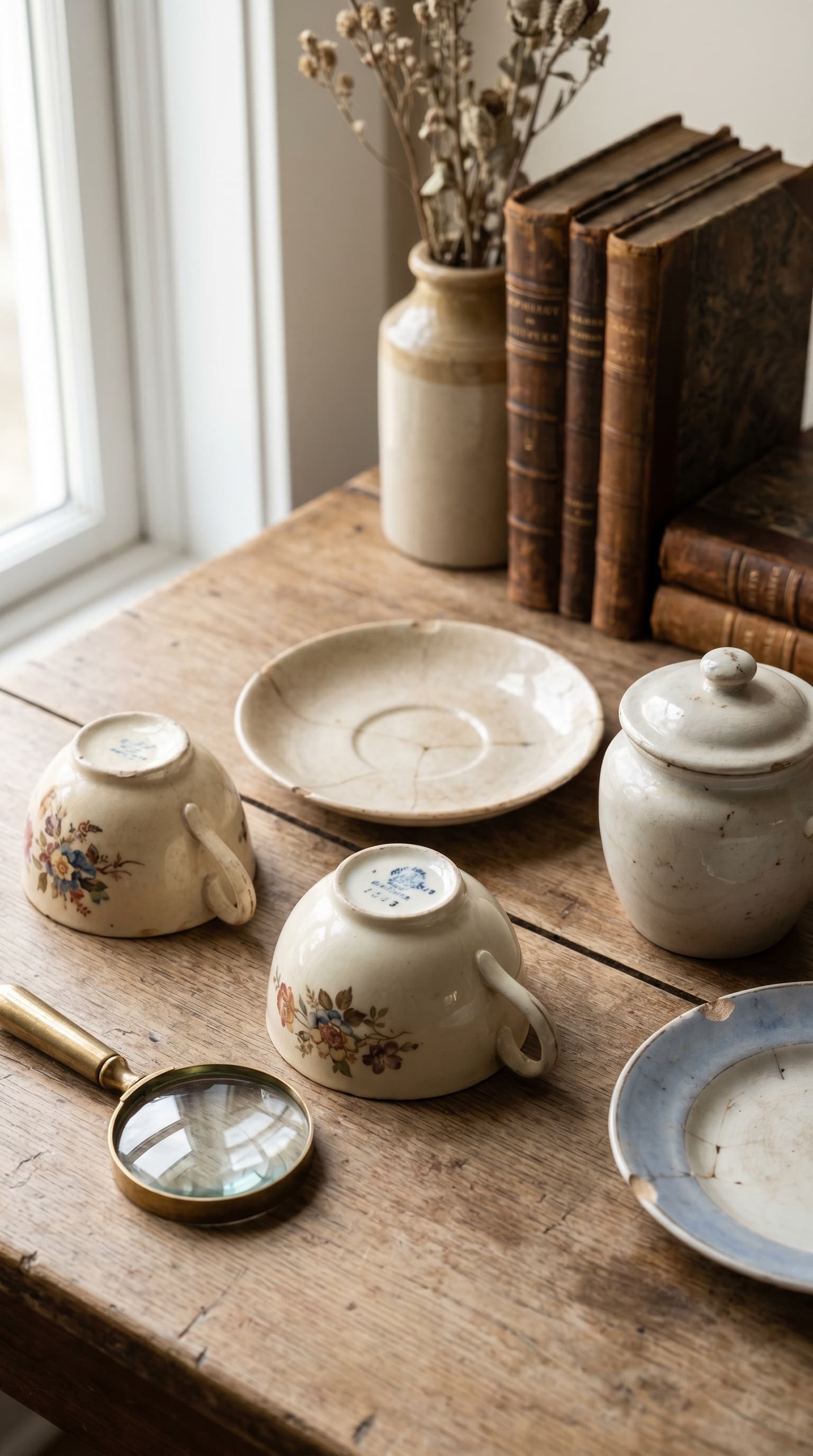
Manufacturers placed marks wherever they'd remain visible but wouldn't interfere with display or use. The base is always your first stop—flip over plates, cups, bowls, and figurines to check the underside. Most makers stamped, painted, or impressed their marks into the unglazed foot rim or flat base.
For hollow pieces like vases, pitchers, and teapots, check inside the base opening if the outside shows nothing. Some makers marked the interior bottom, especially on taller vessels. Lids sometimes carry separate marks on their underside or inner rim, particularly on covered boxes and sugar bowls.
Handles, especially on cups and teapots, occasionally display small impressed marks near where they attach to the body. Figurine marks often appear on the back of the base or along the rear edge where they won't show from the front. Large serving pieces might have marks on the back or along the rim.
Some manufacturers used multiple marks on a single piece—a factory mark plus a decorator's mark, or a maker's stamp alongside a retailer's label. Don't stop at the first mark you find. Turn the piece slowly under good light and check every surface that might have been accessible during production.
What Porcelain Marks Can and Cannot Tell You
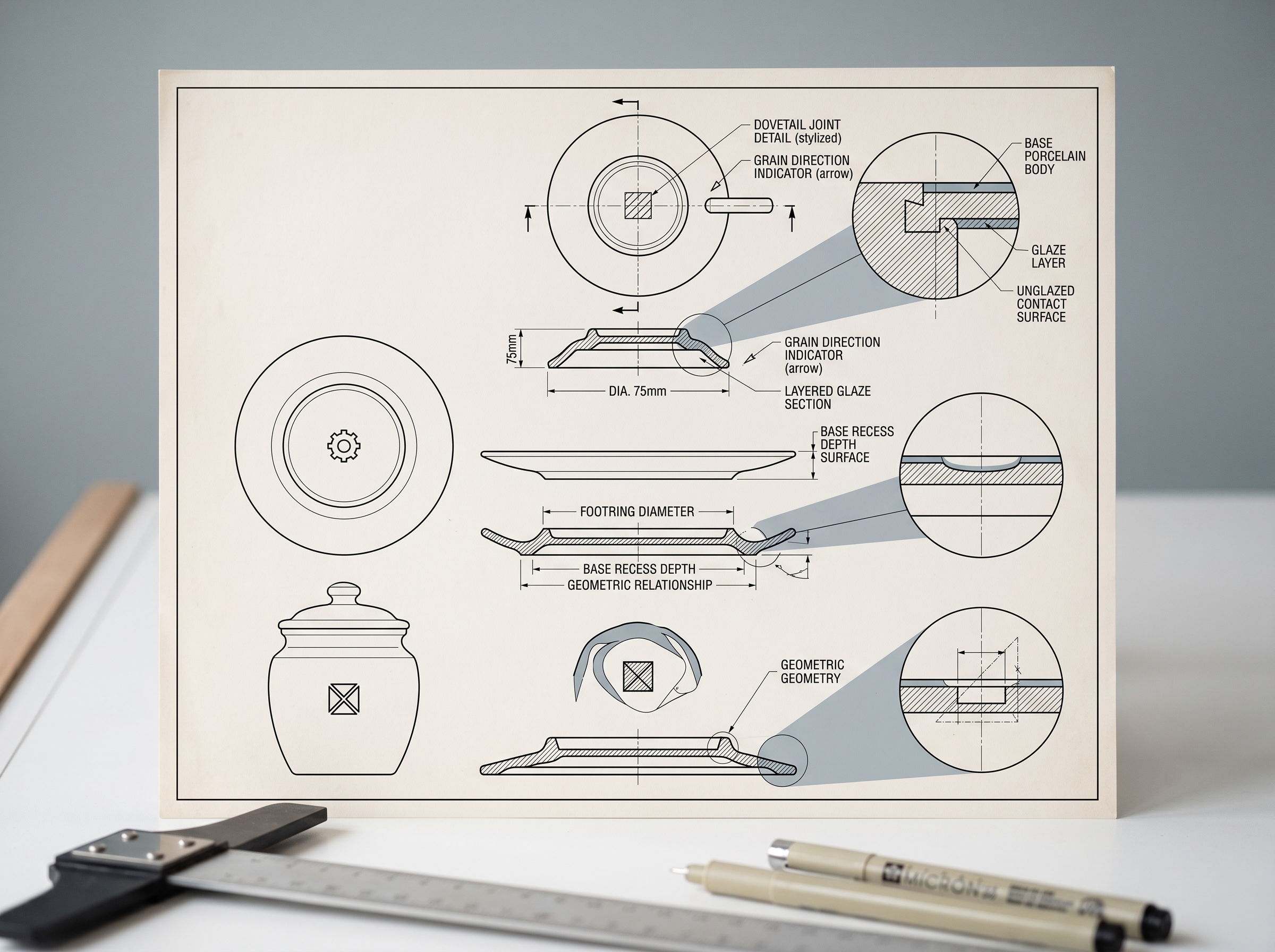
A clear mark can identify the manufacturer, country of origin, and often a production date range. Many marks include the company name, a symbol or logo, and sometimes model numbers or pattern names. Registry numbers, when present, can narrow dating to specific years.
But marks have limits. A famous maker's mark doesn't automatically mean high value—companies like Limoges, Meissen, and Royal Doulton produced both premium wares and commercial-grade pieces for decades. The mark tells you who made it, not whether it's rare or desirable.
Marks rarely indicate condition issues, repairs, or later decoration. A genuine factory mark can sit on a piece that's been restored, over-decorated by amateurs, or damaged. You need to assess the porcelain itself separately from the mark.
Pattern names help identify complete sets but don't reveal how common that pattern was. A mark showing "Rose Garden" by a known maker might represent a pattern produced for decades in huge quantities, or a rare limited run—the mark alone won't tell you which.
Manufacturer date codes exist but vary wildly by company. Some makers used year ciphers, while others marked pieces identically for 20 or 30 years. Production dates often span ranges, not precise years.
Common Misreads in Porcelain Marks Identification
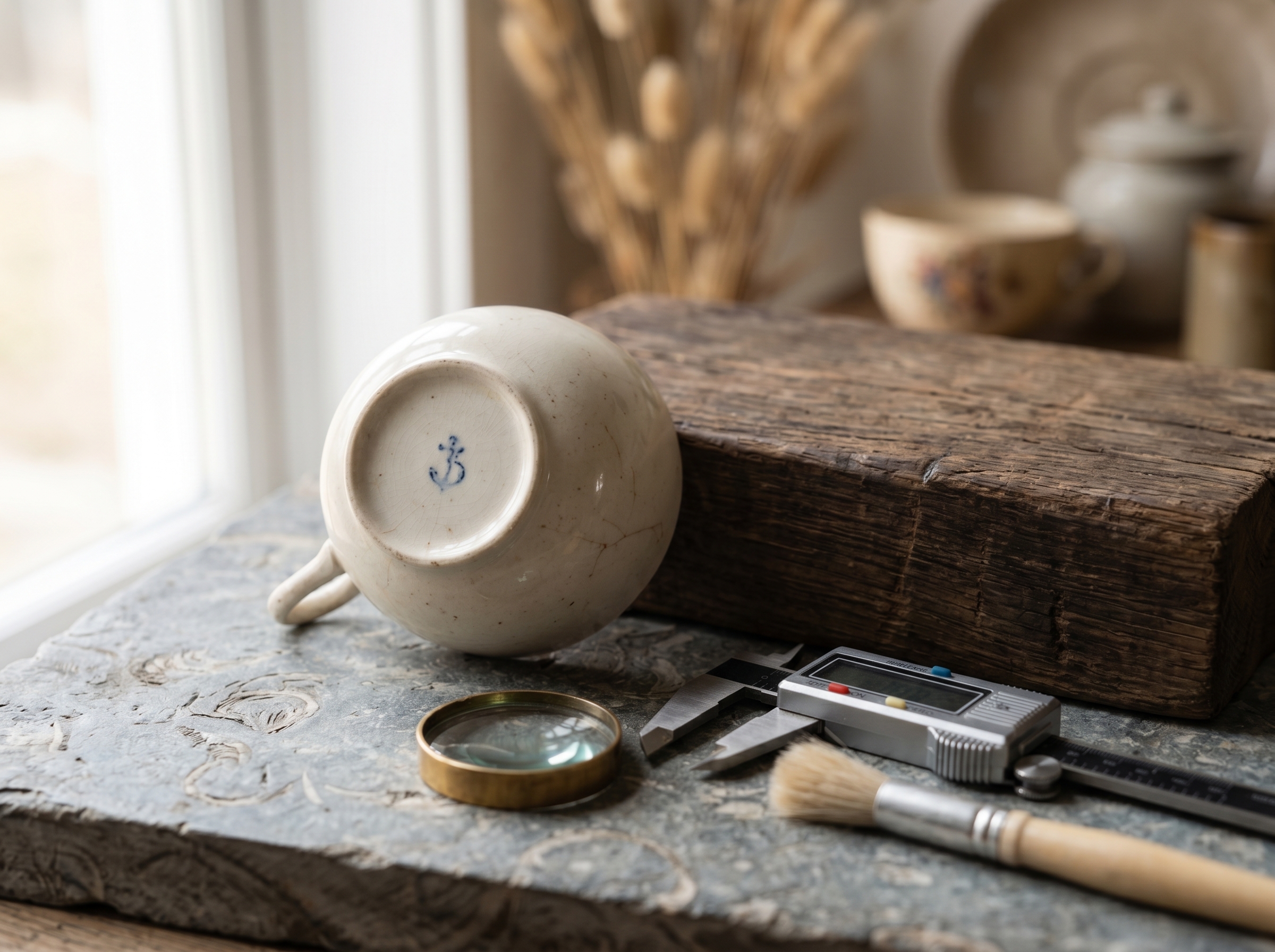
Chinese and Japanese characters get mistaken for European marks regularly. Without reading the script, collectors assume ornate Asian marks indicate famous Western makers. Oriental export porcelain marked for Western markets adds confusion—pieces made in China but bearing English names or European-style symbols.
"Made in..." wording matters more than most people realize. "Made in Occupied Japan" dates pieces precisely to 1945-1952. "Bavaria" without "Germany" typically means pre-WWI production. "England" alone suggests different dates than "Made in England." These subtle distinctions change identification completely.
Registry numbers get confused with pattern numbers. A diamond-shaped British registry mark dates 1842-1883 and indicates when the design was registered, not when your specific piece was made. Later numeric codes work differently and mean different things depending on the country.
Blurred or partial marks cause wild guesses. A smudged crown gets called "Royal" something. An unclear initial becomes whichever famous maker people hope for. Honest uncertainty serves you better than creative interpretation.
Decorator marks aren't always manufacturer marks. Amateur china painters added marks freely, sometimes copying famous makers. A hand-painted mark with obvious brush strokes might be recent decoration, not factory work.
How Photos of Porcelain Marks Improve Identification Results
Clear, detailed photos of marks work better than verbal descriptions for identification. Marks include symbols, logos, crowns, shields, and script that's difficult to describe accurately in words. A photo shows exactly what's there.
Photograph the entire mark straight on, not at an angle. Hold your phone camera directly above the base, get close enough that the mark fills most of the frame, and make sure the lighting eliminates shadows. Natural daylight works best—flash can wash out faint impressed marks or create glare on shiny glazed surfaces.
If the mark spans multiple lines or includes both stamped and painted elements, capture everything in one shot when possible. For very large marks, take a second close-up of details like date codes or small registry numbers.
Include a photo of the mark alongside photos of the full piece. Form, decoration style, glaze quality, and foot rim details all help identify porcelain when marks are ambiguous or missing. Together, these images create a complete identification picture that isolated mark photos can't provide.
Faint or partial marks still help identification even when you can't read them clearly. Photograph what's visible—experts and identification tools can often work with fragments, recognizing mark layouts, crown shapes, or partial letters that narrow down possibilities.
Get Your Porcelain Marks Identified
Wondering what your porcelain mark means? Tocuro identifies items from photos, including manufacturer marks on porcelain, china, and ceramics. Upload clear images of the mark and the full piece to get identification help and estimated value ranges based on current market signals—not formal appraisals, but practical guidance for collectors and sellers.
The app provides 7 free identifications per day, with your count resetting daily, so you can identify multiple pieces without commitment.
Portable, clear marks photograph easily with a phone camera. Combined with photos of form and decoration, your porcelain marks identification becomes straightforward—you'll know what you have and what it might be worth.
Photo identification
Identify a China Mark
Use Tocuro to identify your item from a photo and get an estimated value range when market data is available.