
Porcelain Marks Guide: How to Read Backstamps and What Photos to Take
This porcelain marks guide explains where to locate backstamps on dinnerware and figurines, what marks can and cannot tell you about age and value, how to avoid common misidentification pitfalls, and which photos deliver the best results when identifying your pieces.
Porcelain Marks Guide: How to Read Backstamps and What Photos to Take
A porcelain mark can unlock the story of a piece—or mislead you entirely if you're reading it wrong. Whether you've inherited a tea set, found a figurine at an estate sale, or simply want to know what you own, learning to locate and interpret porcelain backstamps is the first step toward identification. This guide walks you through where to find marks, what they actually reveal, the mistakes collectors make most often, and how to photograph marks for reliable results.
Where to Find Porcelain Marks
Most porcelain marks appear on the underside or base of a piece, but manufacturers have used varied placements depending on form and era.
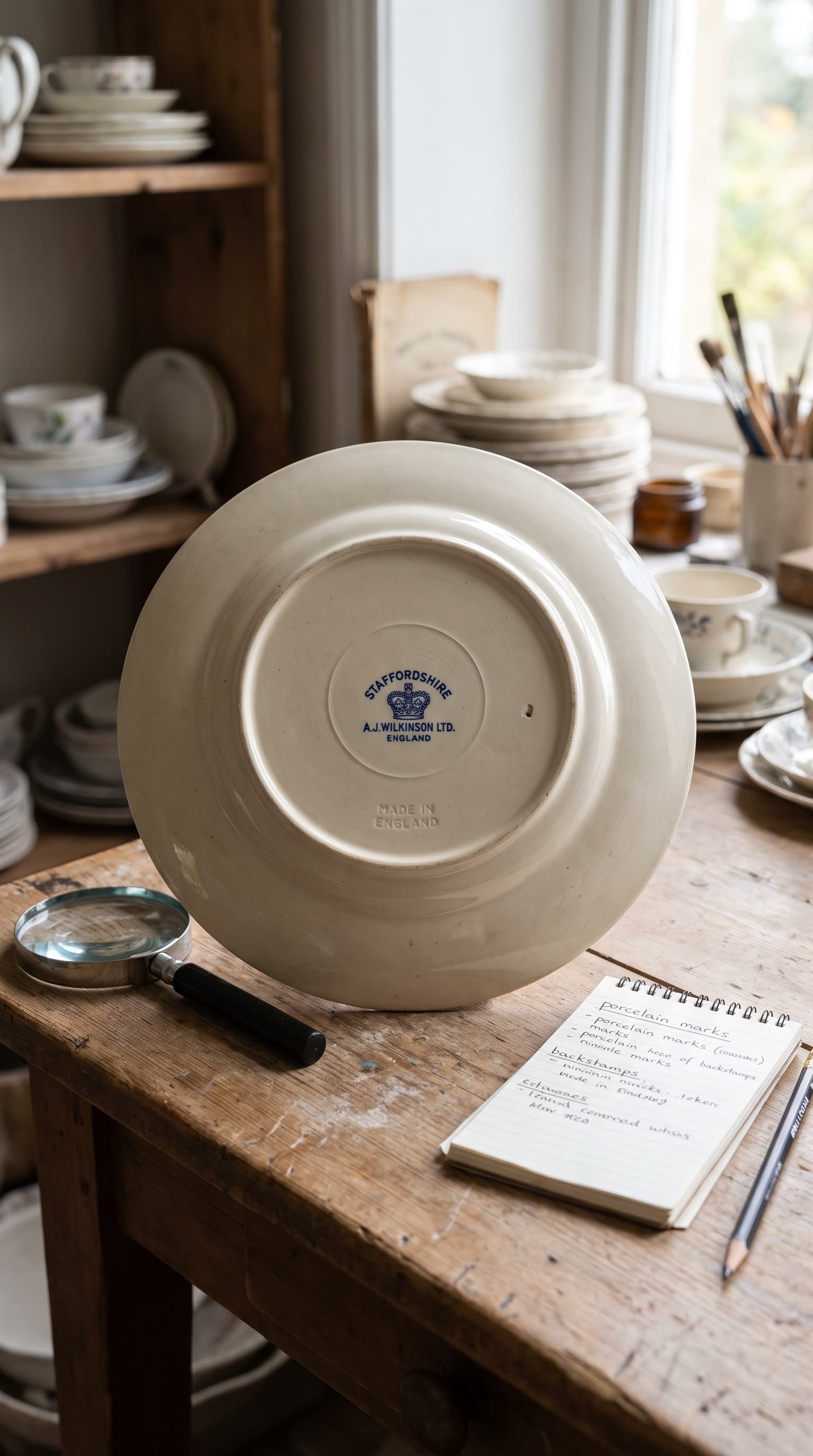
Plates, saucers, and flat tableware almost always carry marks on the bottom center. Turn the piece over and check for stamps, painted symbols, or impressed lettering. Some older pieces feature marks near the foot rim rather than dead center.
Cups and bowls typically show marks on the exterior base. Tilt the cup and rotate it under good light—some marks are faint or partially worn. Interior marks are rare but not unheard of on decorative bowls.
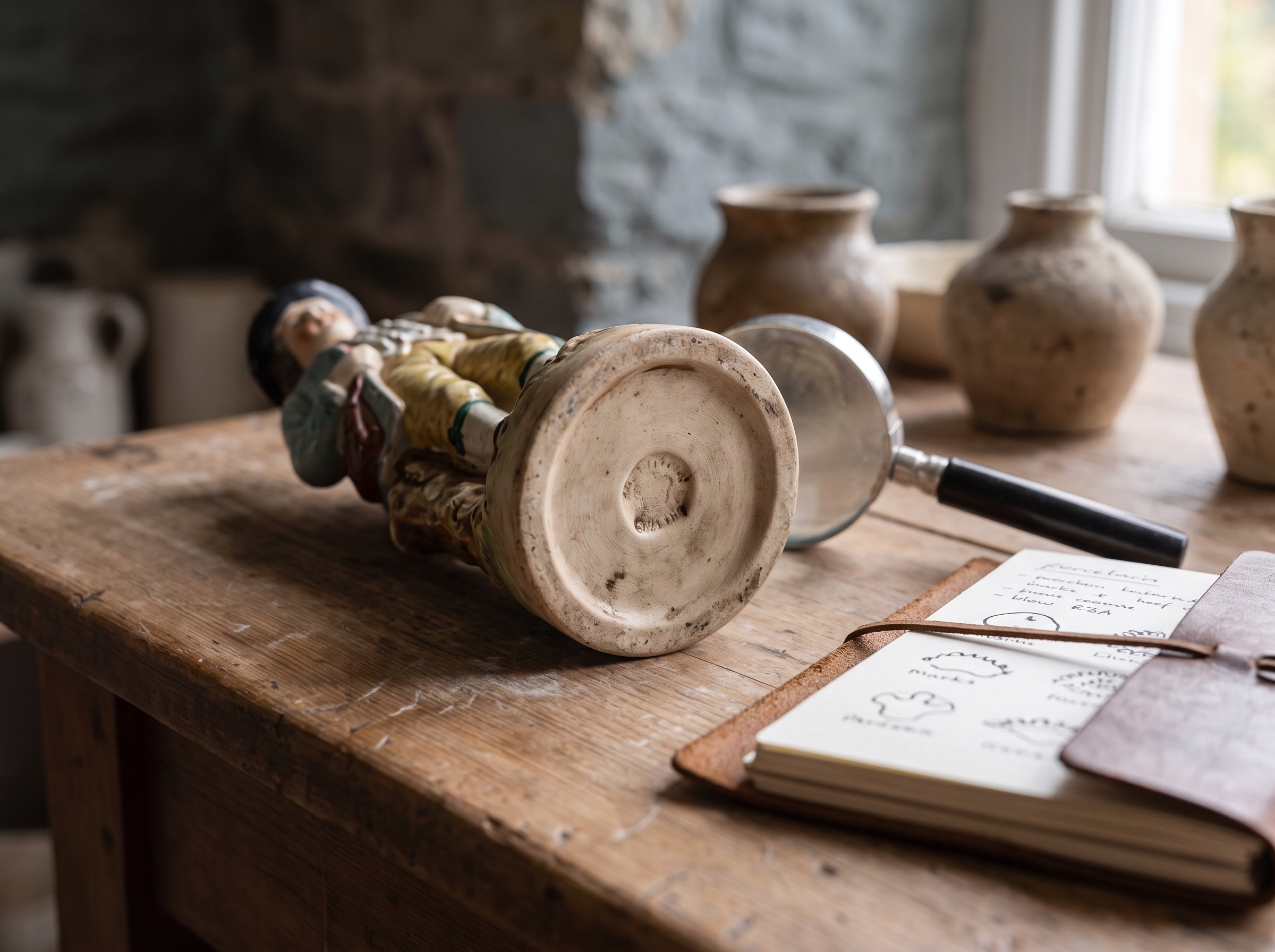
Figurines and vases usually have marks on the flat base or inside the opening. Figurines sometimes carry paper labels rather than permanent stamps, especially mid-century imports. These labels often fall off, leaving only glue residue.
Teapots, pitchers, and lidded pieces may have marks on the base of both the body and the lid. Check both. Lids and bodies sometimes get separated over generations, so mismatched marks can signal replacement parts.
Hidden or secondary marks occasionally appear inside foot rings, under handles, or on interior surfaces. Decorators' marks, pattern numbers, and date codes often sit alongside the main manufacturer's stamp.
If you can't find a mark, don't assume the piece is unmarked. Some manufacturers used extremely subtle impressed marks that only show under raking light. Others relied on paper labels that have since disappeared.
What Porcelain Marks Can and Cannot Tell You
Backstamps offer clues, not certainties. Understanding their limits saves time and prevents costly mistakes.
What marks usually reveal
Manufacturer identity is the most reliable information. A clear Meissen crossed swords mark or a Wedgwood stamp tells you who made the piece, though you still need to verify authenticity.
Country of origin appears on most post-1891 pieces imported to the United States, thanks to the McKinley Tariff Act. "Made in Germany," "England," or "Japan" narrows down production location.
Pattern names or numbers help identify specific lines within a manufacturer's catalog. This is especially useful for matching replacement pieces or researching original retail context.
Date codes and symbols sometimes appear alongside the main mark. Wedgwood date letters, Royal Doulton codes, and Meissen incised numbers can pinpoint production years—if you know how to decode them.
What marks often hide
Exact age is rarely obvious from a mark alone. Manufacturers reused backstamps across decades or even centuries. A Limoges mark might indicate 1870 or 1970 without additional context clues like style, decoration technique, or secondary marks.
Value depends on far more than the manufacturer. Condition, rarity, pattern desirability, and current market demand matter more than whether a piece carries a famous name. A chipped Meissen cup may be worth less than a pristine unmarked piece by a lesser-known maker.
Authenticity guarantees don't come from marks. Forgers have reproduced famous backstamps for over a century. A convincing fake Sèvres mark doesn't make a piece genuine French porcelain. You need to evaluate paste quality, decoration style, and overall construction.
Decorator identity rarely appears unless the piece is artist-signed. Factory workers who hand-painted designs usually remain anonymous, even on high-quality pieces.
Similar to pottery marks identification, porcelain backstamps work best as one piece of a larger puzzle that includes material, form, and decoration style.
Common Porcelain Mark Misreads
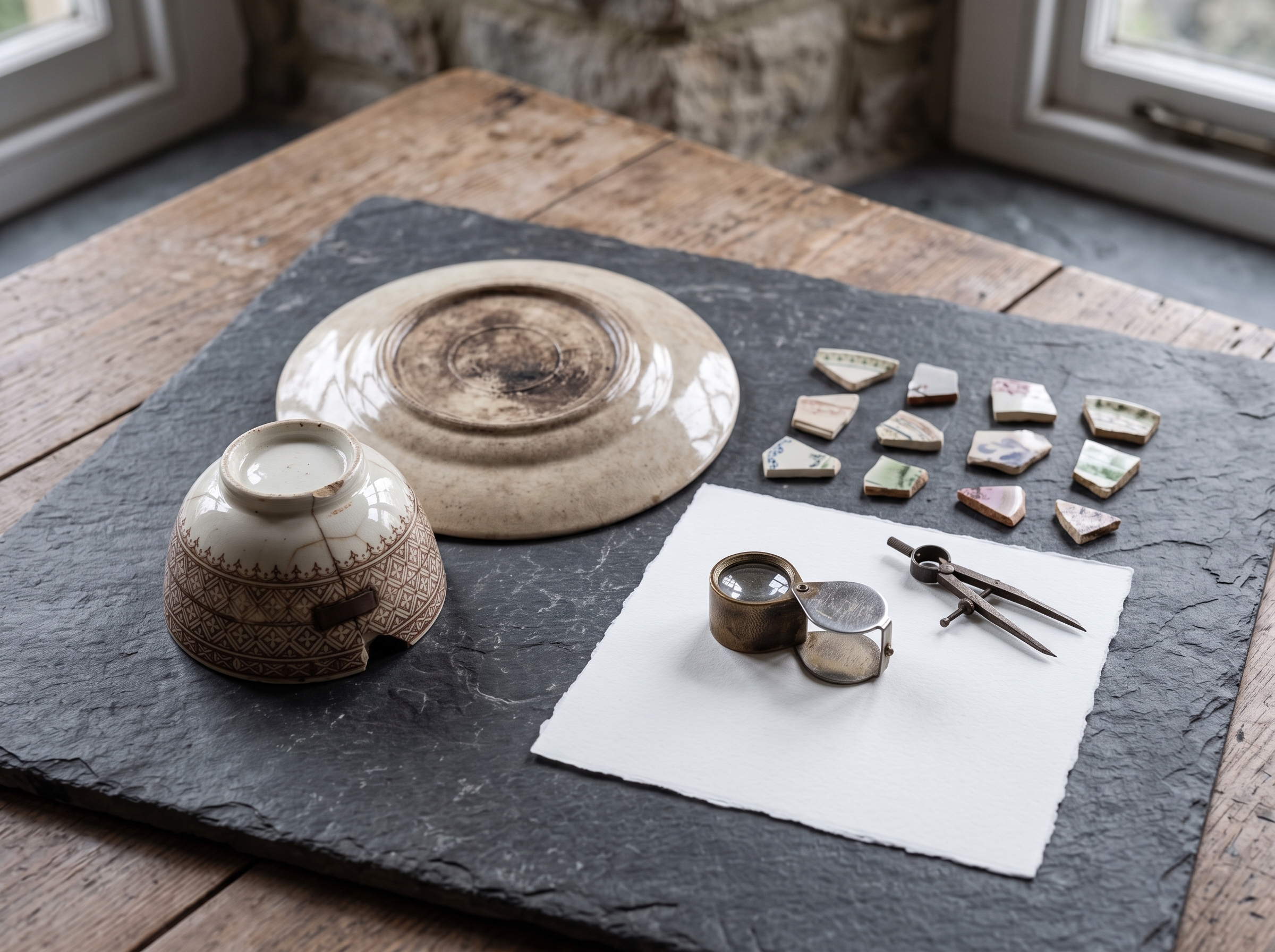
Even experienced collectors misidentify marks. These mistakes happen most often:
Confusing country with company. "Bavaria" or "Limoges" indicates a region, not a specific maker. Dozens of companies operated in these porcelain-producing areas. The actual manufacturer's name usually appears alongside the region, but people often stop reading after seeing the famous place name.
Misreading ornate script. Flowing 19th-century lettering can be hard to parse, especially on worn or faint marks. What looks like "Royal Dresden" might actually say "Royal Rudolstadt." One letter changes the manufacturer entirely.
Dating by "Limited Edition" or "Collector's Plate" language. These phrases usually indicate 20th-century commemorative pieces with limited collectible value, not rare antiques. The words sound impressive but often describe mass-produced items.
Assuming red marks mean Japanese. While many Japanese makers used red overglaze stamps, so did European and American companies. Color alone doesn't determine origin.
Trusting crown symbols as proof of quality. Countless manufacturers—famous and obscure—have used crown imagery in their marks. A crown doesn't automatically mean royal appointment or high value.
Overlooking impressed marks. Raised or incised marks pressed into wet clay before firing can be nearly invisible under glaze. They're often more reliable than overglaze painted stamps, which could be added later, but they're easy to miss.
Mixing up similar marks. Meissen's crossed swords, Worcester's crescent, and Chelsea's anchor have all been copied and adapted by other makers. Small variations in line weight, spacing, or accompanying symbols distinguish authentic marks from imitations or homages.
When in doubt, photograph the mark clearly and compare it against verified references rather than relying on memory or quick visual matches.
How Photos of Porcelain Marks Improve Identification Results
A good mark photo does more for identification than a paragraph of description. Here's how to capture marks effectively:
Use natural indirect light or diffused artificial light. Harsh direct light creates glare that obscures detail, especially on glossy glazed surfaces. Shoot near a window on an overcast day, or use a lamp with a diffuser.
Hold the camera directly above the mark, parallel to the surface. Angled shots distort letter shapes and make symbols harder to compare against references. Keep your phone or camera level.
Fill the frame with the mark. Get close enough that the backstamp occupies most of the image, but don't crop so tight that you lose context. Include enough surrounding area to show placement on the base.
Take multiple shots at different exposures if the mark is faint. Underexpose slightly to darken the background and make a light mark more visible, then take a normally exposed shot. One of them usually captures better detail.
Photograph impressed marks at a low angle with raking light. Hold a flashlight or lamp at the edge of the piece so light skims across the surface. Shadows will reveal incised letters or symbols that disappear under direct overhead light.
Capture any secondary marks, numbers, or symbols. Pattern numbers, decorator marks, date codes, and registry marks often appear near the main backstamp. Photograph the entire base rather than just the central logo.
Include a photo of the front or decorated surface. Decoration style, form, and material quality provide essential context that marks alone cannot. Identifying experts consider the full object, not just the backstamp.
Tocuro identifies porcelain from photos by analyzing marks alongside form, decoration, and material characteristics. Upload clear images of both the mark and the piece itself at https://tocuro.app/identify to get estimated value ranges based on current market signals. You'll receive 7 free identifications per day, with the count resetting daily.
When Marks Aren't Enough
Some of the finest porcelain carries no mark at all. Early Sèvres, rare Chelsea, and many 18th-century pieces were never stamped. Others have lost marks through wear, grinding, or over-zealous cleaning.
When marks are absent, illegible, or ambiguous, focus on:
- •Paste quality and translucency when held to light
- •Glaze texture, color, and crackling patterns
- •Decoration technique—transfer print, hand-painting, or gilding style
- •Form and proportions typical of specific makers or periods
- •Weight and ring when gently tapped
These material clues often prove more reliable than a mark that could be forged, added later, or simply worn beyond recognition. Just as with furniture stamps identification, the mark starts the conversation but rarely finishes it.
Understanding porcelain marks takes practice and patience. Start by photographing your pieces clearly, comparing marks against reliable references, and considering the full context of each object. The backstamp is a tool, not a shortcut—but when used alongside careful observation, it's one of the most valuable tools a collector has.
Ready to identify your porcelain? Upload photos of your marks and pieces to Tocuro for identification and estimated market value. Clear mark photos combined with images of the full piece deliver the most accurate results.
Photo identification
Identify a China Mark
Use Tocuro to identify your item from a photo and get an estimated value range when market data is available.