
Pocket Watch Identification: How to Identify Pocket Watches from Photos
Identifying a pocket watch requires examining case serial numbers, dial signatures, movement details, and case materials. This guide shows you which photos to take and which clues matter most for accurate pocket watch identification.
Pocket Watch Identification: How to Identify Pocket Watches from Photos
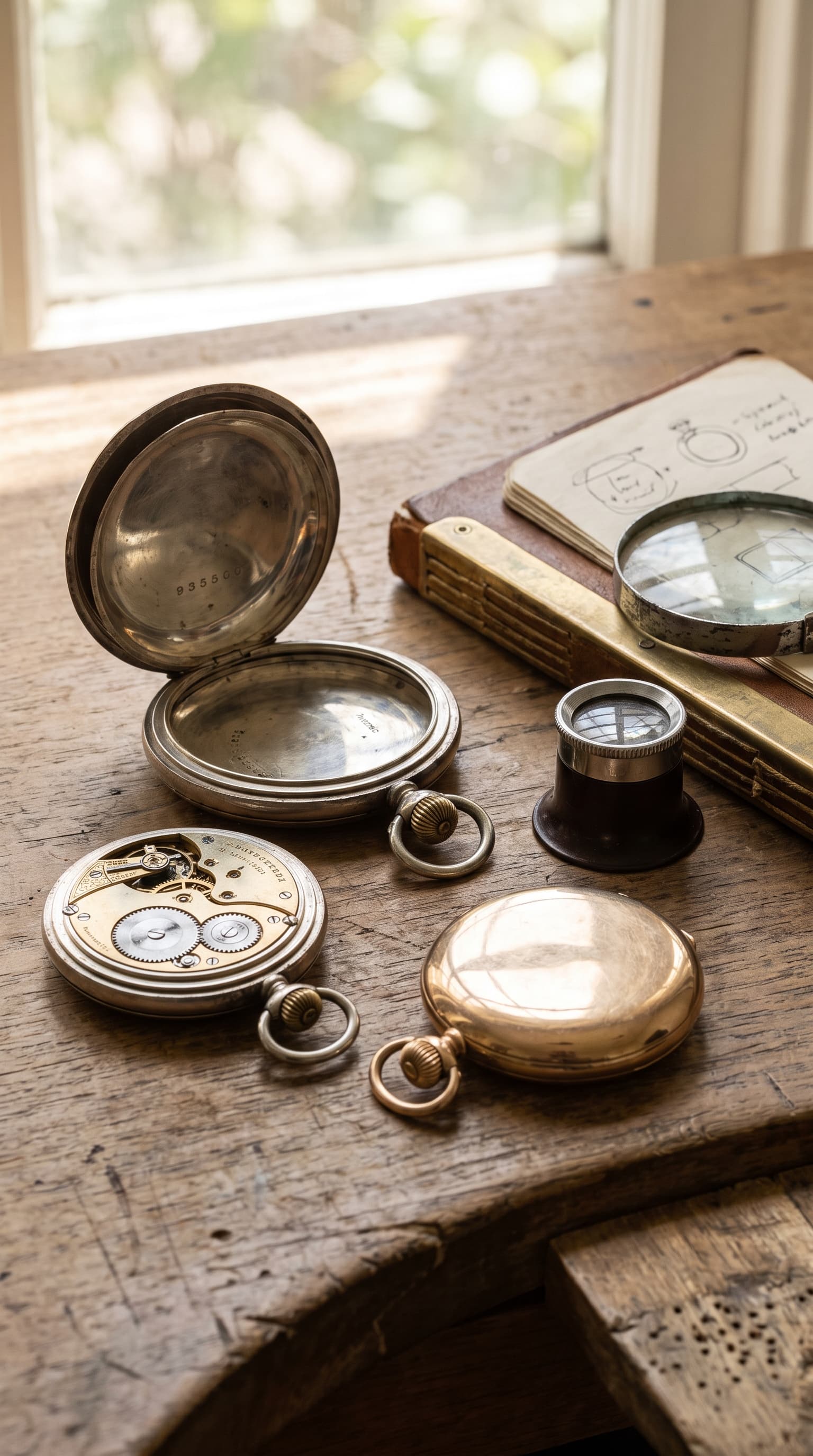
Pocket watch identification starts with understanding that most of the critical information lives in places you can't see when the watch is closed. The serial number on the case interior, the signature on the movement, and the jewel count all tell different parts of the story. Many people mistake a retailer's name on the dial for the manufacturer, or assume a gold-colored case means solid gold. Getting it right means knowing where to look and what actually matters.
What Clues Matter for Pocket Watch Identification
Case Serial Numbers
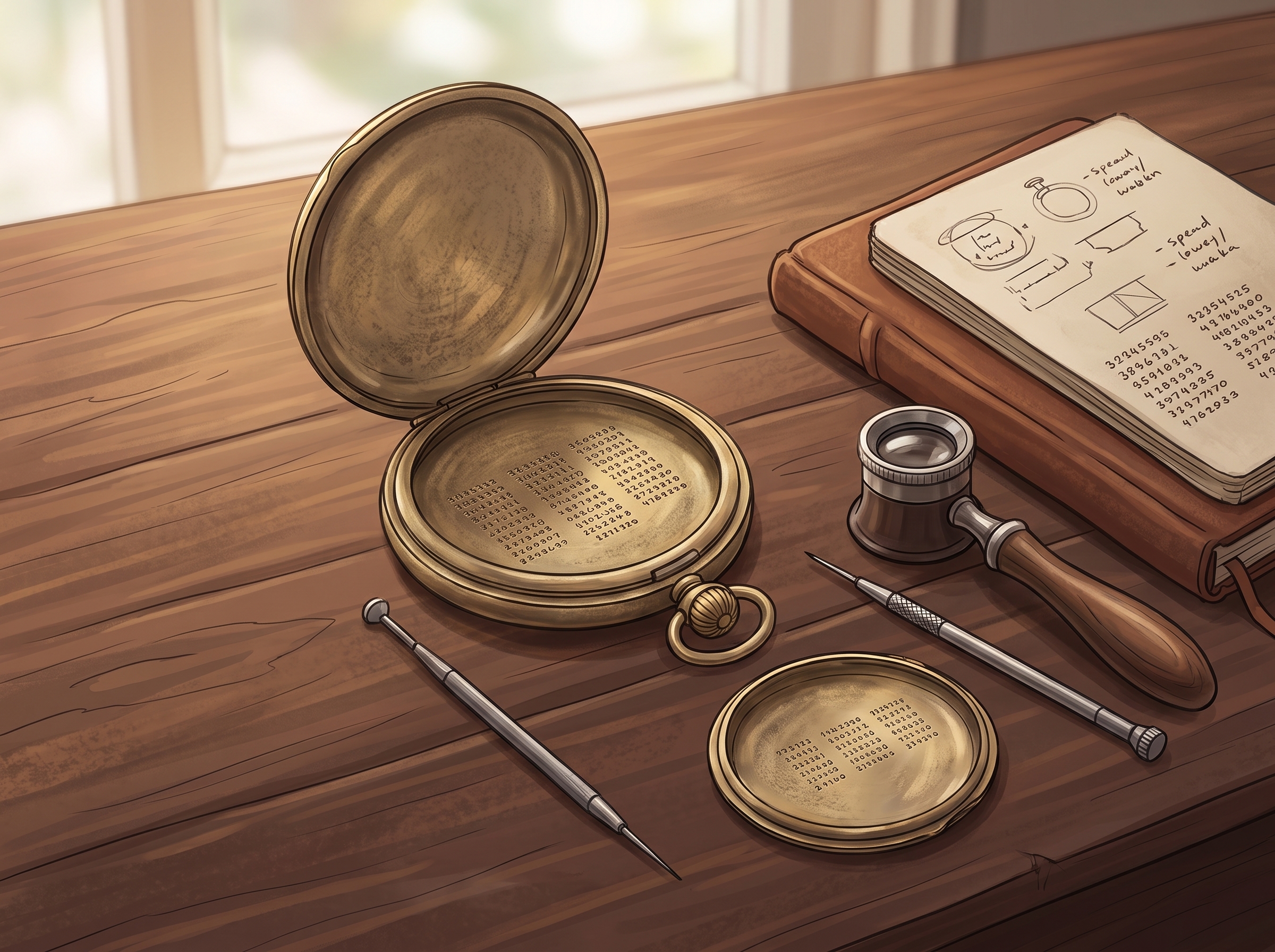
The serial number stamped inside the case back is your single most valuable clue. American manufacturers like Waltham, Elgin, Illinois, and Hamilton kept meticulous production records linking serial numbers to manufacturing dates and grades. These numbers are typically stamped inside the outer case back or dust cover—not on the movement itself. The case serial helps you date the watch and confirms the manufacturer, especially when dial signatures are worn or absent.
Movement Serial Numbers and Signatures
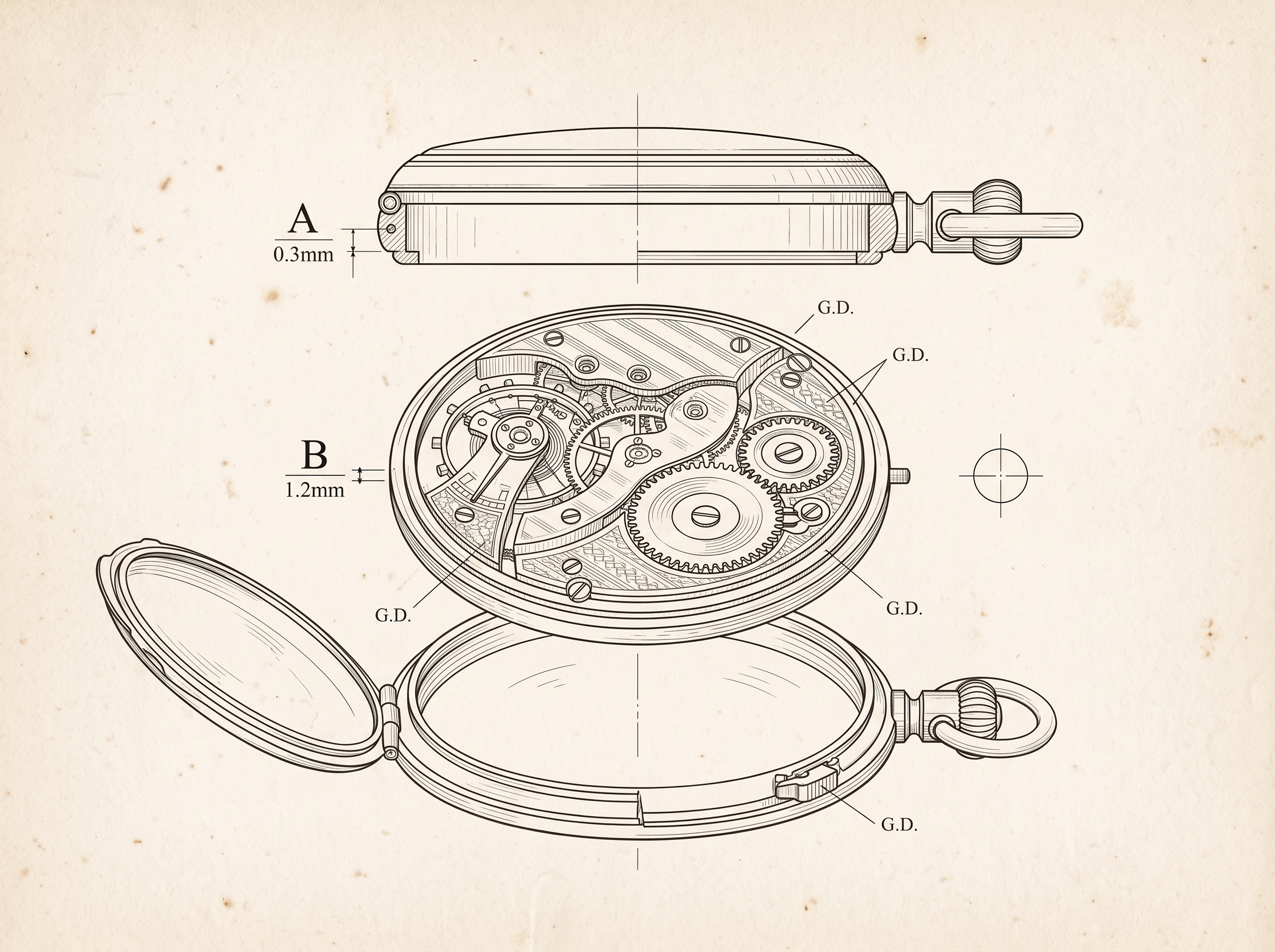
The movement (the mechanism itself) usually carries its own serial number and the actual manufacturer's name. To see it, you need to open the front bezel and sometimes remove the dial. The movement serial is what serious collectors use to identify grade, jewel count, and production run. Waltham movements might read "American Watch Co.," while Elgin movements show "National Watch Co." Early movements often have beautifully engraved signatures and decorative damascening that also help with dating.
Dial Markings and Retailer Names
What's printed on the dial often represents the retailer, not the maker. A watch marked "Ball Watch Co." or "Montgomery Ward" was usually manufactured by Elgin, Waltham, or Hamilton and sold through that retailer. Dial condition matters for value, but the name alone won't tell you who made the watch. Look for additional clues like "Adjusted" markings, which indicate higher-grade movements, or patent dates that help narrow the manufacturing window.
Case Materials and Hallmarks
Case composition varies widely. Look for stamps like "14K," "10K," "Coin," "Silverode," or "Gold Filled." Gold-filled cases have a thin layer of gold bonded to base metal and are far more common than solid gold. Coin silver cases are typically unmarked or stamped "Coin." Many inexpensive cases have no precious metal content at all. European watches may carry hallmarks indicating country of origin and metal purity, but American cases rely on stamped abbreviations.
Jewel Count and Adjustments
Higher jewel counts generally indicate better quality. A 7-jewel movement is basic; 17 or 21 jewels suggest a mid- to high-grade piece. Adjustments (marked "Adjusted to 3 positions" or "Adjusted to temperature") show precision manufacturing for railroad or professional use. These details are engraved or printed on the movement itself, not the dial.
What Photos to Take for Pocket Watch Identification
Good photos unlock accurate identification. You need multiple angles and details that aren't visible in a single snapshot.
Case exterior and dial: Photograph the closed watch from the front, showing the entire dial, hands, and any subsidiary seconds dial. Capture any wear, crazing, or discoloration. The dial's design, numerals, and branding are important even if they don't reveal the true maker.
Case back exterior: Flip the watch over and photograph the closed back. Some cases have decorative engraving, monograms, or presentation inscriptions that help with dating and provenance.
Case interior with serial number: Open the back case and photograph the interior. The serial number is usually stamped inside the outer case back or on a dust cover. Make sure your photo is sharp and well-lit enough to read every digit. Blurry serial numbers are nearly useless.
Movement with signature and serial: If you can safely open the front bezel, photograph the movement. You want the engraved or printed manufacturer name, the movement serial number, jewel count, and any adjustment markings. If the dial is removable and you're comfortable doing so, a photo of the movement with the dial off shows the full signature and sometimes additional grade information.
Hallmarks and case stamps: Zoom in on any stamps inside the case or on the case rim. These tiny marks indicate metal content, country of origin, or case manufacturer. They're easy to miss in wide shots.
Common Misidentifications in Pocket Watch Identification
Collectors and inheritors frequently misread the clues, leading to confusion about origin, value, and age.
Dial name versus manufacturer: The most common error is assuming the name on the dial is the maker. Thousands of watches were private-labeled for jewelers, department stores, and railroads. A dial marked "Sears" or "Pennsylvania Railroad" doesn't mean Sears or the railroad made the movement—it means they sold it. You need the movement signature to know the true maker.
Gold-filled versus solid gold: Many people see a golden case and assume it's solid gold. Gold-filled cases are far more common and worth significantly less. Check for stamps like "GF," "RGP" (rolled gold plate), or "Gold Filled" instead of karat marks. Solid gold cases are stamped "14K" or "18K" with no other qualifiers.
Swiss versus American: Not all pocket watches are American. Swiss movements are common, especially in cases marked with European hallmarks or retailer names. Swiss movements often lack the detailed serial databases that American makers maintained, making them harder to date precisely. The style of the movement, case hallmarks, and dial design help distinguish origin.
Dating by style alone: Dial style, case engraving, and hands can suggest an era, but they're not definitive. Pocket watch designs changed slowly, and many styles overlapped for decades. The serial number is the only reliable dating tool for American watches.
Overestimating value based on age: Old doesn't automatically mean valuable. Millions of pocket watches were produced, and most common models have modest collector value. Grade, condition, jewel count, and rarity matter more than age alone.
What Tocuro Can Help Resolve
Pocket watch identification gets complicated fast, especially when you're dealing with worn dials, missing dust covers, or unfamiliar maker names. Tocuro helps you make sense of the details from photos.
Upload clear photos of your case serial number, movement, and dial, and Tocuro's platform uses market signals to identify the maker, model, and estimated value range. Whether you're trying to figure out if that Elgin is a high-grade railroad watch or a basic 7-jewel model, or you need to know if a European import is worth restoring, Tocuro gives you practical answers without the research rabbit hole.
The platform handles the tricky cases too—retailer-branded dials, unreadable serials, and movements where the signature has worn off. You get an estimated value range based on real market signals, not formal appraisals, so you can make informed decisions about selling, insuring, or just understanding what you own.
Get Your Pocket Watch Identified Today
Pocket watches hide their secrets inside cases and movements that most people never open. The difference between a $50 watch and a $500 watch often comes down to a serial number, jewel count, or manufacturer marking you can't see without the right photos.
Identify your pocket watch with Tocuro today. Upload photos of your case serial, movement, and dial, and get a clear identification with an estimated value range. You get 7 free identifications per day, and the count resets daily, so you can work through an entire collection without committing to a subscription. Stop guessing about what you have—get answers from your photos.
Whether you inherited a family heirloom, found a watch at an estate sale, or just want to know what's ticking in that velvet box, start with the clues that matter and the photos that reveal them.
Photo identification
Identify Your Watch
Use Tocuro to identify your item from a photo and get an estimated value range when market data is available.