
Plate Identification: How to Identify Antique Plates from Photos
Identifying antique plates requires examining backstamps, rim patterns, glaze quality, and material construction. This guide covers which clues matter most, what photos capture the details you need, and how to avoid common misidentifications when researching your dinnerware.
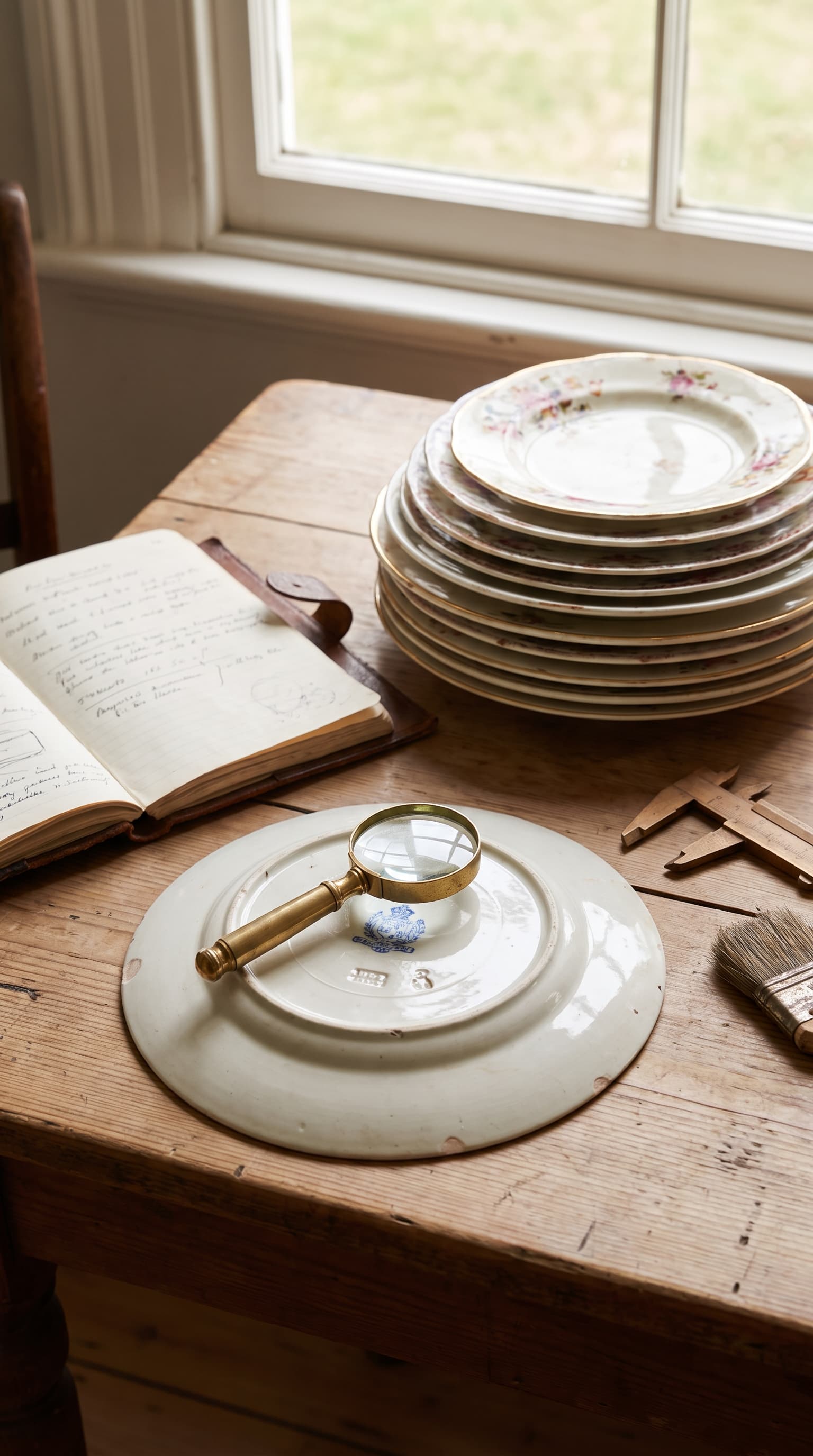
Plate Identification: How to Identify Antique Plates from Photos
Plate identification starts with three main areas: the backstamp, the rim pattern or shape, and the material itself. Unlike larger furniture pieces, plates carry their maker information directly on the base—but only if you know where to look and how to interpret what you're seeing. Whether you've inherited a set, found a single piece at an estate sale, or are sorting through a collection, understanding which visual clues matter makes the difference between guessing and knowing.
What Clues Matter Most for Plate Identification
The backstamp is your first stop. Flip the plate over and look for printed, impressed, or painted marks on the back. These marks often include a manufacturer name, country of origin, pattern name, or registration number. The style of the mark—its colors, font, symbols, and wording—can narrow down the production period to within a decade or two.
Pay attention to how the mark was applied. Printed marks in multiple colors typically suggest post-1850 production, while hand-painted marks or simple impressed stamps often indicate earlier pieces. If you see "Made in [Country]," that phrasing usually dates to after 1891, when the McKinley Tariff Act required country-of-origin labeling on imports to the United States.
Rim patterns and edge treatments tell you about pattern lines and decorative intent. Many manufacturers produced hundreds of distinct patterns, and the rim design—whether scalloped, beaded, embossed, or smooth—helps differentiate one line from another. Look for subtle details like the number of scallops, the spacing of beading, or the presence of molded florals along the edge.
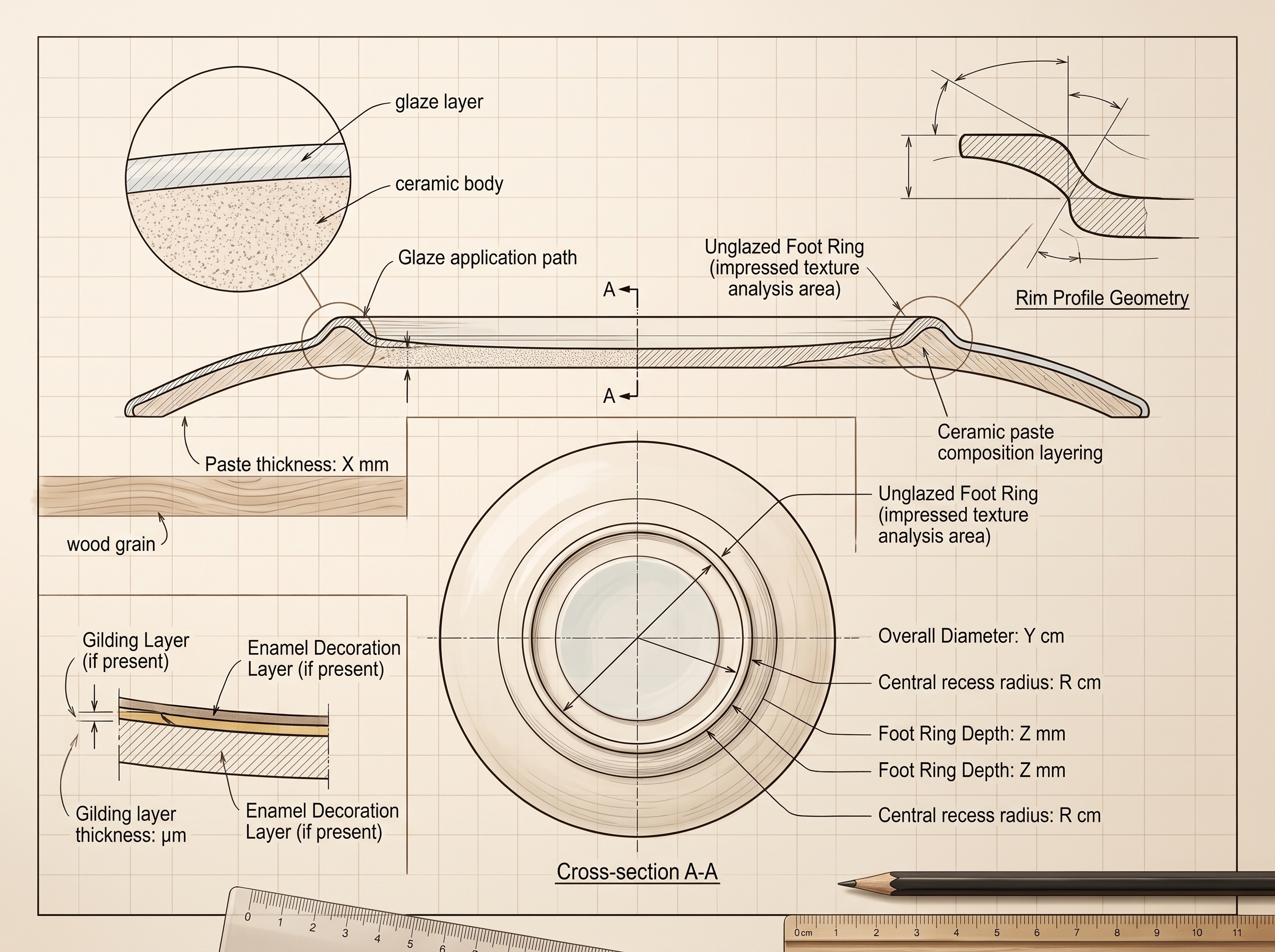
Glaze quality and color reveal production method and era. Early porcelain often shows a softer, slightly uneven glaze with subtle pooling in recesses. Later transfer-printed earthenware tends to have a harder, more consistent glaze. Crazing (fine cracks in the glaze) can indicate age, but it can also result from thermal stress on newer pieces, so don't rely on crazing alone.
Material weight and translucency separate porcelain from earthenware, bone china from semi-porcelain, and hard-paste from soft-paste. Hold the plate up to a strong light source. True porcelain and bone china will show some translucency, especially around the edges. Earthenware remains opaque. Weight varies: bone china feels lighter than most porcelain; ironstone and semi-porcelain feel heavy and dense.
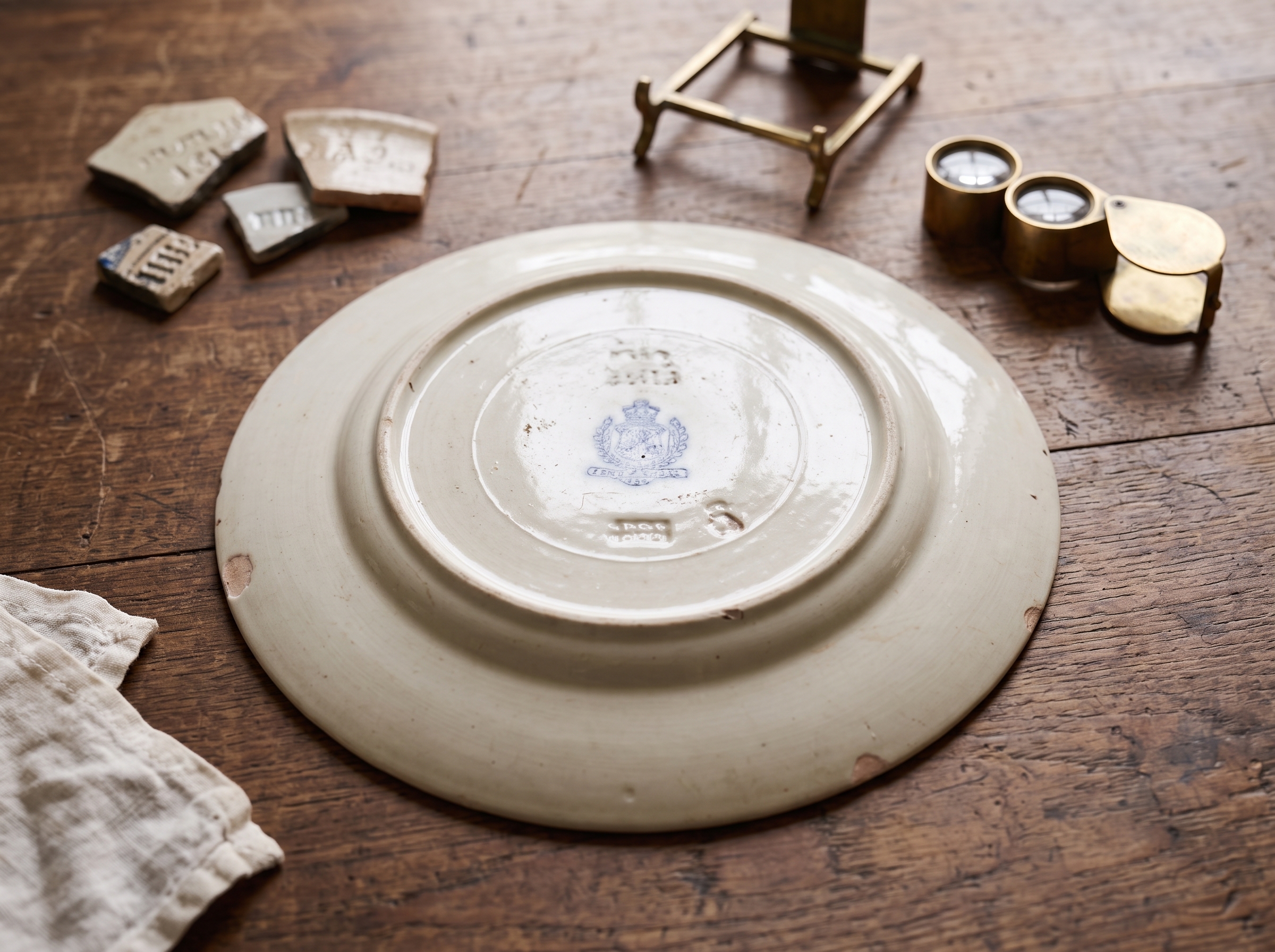
Footring details—the unglazed ring on the base—show production quality and sometimes tool marks from the pottery wheel or mold. A smooth, evenly formed footring suggests factory precision, while slight irregularities point to earlier hand-finishing or smaller-scale production.
What Photos to Take for Plate Identification
Start with the backstamp. Place the plate face-down on a neutral surface with even, bright lighting. Avoid shadows and glare. Capture the entire mark in sharp focus. If the mark is large or has multiple elements, take a second close-up shot to show fine details like small text, registration numbers, or worn portions of the stamp. This is the single most important photo for identification—how you photograph maker marks directly impacts what information you can extract.
Photograph the plate's front view straight-on from above. This shows the overall pattern, center motif, rim decoration, and color palette. Use natural light or diffused indoor light to avoid harsh reflections that obscure pattern details.
Capture the rim and edge in profile. Set the plate on its edge or prop it vertically, then photograph along the rim line to show scalloping, embossing, or edge treatments. This angle reveals three-dimensional details that top-down shots miss.
Take a detail shot of any hand-painted or transfer-printed decoration. Zoom in to show brushwork quality, transfer dot patterns (small dots visible under magnification in transfer-printed designs), or gilding wear. These micro-level clues help distinguish hand-decorated pieces from mass-produced patterns.
Include a photo of the footring and base texture. This shows the unglazed clay body color (white for porcelain, cream or tan for earthenware) and any stilt marks, grinding marks, or other production traces.
If there's damage—chips, cracks, repairs, or significant crazing—photograph those areas clearly. Damage patterns sometimes reveal construction techniques or help estimate age and value.
Common Plate Identification Mistakes
Assuming all floral patterns are old is the most frequent error. Many classic patterns remained in production for decades, and some are still manufactured today. Blue Willow, for example, has been produced continuously since the late 1700s by dozens of makers. The backstamp and mark style date the piece, not the decorative pattern alone.
Mistaking reproductions for originals happens often with popular makers like Limoges, Meissen, or Royal Doulton. Modern reproductions sometimes copy old mark styles, but they often include subtle differences—slightly different fonts, added words like "reproduction," or marks that don't match documented examples. Cross-reference your mark against known examples from reliable databases or tableware maker marks guides.
Confusing bone china with porcelain or earthenware leads to misidentification. Bone china contains bone ash, giving it a warm tone and slight translucency. Porcelain is cooler-toned and denser. Earthenware is opaque and heavier. These material differences affect both identification and value, so checking translucency is worth the extra step.
Ignoring wear patterns causes dating errors. A plate with heavy utensil marks, faded gilding, or worn decoration suggests decades of use—but that wear could have happened on a 1920s plate or a 1990s reproduction used daily. Wear indicates use, not necessarily age.
Overlooking pattern names printed on the backstamp skips a major shortcut. Many makers included the pattern name right on the mark. Search for that exact pattern name along with the maker's name, and you'll often find catalog images, production dates, and identification details that settle the question immediately.
What Tocuro Helps Resolve in Plate Identification
Plate identification often stalls when backstamps are worn, partially missing, or feature symbols without clear text. Tocuro analyzes photos of plates—including unclear or incomplete marks—and cross-references visual details like rim shape, glaze type, and pattern style to identify the maker, pattern, and approximate era.
You don't need to know technical terms or have a reference library. Upload clear photos of the backstamp, the front pattern, and the rim profile, and Tocuro matches those details against known examples. If you're comparing similar-looking plates or trying to determine whether pieces belong to the same set, Tocuro can help resolve those distinctions by identifying subtle differences in mark styles or pattern variations.
Tocuro also provides estimated value ranges based on current market signals, though these estimates are not formal appraisals. Understanding a plate's identification often leads directly to understanding its collectibility and market context.
Example Tocuro-identified item
See this Tocuro public object page for an Etruscan Majolica leaf plate by Griffin, Smith & Hill with identification details, valuation context, and an eBay listing link.
Identify Your Plates with Confidence
Plate identification combines mark reading, pattern recognition, and material analysis. The backstamp remains your most reliable clue, but rim details, glaze quality, and construction methods fill in the gaps when marks are missing or ambiguous. Taking the right photos—especially clear backstamp images—gives you the visual evidence you need to move forward.
When you're ready to identify a plate, upload your photos to Tocuro and get specific identification details along with estimated value ranges. No guessing, no endless forum searches—just clear answers from the photos you already have.
Photo identification
Identify Your Item
Use Tocuro to identify your item from a photo and get an estimated value range when market data is available.