
Pitcher Identification Antique: How to Identify Vintage Pitchers from Photos
Identifying antique pitchers requires examining form, base marks, material composition, and handle construction. This guide explains which clues matter most and how to photograph your pitcher for accurate identification.
Understanding Pitcher Identification Antique Methods
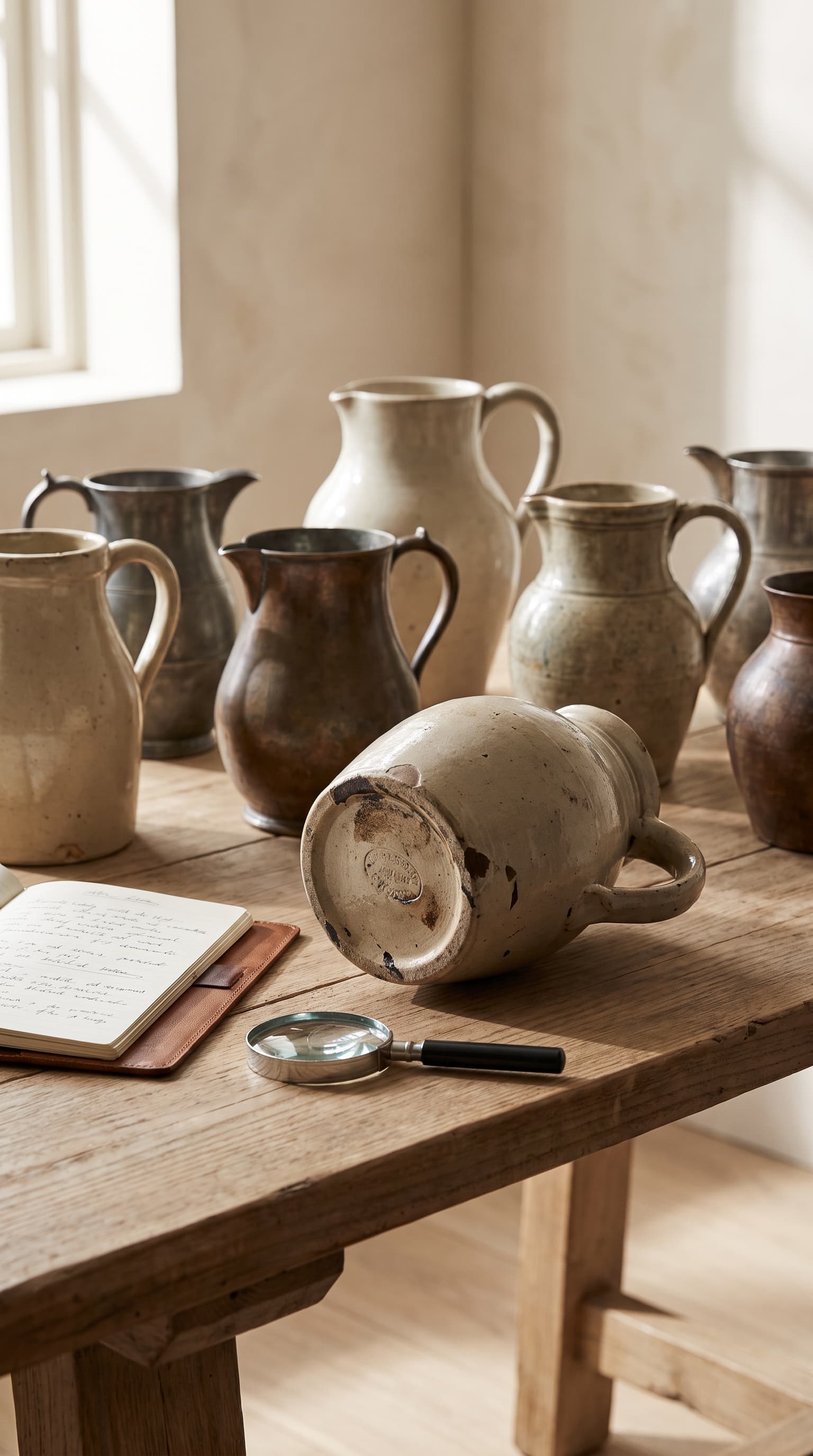
Pitcher identification antique techniques rely on a combination of visual clues that tell you about maker, era, and material. Unlike flat tableware, pitchers offer three-dimensional details—spout form, handle attachment, base construction, and body shape—that narrow down age and origin surprisingly well. Most collectors struggle because they focus only on visible marks and miss the structural details that matter more.
The key is knowing which features are diagnostic and which are just decorative variations. A transfer-printed floral pattern might appear on hundreds of different pitcher forms across multiple decades, but the way the handle meets the body or the profile of the spout can point to a specific pottery or period.
What Clues Matter Most for Pitcher Identification Antique Research
Base Marks and Impressed Stamps
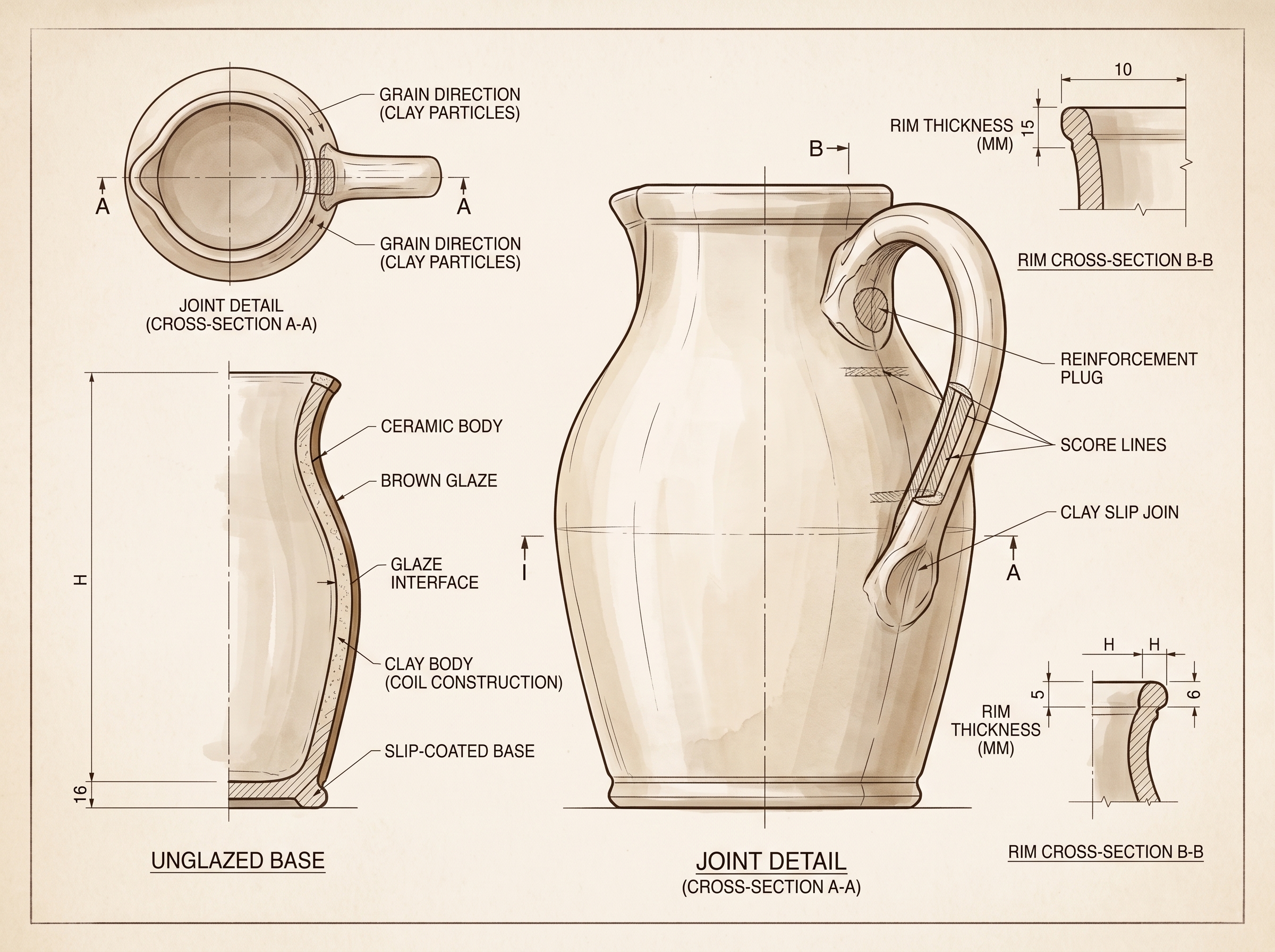
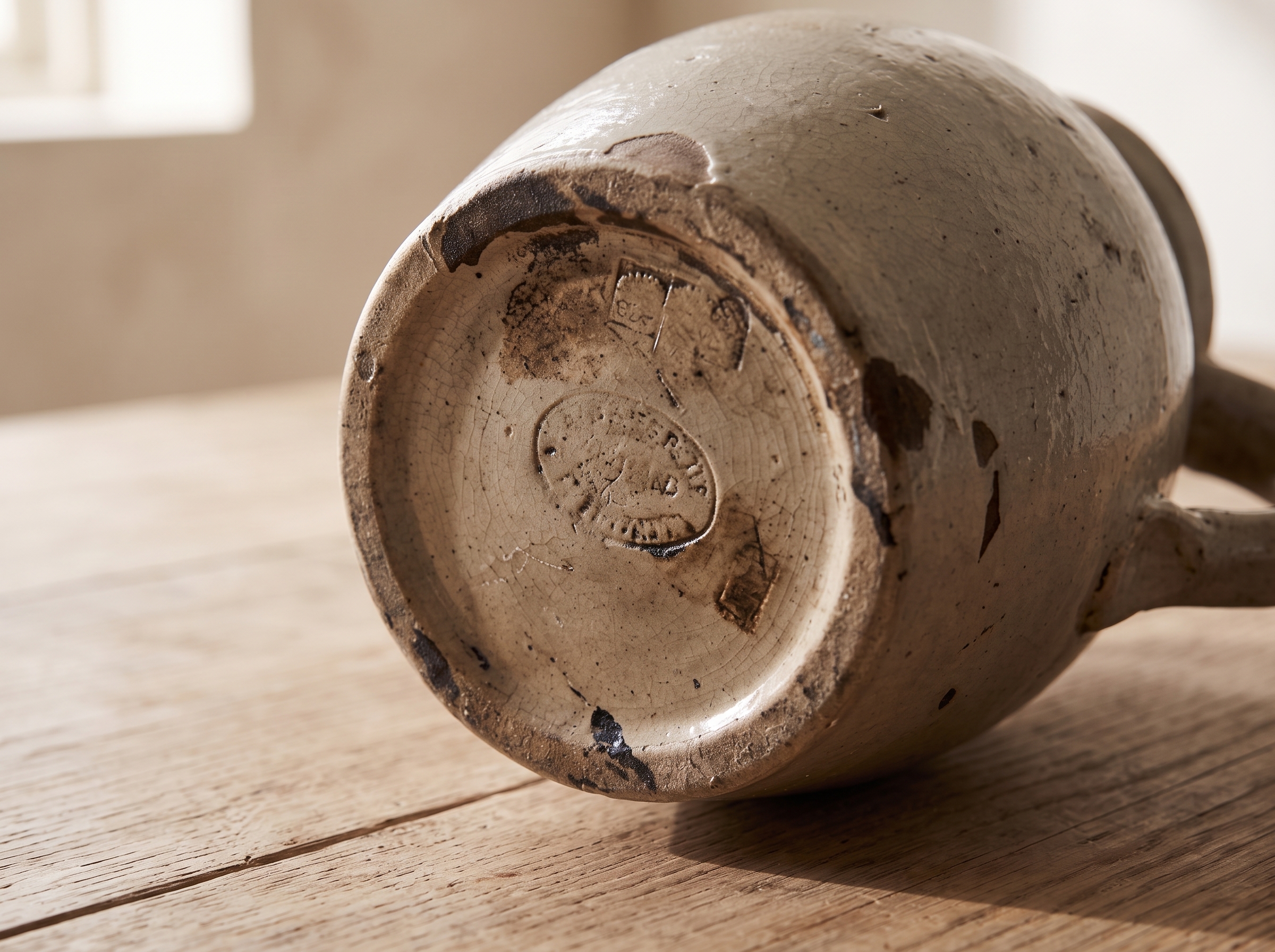
The underside of your pitcher often holds the most direct identification clue. Pottery and porcelain pitchers typically carry maker's marks, country-of-origin stamps, pattern names, or mold numbers. These can be printed, impressed, or incised. Pay attention to mark color and style—backstamp designs changed frequently, sometimes every few years, giving you tight date ranges.
Glass pitchers rarely have paper labels intact, but mold seams, pontil marks, and manufacturing techniques visible on the base reveal age. Machine-made glass shows different seam patterns than hand-blown or mold-blown pieces.
Form and Spout Style
Pitcher forms follow fashion. Bulbous bodies with pinched spouts dominated certain Victorian decades, while Arts and Crafts potters favored cylindrical forms with straight spouts. The spout itself—whether it's a pulled lip, a molded beak, or an ice-lip design—reflects both period and function.
Water pitchers differ from cream pitchers, milk pitchers, and syrup jugs in predictable ways. Size alone doesn't tell the full story, but proportion does. A squat, wide-bodied pitcher with a narrow spout was likely meant for cream or milk, while tall, slim forms with ice guards were water pitchers from the late 1800s.
Handle Construction and Attachment
How the handle attaches to the body reveals manufacturing method and often narrows the date range. Early earthenware and stoneware pitchers have handles that were pulled and applied by hand, leaving visible finger marks or joining seams. Later industrial production used molded handles attached with slip, creating cleaner but still detectable join lines.
Handle terminals—the upper and lower attachment points—can be very distinctive. Some makers used decorative flourishes, leaf shapes, or distinctive thumb rests that act like fingerprints for that pottery or designer.
Material and Glaze
Material identification matters enormously. An ironstone pitcher, a Majolica pitcher, and a pressed glass pitcher from the same year look nothing alike and appeal to completely different collector markets. Earthenware has a porous body visible at unglazed areas; porcelain is translucent when held to light; stoneware is dense and non-porous.
Glaze type and application point to specific traditions. Salt-glazed stoneware has a distinctive orange-peel texture. Majolica glazes are thick, colorful, and often molded into relief designs. Transfer-printed designs on white earthenware dominated British and American production from the 1820s through the early 1900s, with color choices (flow blue, mulberry, brown) tracking changing tastes decade by decade.
What Photos to Take for Pitcher Identification Antique Success
Full Base Photo in Good Light
This is your most important shot. Place the pitcher upside-down on a contrasting surface and photograph the entire base straight-on. Use natural light or bright white light to capture mark details, impressed numbers, and any glaze variations. Shadows obscure critical information, so avoid harsh directional lighting.
If there's a mark, take a second close-up focused only on that mark. Blurry backstamps are nearly useless for identification.
Full Profile and Front View
Photograph the pitcher from the side to show the full silhouette—spout angle, body curve, base width, and overall proportion. Then take a straight-on front view showing how the handle sits relative to the spout. These angles reveal form details that distinguish one maker's work from another.
Handle Attachment Close-Ups
Zoom in on where the handle meets the body at both top and bottom. These joins often show hand-finishing marks, mold lines, or decorative details that help confirm a maker or period. On art pottery especially, handle construction is a key diagnostic.
Interior and Rim Detail
A shot down into the pitcher shows interior glaze, pouring lip construction, and any maker's marks placed inside the rim. Some potters marked pieces inside rather than on the base. The rim itself—whether it's rolled, flat, or shaped—also varies by maker and period.
Common Pitcher Identification Antique Misidentifications
Confusing Reproduction Transfer Ware
Reproduction blue-and-white transfer pitchers flood the market, often marked "Staffordshire" or copying 19th-century patterns. Genuine antique transfer ware shows crazing in the glaze, wear to high points, and backstamps consistent with known maker chronologies. New pieces have suspiciously perfect glazes and marks that don't match historical records.
Mistaking Country of Origin
Many American-made pitchers from 1900–1940 copied English forms and patterns. A pitcher marked "England" is English, but an unmarked pitcher in an English style could easily be American, Canadian, or even Japanese export ware. Form alone doesn't confirm origin without corroborating marks or glaze evidence.
Assuming All Majolica Is Valuable
Majolica became wildly popular in the Victorian era, and production ranged from exquisite English art pottery to mass-market American pieces with crude molding and thin glaze. Not all colorful relief-molded pitchers are created equal. Maker marks, glaze quality, and mold sharpness separate premium examples from later commercial work.
Dating Glass Pitchers by Pattern Alone
Glass patterns were reissued for decades. A pitcher in "Hobnail" or "Daisy and Button" could date anywhere from the 1880s to the 1960s depending on glass quality, mold sharpness, and base construction. Pattern glass identification requires understanding multiple production periods and how manufacturing techniques evolved.
Similar confusion happens with vintage dinnerware identification, where patterns were produced across many years.
What Tocuro Can Help Resolve in Pitcher Identification Antique Challenges
Pitcher identification often stalls when you can't decipher a partial mark, don't recognize a form, or aren't sure whether you're looking at porcelain or ironstone. Tocuro's photo-based identification analyzes the full range of visual clues—material, form, marks, glaze, and construction details—together.
Upload clear photos of your pitcher's base, profile, and handle, and Tocuro matches these details against known makers, patterns, and production periods. You'll get an identification with context: likely maker, approximate date range, material type, and estimated value range based on current market signals. The value estimate reflects actual sales data, not formal appraisal, giving you a practical sense of what similar pitchers sell for today.
This approach works especially well when you have an unusual form or a mark you can't find in reference books. Tocuro recognizes makers across pottery, porcelain, and glass, from major manufacturers to smaller regional potteries that don't appear in standard guides.
The same visual analysis that helps with pitcher identification also applies to related tableware like antique china identification and serving platter identification.
Start Identifying Your Antique Pitcher Today
Whether you inherited a hand-painted porcelain pitcher, found a stoneware jug at an estate sale, or bought a pressed glass water pitcher at auction, knowing what you have changes everything. The right photos reveal maker, age, and value quickly.
Identify your pitcher now using Tocuro's photo-based identification. Upload images of the base, profile, and handle, and get results that clarify what you own and what it's worth in today's market.
Photo identification
Identify Your Item
Use Tocuro to identify your item from a photo and get an estimated value range when market data is available.