
Old Coin Identification: How to Identify Coins by Photo
Identifying old coins starts with capturing the right details in your photos. This guide explains which features matter most—dates, mint marks, edge details, and design elements—and how to photograph them clearly for accurate identification.
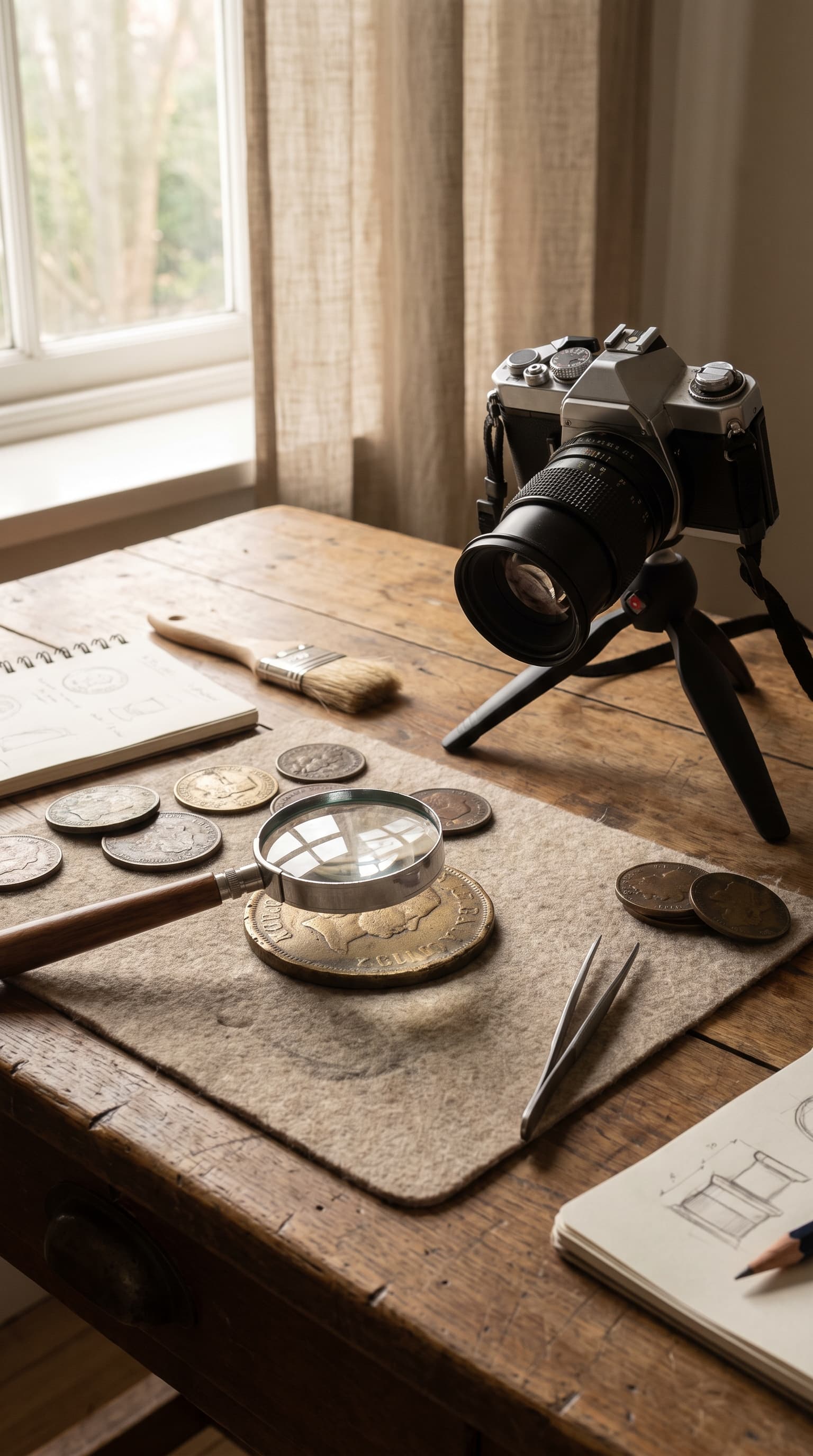
Old Coin Identification: How to Identify Coins by Photo
Old coin identification hinges on a few critical details that tell you what you have and roughly when it was made. You don't need to be a numismatist to get started—you just need to know where to look and how to capture clear photos of the features that matter. Most coins reveal their identity through a combination of date, country, denomination, and design, but mint marks, edge lettering, and wear patterns add important context.
This guide focuses on practical identification from photos: dating your coin, figuring out its type, and spotting the details that separate common pieces from scarcer varieties. Formal grading is a separate skill; here, we're helping you figure out what you have.
What Clues Matter Most for Old Coin Identification
Date and Mint Mark
The date is usually the most obvious identifier, stamped on the obverse (front) or reverse (back). On U.S. coins, you'll typically find it below the portrait or design. Mint marks—small letters indicating where the coin was struck—appear near the date or on the reverse. A "D" means Denver, "S" means San Francisco, "CC" means Carson City, and so on. Some older coins have no mint mark, which usually means Philadelphia.
For foreign coins, dates may use different calendar systems. Roman numerals, regnal years, or non-Gregorian calendars can make dating trickier, but the design and inscription style still help narrow the window.
Denomination and Inscriptions
Most coins state their denomination somewhere on the surface: "ONE CENT," "QUARTER DOLLAR," "5 FRANCS." On older or worn coins, this text may be faint. Look for abbreviated forms like "D" for penny (from "denarius") or "KR" for krona. Inscriptions often include the country name, mint authority, or motto. For U.S. coins, "E PLURIBUS UNUM" and "IN GOD WE TRUST" are standard, but their placement and style changed over time.
Foreign coins may have inscriptions in Latin, Arabic, Chinese, or other scripts. Even if you can't read the language, the script itself is a strong clue.
Design and Portrait
The central design—whether it's a monarch's portrait, national symbol, or allegorical figure—identifies the issuing country and often the era. U.S. coins feature presidents, Liberty, and iconic symbols like the eagle. British coins show the reigning monarch, and the portrait style changes with each reign.
Small design details matter too. The number of stars, arrows, leaves, or the direction a portrait faces can distinguish varieties or indicate a redesign.
Edge Details
The edge of a coin can be plain, reeded (ridged), or lettered. Edge lettering is common on large denominations and commemorative issues. Some coins have ornamental or security edge designs. Edge details are often overlooked but can confirm a coin's authenticity or identify a specific issue.
Metal and Weight
Older coins were often struck in silver, gold, or copper. Composition changed over time, especially during wars when precious metals were scarce. A coin's color, heft, and response to a magnet can hint at its composition. Silver coins have a distinctive ring when dropped on a hard surface; clad or base-metal coins sound dull.
Don't rely on weight alone unless you have a precision scale, but noticeable differences in size or thickness compared to known examples are worth noting.
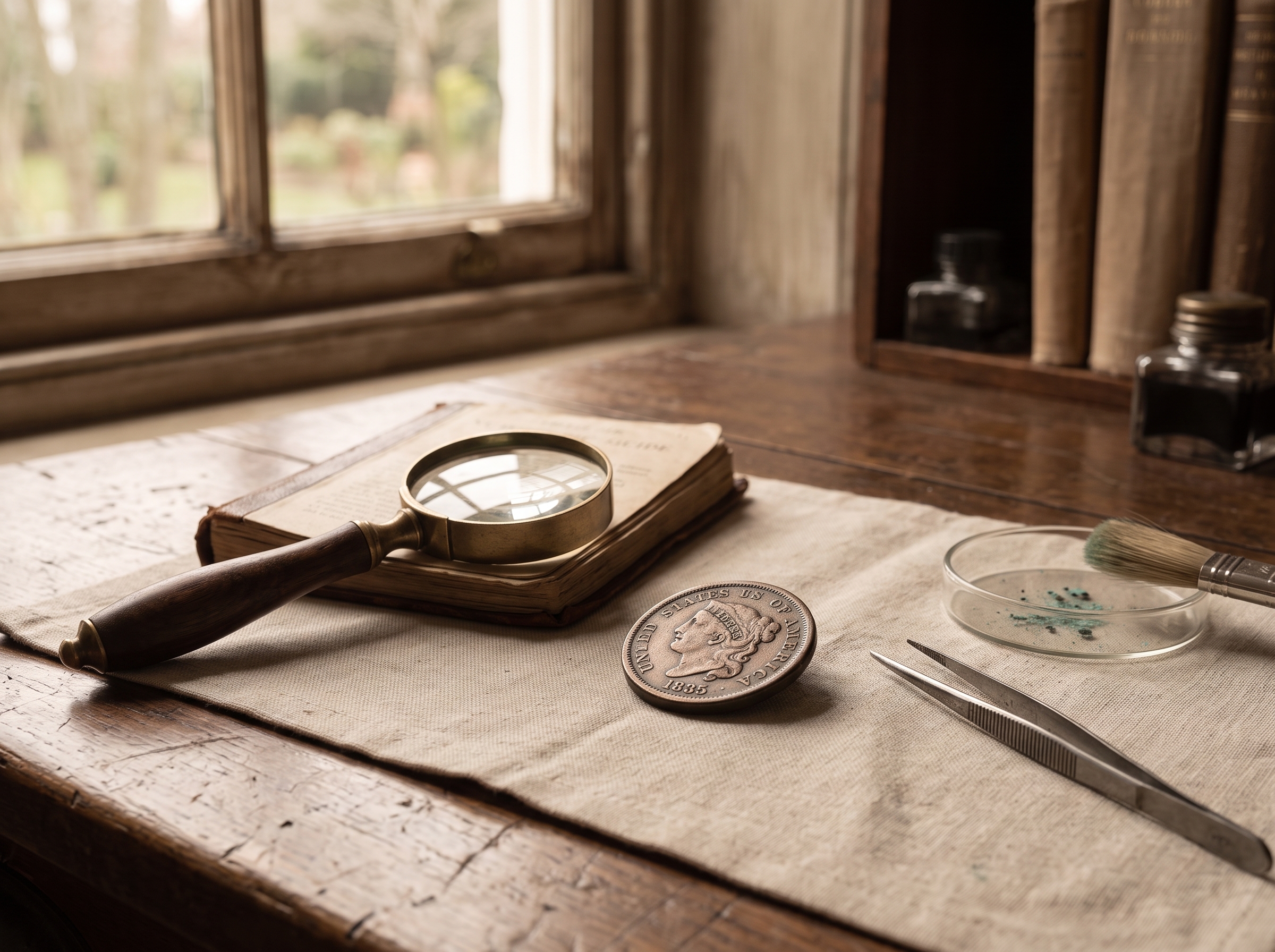
What Photos to Take for Old Coin Identification
Good photos make identification much easier. You don't need professional equipment—a smartphone works fine if you follow a few guidelines.
Both Sides in Good Light
Photograph the obverse and reverse separately, with the coin flat and well-lit. Natural daylight or a bright LED lamp works best. Avoid direct flash, which creates glare and washes out details. Hold the camera or phone parallel to the coin to minimize distortion.
Make sure the entire coin fills most of the frame. Blurry or distant shots make it hard to read dates and inscriptions.
Close-Up of the Date and Mint Mark
Take a dedicated close-up of the date area. Even if the date looks clear to your eye, camera focus can reveal doubling, overstrikes, or faint digits. Capture the mint mark too—its size, font, and position all matter.
If the date is worn or unclear, photograph it from a slight angle under raking light. Shadows can bring out faint details.
Edge View
Turn the coin on its side and photograph the edge. This is especially important for coins that might have edge lettering or for distinguishing solid silver from clad composition. A steady hand or a small stand helps keep the coin stable.
Any Unusual Features or Marks
If you notice doubled text, off-center strikes, or unusual wear, photograph those areas closely. Die cracks, repunched mint marks, and other minting errors can significantly affect interest and value. Also capture any scratches, cleaning marks, or environmental damage—these affect condition assessment.
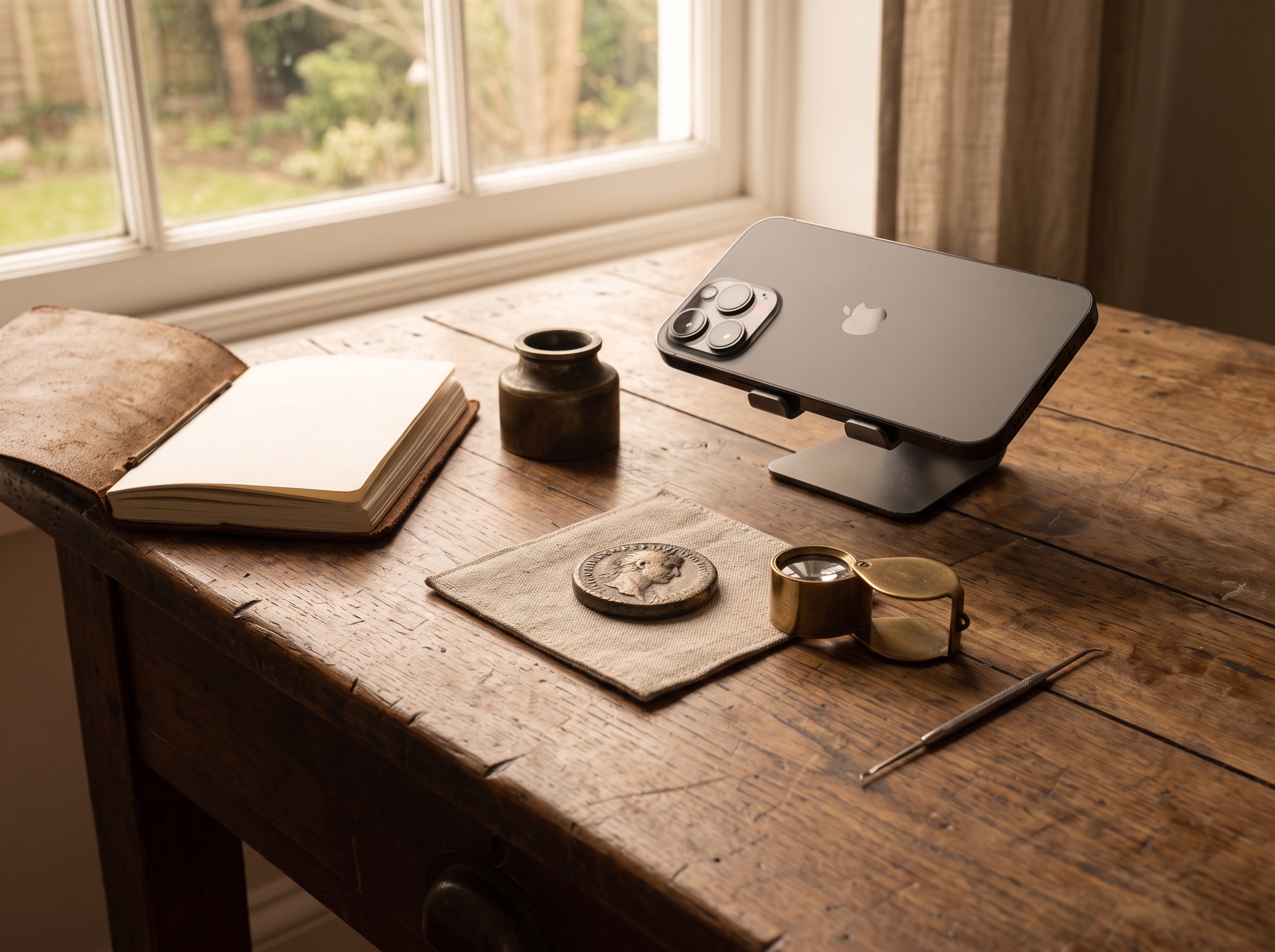
Common Misidentifications in Old Coin Identification
Mistaking Replicas for Originals
Replicas and fantasy pieces often mimic rare coins. Look for the word "COPY" (required by U.S. law on replicas sold after 1973) stamped somewhere on the coin. Replicas may also have incorrect weight, odd color, or suspiciously perfect details. If a coin seems too rare or too perfect for its apparent age, skepticism is warranted.
Confusing Cleaning with Mint Luster
A cleaned coin often looks shiny and bright, but under magnification you'll see hairline scratches and an unnatural, flat luster. Original mint luster has a softer, cartwheel effect and undisturbed surface texture. Collectors and dealers can usually tell the difference at a glance; photos should show the surface texture clearly.
Assuming All Old-Looking Coins Are Valuable
Age alone doesn't guarantee value. Millions of common-date wheat cents, Mercury dimes, and pre-decimal British pennies survive. Condition, rarity, and demand all play larger roles than age. A coin from the 1800s in poor condition may be worth less than a scarcer 1950s issue in excellent shape.
Overlooking Foreign Coins
Many inherited collections include foreign coins that look exotic but are actually common circulation pieces. Without context, it's easy to overestimate their significance. Size, unusual script, or unfamiliar portraits don't automatically mean rarity.
Misreading Dates or Mint Marks
Worn coins can have dates that look like different numbers. An "8" can resemble a "3," or a "1" might be faint. Mint marks can be tiny and easy to miss, or mistaken for damage. Always double-check under magnification and good light.
What Tocuro Can Help Resolve
Tocuro's photo-based identification is built to handle the nuances of old coin identification. Upload clear images of both sides, the date, and the edge, and Tocuro's system will analyze design elements, inscriptions, and other features to identify the coin's type, approximate date range, and issuing country.
Tocuro also provides estimated value ranges based on current market signals. These estimates are not formal appraisals, but they give you a practical sense of what similar coins are trading for. Whether you're sorting an inherited collection, considering a purchase, or just curious about a coin you've held onto for years, Tocuro helps you get answers without needing to be an expert.
You get 7 free identifications per day, and the count resets daily. That's enough to work through a small collection or get quick answers on individual pieces as you find them.
Ready to Identify Your Coins?
If you've got old coins and want to know what they are, Tocuro makes it easy. Just take a few clear photos and upload them. You'll get identification details and estimated value ranges in moments, with no need to dig through reference books or coin catalogs.
Identify Your Item and start discovering what you have.
For collectors exploring other categories, Tocuro also helps with items like costume jewelry and antique china, using the same practical, photo-first approach.
Photo identification
Identify Your Coin
Use Tocuro to identify your item from a photo and get an estimated value range when market data is available.