
Necklace Identification: How to Identify Vintage Necklaces from Photos
Identifying vintage necklaces requires specific photo documentation of clasps, chain links, hallmarks, and construction details. This guide explains which visual clues matter most and what photos help distinguish costume jewelry from fine pieces.
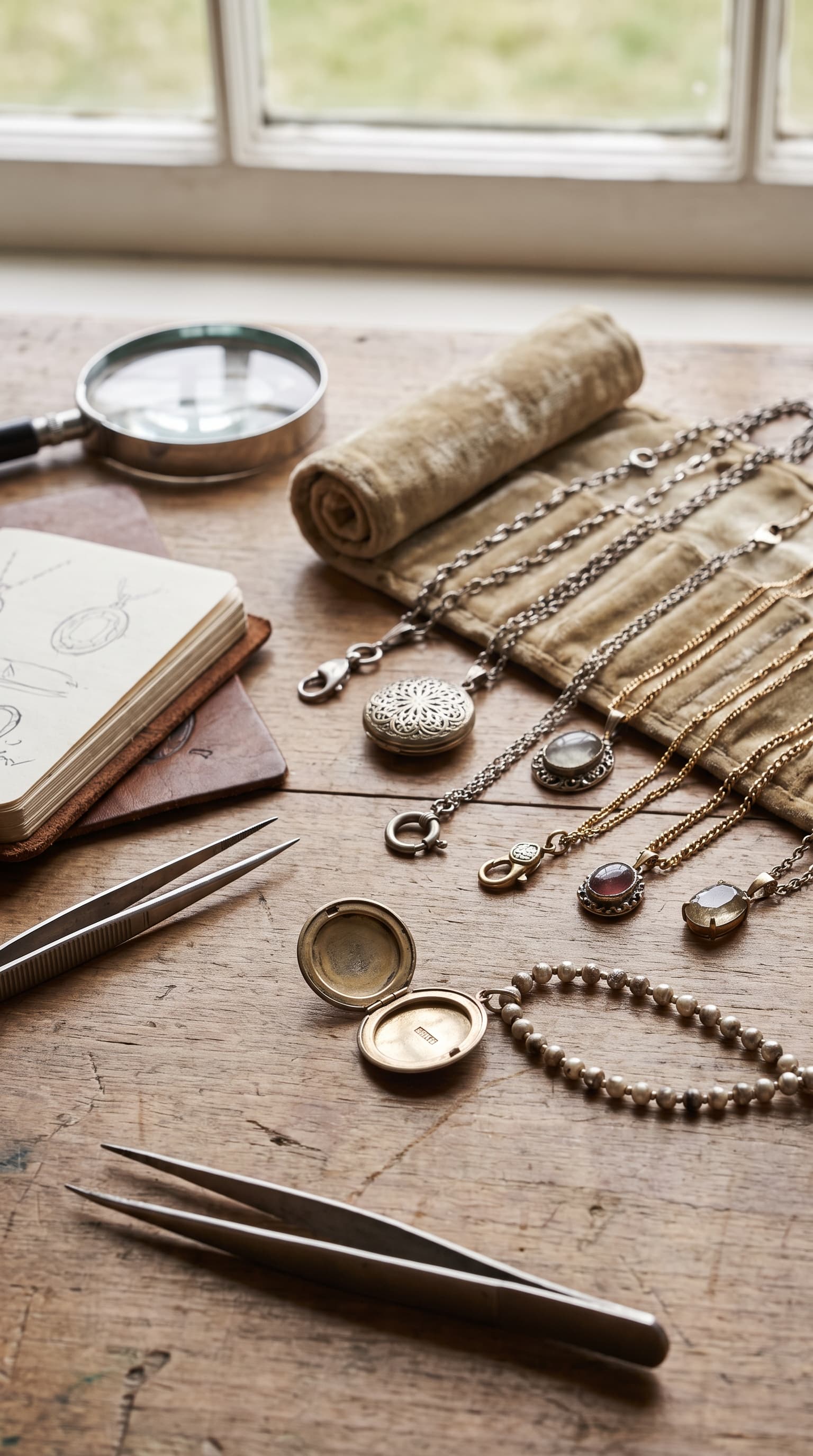
Necklace Identification: How to Identify Vintage Necklaces from Photos
That inherited necklace might be costume jewelry from the 1950s or a signed designer piece worth hundreds. The difference often comes down to tiny details most people overlook. Necklace identification starts with knowing which clues actually matter and how to capture them clearly in photos.
Unlike rings or brooches, necklaces present unique identification challenges. The clasp sits at the back, hallmarks hide in unexpected places, and construction techniques vary wildly between eras and price points. Taking the right photos makes all the difference.
What Clues Matter for Necklace Identification
Clasp Style and Construction
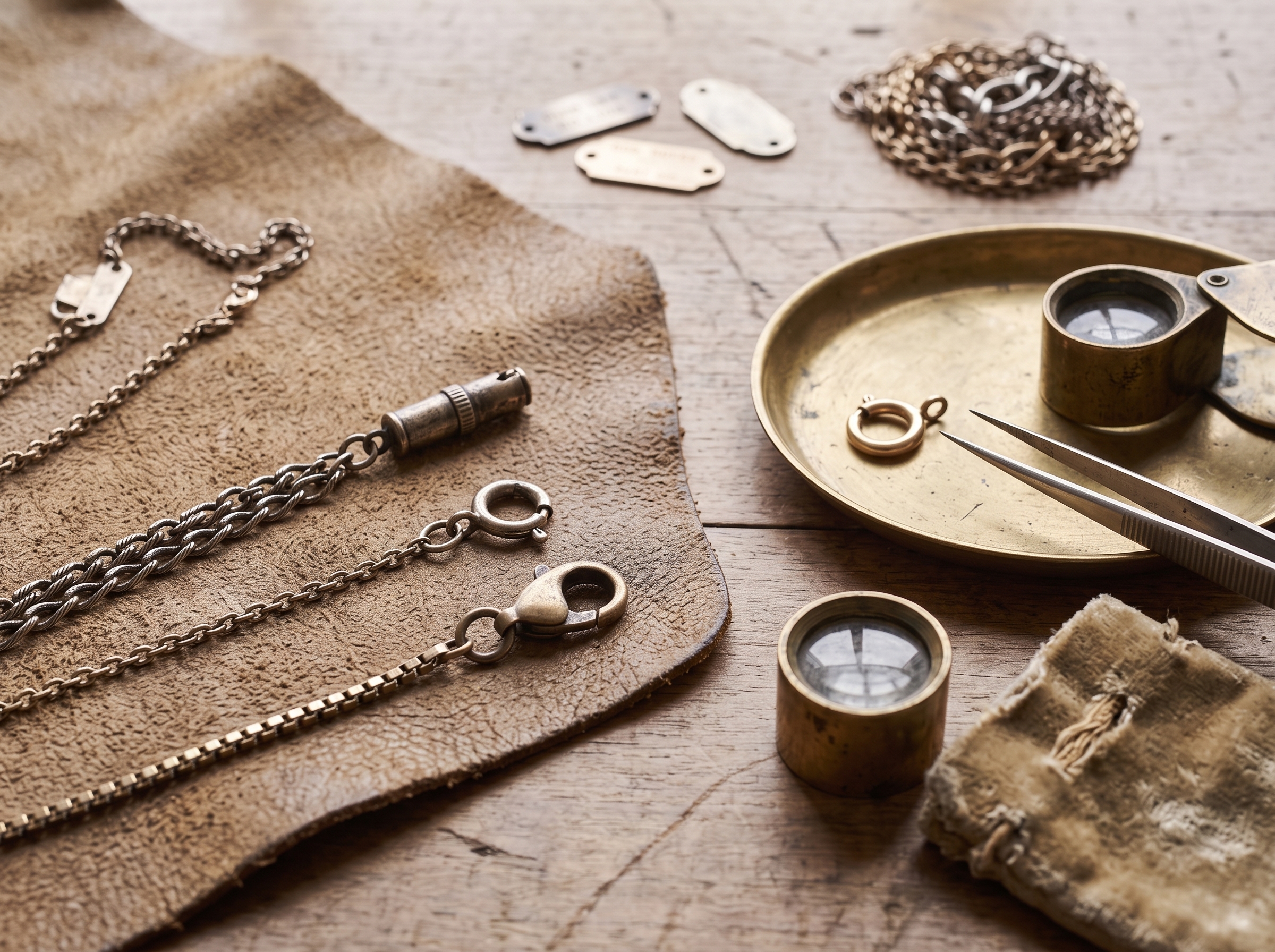
The clasp tells you more than almost any other feature. Barrel clasps, spring rings, and fishhook closures each belong to specific time periods. A genuine Art Deco necklace won't have a modern lobster claw clasp. The metal quality, weight, and how smoothly the clasp operates all signal whether you're holding costume jewelry or something finer.
Look for wear patterns too. Authentic vintage pieces show consistent patina and wear that develops over decades, not artificial aging applied in a factory last year.
Chain Link Construction
How the chain is made reveals manufacturing era and quality level. Hand-fabricated links look different from machine-stamped ones. Soldered connections indicate higher quality than simple pressed links. The weight matters—solid gold or silver chains have heft that plated or filled pieces lack.
Chain style also dates a piece. Rope chains, snake chains, box chains, and figaro links each had their popular moments. A delicate trace chain suggests Georgian or early Victorian work, while chunky curb chains point to mid-century or later.
Hallmarks and Maker's Marks
This is where most people struggle with necklace identification. Unlike rings where marks sit inside the band, necklace hallmarks can appear on the clasp, jump ring, decorative elements, or even individual links. Some makers stamped everything; others marked only the clasp.
Common marks include metal purity stamps (14K, 925, STERLING), country marks, maker signatures, and patent numbers. Designer pieces from Trifari, Miriam Haskell, or Eisenberg often carry distinct marks that significantly affect value. Learn more about reading jewelry marks to understand what you're seeing.
Stone Settings and Materials
How stones attach to the metal tells you about age and quality. Prong settings, bezel settings, and glued-in stones each suggest different manufacturing approaches. Hand-cut stones show slight irregularities that machine-cut gems lack.
Material combinations also matter. Rhinestones set in pot metal scream costume jewelry. Faceted glass can look convincing in photos but feels light in hand. Natural pearls have surface irregularities and weight that cultured or glass pearls don't match.
What Photos to Take for Necklace Identification
Full Necklace Overview
Start with the complete piece laid flat on a neutral background. Natural light works best—no flash. This shot establishes overall style, length, and condition. Include a ruler or common object for scale so viewers understand whether they're looking at a choker or an opera-length piece.
Detailed Clasp Photos
The clasp deserves multiple angles. Photograph it closed, then open. Capture both sides and the interior mechanism. This is where hallmarks often hide, so get close enough to see any stamped text or symbols clearly. If your phone camera struggles with focus at close range, try proper mark photography techniques.
Chain Construction Close-ups
Photograph a section of chain that shows how individual links connect. Zoom in enough to reveal whether links are soldered, how they're shaped, and any wear patterns. If the chain has different sections or decorative elements, photograph the transitions between them.
Any Decorative Elements or Pendants
Catch front and back views of pendants, centerpieces, or decorative links. The back often reveals construction methods invisible from the front. Look for pin stems, findings, or repairs. Photograph any stones or enameling from multiple angles in good light.
Condition and Wear Details
Document any damage, repairs, missing stones, or unusual wear patterns. These affect both identification and value. An expert can often tell if wear is authentic vintage patina or artificial aging by seeing clear photos.
Common Necklace Identification Mistakes
Assuming All Gold-Colored Chains Are Gold
Gold plating, gold fill, and solid gold look similar in photos but differ enormously in value. Without hallmarks or testing, color alone proves nothing. Even heavy pieces can be gold-plated brass. The marks and construction methods matter more than appearance.
Overlooking Mark Locations
People photograph the pendant and forget the clasp entirely. Or they check the clasp but miss marks on jump rings or decorative elements. Designer signatures sometimes appear on the back of a centerpiece, not the chain at all. Check everywhere before concluding a piece is unmarked.
Confusing Rhinestones With Diamonds
Rhinestone jewelry can be beautiful and collectible, but it's not diamond jewelry. In photos, both sparkle. The setting style, metal quality, and overall construction reveal the truth. Paste or rhinestone pieces set in sterling or gold-filled metal can fool people who judge by sparkle alone.
Misidentifying Reproduction Pieces
The vintage jewelry market includes countless reproductions sold as authentic period pieces. Modern clasps on supposedly antique necklaces are the easiest tell, but subtle details in chain manufacturing and patina patterns matter too. Authentic wear develops in specific places based on how the piece drapes and moves. Artificial aging looks uniform and doesn't follow natural stress points.
Missing Converted or Altered Pieces
Many necklaces started life as something else. Victorian watch chains become modern necklaces. Brooches convert to pendants. Individual earrings join together as centerpieces. These alterations affect identification and value. Look for evidence of modification—extra solder joints, mismatched components, or findings that don't match the main piece in age or quality.
What Tocuro Can Help Identify
You can read about clasps and chain styles all day, but applying that knowledge to your specific necklace is different. Tocuro analyzes your photos and matches them against market data, maker signatures, and construction details to identify your piece.
Upload clear photos of your necklace's clasp, chain, and any hallmarks, and Tocuro can often identify the maker, approximate age, and style period. The platform recognizes thousands of jewelry makers' marks and matches construction details to specific eras and manufacturing techniques.
For vintage and antique necklaces, Tocuro provides estimated value ranges based on current market signals. These estimates help you understand what similar pieces actually sell for, though they're not formal appraisals. You get 7 free identifications per day, with the count resetting daily, so you can check multiple pieces or angles without commitment.
Whether you're sorting an estate, researching a thrift store find, or simply curious about jewelry you already own, identify your necklace with the photos you already have.
Ready to Identify Your Necklace?
Necklace identification relies on details most casual photos miss. The clasp, chain construction, mark locations, and setting styles all contribute pieces of the puzzle. With clear, well-lit photos of the right features, you can move from "pretty necklace" to confident identification.
Get your necklace identified now by uploading photos of your piece. Tocuro's analysis helps you understand what you have and what it might be worth in today's market.
Photo identification
Identify Your Jewelry
Use Tocuro to identify your item from a photo and get an estimated value range when market data is available.