
Mission Oak Furniture Identification: How to Recognize Quarter-Sawn Oak and Exposed Joinery
Mission oak furniture emerged from the American Arts and Crafts movement with distinctive quarter-sawn oak grain, visible joinery, and honest construction. This guide shows you how to identify authentic Mission pieces through wood characteristics, construction methods, and design details that separate them from later colonial and craftsman reproductions.
Mission Oak Furniture Identification: How to Recognize Quarter-Sawn Oak and Exposed Joinery
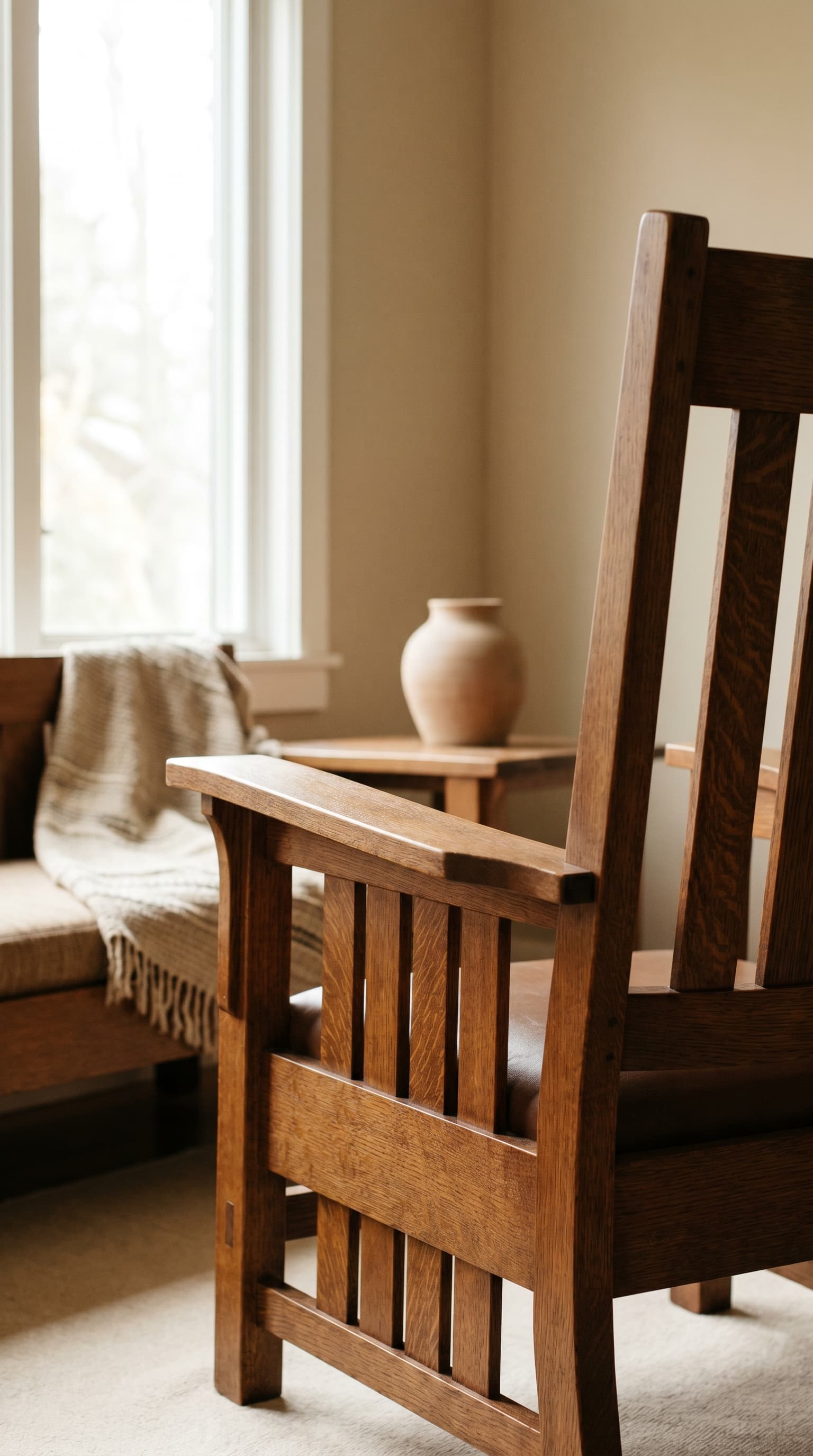
You're looking at a heavy oak piece with straight lines and visible wooden pegs. The grain shows distinctive ray flecks, and the joints look deliberately displayed rather than hidden. You're likely holding Mission oak furniture—or something trying to look like it. Here's how to tell the difference.
What You're Actually Trying to Name
Mission oak furniture refers to American Arts and Crafts pieces made roughly between 1895 and 1920, with the peak years around 1900-1915. The name comes from Gustav Stickley's early marketing describing simple, honest furniture suited to a "mission" or purpose. The style emphasized visible construction, quarter-sawn white oak, and rectilinear forms that rejected Victorian excess.
When people say "Mission oak," they usually mean furniture by makers like Gustav Stickley, L. & J.G. Stickley, Limbert, Roycroft, or Lifetime. But the term also gets applied to later reproductions, colonial revival pieces with some Mission elements, and entirely modern interpretations. Your identification job involves separating authentic period pieces from the many lookalikes.
Mission Oak Furniture Visual Checklist
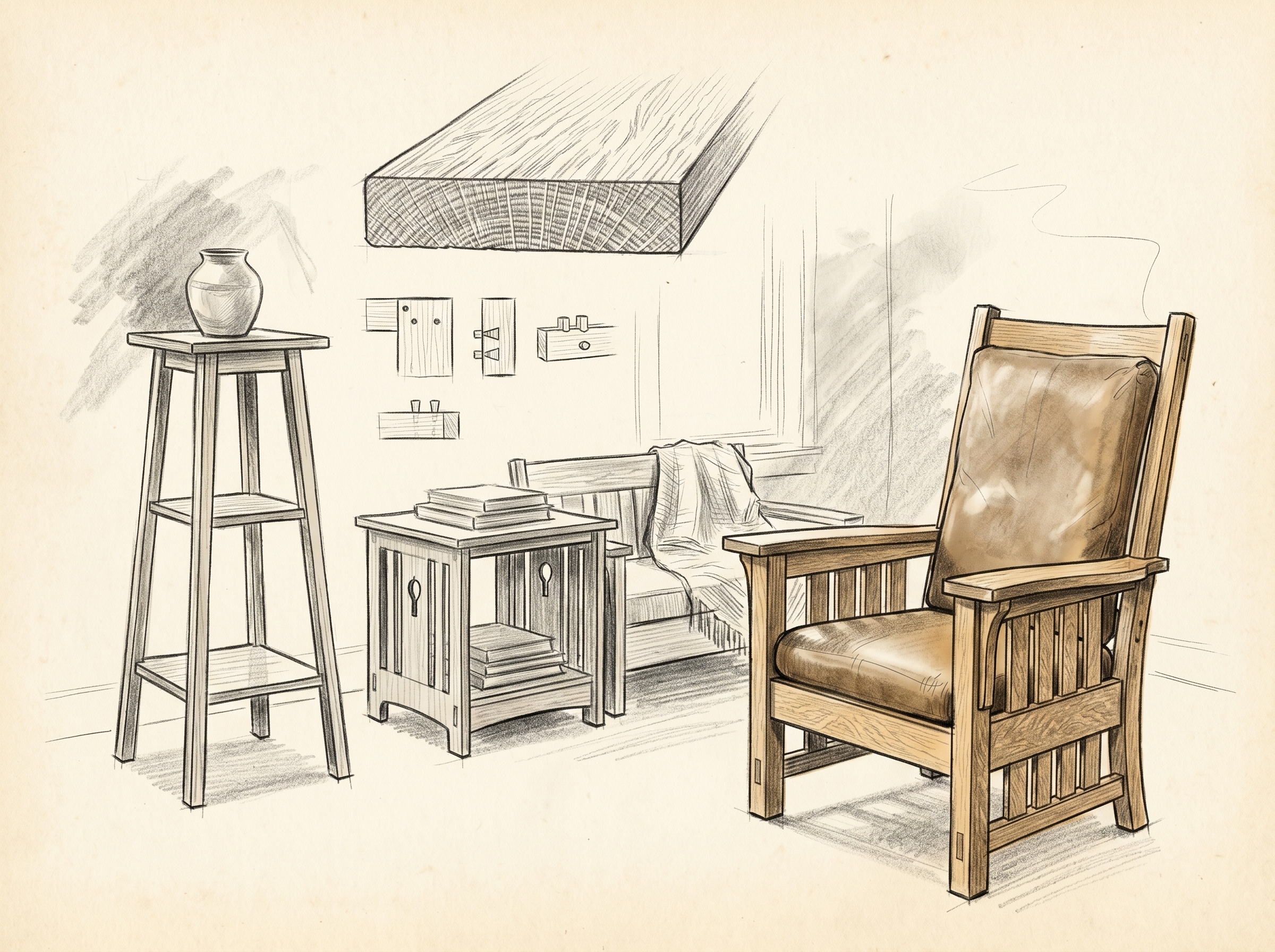
Authentic Mission oak pieces share specific visual characteristics you can spot in photos:
Quarter-sawn oak with ray flecks: The most distinctive feature. When you look at flat surfaces, you should see tiger stripes or flakes running perpendicular to the grain. This "figure" comes from cutting oak logs radially rather than tangentially. Period makers prized this effect and oriented boards to showcase it.
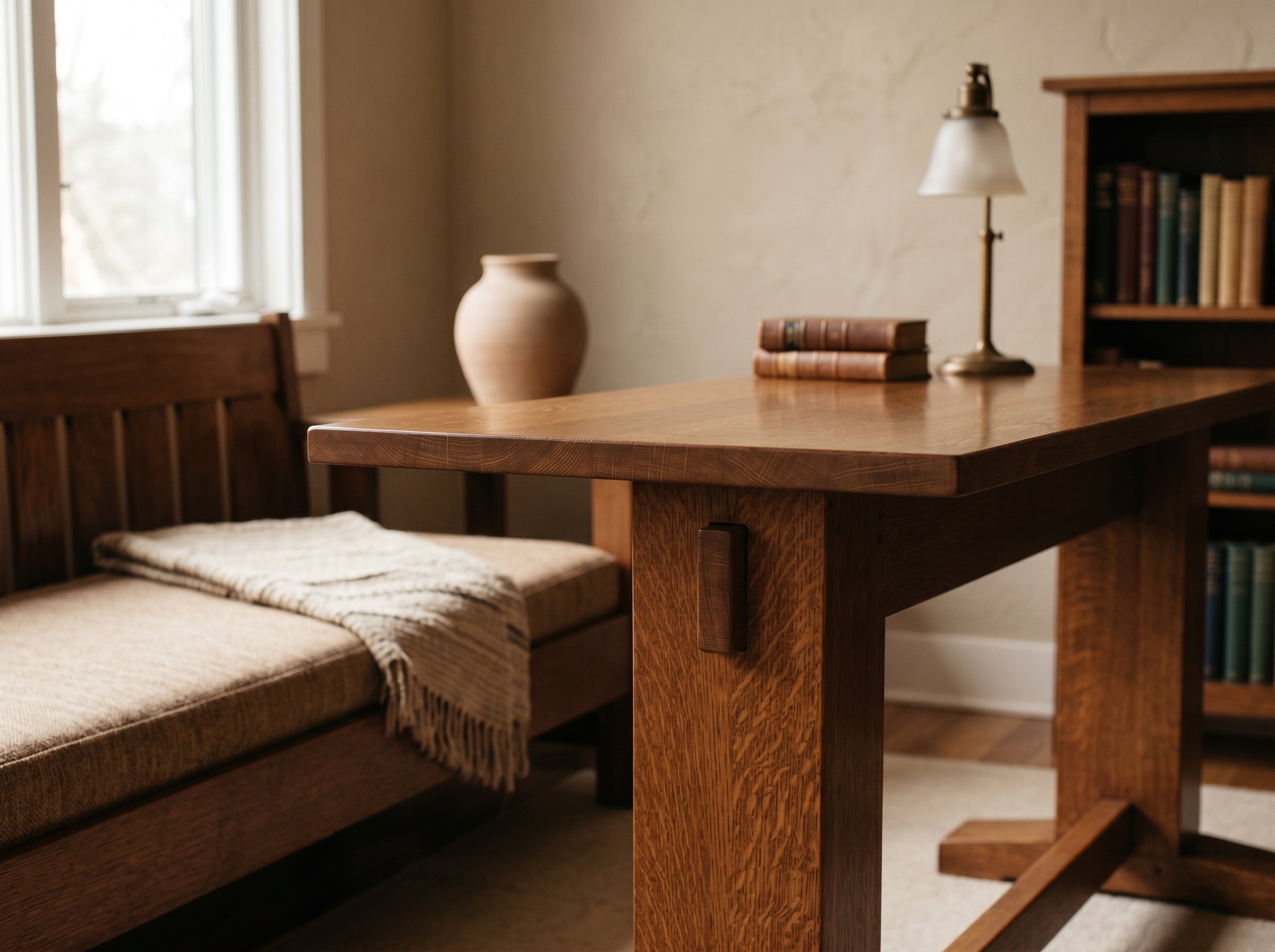
Exposed mortise-and-tenon joinery: Look for through-tenons—rectangular pieces of wood poking through posts and rails, often secured with visible wooden pins. These aren't decorative appliqués; they're actual structural joints the maker chose to leave visible.
Flat, recessed panels: Cabinet doors and side panels sit in grooves rather than being applied on top. The panels don't have raised centers or carved decoration. They're simply flat boards framed by rails and stiles.
Square or rectangular posts and legs: No turning, no curves, no tapers in most cases. Posts run straight from floor to top, often continuing through tabletops or shelf surfaces.
Minimal applied decoration: Original Mission pieces avoid carved ornament. What looks decorative—the joinery, the corbels, the through-tenons—serves a structural purpose or emerges from construction methods.
Hand-hammered copper or iron hardware: Drawer pulls, hinges, and strap hardware often show hammer marks and irregular surfaces. The metal has a hand-wrought appearance even when machine-made.
Dark brown or medium brown finish: Period pieces typically show fumed oak (darkened with ammonia fumes) or darker stains. The wood underneath should still be oak, not a surface treatment over pine or other species.
Common Mission Oak Furniture Style Confusions
Mission oak gets mixed up with several related and unrelated styles:
Golden oak commercial furniture
Mass-produced oak furniture from the same era often shows lighter finishes, pressed decorative elements, and machine-cut ornamentation. Golden oak pieces have the same wood but lack the deliberate exposure of joinery. They're more about economy than philosophy.
Colonial revival oak pieces
By the 1920s and 1930s, manufacturers made oak furniture in "colonial" styles that borrowed Mission's straight lines but added turned legs, carved sunbursts, or other ornamental touches. These hybrid pieces confuse many collectors.
Craftsman style reproductions
From the 1980s forward, "Craftsman" furniture borrowed Mission aesthetics but often used different construction. Modern reproductions may show quarter-sawn oak veneer over plywood, dowel joints instead of mortise-and-tenon, or stain over red oak rather than white oak. The visual similarities can fool casual observers.
Prairie School furniture
Frank Lloyd Wright and other Prairie architects designed rectilinear oak furniture that shares Mission's geometric approach but often includes more elongated proportions, spindle galleries, and integrated lighting. Prairie pieces feel taller and thinner than stocky Mission forms.
Earlier Eastlake furniture
Eastlake pieces from the 1880s-1890s sometimes show exposed joinery and rectilinear forms, but in walnut or mahogany rather than oak. The proportions differ, and Eastlake allows for more incised decoration.
Understanding these distinctions matters because authentic period Mission oak furniture from recognized makers can command significant values, while golden oak commercial pieces or recent reproductions typically don't.
How to Use Photos for Mission Oak Identification
When photographing a piece you suspect is Mission oak, specific images help narrow down authenticity and maker:
Overall form and proportion
- •Most revealing angle: Straight-on front view
- •What to capture: The piece's silhouette, width-to-height ratio, and how heavy it looks. Mission furniture tends toward stocky, grounded proportions.
Joinery details
- •Most revealing angle: Close-ups of corners and joints
- •What to capture: Through-tenons, wooden pins, how rails meet posts. Look for evidence of hand-fitting versus perfectly uniform machine cuts.
Wood grain and figure
- •Most revealing angle: Flat, well-lit shot of a large panel
- •What to capture: The ray fleck pattern. Turn the piece or your camera to catch light reflecting off the medullary rays. Quarter-sawn oak shimmers; plain-sawn doesn't.
Hardware and metal details
- •Most revealing angle: Straight-on close-up of pulls and hinges
- •What to capture: Hammer marks, patina, how the metal attaches. Period hardware shows age-appropriate wear and oxidation.
Maker's marks and labels
- •Most revealing angle: Underbelly, drawer backs, hidden surfaces
- •What to capture: Branded marks, paper labels, shop marks. Many period makers branded their work. Stickley used several different marks over the years.
Construction of backs and undersides
- •Most revealing angle: Flip the piece or photograph underneath
- •What to capture: Secondary wood species, saw marks, how the back panel attaches. Period pieces often show mixed construction methods and handwork evidence that reproductions lack.
Good photos showing these details help experts distinguish an authentic Stickley piece worth thousands from a 1980s reproduction worth hundreds.
Get Help Identifying Your Mission Oak Furniture
The difference between authentic Mission oak and later interpretations often comes down to construction details, proportions, and wood characteristics that are easier to evaluate with expert input. Tocuro helps you identify furniture from photos, using market signals to provide estimated value ranges based on what similar pieces actually sell for. Upload clear images showing joinery, grain patterns, and any maker's marks to get started.
Mission oak identification rewards careful observation. That quarter-sawn figure, those through-tenons, and the honest rectilinear form represent a specific moment when American makers rejected ornament in favor of visible craft. Whether you're evaluating a potential purchase or understanding what's already in your home, knowing what to look for makes all the difference.
Photo identification
Identify Your Furniture
Use Tocuro to identify your item from a photo and get an estimated value range when market data is available.