
Milk Glass Identification: How to Identify Forms and Makers
Milk glass identification relies on examining edge details, mold seams, pattern sharpness, and base marks. This guide shows collectors which details matter most, what photos to capture, and how to avoid confusing milk glass with newer white glass or ceramic.
Milk Glass Identification: How to Identify Forms and Makers
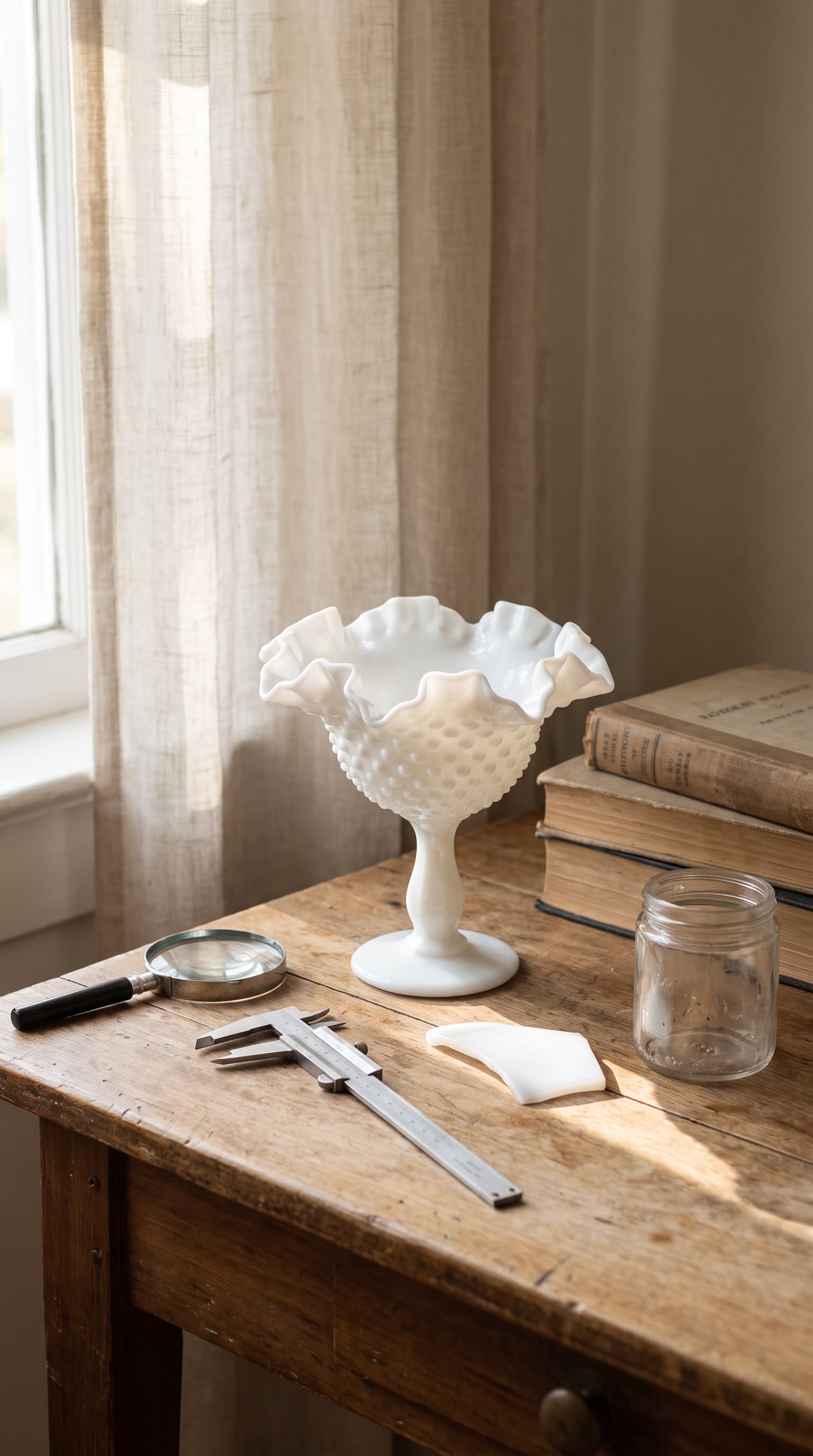
Milk glass identification starts with understanding that "milk glass" describes opaque white glass made from the 1800s through today—not a single maker or style. The opalescent white color comes from bone ash, tin dioxide, or fluorides added during manufacturing. Most collectors focus on American pieces from the 1940s–1970s golden era, but identifying specific makers and periods requires close attention to edges, mold work, and pattern details that photos can reveal.
What Clues Matter for Milk Glass Identification
Authentic vintage milk glass shows specific manufacturing signatures that separate quality pieces from modern reproductions or unrelated white glass.
Edge Treatment and Finish
The rim edge tells you about manufacturing quality and era. Mid-century Westmoreland pieces often feature fire-polished edges that feel smooth and slightly rounded. Fenton edges may show a deliberate rolled or beaded rim. Sharp, unfinished edges typically indicate newer production or lower-quality pieces. Hold the piece at an angle under good light—vintage milk glass edges often show a faint blue or yellow tint where the glass is thinnest.
Mold Seams and Pattern Sharpness
Mold seams appear on nearly all pressed glass, but their treatment varies by maker. Westmoreland typically ground seams smooth on better lines. Fenton left subtle seams visible. Pattern details matter even more: crisp, deeply molded fruit, flowers, or geometric designs indicate earlier production. Soft, shallow patterns suggest worn molds or reproduction work. Check pattern undercuts—vintage pieces show clean definition where patterns meet the glass surface.
Weight and Density
Genuine milk glass feels substantial. Pieces from quality makers used dense glass formulas that create noticeable heft. If a candy dish or vase feels surprisingly light, you may be holding newer glass or an import. This weight difference becomes obvious when comparing similar forms side by side.
Base Details and Marks
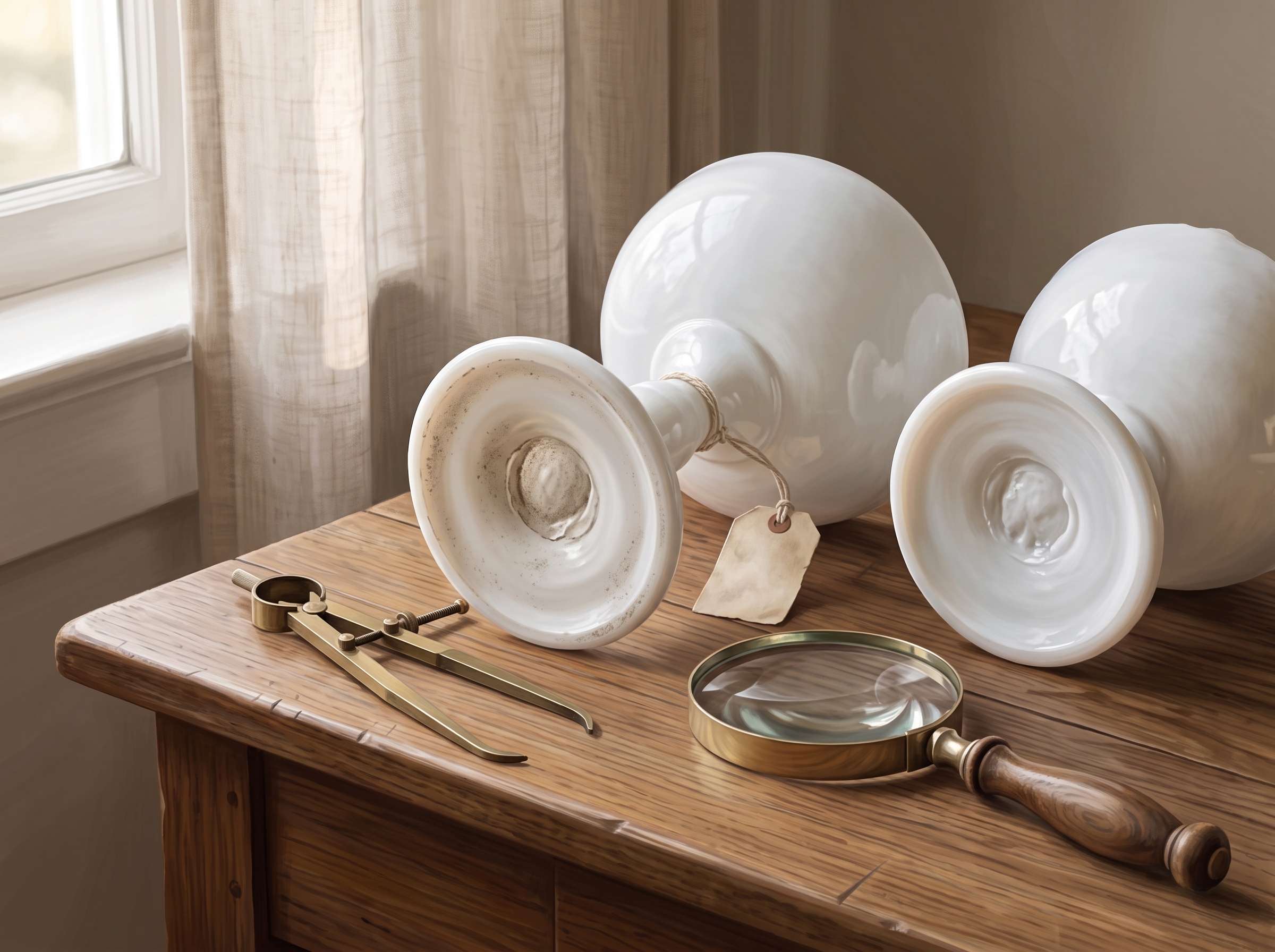
Flip every piece over. The base reveals critical information about maker and age. Westmoreland often marked pieces with a "W" inside a keystone or "WG" after 1949. Fenton used an oval mark after 1970 and sometimes added "in" to handwritten molds. Many premium pieces carried paper labels that have since fallen off, leaving slight residue patterns. Unmarked pieces aren't necessarily less valuable—many quality makers didn't mark consistently before the 1960s.
Look at the pontil area (the center bottom where glass was held during forming). A ground and polished pontil indicates hand-finishing and often better quality. Rough or molded pontil marks are common on mass-produced pieces.
Color and Translucency
True milk glass is opaque but glows slightly when backlit with a strong light source. Hold the piece in front of a bright LED flashlight. Quality vintage milk glass shows warm light transmission at thin areas, often with blue or yellow undertones. Stark white glass that blocks all light may be painted glass, ceramic, or modern production using different formulas.
What Photos to Take for Milk Glass Identification
Your phone captures details that help identify maker, pattern, and period when you know where to focus.
Overall Form and Proportion
Capture the entire piece against a plain background from multiple angles: front, side, top-down, and three-quarter view. These establish the form—whether it's a covered dish, planter, vase, or serving piece. Proportions help narrow down maker catalogs.
Edge and Rim Close-Ups
Photograph the rim edge straight-on in good natural light. Capture any decorative edge treatment, scalloping, or beading. Include an angled shot that shows the rim thickness and any color tinting at the edge.
Pattern Details
Get within 4–6 inches of raised patterns, embossed designs, or painted decoration. Focus on the sharpest area to show mold quality. If the piece has fruit, flowers, or figures, capture how deeply they're molded and whether undercuts show clean separation.
Base and Mark Photography
Flip the piece over and photograph the entire base straight-on. Capture any marks, mold numbers, or roughness. If there's a paper label or label residue, photograph it separately with side lighting to reveal texture. Include a shot showing the pontil treatment.
Backlighting Test
Hold the piece in front of a window or bright light source and photograph how light transmits through thin areas. This reveals true milk glass versus painted or modern white glass.
These photos work particularly well with glassware identification tools that can compare your piece against known examples.
Common Milk Glass Misidentifications
Collectors frequently mistake several categories of white glass and ceramic for vintage milk glass.
Modern White Glass Imports
New white glass from overseas floods markets, often copying vintage forms. These pieces lack weight, show no edge tinting, and feature soft pattern details. The white appears flat and chalky rather than glowing. Bases often show glossy, uniform finish without the slight texture variation of older glass.
Painted or Cased Glass
Some clear glass was painted white or cased with white glass over color. Chips reveal clear glass underneath. True milk glass is white throughout. Check any damage spots or rim edges where paint might have worn away.
White Ceramic and Porcelain
Milk glass gets confused with white ceramic, especially Italian or Portuguese pottery. Ceramic feels different in temperature (cooler initially), weighs less, and shows no light transmission when backlit. The surface texture differs—ceramic often has slight porosity while glass is perfectly smooth.
Depression-Era White Glass
Some Depression glass was made in opaque white, but it differs from true milk glass in formula and appearance. Depression white glass tends toward gray-white rather than blue-white, and patterns follow Depression-era styling rather than Victorian-revival forms popular in mid-century milk glass.
Carnival Glass White Base Glass
Before iridescent coating, carnival glass started as milk glass. Some pieces never received iridization or had it wear off. These pieces show manufacturing quality typical of carnival glass production but lack the characteristic luster. They're still collectible but represent a different category.
What Tocuro Can Help You Identify
Milk glass presents identification challenges because hundreds of companies produced similar forms, and many pieces never carried marks. Tocuro helps narrow down maker, pattern, and era by comparing your photos against documented examples.
Upload your edge details, base shots, and pattern close-ups. Tocuro's identification process recognizes specific mold characteristics, edge treatments, and form proportions that distinguish Westmoreland from Fenton, Imperial from Kemple, or quality vintage from modern reproduction. The platform can identify pattern names for common lines like Paneled Grape, Beaded Edge, or Old Quilt—details that aren't obvious without access to vintage catalogs.
For unmarked pieces, Tocuro provides probable maker suggestions based on construction details and style characteristics. You'll get context about production period and estimated value ranges based on current market signals rather than formal appraisals.
The identification system works across all types of glassware, making it useful whether you're sorting a mixed estate lot or researching a single piece.
Start Identifying Your Milk Glass
Milk glass identification gets easier once you know which details separate quality vintage pieces from modern reproductions. Edge treatment, pattern sharpness, weight, and base details provide the clues you need.
Gather your pieces and photograph the edges, patterns, and bases in good light. Upload your photos to Tocuro to identify makers, match patterns, and understand what you're holding. You'll get clear answers about your milk glass without needing to become an expert in every manufacturer's catalog.
Start identifying today—you get 7 free identifications per day, and your free count resets daily so you can work through your collection at your own pace.
Photo identification
Identify Your Glassware
Use Tocuro to identify your item from a photo and get an estimated value range when market data is available.