
Mid Century Modern Furniture Identification: How to Recognize the Style
A practical guide to identifying mid century modern furniture, covering the visual markers, common style confusions, and what photos reveal about era and maker.
What You're Trying to Name
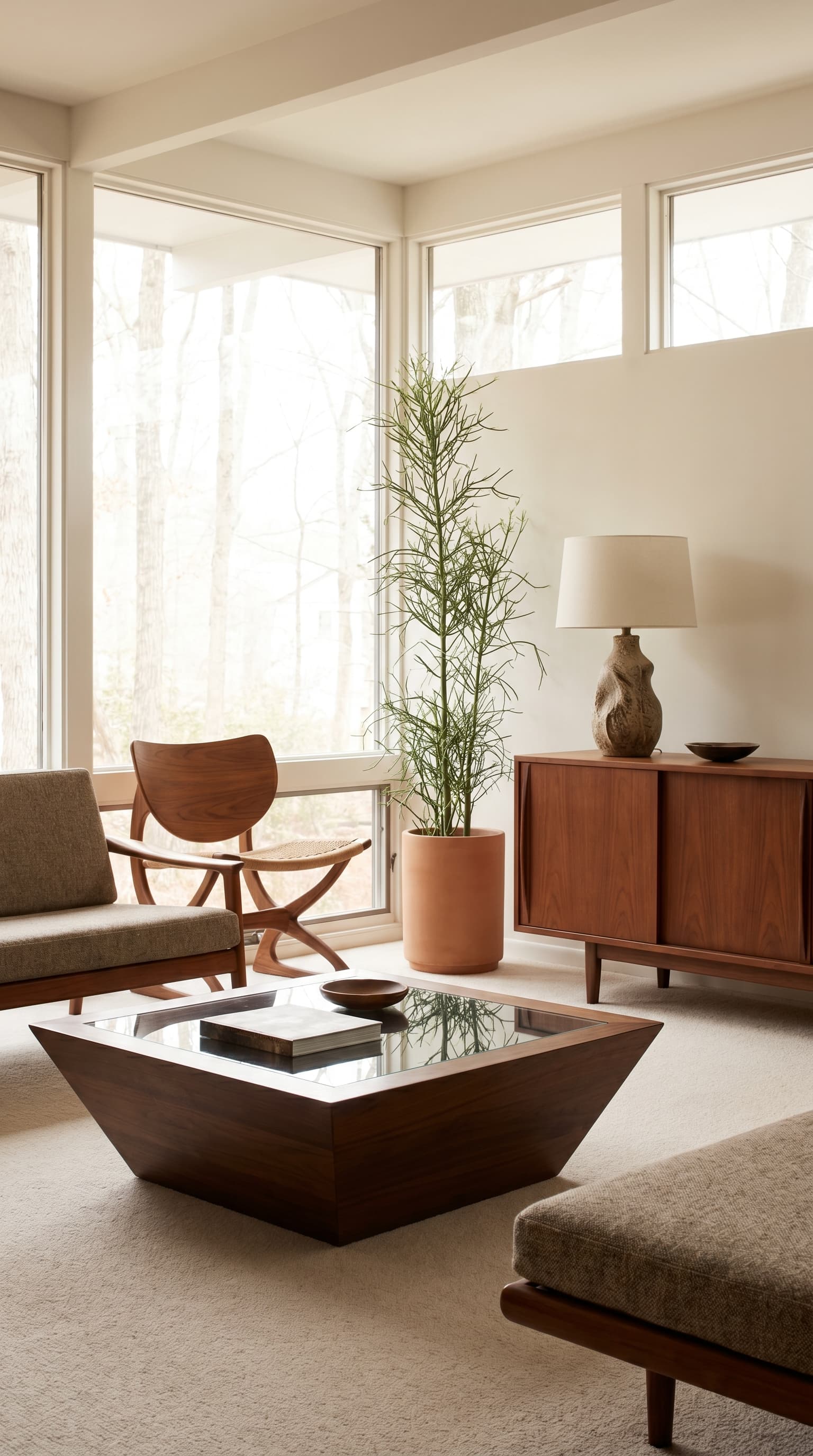
You've spotted a piece with clean lines, tapered legs, and warm wood tones—but is it actually mid century modern furniture, or something inspired by the era? Mid century modern furniture identification starts with understanding that "mid century modern" describes a design movement spanning roughly 1945 to 1975, with its peak in the 1950s and 1960s. The style emerged from postwar optimism, new manufacturing techniques, and a belief that good design should be accessible.
The challenge: reproductions flooded the market starting in the 1990s, and many newer pieces mimic the aesthetic without the period construction or materials. If you're trying to confirm whether your piece is original to the era or identify its maker, you need to look beyond surface style to construction details, materials, and proportions.
Visual Classification Checklist for Mid Century Modern Furniture Identification
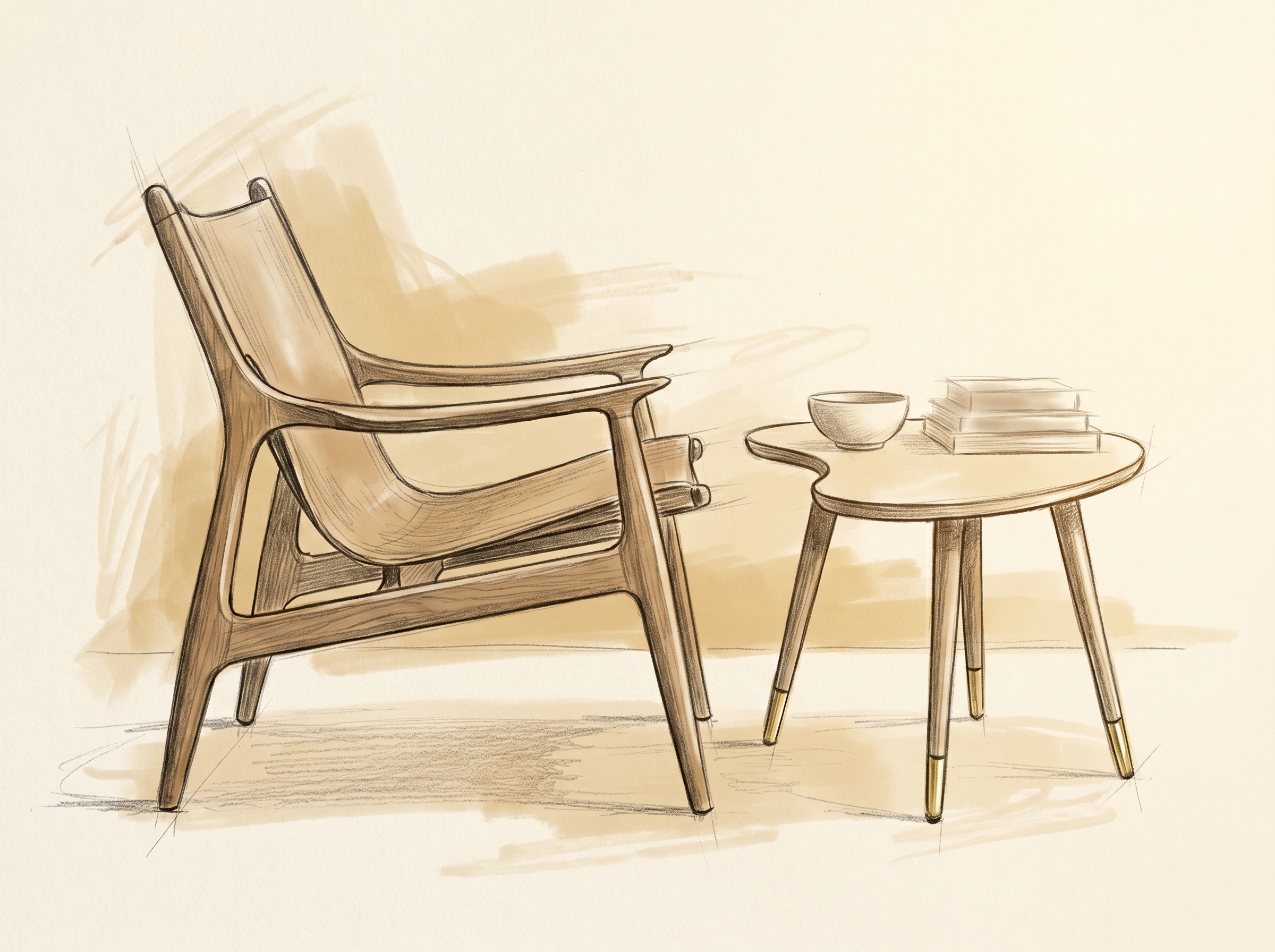
Authentic mid century modern pieces share a set of visual and structural markers that separate them from later reproductions:
Form and Proportion
- •Low, horizontal profiles with an emphasis on function
- •Tapered or splayed legs, often angled outward
- •Exposed joinery that celebrates construction rather than hiding it
- •Asymmetrical arrangements or unexpected angles
- •Minimal ornamentation—the form itself is the design statement
Materials and Finishes
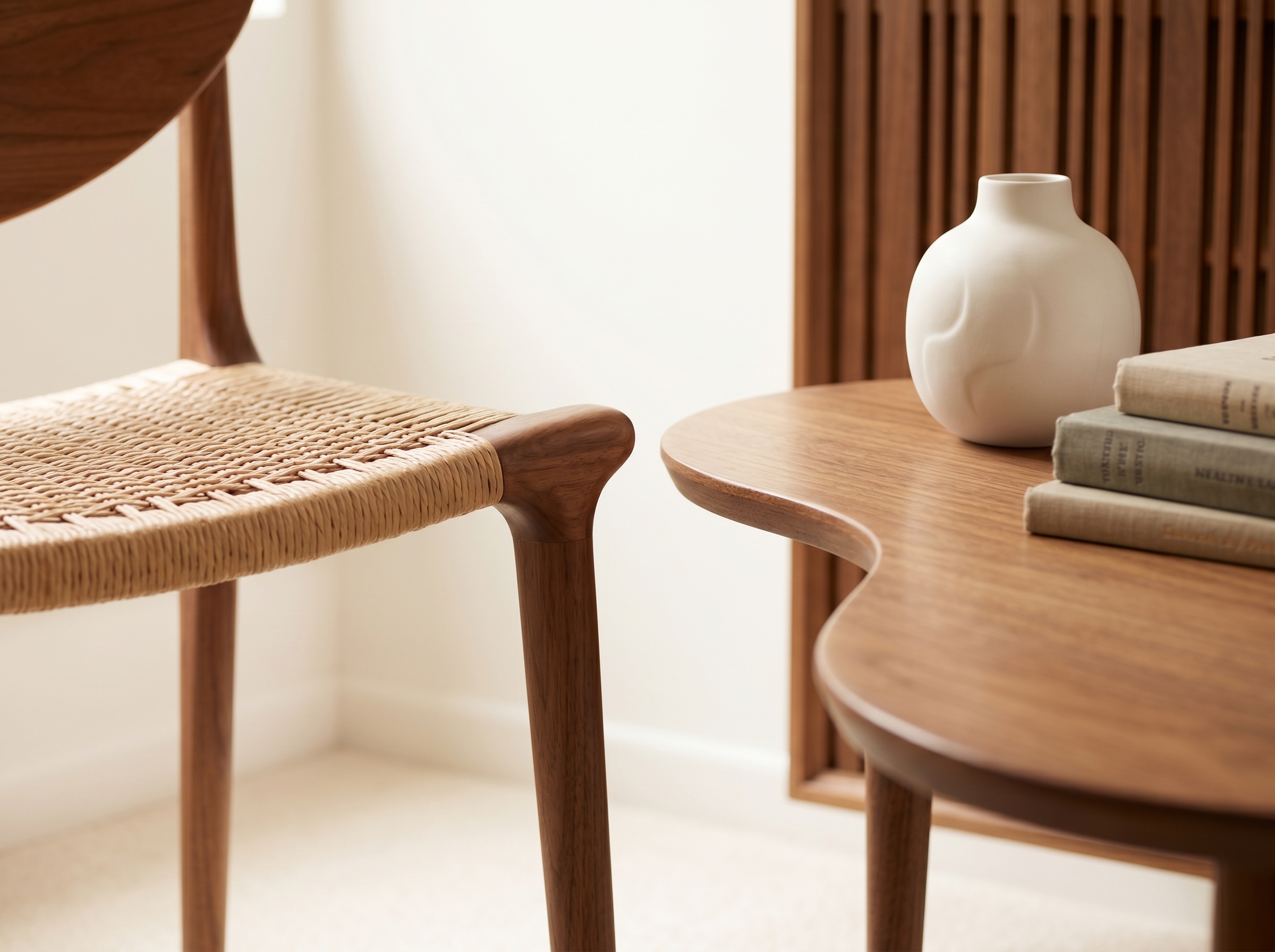
- •Teak, walnut, rosewood, or oak with natural grain visible
- •Molded plywood (often layered and bent)
- •Fiberglass, plastic, or Formica in bold, saturated colors
- •Chrome, brushed steel, or brass hardware
- •Original upholstery in wool, leather, or nubby textured fabrics
Construction Details
- •Dovetail or mortise-and-tenon joinery visible on drawers
- •Plywood backing on case goods (not thin particleboard)
- •Metal glides or original casters on chairs and sofas
- •Screws with period-correct heads (slotted, not Phillips in early pieces)
- •Labels, stamps, or branded marks often hidden underneath or inside drawers
Color and Pattern
- •Warm wood tones or bold accent colors (orange, turquoise, avocado, mustard)
- •Geometric or abstract patterns on upholstery
- •Black-and-white combinations
- •Minimal use of dark stain—natural finishes were preferred
If your piece checks most of these boxes, you're likely looking at something from the era. The next step is narrowing down the maker and verifying authenticity.
Common Style Confusions in Mid Century Modern Furniture Identification
Several adjacent styles overlap with mid century modern, making identification tricky:
Danish Modern vs. American Mid Century Modern
- •Danish Modern: Typically features teak, refined joinery, and restrained Scandinavian elegance. Makers like Hans Wegner, Finn Juhl, and Arne Jacobsen.
- •American Mid Century Modern: Often bolder, more experimental. Designers like Charles and Ray Eames, George Nelson, and Eero Saarinen pushed materials like molded plywood and fiberglass.
Both fall under the mid century umbrella, but Danish pieces tend to be more subdued and craft-focused, while American designs embraced industrial processes.
Atomic Age and Space Age
- •Atomic Age: Describes the optimistic, futuristic aesthetic of the 1950s and early 1960s. Overlaps heavily with mid century modern but emphasizes starburst motifs, boomerang shapes, and playful forms.
- •Space Age: Emerged in the late 1960s and 1970s. Features white plastic, pod-shaped seating, and chrome. Often confused with late-period mid century modern, but the aesthetic is more overtly futuristic.
1990s–2000s Reproductions
The mid century revival brought countless reproductions to market. These pieces mimic the style but often use cheaper materials (veneer over particleboard, stapled joints instead of dovetails) and lack maker marks. They can fool the eye from across a room but fall apart under close inspection.
Transitional and Early Postmodern
By the mid-1970s, postmodern design began to react against mid century minimalism, introducing more ornamentation and historical references. A piece from 1975 might straddle both worlds, making precise furniture era identification more difficult.
How to Use Photo Identification to Narrow Down Mid Century Modern Pieces
Photos are your most powerful tool for mid century modern furniture identification, especially when you can't examine a piece in person. Here's what to capture and where to focus:
Overall Shape and Proportion
- •What to photograph: Full front, side, and three-quarter views in good natural light
- •What it reveals: Silhouette, leg style, and whether proportions match period pieces
Authentic mid century furniture has a lightness to it—legs are slender, profiles are low. If the piece looks heavy or bulky, it's likely not from the era.
Joinery and Hardware
- •What to photograph: Drawer corners, how legs attach to the frame, screw heads, hinges
- •What it reveals: Construction quality and era-appropriate techniques
Dovetails, exposed dowels, and mortise-and-tenon joints are hallmarks of quality mid century construction. Staples, particle board, and modern Phillips screws suggest a reproduction.
Materials and Finish
- •What to photograph: Close-ups of wood grain, any plastic or metal components, upholstery texture
- •What it reveals: Whether materials match the period
Teak veneer should have a consistent, warm tone. Molded plywood will show visible layers at the edges. Fiberglass should have a slightly textured surface, not the smooth finish of modern plastic.
Labels, Stamps, and Marks
- •What to photograph: Anything on the underside, inside drawers, or on the back
- •What it reveals: Maker, retailer, or factory of origin
Many designers and manufacturers marked their work. A "Herman Miller" label, a "Made in Denmark" stamp, or a branded mark from Knoll can immediately confirm both era and maker. Even retailer tags can help date a piece.
Wear Patterns and Patina
- •What to photograph: Areas of heavy use—arm rests, seat cushions, drawer pulls
- •What it reveals: Whether aging is consistent with 50+ years of use
Authentic mid century pieces show honest wear: faded upholstery, minor dings in wood, tarnished hardware. Reproductions often look too perfect or show wear that doesn't match use patterns.
For more guidance on using photos to confirm authenticity, see How to Tell If Furniture Is Authentic: What Photos Reveal About Reproductions.
Get Help Identifying Your Mid Century Modern Furniture
If you've taken photos and still aren't sure whether your piece is authentic mid century modern—or which maker produced it—Tocuro can help. Upload clear images of your furniture, focusing on construction details, materials, and any marks or labels. Tocuro identifies items from photos and provides estimated value ranges based on current market signals, so you'll know not just what you have, but what it's worth.
Identify Your Item and get answers in seconds.
FAQ
How can I tell if my mid century modern furniture is authentic or a reproduction? Examine construction details: authentic pieces use dovetail joints, solid wood or quality plywood, and period-appropriate hardware. Reproductions often rely on staples, particleboard, and modern fasteners. Maker marks and labels are the strongest confirmation.
What's the difference between Danish modern and mid century modern? Danish modern is a subset of mid century modern, emphasizing Scandinavian craftsmanship, teak wood, and understated elegance. American mid century modern tends to be bolder and more experimental with materials like molded plywood and fiberglass.
Do all mid century modern pieces have maker marks? No. Many mass-produced pieces from department stores or smaller manufacturers were unmarked. However, high-end designers and manufacturers like Herman Miller, Knoll, and Danish makers typically labeled their work.
Can Tocuro identify the maker of my mid century modern furniture? Yes. Tocuro analyzes photos of your piece—including any marks, construction details, and design elements—to identify the maker and estimate value based on market signals. You get 7 free identifications per day, and the count resets daily.
What photos should I take for mid century modern furniture identification? Capture overall views from multiple angles, close-ups of joinery and hardware, any labels or stamps, and details of materials like wood grain or upholstery. Clear, well-lit photos of construction and wear patterns help most.
Photo identification
Identify Your Furniture
Use Tocuro to identify your item from a photo and get an estimated value range when market data is available.