
Mid Century Chair Identification: How to Recognize MCM Silhouettes and Styles
A practical guide to identifying mid century modern chairs through visual cues like silhouette, leg style, materials, and joinery—plus how to avoid common style mix-ups.
Mid Century Chair Identification: How to Recognize MCM Silhouettes and Styles
That sleek chair at the estate sale or thrift store could be a genuine mid century modern piece—or a later reproduction. Mid century chair identification starts with recognizing the distinctive silhouettes, materials, and construction details that defined the era's most influential designs. Whether you've inherited a set of dining chairs or spotted something promising in a vintage shop, knowing what visual markers separate authentic MCM from later styles helps you understand what you're looking at.
What You're Actually Trying to Name
When people search for mid century chair identification, they're usually trying to:
Distinguish authentic period pieces from reproductions. A chair made in 1958 looks different than a 2008 "mid century style" piece, even if the silhouette seems similar.
Identify specific designers or manufacturers. Names like Eames, Wegner, Saarinen, and Knoll carry weight in the market, but most MCM chairs aren't signed like paintings.
Understand style categories within the era. "Mid century modern" is broad—it includes Danish modern, American modern, sculptural, organic, and Brutalist approaches that each have distinct visual signatures.
Separate mid century from adjacent styles. Art Deco, Atomic Age, and early 1970s designs can blur together if you're not looking at the right details.
The challenge is that mid century modern became so influential that its core ideas—clean lines, organic forms, functional simplicity—have been copied, adapted, and mass-produced for decades. Real identification requires looking beyond "it looks vintage" to specific construction and design markers.
Visual Mid Century Chair Identification Checklist
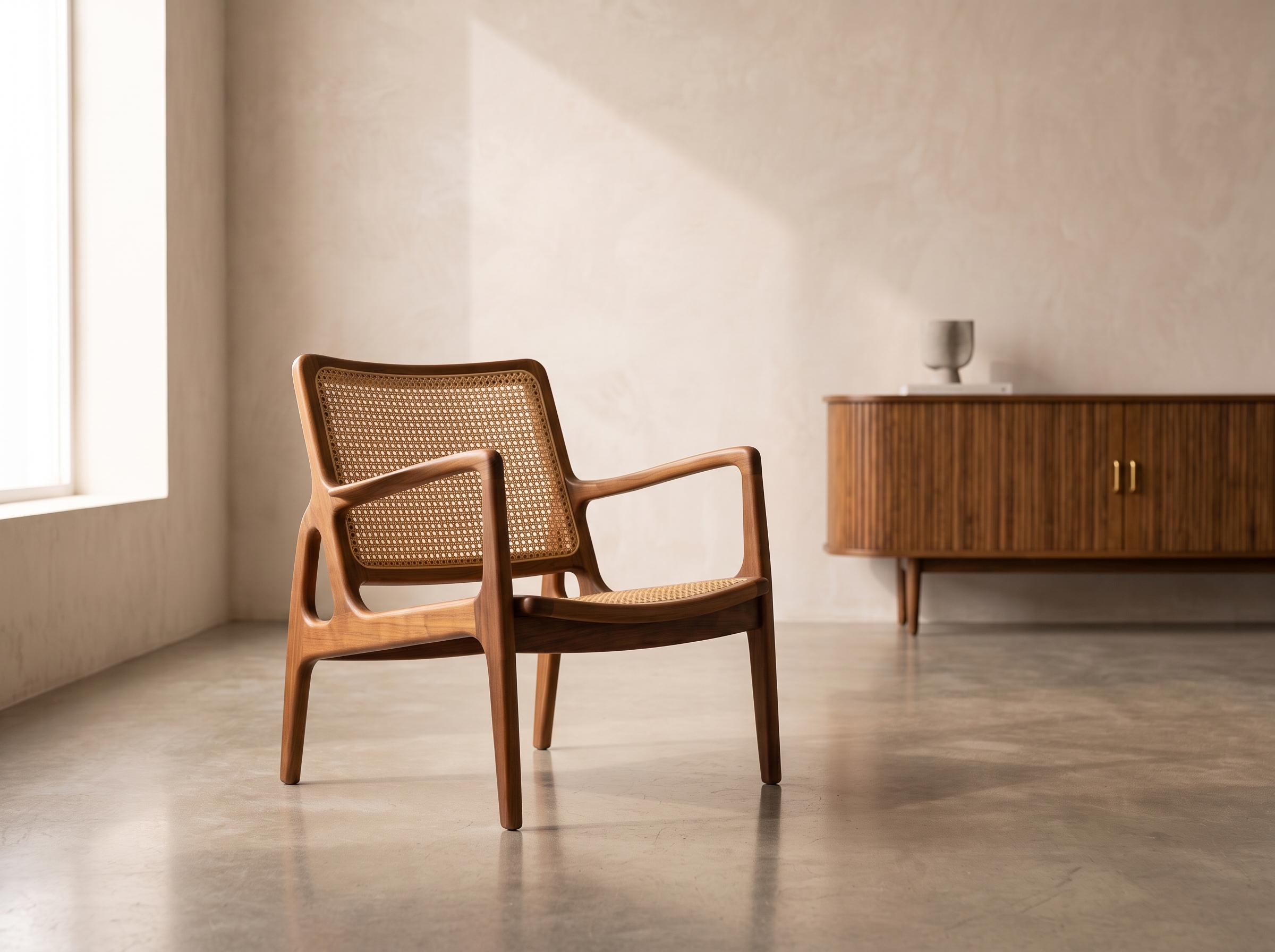
Start with these physical characteristics when examining any chair you suspect might be mid century:
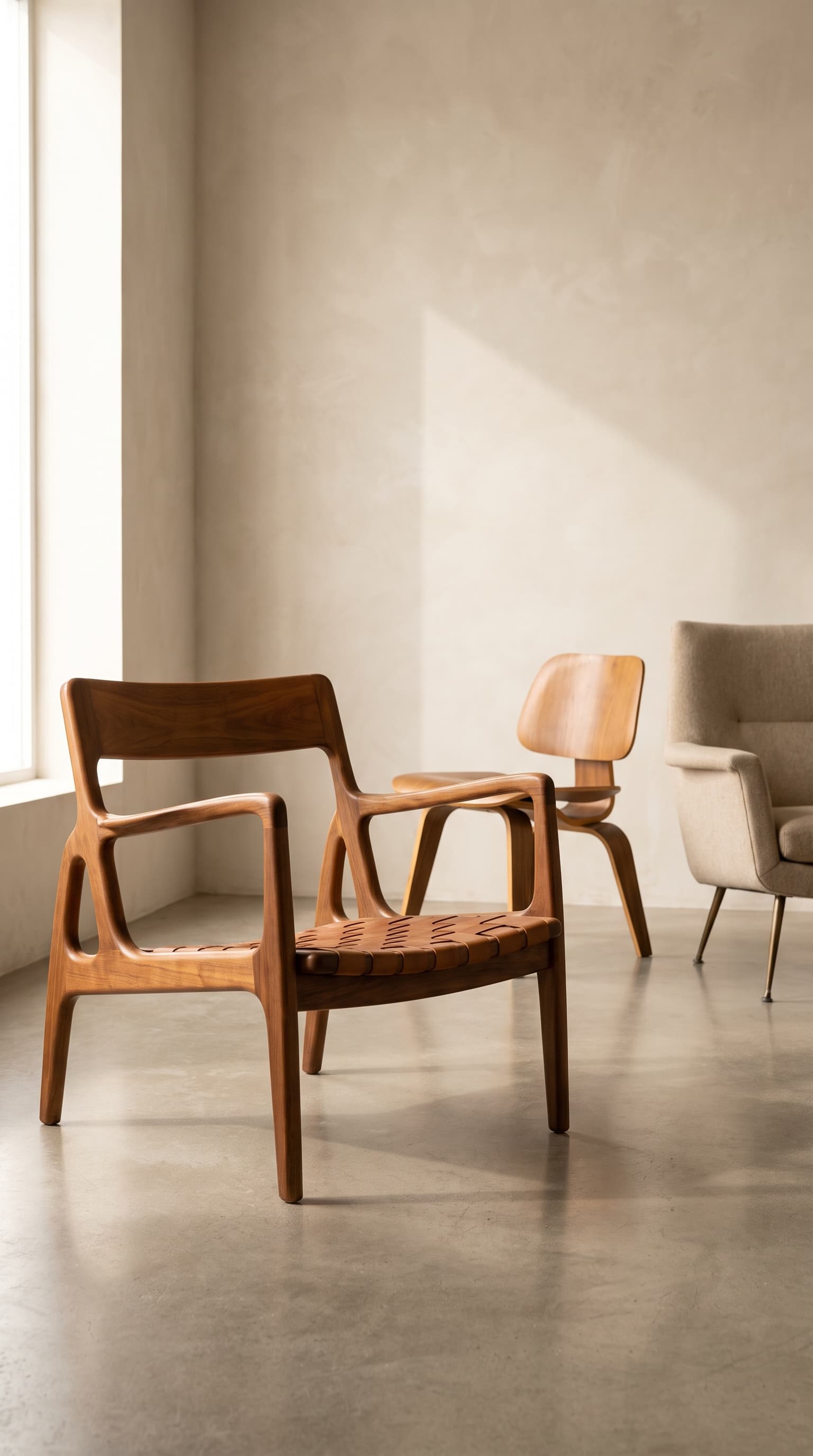
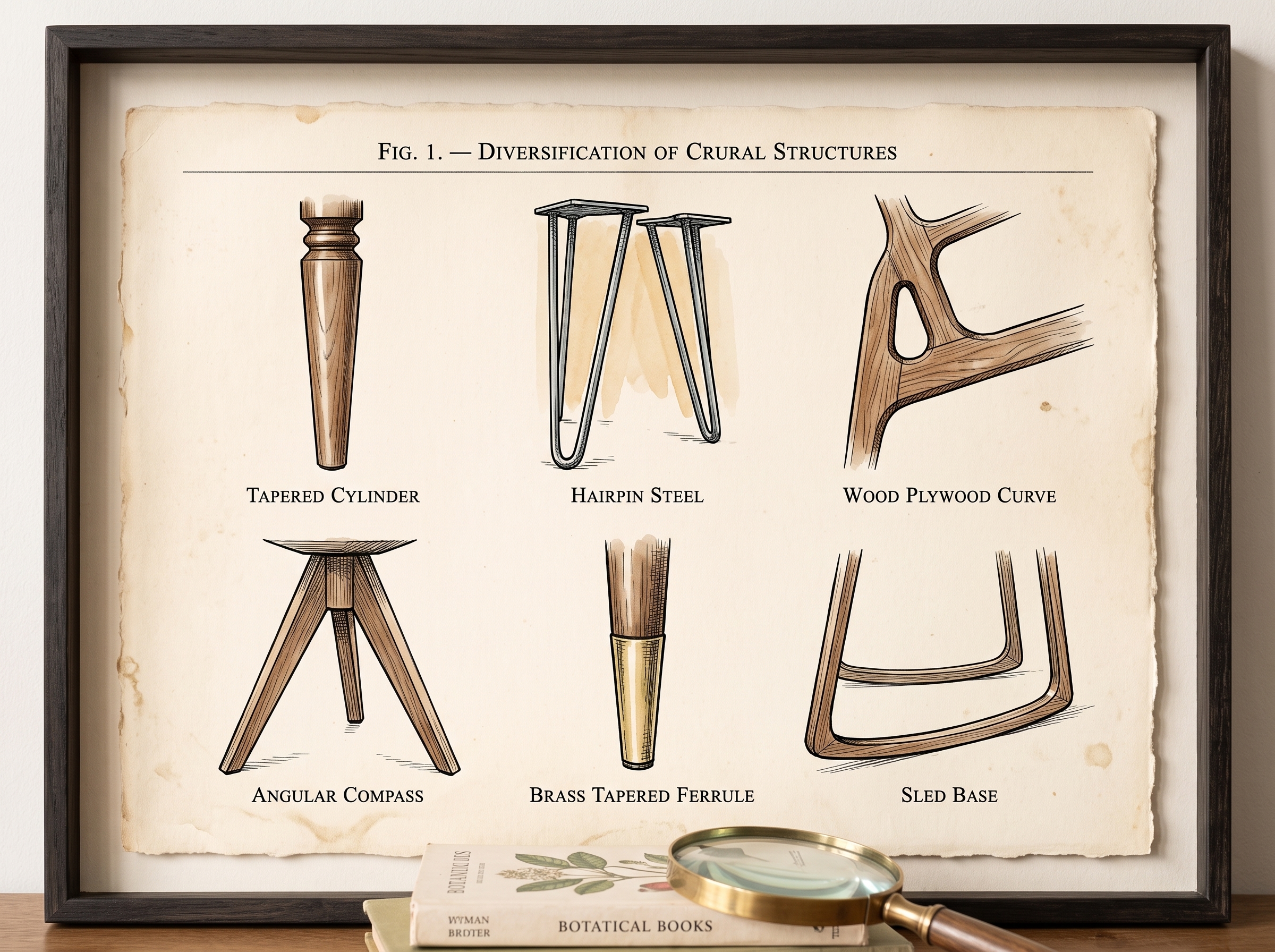
Leg style and taper. Authentic MCM chairs often feature legs that taper elegantly—thick at the seat, narrowing toward the floor. Splayed legs (angled outward) are common. Look for wooden legs that are rounded or gently squared, not blocky. Metal hairpin legs, wire bases, and pedestal bases also appear in the era.
Seat and back profile. The silhouette should feel purposeful and streamlined. Molded plywood shells, contoured seats, and gently curved backs dominate. Avoid heavy padding and overstuffed cushions—MCM prioritized form and structure over excessive upholstery.
Materials and finishes. Teak, walnut, rosewood, and oak are period-correct woods, often finished with oil or thin lacquer that lets the grain show. Molded fiberglass, bent plywood, and molded plastic appear in iconic designs. Upholstery fabrics tend toward wool, linen, and leather in solid tones or restrained geometric patterns.
Joinery and fasteners. Quality MCM chairs use visible dowel joints, finger joints, or through-tenons as design features. Metal hardware—when present—is minimal and functional. Phillips-head screws suggest later manufacture; period pieces often use older screw types or hidden joinery.
Proportions and scale. Mid century chairs sit lower and wider than Victorian or Colonial styles. Armrests (when present) are sculptural and often part of the continuous form rather than applied elements.
Maker's marks and labels. Check underneath the seat for stamps, labels, or branded marks. Many manufacturers used paper labels that may be faded or partially removed. Metal tags riveted to the underside are also common.
Common Mid Century Chair Identification Confusions
Even experienced collectors can confuse MCM chairs with adjacent styles or later imitations. Here's where mistakes happen:
Mid Century Modern vs. Danish Modern
Danish modern is a subset of mid century modern, not a separate style. True Danish pieces emphasize organic curves, handcrafted joinery, and premium hardwoods like teak. American MCM can be more angular, experimental with materials (fiberglass, wire), and industrial in production. Both are "mid century," but Danish work tends toward warmer, more refined execution.
1950s vs. 1970s
By the early 1970s, design was shifting. Chairs got heavier again, with chunkier proportions and darker finishes. The lightness and optimism of 1950s–60s MCM gave way to earthier tones and more ornamental details. A chair from 1973 might share some MCM DNA but often feels visually different.
Authentic vs. Licensed Reproduction
Some iconic MCM chairs remain in licensed production today (Herman Miller still makes Eames designs, for example). These are authentic designs but not period pieces. Materials, manufacturing techniques, and labels differ. Knowing the production history of a specific design helps clarify whether you're looking at a vintage original or a quality modern reissue.
Art Deco Streamline Influence
Late 1930s and early 1940s Art Deco pieces sometimes preview MCM's streamlined aesthetic, but they're pre-MCM. Look for heavier construction, more decorative veneers, and design motifs (zigzags, stepped profiles) that don't appear in true mid century work.
How to Use Photo Identification to Narrow It Down
Photos are your most practical tool for mid century chair identification, especially when you can't examine a piece in person. Here's how to capture and use images effectively:
Photograph the full silhouette from the side. This angle reveals leg taper, seat contour, and overall proportions—the core visual signature of any MCM chair.
Capture joinery and connection points. Photograph where legs meet the seat, how the back attaches, and any visible joints. Quality MCM construction shows careful engineering.
Document the underside. Flip the chair and photograph any labels, stamps, hardware, or construction details. This is where maker identification happens.
Show material close-ups. Photograph wood grain, upholstery texture, and any metal components. Authentic period materials often have a patina or wear pattern that reproductions lack.
Include context shots. Photos that show scale (next to a standard door or piece of furniture) help identify proportions that text descriptions miss.
Once you have clear images, you can compare them against known designs, consult collector resources, or use identification tools to narrow down maker, era, and style. Visual matching works well for MCM chairs because the era's design language is distinct—once you train your eye to see the markers, patterns emerge quickly.
Identify Your Mid Century Chair
If you've got photos of a chair you're trying to identify, Tocuro can help you narrow down the style, era, and potential maker from your images. Upload clear shots of the silhouette, joinery, and any labels, and get context that connects what you're seeing to known mid century designs. It's a faster starting point than endless image searches or forum posts, and helps you understand whether you're looking at a collectible original or a later piece inspired by the era.
What Happens After Identification
Once you've identified a chair as mid century modern—and ideally tied it to a specific maker, designer, or production period—you're in a better position to research value, decide whether to restore or preserve it as-is, and understand its place in design history.
Authentic period MCM chairs range widely in value depending on designer, condition, rarity, and materials. A mass-produced 1960s dining chair might be worth $50–$200, while a documented Wegner or Eames piece can command thousands. Reproductions and MCM-inspired designs have their own market, often valued more for function and aesthetic than collectibility.
Condition matters. Original finish and upholstery often add value, even when worn, because they confirm period authenticity. Over-restored pieces can lose provenance markers that serious collectors look for.
Mid century chair identification is ultimately about seeing the design language clearly—those tapered legs, organic curves, and honest materials that defined an era. Once you know what to look for, you'll spot the real thing even in a crowded thrift store.
Photo identification
Identify Your Furniture
Use Tocuro to identify your item from a photo and get an estimated value range when market data is available.