
Majolica Identification: How to Identify Majolica Pottery by Photo
Majolica pottery features brilliant colored glazes over raised relief designs on earthenware. This guide helps you identify authentic majolica by examining glaze characteristics, mold patterns, base marks, and common confusions with faience, art pottery, and modern reproductions.
What You're Looking At: Majolica Pottery
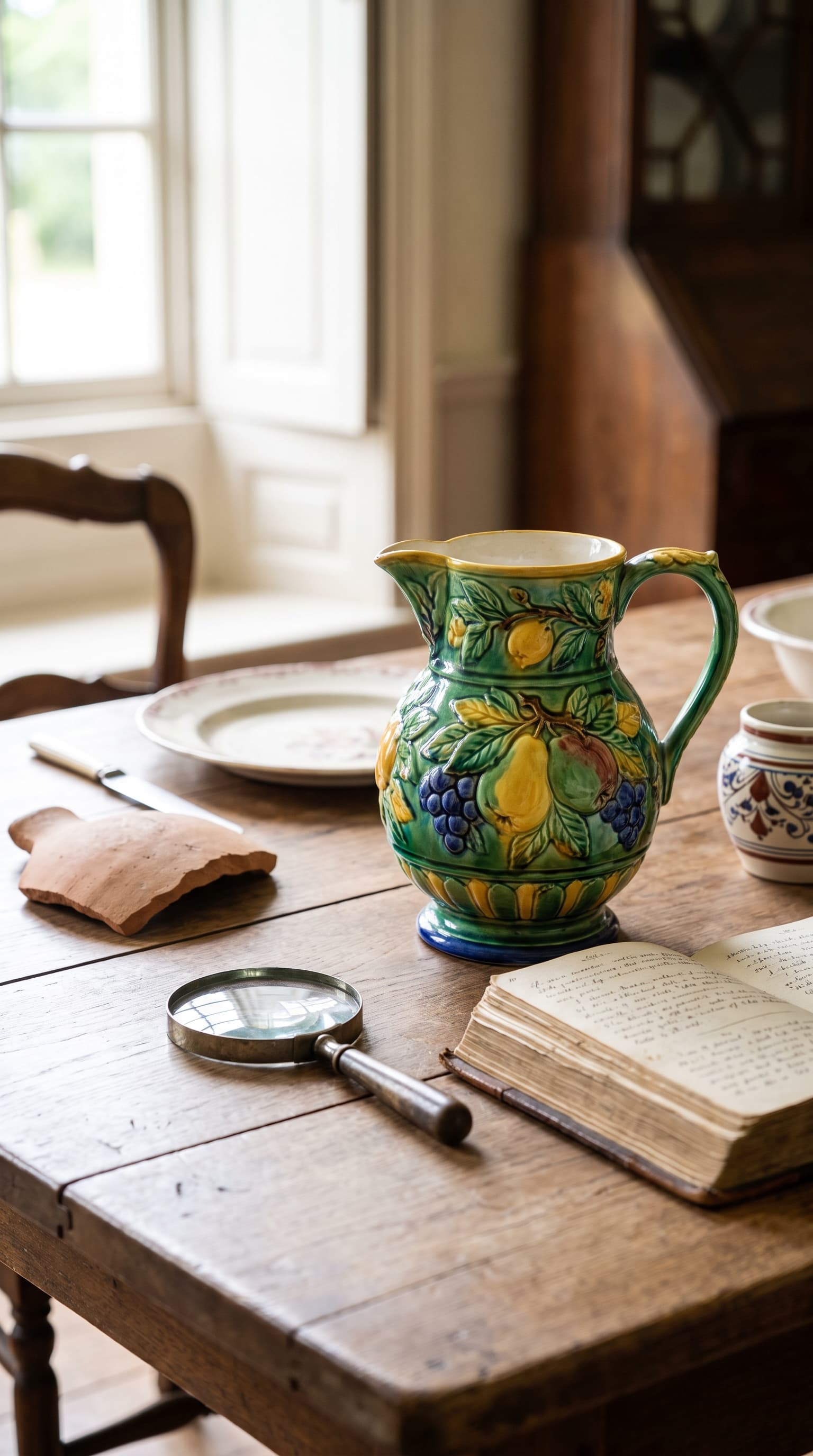
When you're trying to identify majolica pottery, you're looking for earthenware with vibrant, glossy colored glazes applied over three-dimensional relief designs. The name covers both 19th-century Victorian majolica (the most collectible) and earlier tin-glazed pottery from Italy. Most collectors use "majolica" to mean the relief-molded earthenware popularized by Minton in the 1850s and mass-produced through the early 1900s.
Authentic Victorian majolica identification starts with recognizing the marriage of crisp mold detail and saturated glazes in greens, blues, browns, and purples. The glaze pools in the recesses and thins on the high points of the relief, creating natural shading that makes leaves look three-dimensional and fruit look ready to pick. This isn't painted decoration—the color comes from different glaze formulas applied to specific areas of the molded form.
Unlike smooth porcelain or painted earthenware, majolica feels dimensional. Run your finger over a leaf or flower, and you'll trace raised veins and petals. The back is usually unglazed or has a thinner glaze, often showing pinkish or buff-colored earthenware clay.
Visual Checklist for Majolica Identification
Glaze characteristics:
- •Thick, glossy, opaque glazes in multiple colors on one piece
- •Lead-based glaze with a wet, jewel-like shine (pre-1900 especially)
- •Glaze variations where it pools in valleys and thins on peaks
- •Crazing (fine cracks) common but not universal
- •Colors often include cobalt blue, turquoise, manganese purple, chromium green, and ochre yellow
Relief and mold patterns:
- •Deeply molded three-dimensional designs—nature themes dominate
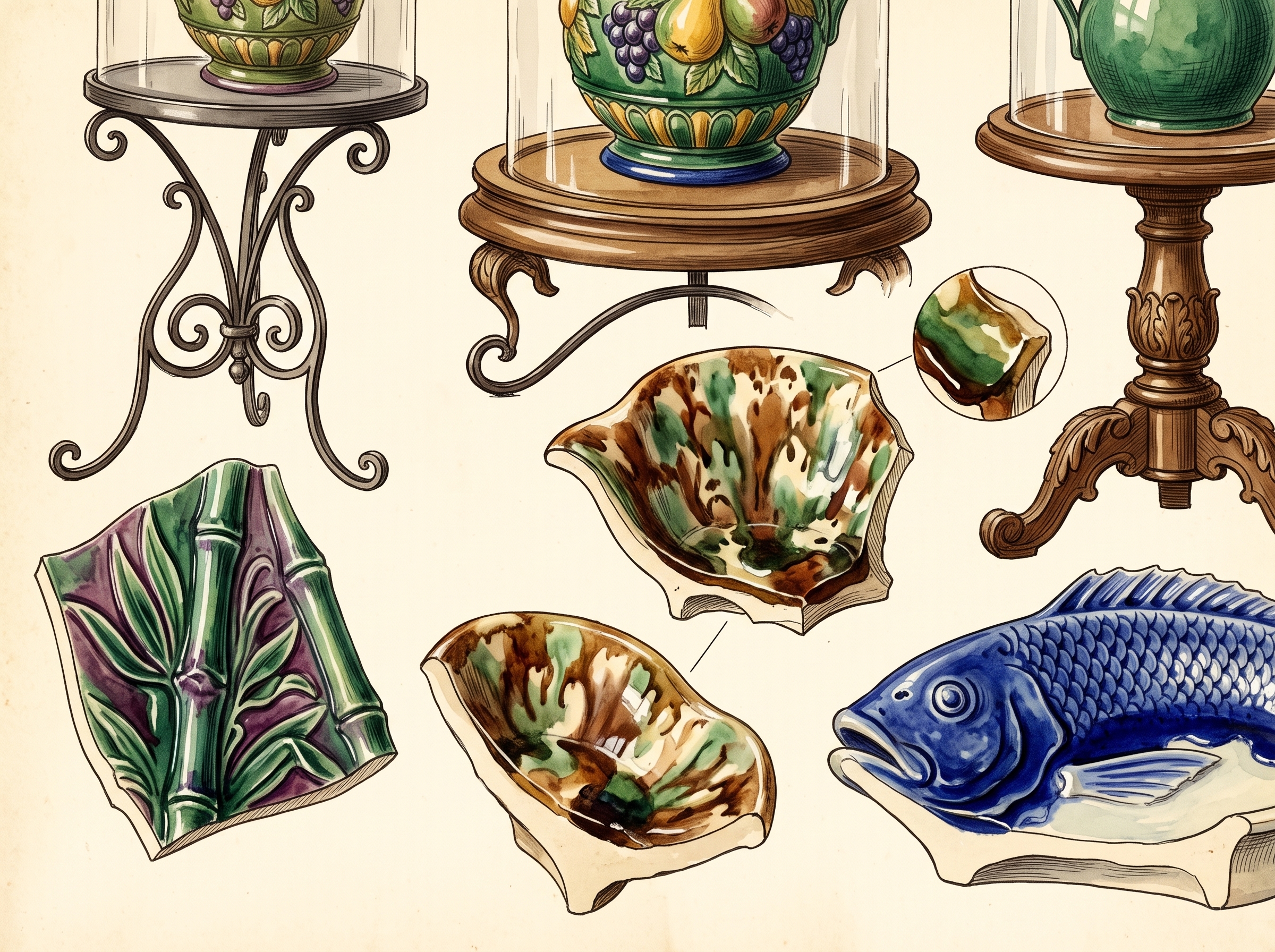
- •Botanical subjects: ferns, leaves, water lilies, bamboo, berries
- •Animal motifs: fish, birds, rabbits, snakes, insects
- •Geometric basketweave, cable, or rope borders
- •Mold seams sometimes visible on sides or base
- •Detail remains sharp even under thick glaze
Base and maker information:
- •Impressed marks more common than printed ones
- •Many pieces unmarked, especially American majolica
- •British makers often stamped registry marks or names (Minton, Wedgwood, George Jones)
- •Continental makers used impressed numbers or country marks
- •Rough, unglazed base typical (stilts or spur marks from kiln firing)
- •Shape numbers or pattern codes sometimes present
Construction clues:
- •Earthenware body, not porcelain—feels heavier and coarser
- •Visible clay color at base or chips: pink, tan, buff, or gray
- •Wall thickness varies by maker and form
- •Handles and spouts often applied separately and glazed over
Common Majolica Identification Confusions
Faience vs. Majolica
Faience uses tin-glazed earthenware with painted designs on a flat white surface. Majolica uses transparent colored glazes over relief-molded forms. If the decoration is painted on a smooth white ground, it's faience. If the color follows raised details and the piece is dimensional, it's likely majolica.
Art Pottery with Colored Glazes
American art pottery (Rookwood, Roseville, Weller) sometimes used multiple glazes on relief-molded forms. Art pottery typically shows more subtle, blended glazes with matte or satin finishes, while majolica favors bright, glossy, clearly separated color zones. Art pottery also tends toward Arts and Crafts or Art Nouveau aesthetics, while Victorian majolica leans heavily naturalistic or whimsical.
Modern Reproductions
Contemporary majolica-style pottery appears frequently at garden centers and import stores. Reproductions often have:
- •Overly uniform glaze application without natural pooling variation
- •Less crisp mold detail
- •Lighter weight
- •Brighter, synthetic-looking colors
- •Sticker labels or "Made in China" stamps
Authentic period majolica shows hand-applied glaze with natural irregularities and weight consistent with 19th-century earthenware construction.
Portuguese and Italian Tin-Glazed Pottery
Renaissance-era Italian maiolica (note the different spelling) and Portuguese pieces can confuse beginners. These earlier wares feature flat painted designs on tin-glazed surfaces, not relief decoration. The term "majolica" for Victorian relief ware borrowed the name but describes a completely different technique.
How to Identify Majolica Pottery from Photos
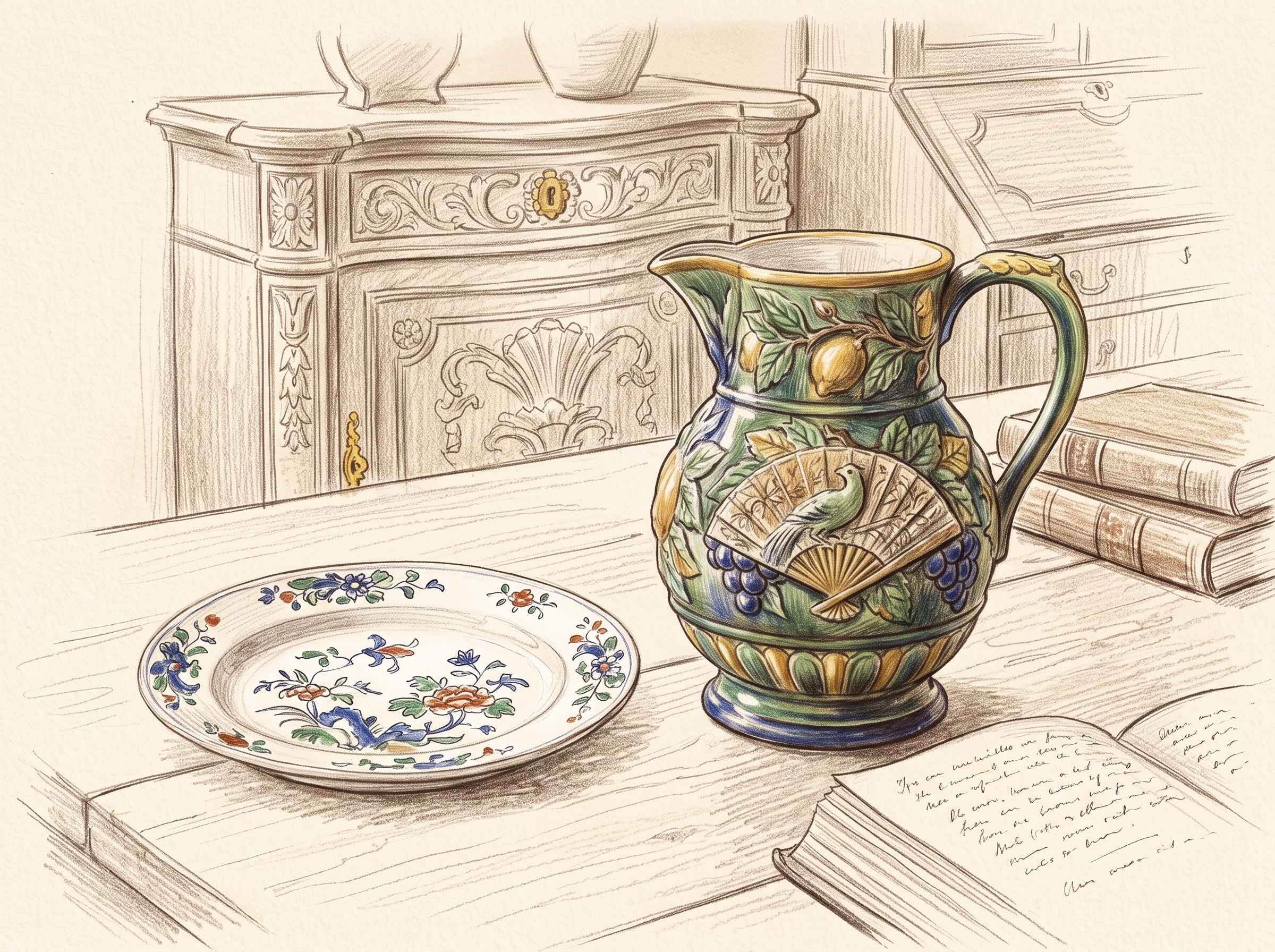
Photography reveals the details that confirm majolica identification when you can't handle a piece in person.
Overall form and relief
- •Photo effectiveness: High
- •What to capture: Angled light showing depth of relief, full profiles from multiple sides
Shoot at an angle so shadows reveal how deeply the design is molded. A straight-on shot can flatten relief details that are critical for identification. Capture the whole piece to show form—majolica shapes often tell as much as decoration.
Glaze pooling and color separation
- •Photo effectiveness: Very high
- •What to capture: Close-ups of recessed areas, color transitions, surface texture
Zoom in where different glaze colors meet. Look for the characteristic pooling in valleys and thinning over ridges. Natural light works best—flash can blow out the subtleties that distinguish authentic majolica from reproductions.
Base and maker marks
- •Photo effectiveness: Critical
- •What to capture: Entire base, any impressed or printed marks, clay color, glaze coverage
Photograph the base straight-on and well-lit. Use raking light to make shallow impressed marks readable. Many majolica pieces lack marks, but when present, they're the fastest route to maker and date. Note glaze coverage patterns on the base—authentic pieces often show stilts or spur marks from kiln furniture.
Mold seams and construction details
- •Photo effectiveness: Medium to high
- •What to capture: Edges, handle attachments, any visible seam lines
Mold seams sometimes appear as faint raised lines on sides. Handles and spouts were applied separately—look for slight ridges where they join the body. These details help distinguish hand-finished Victorian majolica from later mass-produced copies.
Wear, crazing, and age indicators
- •Photo effectiveness: Medium
- •What to capture: Surface imperfections, glaze crazing, chips showing clay body, utensil marks
Crazing appears as fine spider-web cracks in glaze. It's common in old majolica but not definitive—some pieces don't craze, and some reproductions do. Chips are actually helpful: they show clay color and glaze thickness. Period majolica typically has thick, often irregular glaze layers.
For broader pottery identification techniques including clay body assessment and glaze analysis, see our guide on how to identify pottery by photo.
Get Your Majolica Identified
If you've got photos of a piece with brilliant colored glazes over relief decoration and you're still not certain whether it's majolica, Victorian art pottery, or a modern garden piece, Tocuro can help identify it from photos. Upload clear images of the overall piece, close-ups of the glaze and relief detail, and the base with any marks. Tocuro provides estimated value ranges based on current market signals, helping you understand both what you have and what similar pieces are bringing at auction and in dealer inventory. The identification isn't a formal appraisal, but it gives you the information collectors need to make informed decisions.
Majolica identification rewards careful observation. The interplay of mold, glaze, and color creates a distinctive look that becomes easier to spot with practice—and good photos capture almost everything you need to see.
Photo identification
Identify Your Pottery
Use Tocuro to identify your item from a photo and get an estimated value range when market data is available.