
Jewelry Marks Identification: How to Read Stamps and Hallmarks from Photos
Jewelry marks and hallmarks tell you about metal content, maker, and sometimes country of origin—but not always age or value. This guide shows you where to find stamps on rings, bracelets, necklaces, and earrings, what the marks can and cannot reveal, and how to photograph them for reliable identification.
Where to Find Jewelry Marks
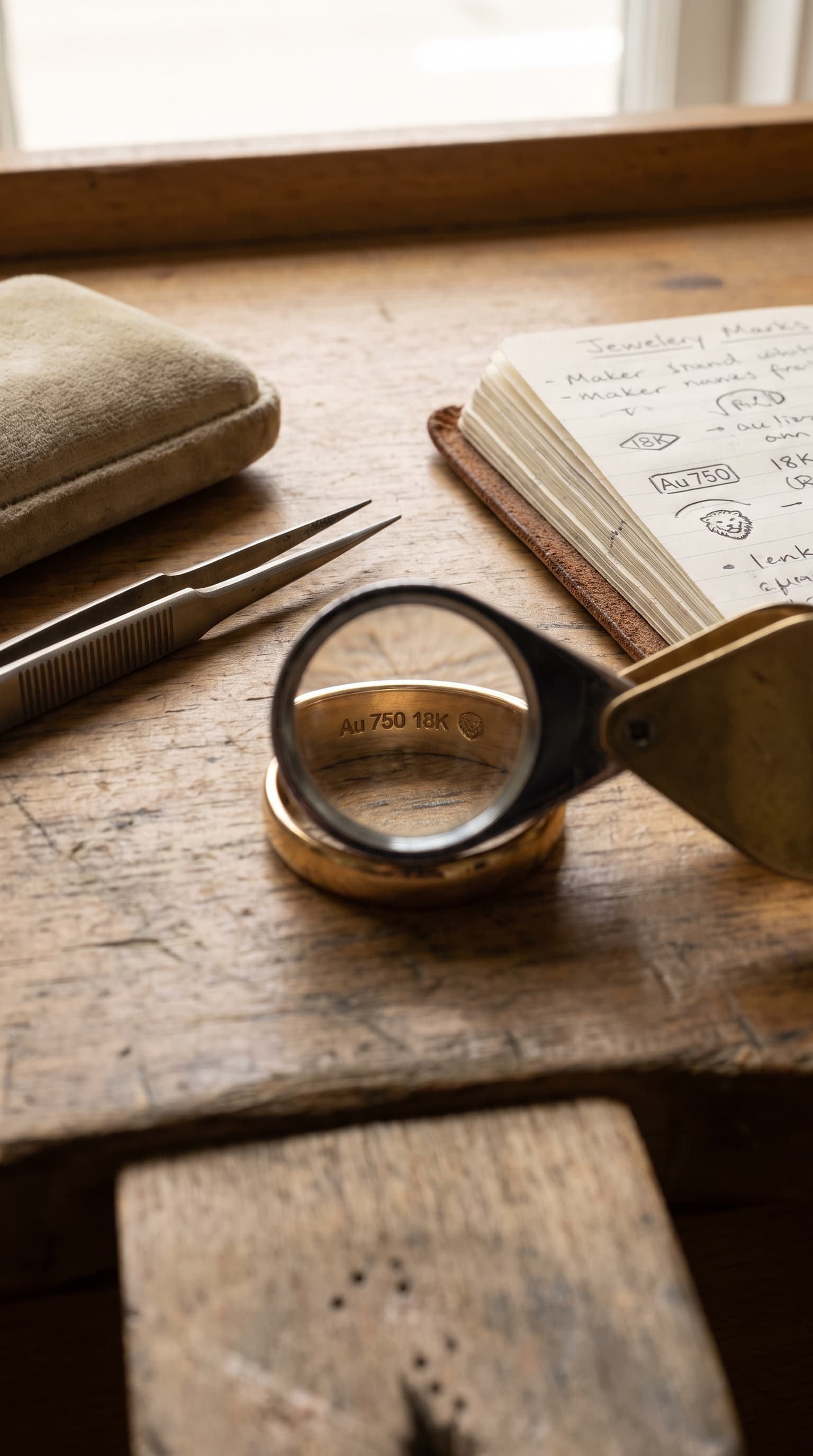
Jewelry marks identification starts with knowing where to look. Unlike porcelain marks or furniture stamps that appear in predictable spots, jewelry marks hide in different places depending on the piece.
Rings carry marks on the inside of the band, usually near the shank where it meets the setting. On wide bands, check both sides of the interior. Estate rings sometimes have marks worn nearly smooth from decades of wear.
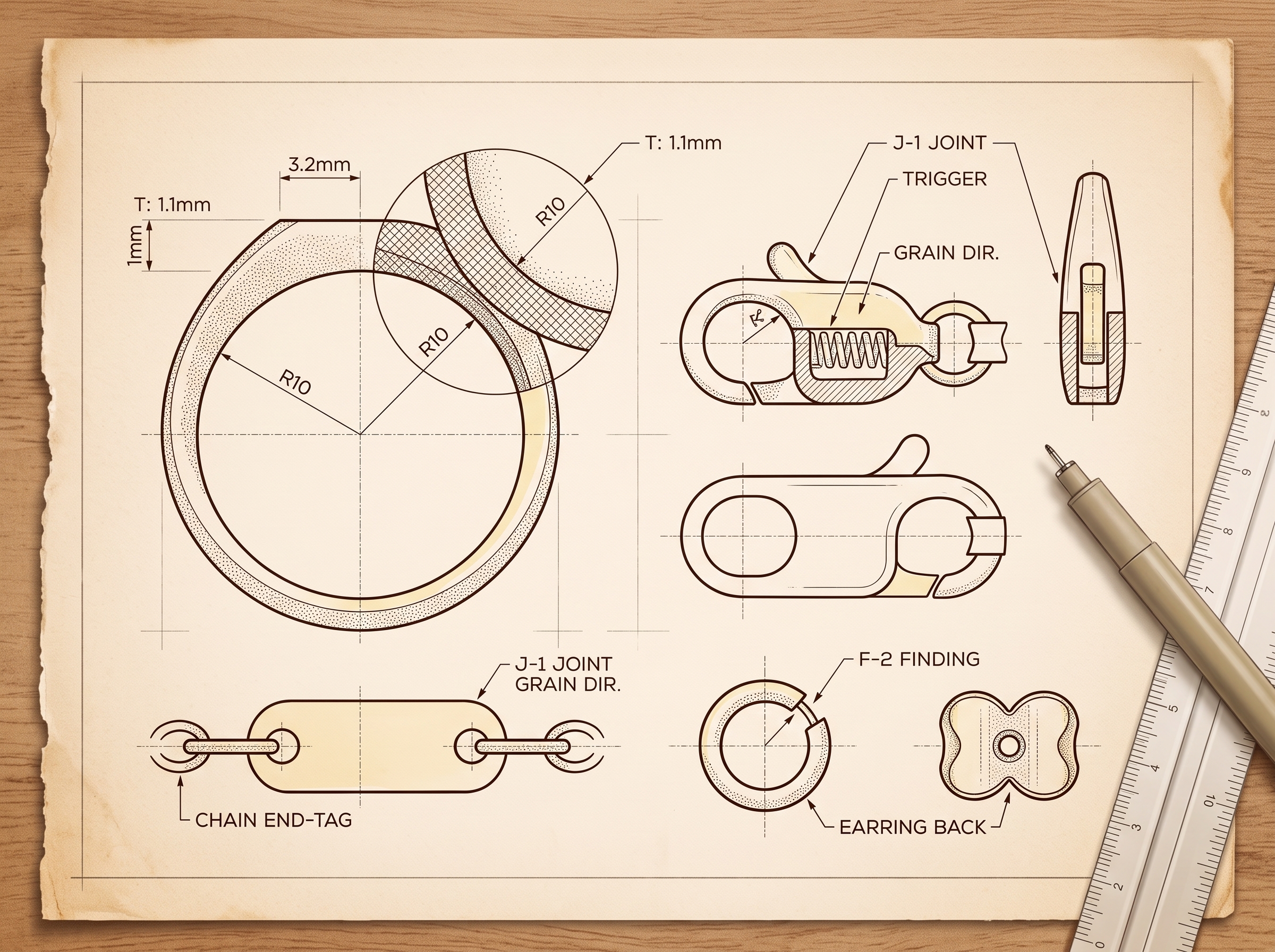
Bracelets show marks on the inside of the clasp assembly, on the jump ring, or on a small plate near the closure. Link bracelets may have marks on individual links or only on the clasp itself. Bangle bracelets often stamp marks on the interior surface, sometimes hidden under a design element.
Necklaces place marks on the clasp mechanism—spring rings, lobster claws, or box clasps all carry stamps. Look at both the clasp body and the jump rings connecting it to the chain. On vintage pieces, maker marks sometimes appear on decorative elements rather than functional hardware.
Earrings stamp marks on the post, the back of the earring near the finding, or on the clip mechanism for non-pierced styles. Screw-backs from the 1940s-60s often have marks on the threaded post or the paddle.
Brooches and pins typically show marks on the back near the pin stem or on the C-clasp. Larger pieces may have multiple marks scattered across the back plate.
Marks range from crisp and clear on newer pieces to faint impressions on worn items. Use a jeweler's loupe or your phone's macro mode to spot tiny stamps—some are less than 2mm tall.
What Jewelry Marks Can and Cannot Tell You
Metal Content
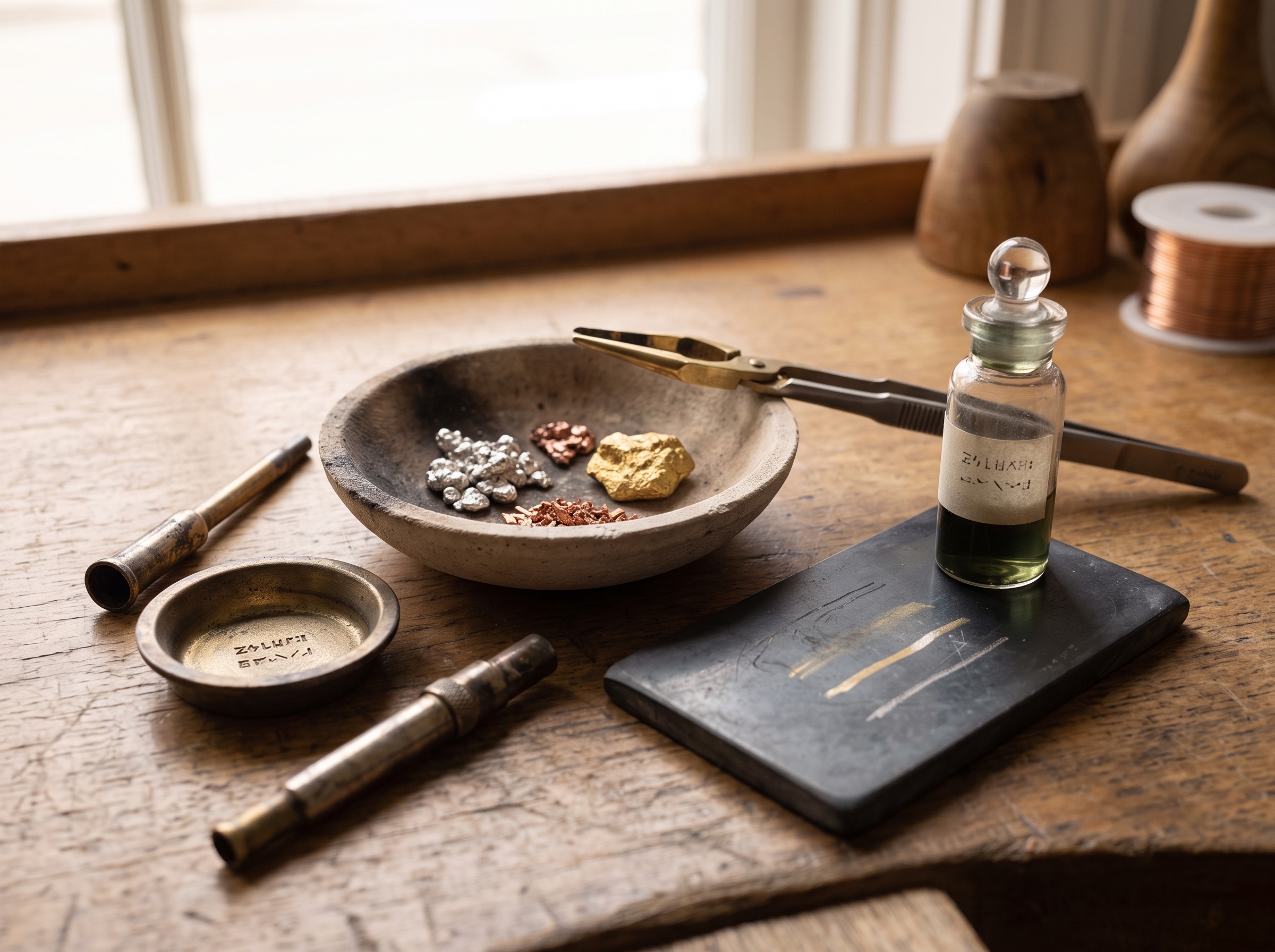
Metal marks tell you composition with reasonable certainty. "925" or "Sterling" confirms 92.5% silver. "14K" or "585" indicates 14-karat gold (58.5% pure gold). "750" means 18-karat gold. "PLAT" or "950" signals platinum.
European marks use millesimal fineness: "375" for 9K gold, "585" for 14K, "750" for 18K. British marks include a lion passant for sterling silver and specific symbols for gold karats.
Maker and Origin
Maker marks identify the manufacturer or designer when you can read them clearly. Tiffany & Co. stamps "Tiffany & Co." plus metal content. Cartier uses "Cartier" with serial numbers on newer pieces. Smaller makers used initials or symbols—"WRE" for William Ruser, "HMH" for Margot de Taxco.
Country marks tell you where a piece was assayed or made. British hallmarks include a town mark (leopard's head for London, anchor for Birmingham), date letter, and assay office symbol. French marks use an eagle's head for gold, a boar's head for imported gold.
What Marks Don't Reveal
Jewelry marks identification rarely gives you precise age. A "925" stamp appears on both 1920s Art Deco rings and pieces made last year. Maker marks help narrow dating if the company's operating dates are documented, but many small manufacturers worked for decades using identical stamps.
Marks don't confirm authenticity alone. Counterfeiters stamp fake Cartier and Tiffany marks on jewelry regularly. Style, construction quality, and provenance matter more than marks for authentication.
Value depends on current metal prices, designer recognition, condition, and fashion trends—not just what's stamped inside. A "14K" stamp tells you gold content but not whether the design is collectible or the craftsmanship exceptional.
Common Jewelry Marks Misreads
"925" confused with "925 China": Legitimate sterling silver carries "925" alone or with maker marks. "925 China" appears on silver-plated or low-quality items from mass production facilities—not genuine sterling.
"GP" and "GF" misunderstood: "GP" means gold plated—a thin gold layer over base metal. "GF" means gold filled—a thicker bonded layer with actual gold weight, but still not solid gold. Both are legitimate marks but indicate less valuable items than karat gold.
Patent numbers mistaken for dates: "Pat. 1234567" is a patent number, not a year. Patent dates require looking up the filing, and many designs continued production decades after patent grant.
"Germany" versus "West Germany": "West Germany" dates a piece to 1949-1990. "Germany" alone appears before 1949 or after 1990. The distinction matters for dating costume jewelry.
Worn marks read as different numbers: A worn "585" can look like "525." A faint "750" might appear as "150." Lighting and photo angle change how partial marks photograph.
Decorative stamps mistaken for hallmarks: Some jewelry features decorative patterns or textures that resemble marks. A tiny flower or star might be design, not a maker symbol.
How Photos of Jewelry Marks Improve Identification
Clear mark photos give you reliable information. Blurry or poorly lit shots lead to misidentification and wasted research time.
Sharp Focus on Small Text
Jewelry marks often measure 1-2mm tall. Your phone camera's macro mode or a jeweler's loupe captures detail that naked-eye examination misses. Focus directly on the mark, not the entire piece. A crisp photo of "14K FAS" tells you more than a sharp photo of the whole bracelet.
Multiple Angles for Worn Marks
Worn or shallow marks disappear in direct light but show up in raking side light. Take three photos: one with light from above, one from the side, one from the opposite side. Different angles reveal different parts of a faint impression.
Context Shots of Mark Location
A close-up of "925" plus a photo showing where that stamp sits—inside a ring shank, on a clasp, on a pin back—helps verify authenticity. Forgers sometimes stamp marks in wrong locations. Legitimate manufacturers follow consistent placement patterns.
Clasp and Finding Photos
For necklaces and bracelets, photograph the entire clasp assembly, not just the stamp. A spring ring with "925" plus photos of the jump ring attachment, chain links, and closure mechanism give a complete picture. Mismatched components suggest repairs or marriages of parts.
Similar to silver hallmarks, jewelry marks need good lighting and steady hands. Natural daylight or a bright LED desk lamp works better than overhead room lights. Rest your hands on a stable surface while shooting to avoid motion blur.
Get Your Jewelry Marks Identified
Jewelry marks identification combines readable photos with knowledge of metal standards, maker histories, and regional hallmarking systems. When you're looking at a piece with unfamiliar stamps, clear photos of the marks give you the best starting point.
Tocuro identifies jewelry from photos, including mark analysis and estimated value ranges based on current market signals. Upload clear shots of your marks, the full piece, and any clasp or finding details. The AI reads stamps, cross-references maker databases, and provides context about what your marks mean—not a formal appraisal, but practical information collectors need.
Identify your jewelry marks now and get answers about what those tiny stamps actually tell you.
Photo identification
Identify Your Jewelry Mark
Use Tocuro to identify your item from a photo and get an estimated value range when market data is available.