
Ironstone China Identification: How to Identify Ironstone by Photo
Ironstone china is identified by its dense, heavy body, backstamps with "ironstone" or "stone china," and specific physical characteristics. This guide shows you which clues matter most and how to photograph pieces for accurate identification.
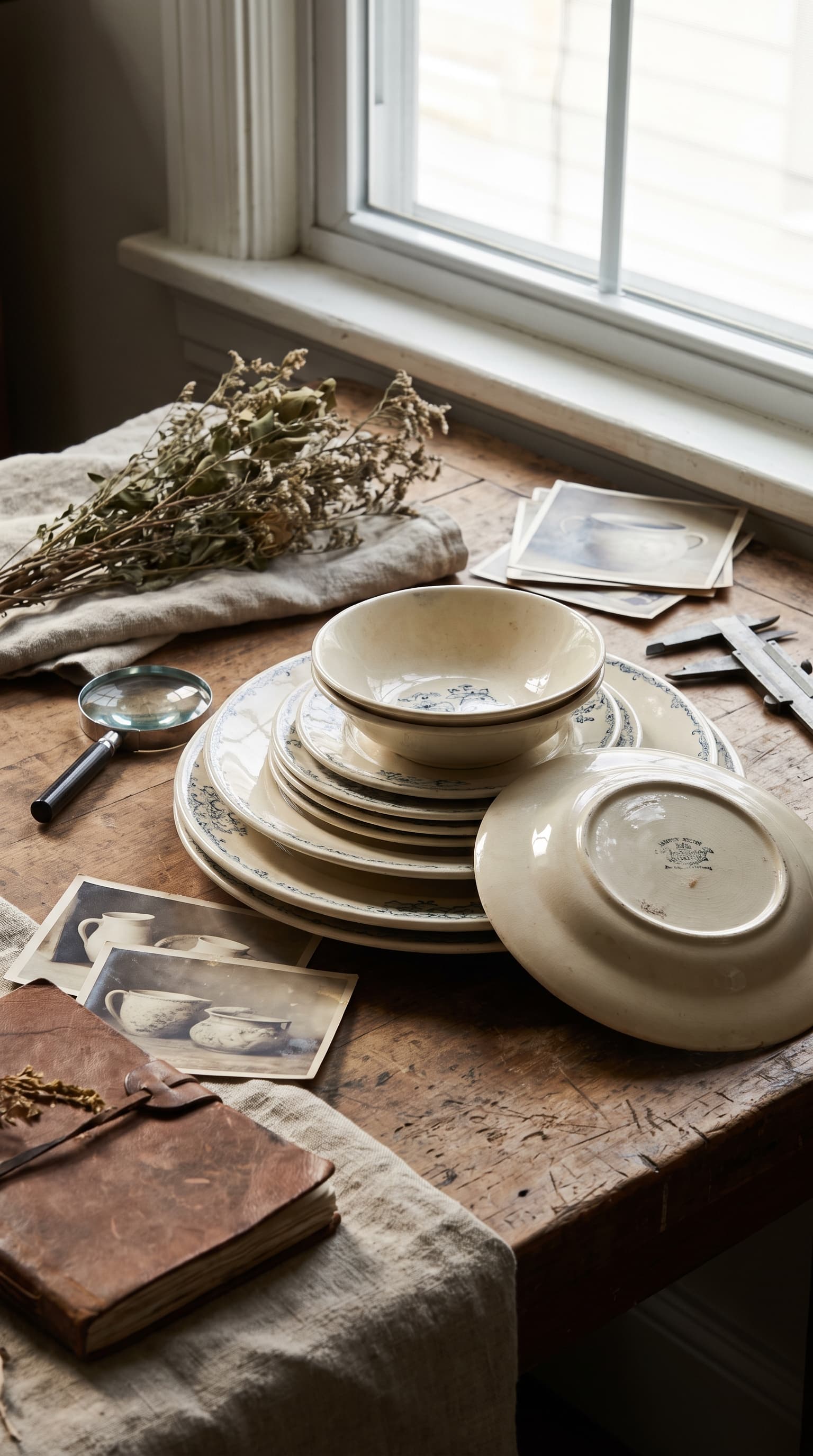
Ironstone China Identification: How to Identify Ironstone by Photo
Ironstone china sits in a unique category—heavier than standard pottery, tougher than fine porcelain, and instantly recognizable once you know what to look for. Whether you've inherited a stack of white platters or picked up a transferware pitcher at an estate sale, ironstone china identification starts with understanding what makes this utilitarian ceramic different from everything else on the shelf.
Developed in England around 1813, ironstone was designed to be durable, affordable dinnerware that could survive everyday use. Identifying it accurately depends on recognizing the dense body, reading backstamps correctly, and knowing where standard porcelain identification techniques fall short.
What Clues Matter for Ironstone China Identification
Ironstone reveals itself through a combination of physical traits and maker's marks. Unlike fine porcelain, which prioritizes translucency and delicacy, ironstone emphasizes strength and weight.
Body and Weight
Ironstone feels substantially heavier than regular earthenware or china. Pick up a plate and compare it to standard dinnerware—if it feels unexpectedly dense for its size, that's your first clue. The body is thick-walled and opaque, never translucent like porcelain. When you tap the rim with your fingernail, ironstone produces a dull thud rather than the clear ring of fine china.
Glaze Characteristics
Most ironstone features a white or off-white glaze with a slightly bluish or grayish tint. The glaze often shows fine crazing (a network of tiny cracks) that developed over decades of use and temperature changes. This crazing is normal and doesn't indicate damage—it's part of ironstone's aging signature. The glaze on genuine ironstone feels smooth but substantial, not glassy-thin like porcelain.
Backstamps and Marks
Backstamps are your most reliable identification tool. Look for words like "ironstone," "stone china," "granite ware," or "white granite" in the mark. English makers often included "Royal Ironstone China" or the specific patent name "Mason's Patent Ironstone China." American manufacturers used variations like "White Granite" or simply "Ironstone China."
The mark's design, typography, and included registration numbers can date pieces and identify makers. English registry marks (diamond-shaped marks used 1842–1883) provide precise dating. Later pieces may show pattern names alongside the manufacturer.
Decoration Styles
While plain white ironstone dominates the market, decorated pieces show specific patterns:
- •Transfer prints: Mulberry, blue, brown, or black printed designs, often scenic or floral
- •Hand-painted details: Simple gold bands, minimal floral accents
- •Relief molding: Wheat, corn, grape, or geometric patterns molded into the body
- •Flow blue: Blurred blue transferware created by intentional running during firing
Plain white ironstone often features subtle molded patterns—cables, ribs, or botanical motifs raised from the surface.
What Photos to Take for Ironstone China Identification
Photographing ironstone requires capturing both the backstamp and the physical characteristics that separate it from lookalikes.
Backstamp in Natural Light
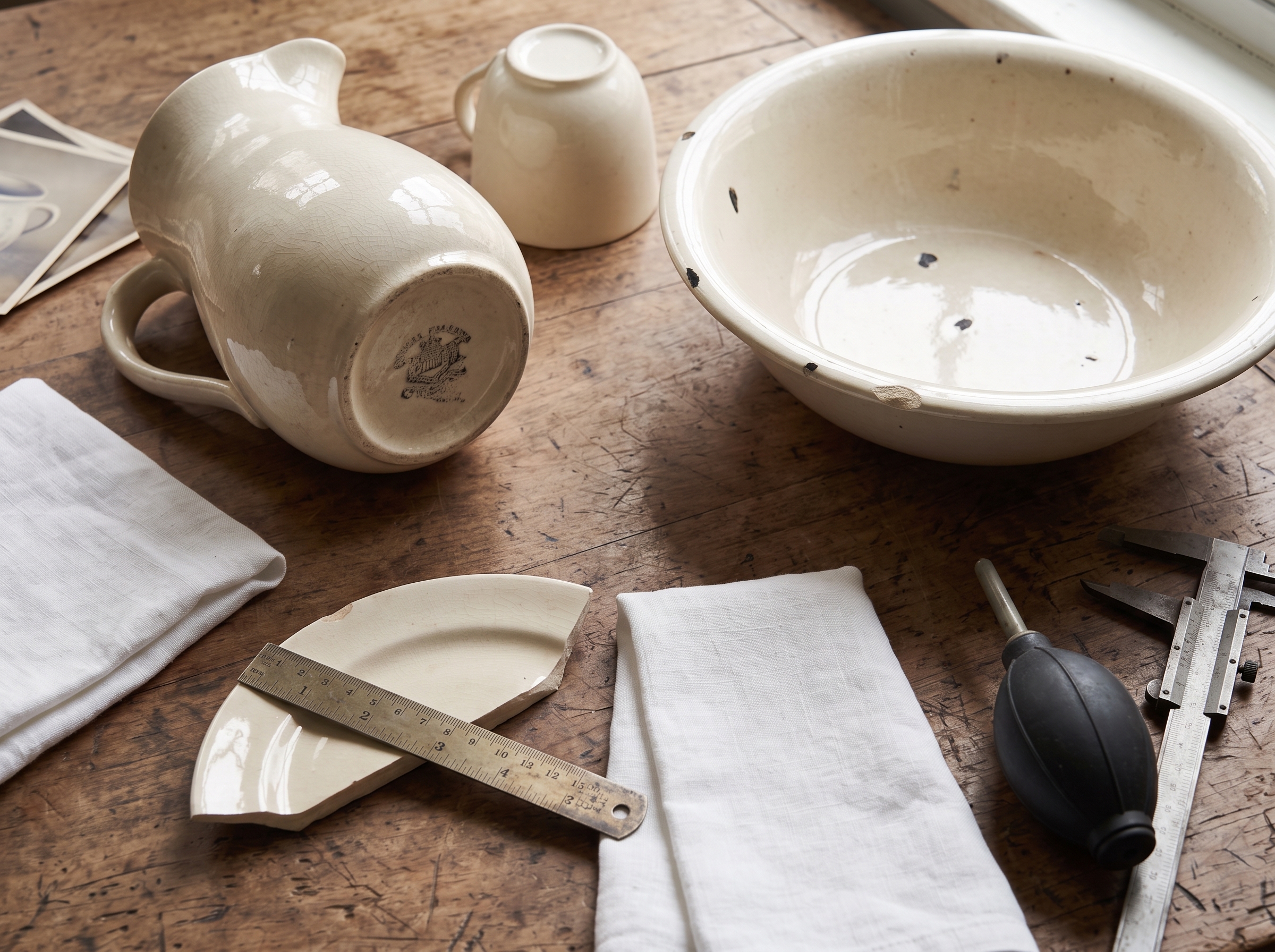
Flip the piece over and photograph the backstamp straight-on with even, natural light. Avoid flash, which creates glare and washes out faint marks. If the mark is worn, try photographing at a slight angle with light from the side to create shadows that reveal faded text. Capture the entire mark—maker name, pattern name, and any registry numbers or symbols.
Overall Shape and Profile
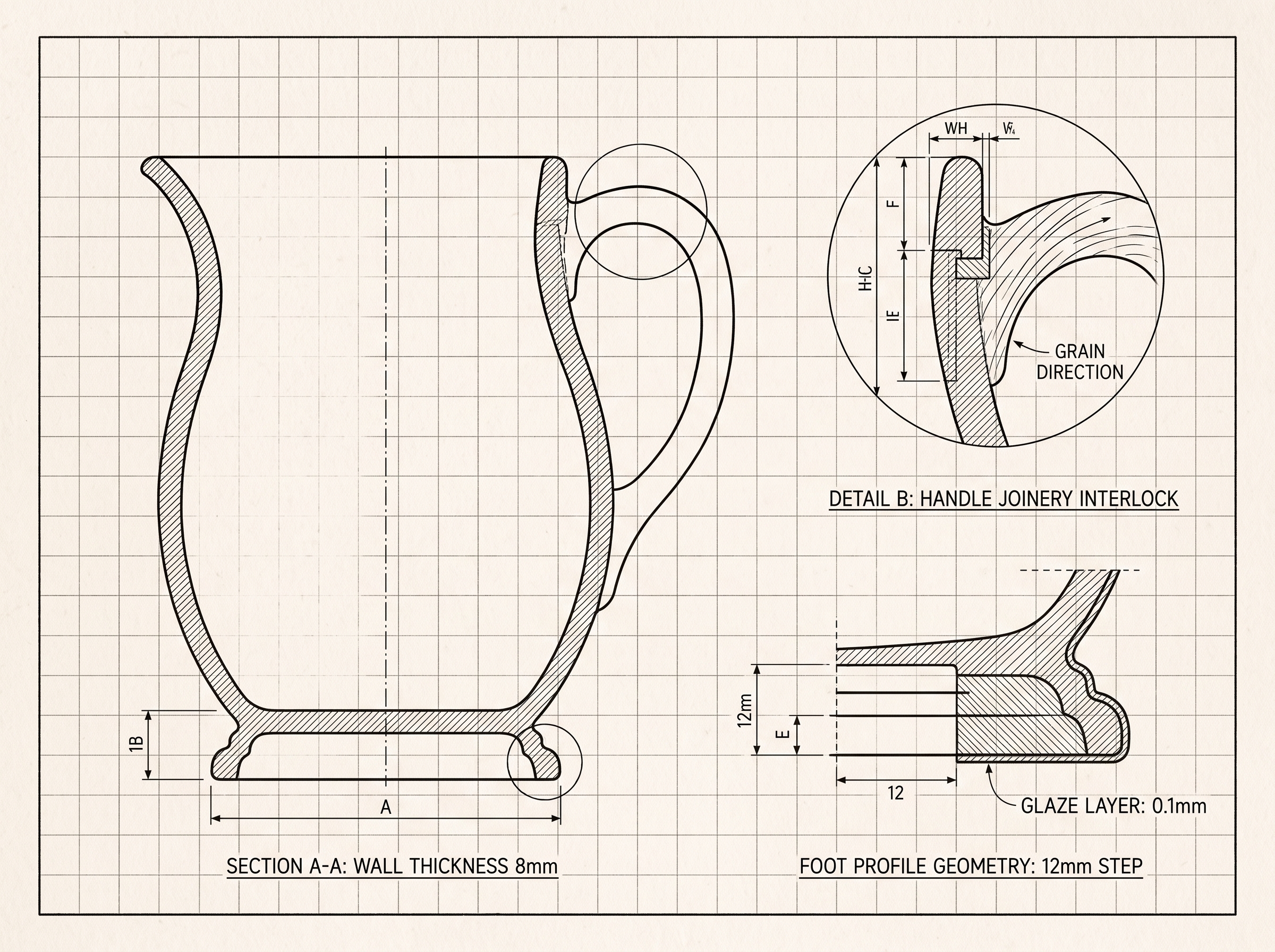
Photograph the piece from the side to show its thickness and profile. This view reveals the substantial walls that distinguish ironstone from lighter china. For hollow pieces like pitchers or tureens, show the rim thickness and handle attachment points.
Surface Texture and Glaze
Take a close-up of the glaze surface showing any crazing, the color tone, and the glaze quality. If the piece has molded decoration, photograph it in raking light (light from the side) to emphasize the relief details.
Color and Decoration
For decorated ironstone, capture the pattern clearly. With transfer prints, photograph close enough to see the line quality and any color details. For flow blue or mulberry, show how the pattern bleeds into the glaze—this bleeding is intentional and characteristic.
Damage or Repairs
Document any chips, cracks, staining, or repairs. Ironstone chips typically show a dense, white or grayish body underneath the glaze—distinctly different from the porous, tan body of earthenware.
Common Misidentifications in Ironstone China Identification
Several ceramic types get confused with ironstone, often because sellers use the term loosely or because superficial similarities obscure real differences.
White Earthenware Marketed as Ironstone
Plain white earthenware from the mid-20th century often gets labeled "ironstone" in online listings. True ironstone is significantly heavier and denser. Earthenware chips reveal a porous, lighter-colored body; ironstone shows a tight, smooth break. Check the weight first—if it feels light for its size, it's probably not ironstone.
Semi-Porcelain and Hotel Ware
Thick, durable restaurant china from the 1920s–1960s mimics ironstone's heft, but backstamps typically say "semi-porcelain," "vitrified," or name a hotel/restaurant supplier. These pieces were made for commercial durability but use different formulas than 19th-century ironstone.
Transfer-Printed Earthenware
Blue or brown transferware on lighter earthenware sometimes gets mistaken for decorated ironstone. The body weight and density reveal the truth. Transfer-printed earthenware feels lighter and often shows a yellowish or cream-colored body where chipped. Ironstone remains white or grayish throughout.
Modern Reproductions
Contemporary "ironstone-style" dinnerware mimics the look but lacks the weight and glaze characteristics of period pieces. Backstamps on reproductions often include modern branding, microwave-safe symbols, or country-of-origin marks required after 1891 ("Made in China," "Made in England"). Genuine 19th-century ironstone rarely includes those designations.
What Tocuro Can Help Resolve in Ironstone China Identification
Backstamps can be tricky. Maker names changed, patterns went unnamed, and registry marks require decoding. Distinguishing a valuable Mason's Patent piece from generic white granite demands specific knowledge of hundreds of manufacturers and their marks.
Tocuro identifies ironstone from photos by analyzing backstamps, body characteristics, and decoration patterns together. Upload clear images of your piece—backstamp, profile, and any decoration—and get identification help that accounts for the details collectors care about: maker, pattern name, approximate age, and estimated value range based on current market signals.
This is especially helpful when you're evaluating a mixed lot, trying to date an unmarked piece by its molded pattern, or determining whether that "antique ironstone" listing is genuine or a hopeful description of heavy earthenware. Tocuro offers free daily scans, with the count resetting daily, so you can work through a set or compare multiple pieces without commitment.
Get Your Ironstone Identified
Ironstone china identification depends on catching the right details in the right light—backstamps that authenticate age and maker, body weight that confirms material, and glaze characteristics that separate genuine pieces from lookalikes.
If you're holding a piece and want to know exactly what you have, identify your item with Tocuro. Upload photos of the backstamp and piece, and get identification and estimated value ranges based on real market signals. The estimated value is not a formal appraisal, but it gives you a practical starting point for understanding what your ironstone is worth today.
Photo identification
Identify Your China
Use Tocuro to identify your item from a photo and get an estimated value range when market data is available.