
How to Identify Vintage Furniture: What Makes It Vintage, Not Antique
Vintage furniture occupies a sweet spot between antique and modern—roughly mid-20th century pieces that blend character with usability. This guide shows you what to look for when you suspect a piece is vintage, which photos reveal the most, and how to avoid common dating mistakes.

What Clues Separate Vintage From Antique
When you're trying to identify vintage furniture, the first question is usually: "Is this actually vintage, or is it antique?" The difference matters. Most collectors use "vintage" to describe pieces from roughly the 1920s through the 1980s—especially mid-century modern work from the 1940s through 1970s. Antique furniture, by contrast, is typically 100+ years old.
Vintage pieces show their era in predictable ways:
Materials tell the decade. Plywood, laminate, molded plastic, chrome tubing, and teak veneer all scream mid-century. Particle board and melamine point to the 1960s onward. If you see solid walnut or oak with hand-cut joinery, you're likely looking at something older—true antique territory.
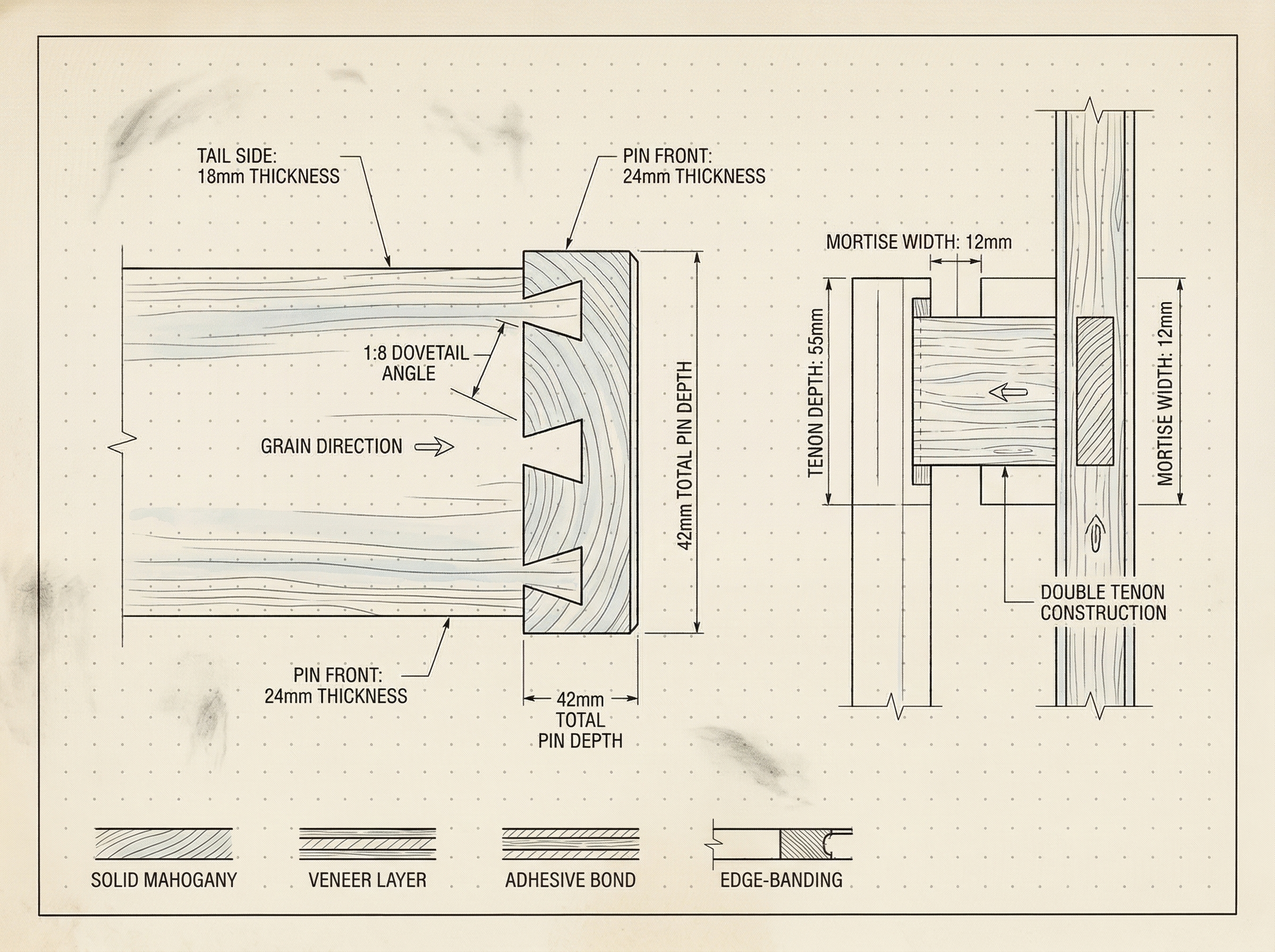
Construction methods shifted. Vintage furniture often uses machine-cut dovetails, staples, or screws rather than hand-cut joinery. Drawer bottoms may be plywood instead of solid wood. Legs attach with metal brackets or bolts, not mortise-and-tenon joints. These aren't flaws—they're clues that place a piece firmly in the 20th century.
Style signatures are strong. Tapered legs, atomic-age curves, Scandinavian minimalism, bold geometric patterns, and low-slung profiles all point to vintage eras. If a piece looks like it belongs in a Mad Men set or a 1970s conversation pit, it's vintage.
Labels and marks are more common. Many vintage manufacturers used paper labels, metal tags, or stamps. Names like Herman Miller, Lane, Broyhill, Heywood-Wakefield, and Drexel show up often. Even budget brands labeled their work. Identifying these marks can narrow the date range fast.
Which Photos Help You Identify Vintage Furniture
Good photos make identification faster and more accurate. When you suspect you have vintage furniture, these angles matter most:
Overall shape and proportion. Stand back and capture the full piece from eye level. Vintage furniture often has a distinct silhouette—low, wide credenzas; sculptural chair backs; geometric case goods. This shot establishes the style family.
Hardware and joinery close-ups. Zoom in on drawer pulls, hinges, and leg attachments. Chrome pulls, brass with a satin finish, or molded plastic knobs all point to specific decades. Look at how drawers are assembled—staples and machine dovetails confirm 20th-century manufacture.
Underside and back panels. Flip chairs over. Pull drawers out and photograph the bottoms. Check the back of cabinets. You'll often find labels, stamps, or construction details that date a piece precisely. Plywood backs and particleboard are dead giveaways for vintage rather than antique.
Material texture. Capture the grain of veneers, the weave of upholstery, the finish on wood. Teak, rosewood, and walnut veneers were wildly popular in mid-century pieces. Nubby wool, vinyl, and bold prints say 1950s through 1970s. These textures help distinguish a genuine vintage piece from a modern reproduction.
Any visible marks or tags. Even a faded paper label or a partial stamp can be the key. Photograph every mark you find, even if it's illegible to you. Context clues—typefaces, logo styles, even the adhesive used—can help identify the piece online.
Common Misidentifications to Avoid
Vintage furniture gets confused with other categories more often than you'd think. Here's where people go wrong:
Reproduction vs. original
- •The confusion: Modern retailers sell "mid-century style" and "vintage-inspired" furniture that mimics 1950s and 1960s designs.
- •How to tell: Check materials and weight. Reproductions often use lighter woods, veneers over MDF, and simpler joinery. Original vintage pieces feel heavier, use solid hardwoods or thick plywood, and show real wear in logical places—drawer runners, arm rests, feet.
Vintage vs. just old
- •The confusion: Not every piece from the 1970s is collectible vintage. Mass-market particleboard furniture from that era was disposable then and still is.
- •How to tell: Look for design intention. Vintage furniture worth identifying has a clear style—Scandinavian modern, Danish teak, American midcentury, Hollywood Regency. Generic brown furniture with no recognizable design language is just old, not vintage.
Transitional antiques
- •The confusion: Pieces from the 1920s and 1930s straddle the line. Art Deco furniture, early Modernist designs, and Bakelite-trimmed pieces blur the antique/vintage boundary.
- •How to tell: Construction is the tell. If you see hand-planed surfaces, hide glue, and traditional joinery, it leans antique. If you see factory precision, laminate, and metal hardware, it's vintage.
Vintage vs. "retro"
- •The confusion: "Retro" often means new items styled to look old. The terms get used interchangeably, but they're not the same.
- •How to tell: Age. Vintage pieces are actually from the era. Retro pieces are styled like the era but made recently. Check for modern fasteners, pristine finishes, and materials that didn't exist in the period.
What Tocuro Can Help You Identify Vintage Furniture
Once you've taken the right photos, the next step is getting a confident ID. That's where photo-based identification helps.
Tocuro analyzes your photos to identify furniture by style, era, materials, and often the maker. You upload images of the piece—especially those detail shots of hardware, labels, and construction—and get back a structured answer: what it likely is, when it was made, and an estimated value range based on current market signals.
It's especially useful when you're stuck between "vintage" and "just old," or when you've found a label but can't place the manufacturer. The app cross-references visual clues with known design patterns and maker marks, so you get an answer that's grounded in real collector knowledge.
Because Tocuro gives you an estimated value range along with the ID, you'll know whether your vintage credenza is a $150 garage-sale find or a $1,500 designer piece. That clarity matters whether you're buying, selling, or just trying to figure out what you inherited.
Ready to Identify Your Vintage Furniture?
If you've got a piece with tapered legs, a teak veneer, or a suspicious laminate top, you're likely holding something vintage. The best way to confirm it—and learn what it's worth—is to let the right tool analyze your photos.
Identify your vintage furniture now with Tocuro. Upload your photos, get a detailed ID, and see an estimated value range based on real market data. It's the fastest way to move from "I think this is mid-century" to "I know exactly what I have."
Photo identification
Identify Your Furniture
Use Tocuro to identify your item from a photo and get an estimated value range when market data is available.