
How to Identify Pottery by Photo: Clay Body, Glaze, and Mark Clues
Identifying pottery by photo requires examining clay body color and texture, glaze application, form details, and maker's marks. This guide explains which physical clues reveal a piece's age, origin, and maker, what angles and lighting help most in photos, common identification pitfalls, and how photo-based tools can decode what you're seeing.
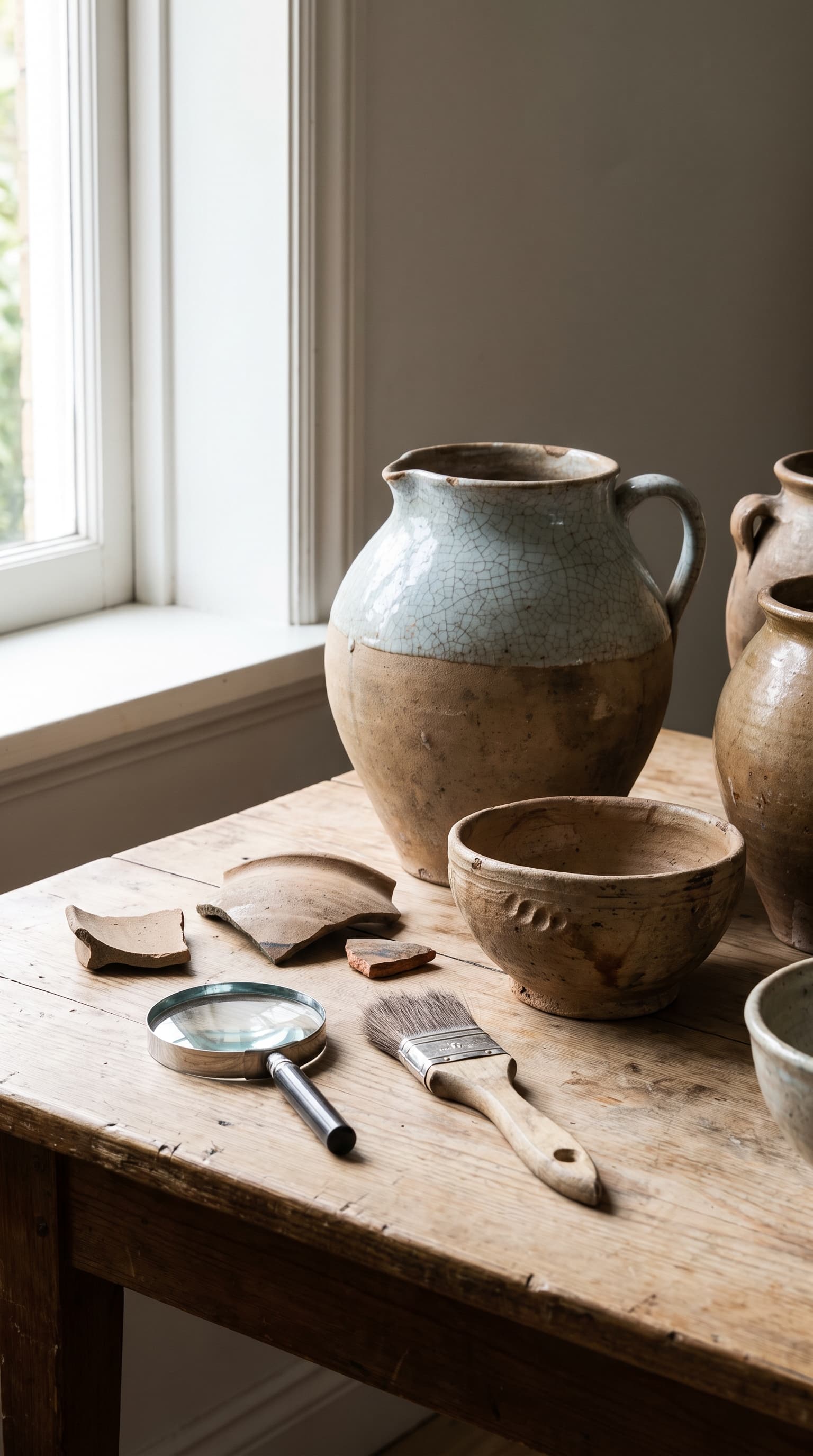
What Clues Matter When You Identify Pottery by Photo
When you're trying to identify pottery by photo, certain details speak louder than others. Clay body composition, glaze character, maker's marks, and construction methods all tell a story—but only if you know where to look and how to capture them.
Clay Body Color and Texture
The clay itself is one of the most revealing features. Earthenware tends to be porous, often reddish-brown or buff-colored, and feels relatively lightweight. Stoneware is denser, usually gray or tan, and can ring when tapped. Porcelain is white, translucent when thin, and vitreous. Many makers used local clay, so body color can point to a region or studio. A photo of an unglazed area—typically the base or a chip—shows the true clay color without glaze interference.
Glaze Application and Crazing
Glaze can identify both era and maker. Hand-dipped glazes often show drips, pooling, or uneven edges. Spray-applied glazes from the mid-20th century onward are more uniform. Crazing—those fine cracks in the glaze—develops over time and can suggest age, though some modern potters intentionally craze their work. The color palette matters, too: certain oxides and compounds were popular in specific decades. Uranium-based oranges peaked before World War II, while avocado and harvest gold scream 1970s.
Maker's Marks and Stamps
Most studio pottery, commercial ceramics, and factory-made pieces carry some kind of mark. It might be impressed into wet clay, hand-painted, stamped with ink, or applied as a paper label. Marks can include a potter's signature, factory logo, country of origin, mold number, or pattern name. Photographing the base clearly is essential—many marks are small, partially worn, or obscured by glaze drips.
Some potters changed their marks over time. Roseville, for example, used different stamps and paper labels across decades. Hull switched from matte to glossy glazes and updated marks accordingly. Knowing which version of a mark you're seeing can narrow the production window to a few years.
Form, Weight, and Construction
Shape and construction offer clues even when marks are absent. Wheel-thrown pottery shows concentric ridges inside. Molded pieces often have seam lines. Hand-built pottery may show fingerprints, coil joins, or slab edges. The profile of a rim, the style of a handle, or the way a foot ring is finished can point toward a particular maker or tradition. Weight relative to size can separate earthenware from stoneware or distinguish a solid piece from a hollow one.
What Photos to Take for Pottery Identification
Getting the right photos makes all the difference. You're not aiming for artistic shots—you're documenting diagnostic details.
Base and Maker's Marks
Start with a straight-down photo of the base in bright, even light. Use a plain background—white paper or fabric works well. If the mark is faint, try angling a light source from the side to create shadows that make impressed marks more legible. If there's a paper label, photograph it without flash to avoid glare. Capture any mold numbers, pattern codes, or hand-written notations.
Clay Body and Unglazed Areas
Photograph any unglazed areas, especially the foot ring or base. This reveals the true clay color and texture. If there's a chip or firing flaw, photograph it—chips show the clay body in cross-section and can confirm whether a piece is earthenware, stoneware, or porcelain.
Glaze Detail and Surface Texture
Take close-ups of the glaze under natural light. Show any drips, color variations, or crazing. If the piece has hand-painted decoration, capture the brushwork and any overglaze enamels. Matte glazes, crystalline finishes, and sgraffito all look different in photos, and each points toward different makers or eras.
Overall Form and Proportions
Include a full-view shot from the side and one from above. This shows the silhouette, rim style, and proportions. Include a common object—a coin or ruler—for scale if the size is ambiguous. Some forms, like a particular vase shape or bowl profile, are signature to specific potteries.
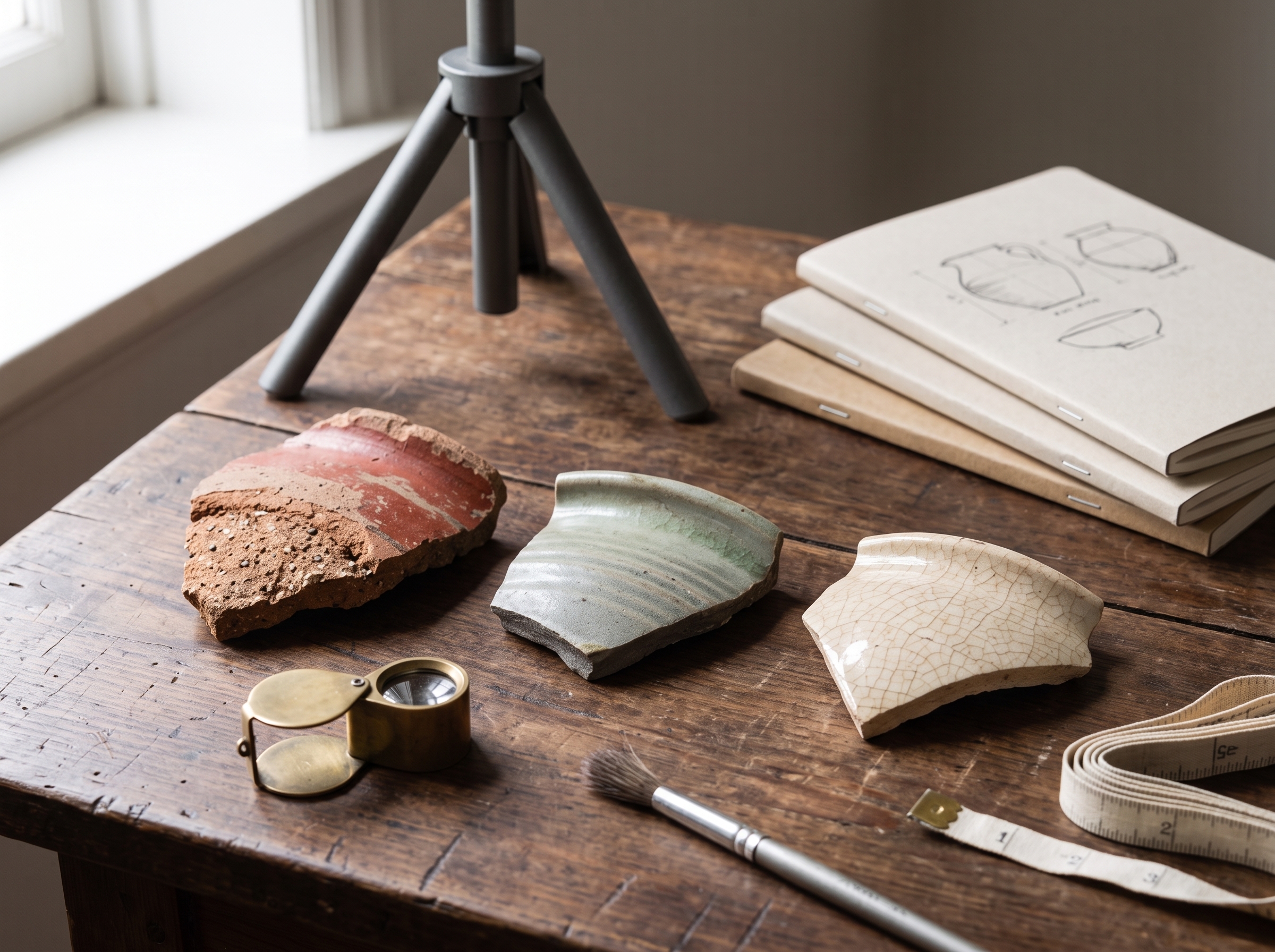
Common Misidentifications in Pottery
Even experienced collectors mix things up. Here's where photos can mislead—or where you need extra context.
Reproductions and Fakes
Many popular pottery lines have been reproduced. McCoy, Roseville, and Weller all have modern knockoffs with fake marks. Reproductions often use molds taken from originals, so the form looks right, but the clay body, glaze chemistry, and mark details differ. A photo can show a mark, but without knowing subtle differences—like font weight, stamp depth, or glaze pooling—it's easy to mistake a repo for the real thing.
Unsigned Studio Pottery
Not all studio potters signed their work, especially in the early 20th century. An unsigned piece might be a student work, a prototype, or simply from a potter who didn't mark consistently. Photos can show high-quality craftsmanship, but without a mark, attribution often relies on comparing glaze recipes, clay body, and form to known examples. That requires a deep reference library or experienced eyes.
Export and Import Marks
Pieces marked "Japan," "Made in Occupied Japan," or "Germany" span a huge range of quality and desirability. The country mark alone doesn't tell you much. You need to identify the specific maker, factory, or importer. A photo of the full mark—including any accompanying symbols, numbers, or brand names—is critical.
Confusing Earthenware and Stoneware
Glazes can disguise the clay body. A glossy glaze on earthenware can look dense and durable in photos, but the piece may still be porous and fragile underneath. Conversely, a rustic stoneware piece with a thin glaze might photograph like earthenware. A photo of the unglazed base or a chip clarifies this immediately.
What Tocuro Can Help Resolve When You Identify Pottery by Photo
Sorting through pottery marks, glaze types, and regional styles takes time—and access to reference materials most people don't have on hand. Tocuro identifies pottery from photos by analyzing clay body, glaze, form, and marks, then comparing them against a broad range of known examples.
Upload a clear photo of the base, and Tocuro can recognize maker's marks, decode factory stamps, and identify unsigned studio work by matching glaze and form characteristics. It provides context on the maker, production period, and what similar pieces have sold for, offering an estimated value range based on current market signals. This isn't a formal appraisal, but it gives you a practical sense of what you're holding and what it might be worth.
Tocuro also helps when marks are partial, worn, or ambiguous—situations where a quick image search falls short. It can distinguish between a genuine Roseville piece and a reproduction, identify regional pottery traditions, and flag details you might have overlooked in your own photos.
If you're identifying bowls or ceramic figurines, Tocuro works the same way: upload photos, and get a detailed identification with market context.
Get Your Pottery Identified
Wondering what you've found? Upload a photo to Tocuro and get an identification based on clay body, glaze, marks, and form. You'll see who made it, when, and what the current market looks like—all from the photos you already have.
Photo identification
Identify Your Pottery
Use Tocuro to identify your item from a photo and get an estimated value range when market data is available.