
Identify My Antique: How to Get Accurate Answers From Photos
When you need to identify an antique, the details you capture make all the difference. This guide shows you which clues matter most, what photos will get you accurate answers, and how to avoid the misidentifications that trip up even experienced collectors.
Identify My Antique: How to Get Accurate Answers From Photos
You've found something interesting at an estate sale, inherited a mysterious object, or pulled something curious from the attic. Now you need to know what it is. When you want to identify an antique, success depends on capturing the right details—not just snapping a quick photo and hoping for the best.
The difference between "it's just old" and "it's a documented maker from 1880" often comes down to tiny visual clues that photos either capture or miss entirely. This guide walks you through what matters, what to photograph, and how to avoid the identification pitfalls that send collectors down the wrong path.
What Clues Matter Most to Identify an Antique
Identifying decorative objects requires reading multiple layers of evidence. Each clue narrows the possibilities.
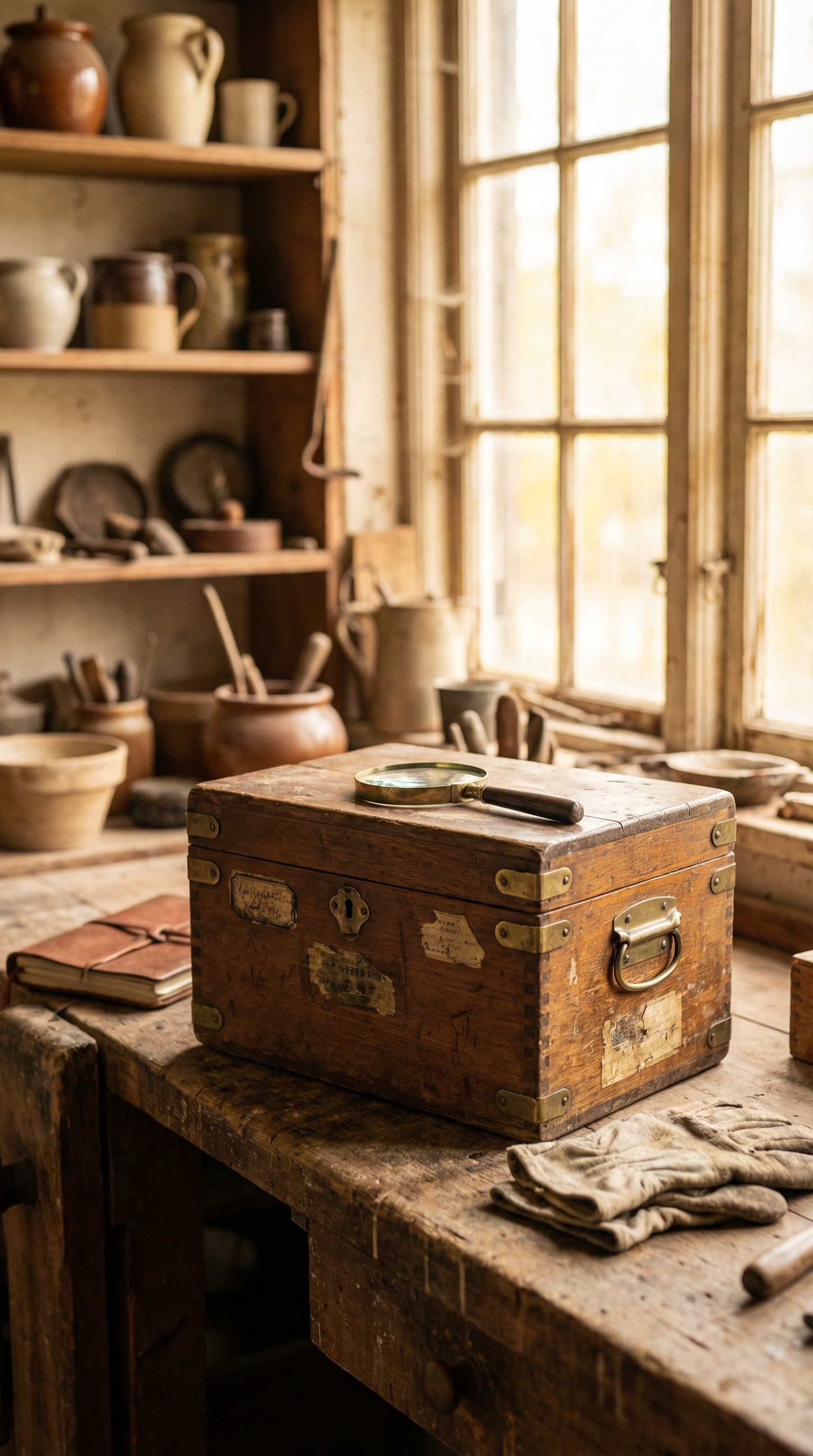
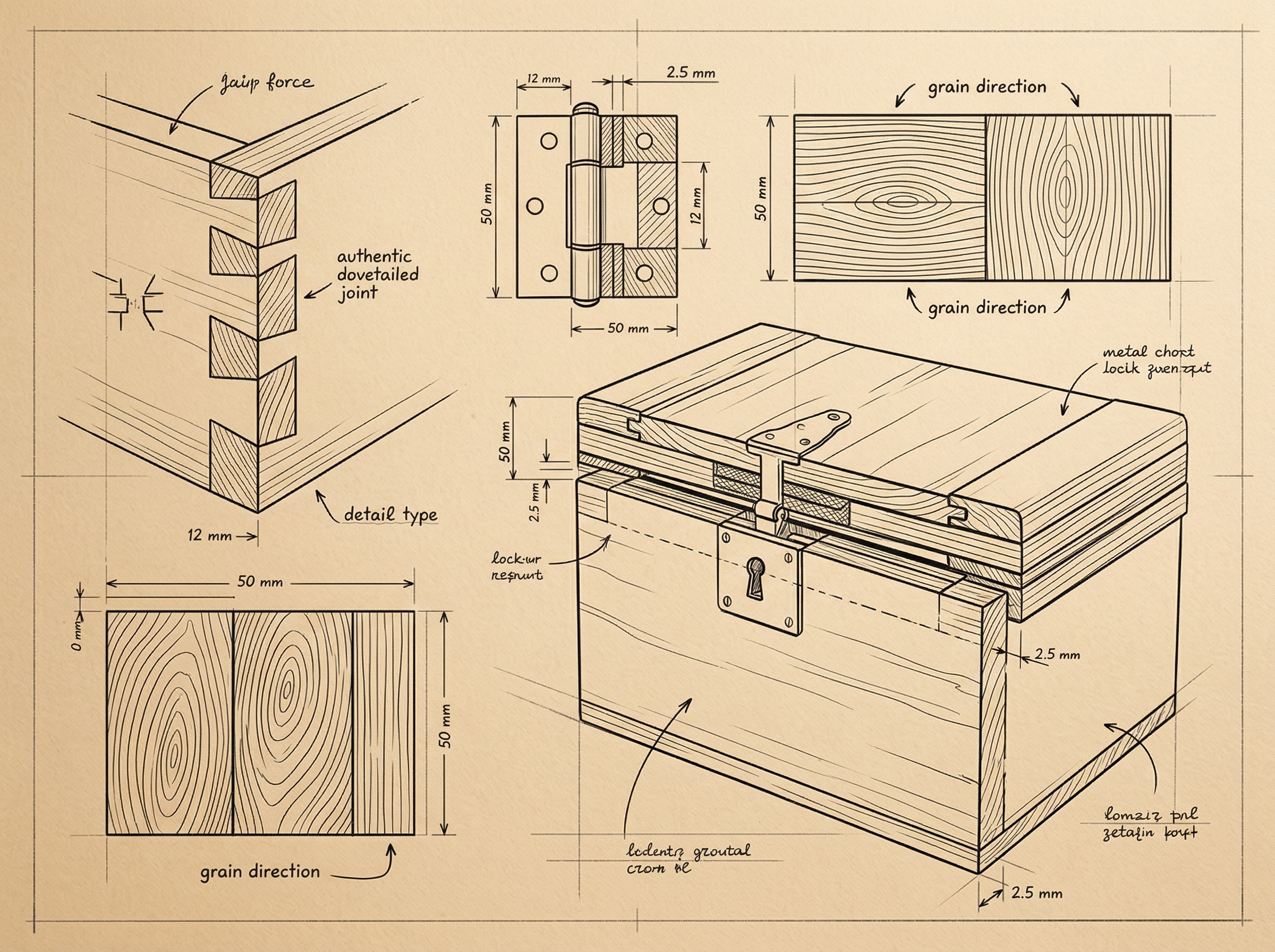
Construction and materials tell you manufacturing era and origin. Look at how pieces connect—hand-cut dovetails versus machine-cut, mortise-and-tenon joints, evidence of hand tools versus power tools. Materials change over time: certain glasses, metals, and wood finishes appeared in specific periods.
Maker's marks and signatures are gold when present, but most antiques carry no marks at all. When you find stamps, labels, or incised marks, they're often the fastest path to identification. Even partial marks help—a fragment of a pottery backstamp or half a furniture label can lead to the maker.
Style and decorative elements place objects in time and movement. Art Nouveau curves, Arts and Crafts joinery, Victorian ornamentation, Mid-Century minimalism—design language speaks volumes. But style alone misleads: revivals, reproductions, and mass-market knockoffs copy popular aesthetics for decades after the original period.
Wear patterns and patina reveal authentic age versus artificial aging. Real use creates specific wear in logical places. Reproduction "distressing" often appears random or overdone. Oxidation, tarnish, and surface degradation follow predictable patterns that forgers struggle to replicate convincingly.
Size and proportion matter more than many collectors realize. Antique furniture and objects often follow different scale conventions than modern pieces. A table that feels too small, a pitcher that seems oddly shaped—those proportions can point to specific regions, eras, or uses that weren't immediately obvious.
What Photos to Take to Identify an Antique
The photos you submit determine what can be identified. Take these systematically before asking for help.
Start with a clear overall shot in good natural light. Position the object against a neutral background with no clutter. This establishes form, proportion, and general style. Avoid harsh shadows or backlighting that obscures detail.
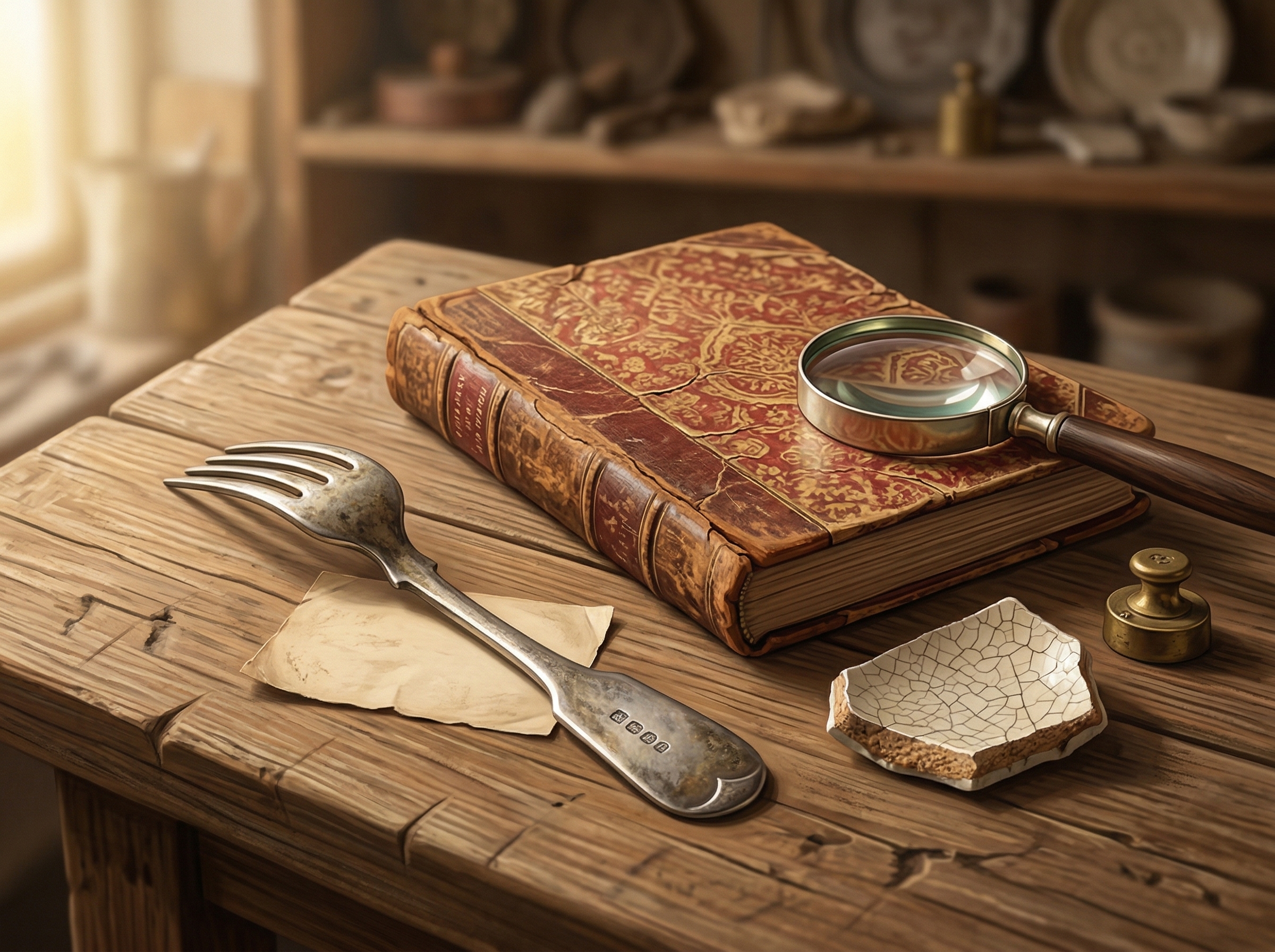
Capture all maker's marks, labels, and signatures with dedicated close-ups. Get close enough that text is sharp and readable. Photograph stamps from multiple angles if they're worn or faint. Include any paper labels, metal tags, or incised signatures. Even mysterious symbols or partial marks help.
Document construction details that reveal age and method. Photograph joint types, hardware, tool marks, and fasteners. Show the back, bottom, or underside where manufacturers often left unfinished surfaces that display original materials and techniques.
Show areas of wear and damage honestly. These aren't flaws in identification photos—they're evidence. Photograph worn spots, repairs, replaced parts, and aged surfaces. Comparison between worn and protected areas helps date pieces.
Include scale reference when size isn't obvious. A ruler, coin, or common object in frame gives crucial context. A miniature oil lamp looks like a full-size lamp without scale reference. A small decorative box might be mistaken for a larger piece.
Common Misidentifications When Trying to Identify an Antique
Certain mistakes appear repeatedly. Knowing them protects you from false conclusions.
Style revival pieces mistaken for originals trip up countless collectors. Victorian Gothic revival isn't medieval. Colonial revival from 1920 isn't Colonial from 1770. Arts and Crafts revival from 1970 isn't original Stickley. Reproductions can be antiques themselves now, but they're not what they imitate.
Unmarked mass-market items misread as rare pieces happens when decorative quality exceeds actual value. Many beautiful objects came from large manufacturers who produced thousands of identical pieces. Department store brands, catalog companies, and import wholesalers distributed attractive items that weren't custom or limited.
Married pieces and marriages confuse identification. A period base with a later top, old hardware added to newer wood, or replacement parts can make dating and attribution nearly impossible without examining every component separately. Antique furniture pieces often accumulate modifications over lifetimes of use.
Regional variations confused with earlier periods send identification sideways. Rural makers worked in older styles longer than urban craftsmen. Southern furniture used different woods than Northern. What looks "primitive" might be regional preference, not early date.
Deliberate fakes aged to deceive exist in every collectible category. Some are obvious, some are sophisticated. Artificial patina, fake wear, applied "age" stains, reproduction marks stamped on new items—forgers target valuable categories. When identification seems too good to be true, verify carefully.
Parts misidentified as complete objects happens with architectural salvage, hardware, and fragments. A decorative element removed from a larger piece can be misread as a standalone object. Context matters.
How Tocuro Helps You Identify an Antique
When you need to identify an antique quickly, Tocuro analyzes photos and provides specific identification based on visual evidence.
Upload your photos and Tocuro examines style markers, construction details, materials, and design elements to narrow identification. The system recognizes maker's marks, compares decorative patterns, and dates pieces based on multiple visual signals rather than single features.
You'll get period dating, style classification, likely origin, and—when marks are present—specific maker attribution. Tocuro also provides estimated value ranges drawn from current market signals, giving you both identification and practical market context.
For objects spanning ceramics, glass, metalwork, decorative accessories, and furniture pieces, Tocuro handles identification across collecting categories. The approach works whether you're identifying a single inherited object or working through an estate full of unknowns.
Unlike waiting days for forum responses or paying for preliminary appraisals, photo-based identification gives you answers in minutes. You'll know what you have, when it was made, and what it might be worth—all from the photos you take at home.
Get Your Antique Identified Now
Stop wondering what you have. Take clear photos showing overall form, any marks, construction details, and wear patterns, then identify your antique with Tocuro. You'll get specific identification with period dating and estimated value based on current market data.
Whether you're sorting an inheritance, evaluating a potential purchase, or finally solving a mystery from your own collection, photo-based identification gives you the answers you need to move forward with confidence.
Photo identification
Identify Your Item
Use Tocuro to identify your item from a photo and get an estimated value range when market data is available.