
How to Identify Flea Market Finds Fast: On-the-Spot Item ID for Savvy Collectors
Master the art of on-the-spot flea market identification with your smartphone. This practical guide shows you what to photograph, which details matter most, and how to make confident buying decisions before someone else grabs that hidden treasure.
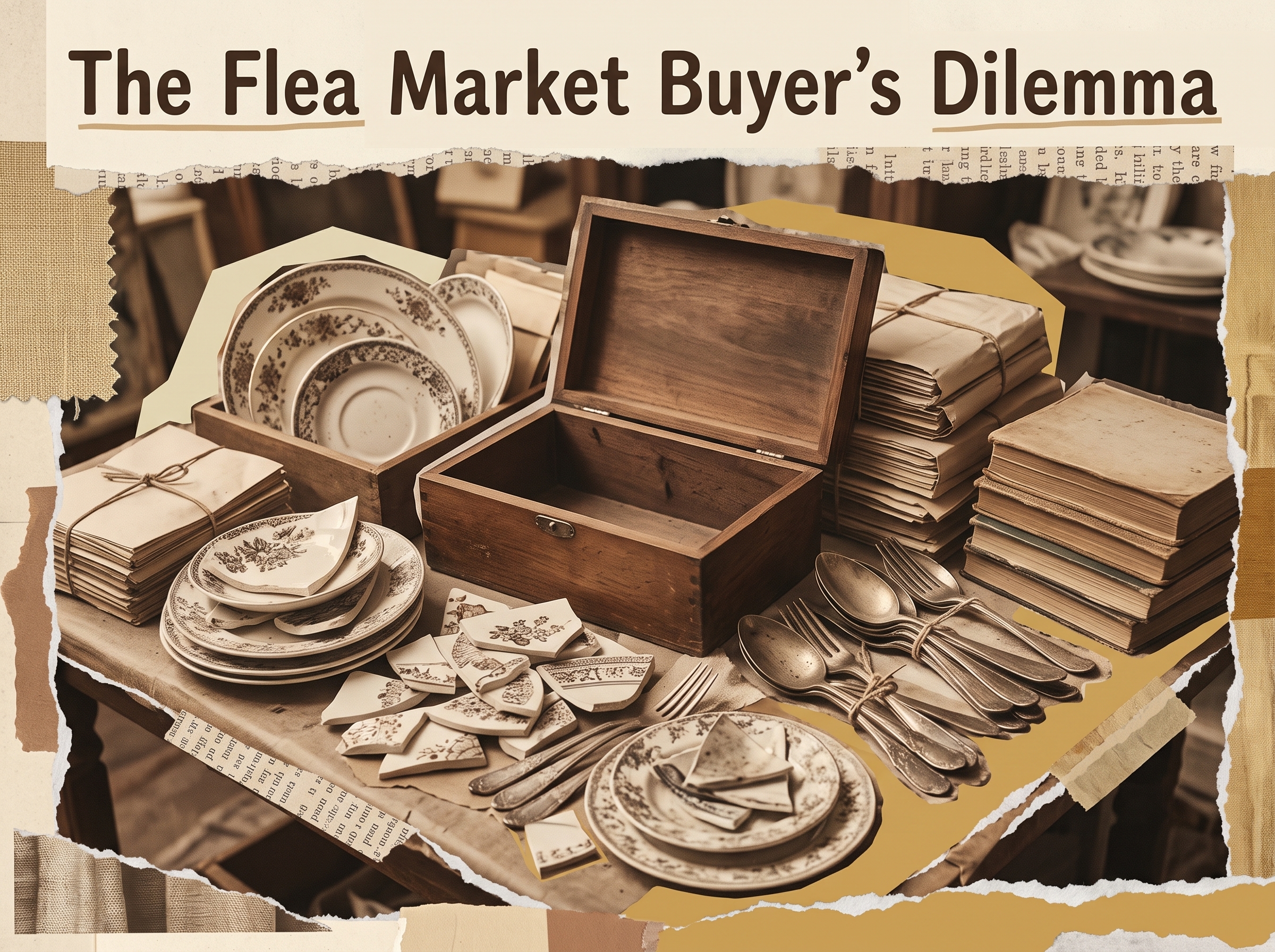
The Flea Market Buyer's Dilemma
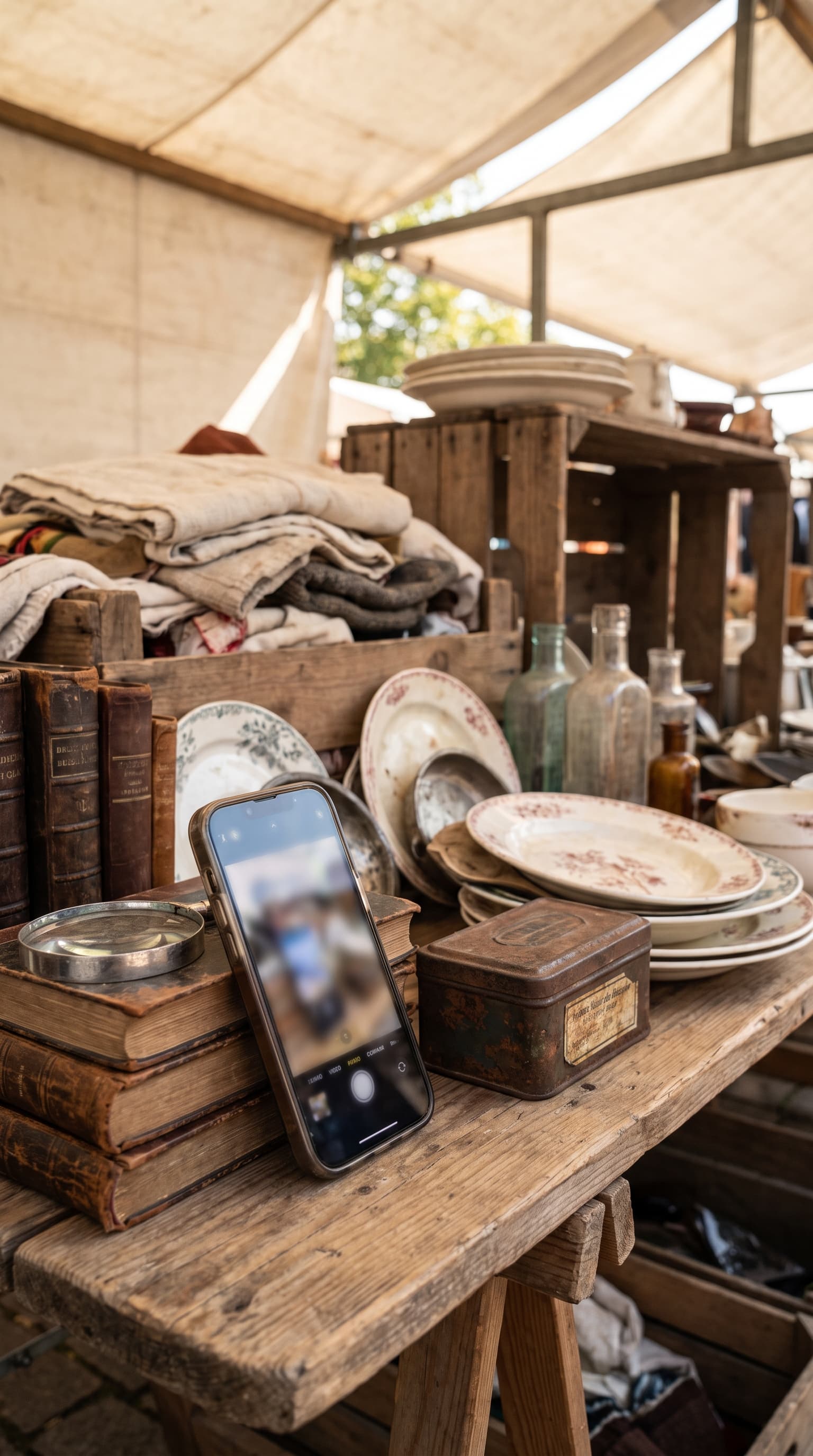
You're standing in front of a vendor table loaded with dusty china, tarnished silver, and a wooden box that just caught your eye. The dealer is watching. Two other shoppers are circling. You have maybe ninety seconds to decide if that mystery piece is a $5 gamble or a $500 find.
Identifying flea market finds quickly isn't about being the smartest person there—it's about knowing what to check first and having the right tools in your pocket. Most serious collectors now use their phones to snap quick photos, verify marks, and estimate value before they negotiate. The difference between walking away with a deal and overpaying often comes down to thirty seconds of smart research.
What to Check Fast When Time Is Tight
Speed matters at markets. Here's what experienced buyers photograph first:
Maker's marks and signatures
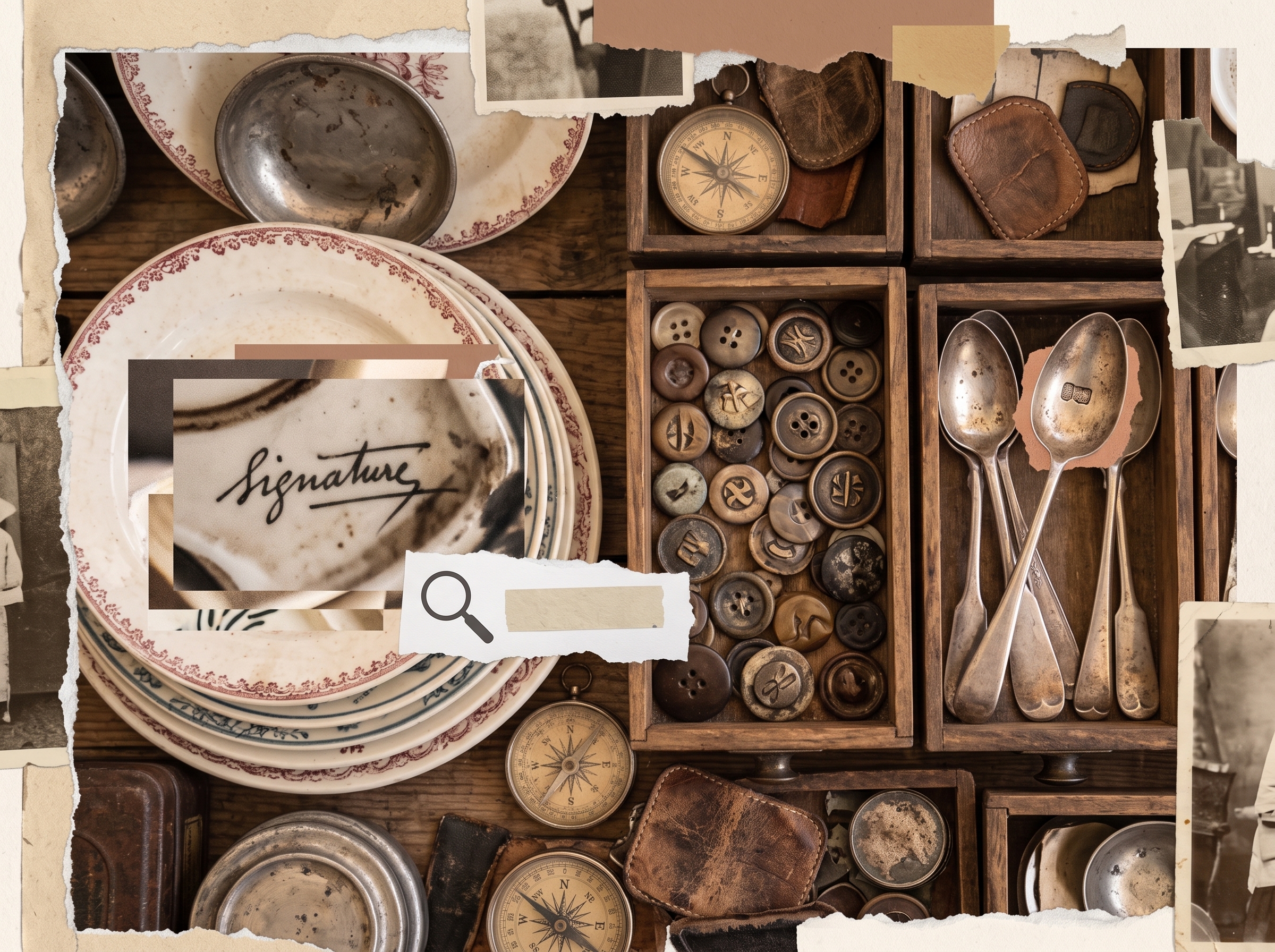
Flip it over, look underneath, check the back. Most valuable items are signed, stamped, or labeled somewhere. Photograph any mark you find—even if it's partial or worn. Pottery marks, furniture labels, silver hallmarks, and artist signatures are your fastest route to identification. Get close enough that letters and symbols are readable in your photo.
Construction and materials
How is it made? Look at joints on furniture (dovetails, screws, or nails), examine how pottery feels in your hand (weight matters), and check if metal is plated or solid. Take photos of joinery, seams, and any hardware. These details reveal age and quality faster than style alone.
Condition red flags
Cracks, repairs, missing pieces, and replaced parts all affect value. Photograph damage clearly—you'll want to reference it later when deciding if the price makes sense. Some condition issues are easy fixes; others tank value permanently.
Comparison shots
If the vendor has multiples or similar items nearby, photograph them together. Sometimes you can spot the better example or notice details that separate reproduction from original.
What's Worth Saving or Researching at Flea Markets
Not everything deserves a deep dive. Here's what seasoned collectors prioritize:
Items with clear maker identification
Anything marked by a known manufacturer, artist, or studio is worth investigating. Even lesser-known makers can surprise you. A clear photo of the mark gives you something concrete to research.
Unusual construction or materials
Hand-forged hardware, solid brass instead of plating, hand-painted details instead of transfers, mortise-and-tenon joinery instead of screws—these signals often indicate age and quality. If something is made differently than modern equivalents, photograph those differences.
Complete sets and original packaging
A single spoon might be $3. A complete silver service in the original fitted case could be $300. Completeness dramatically affects value. Photograph the full set together, then zoom in on individual pieces.
Things you keep seeing mentioned
If you follow collecting trends, certain names, styles, or categories come up repeatedly. When you spot those items in person, they're worth documenting even if you're not sure about the specific example. Learning to recognize what's currently trending helps you spot opportunity faster.
Pieces in your actual collecting lane
Don't get distracted by everything. If you collect mid-century ceramics, photograph and research those thoroughly. Give the Art Deco furniture a pass unless it's screaming "deal." Depth beats breadth at flea markets.
How to Identify Flea Market Finds While You Shop
The practical workflow most collectors use looks like this:
Step one: Spot something interesting. Pick it up before you photograph it—this signals to the vendor and other shoppers that you're seriously looking.
Step two: Photograph marks first, then overall shots, then construction details. Takes 15-30 seconds total. Make sure your photos are sharp and well-lit. Blurry shots of marks are useless.
Step three: Use a photo-based identification tool right there in the aisle. Tocuro identifies items from photos and provides estimated value ranges based on current market signals. You get 7 free identifications per day, and the count resets daily, so you can check multiple finds as you shop.
Step four: Compare the estimated value range to the asking price. If there's room for profit or if you simply love the piece and the price is fair, you've got your answer. If the math doesn't work, set it down and keep moving.
Step five: Negotiate if appropriate, or walk away if the dealer won't budge and the numbers don't make sense.
This entire process can happen in under two minutes. You're not holding up traffic, you're not fumbling through reference books, and you're not relying on guesswork.
Photo Tips That Actually Help Identification
Bad photos waste your free daily identifications. Here's what works:
Marks and labels: Get close. Fill the frame. Use your phone's macro mode if it has one. If the mark is worn or faint, try different angles to catch the light.
Overall shots: Step back far enough to show the whole item in context. For furniture, get the full piece. For sets, photograph everything together.
Detail shots: Hinges, feet, handles, joinery, signatures, pattern details—these close-ups reveal age and quality. Antique desk identification relies heavily on hardware and construction photos, for example.
Multiple angles: Front, back, side, bottom, inside. Different views catch different details. This is especially important for three-dimensional objects like pottery or antique clocks.
Lighting matters: Natural light is best. Avoid harsh overhead vendor lights that create deep shadows. If you're indoors under bad lighting, step outside for better photos.
Making the Call: Buy, Pass, or Counter
Once you've identified your flea market find and checked its estimated value, you have three moves:
Buy immediately if the asking price is significantly below market value and the condition is acceptable. Don't overthink slam-dunk deals.
Counter-offer if you're close but not quite there. Most flea market vendors expect negotiation. "Would you take $X?" is a perfectly reasonable question. Have your phone ready to show comps if needed.
Walk away if the numbers don't work or if your research reveals problems (reproductions, condition issues that kill value, or simply an inflated asking price). There will be other finds.
The worst mistake is buying something you can't identify. If you can't get a clear ID from photos and the vendor doesn't have provenance, you're gambling. Sometimes that's fine—but know that's what you're doing.
Building Your Flea Market Identification Skills
The more you photograph and research, the faster you get. Start by focusing on the categories you collect most often. Learn what marks look like for your favorite makers. Understand typical construction methods for your era.
Before your next market trip, practice taking identification photos at home with items you already know. See which angles and lighting work best. This way you're ready when you spot something good.
If you're just getting started with antiques and collectibles generally, a broader collecting guide can help you think through what categories interest you most.
Ready to Identify Your Next Find?
Flea markets reward preparation and speed. Your phone is the best research tool you'll ever bring to a market—if you know how to use it.
Identify your flea market finds instantly with Tocuro. Snap a photo, get identification and estimated value ranges based on real market signals, and make confident buying decisions before that other shopper swoops in. Seven free identifications daily means you can check everything that catches your eye without commitment.
The next time you're standing in a crowded aisle wondering if that piece is special, you'll have your answer in seconds.
Photo identification
Identify Your Item
Use Tocuro to identify your item from a photo and get an estimated value range when market data is available.