
How to Identify Coins by Photo: Date, Mint Mark, and Design Clues
Identifying coins from photos requires capturing both sides clearly, plus close-ups of date, mint mark, edge, and any design details. This guide walks through the visual clues that matter most for coin identification, common photo mistakes, and how Tocuro helps resolve tricky cases without requiring formal grading.
What Clues Matter Most When You Identify Coins by Photo
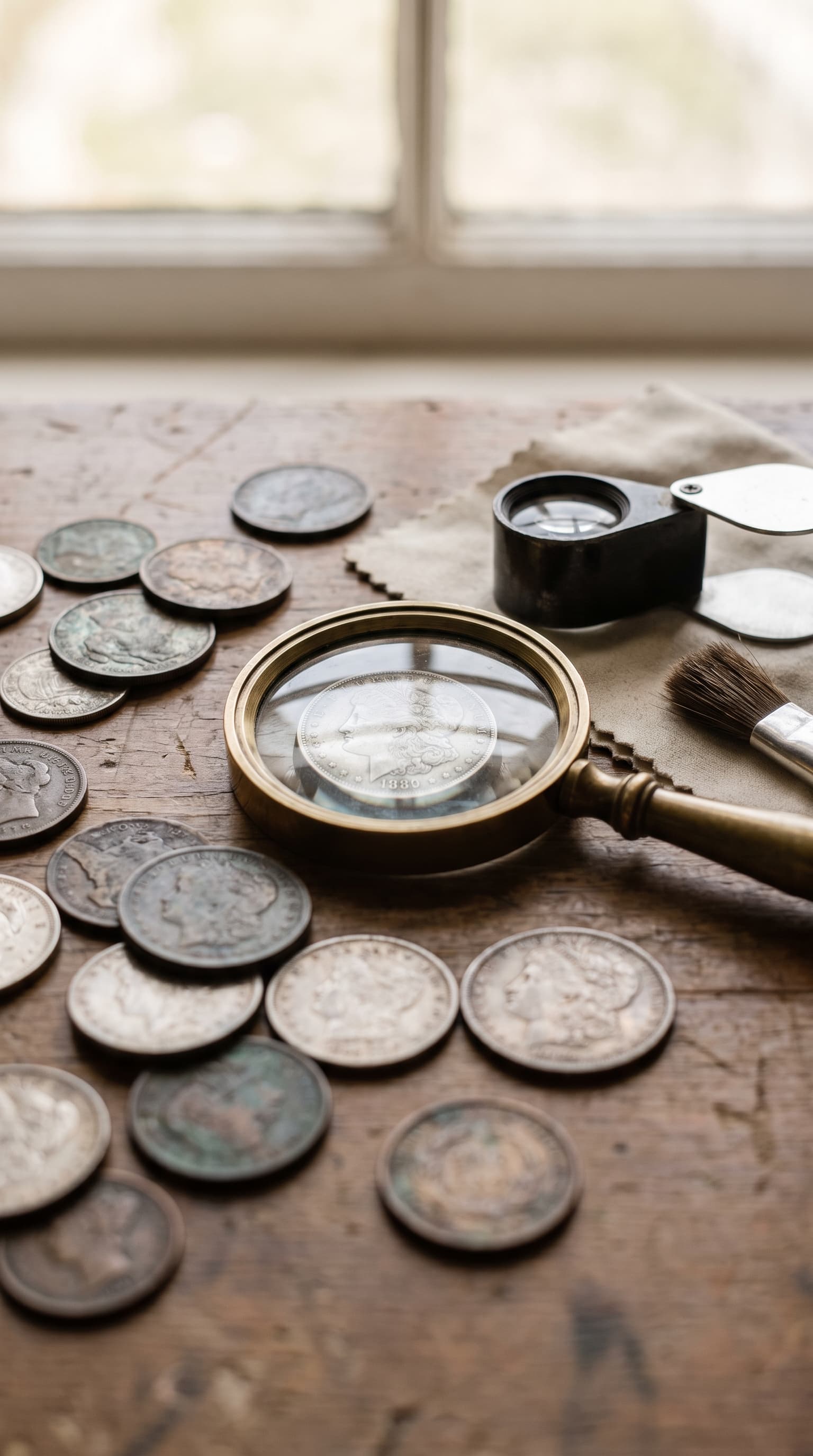
When you identify coins by photo, you're looking for a handful of specific details that narrow down country, denomination, year, and mint. Coins pack a lot of information into a small space, and photos need to capture the right angles to reveal what matters.
Date and Mint Mark
The date tells you the year of issue, but the mint mark—a tiny letter or symbol—reveals which facility struck the coin. A 1909-S VDB penny is worth thousands; a 1909 without the S is common. Mint marks are often tucked below the date, near the rim, or on the reverse. They're small, so close-up photos are essential.
Design Elements and Text
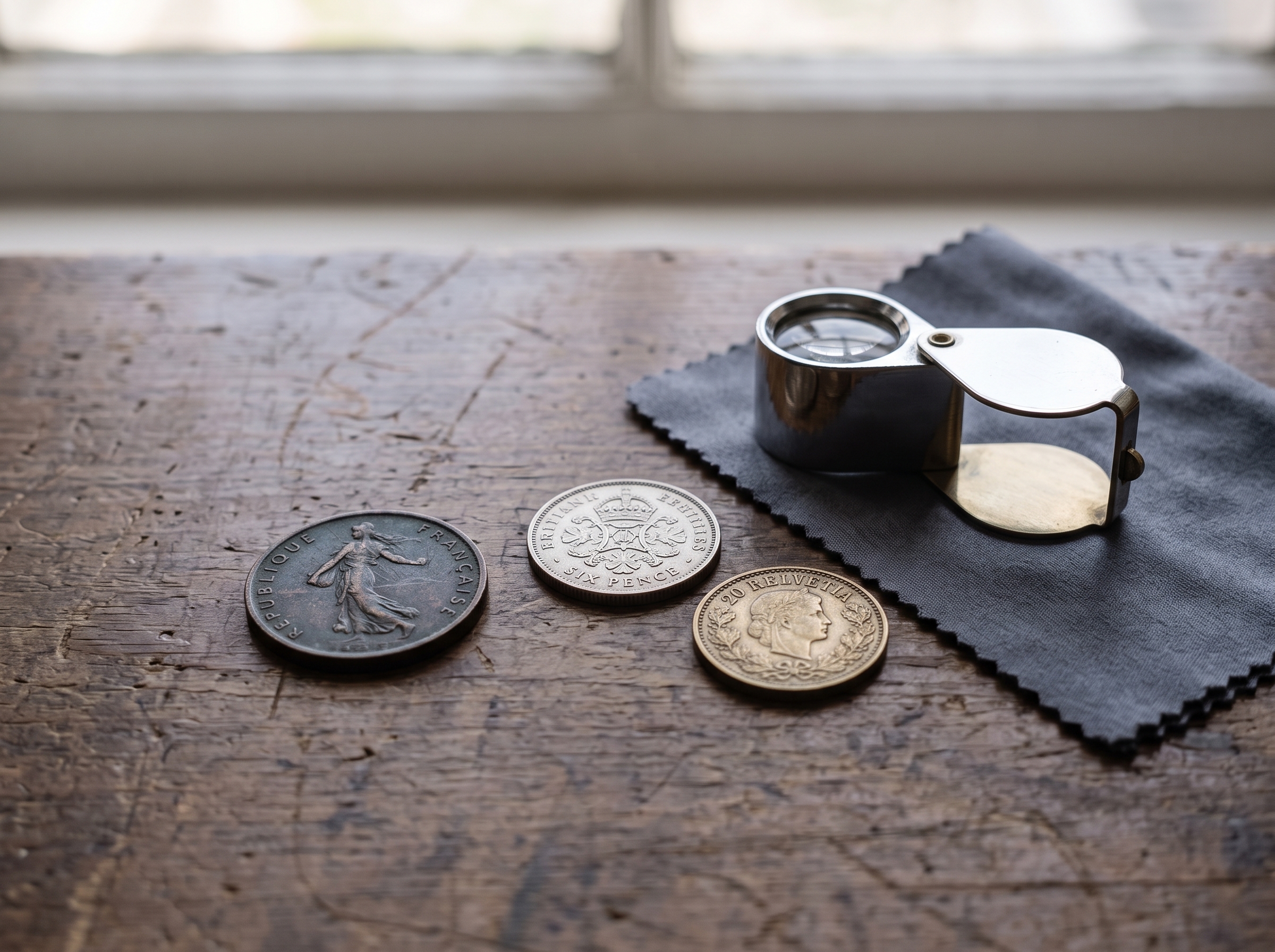
Even worn coins show design features: portrait orientation, inscriptions, symbols, wreaths, or shields. These help distinguish similar-looking coins from different countries or eras. A seated figure might be Britannia, Liberty, or Marianne—each from a different nation. Text around the rim ("E Pluribus Unum," "Dei Gratia," "Republique Française") confirms origin.
Edge and Thickness
Edges vary: reeded (ridged), smooth, lettered, or decorated. Some coins have edge inscriptions that name the mint or add security features. Thickness matters too—silver dollars, crowns, and commemorative issues often have heft and width that photos should convey with a side view.
Metal and Color
Copper, silver, nickel, brass, and bronze all age differently. Patina, toning, and wear patterns help date a coin and confirm composition. Photos taken in natural light reveal color nuances that artificial light can mask.
Condition and Wear Patterns
Wear shows which parts of the design sit highest. A coin with a worn-down date but clear rim details likely circulated heavily. Identifying wear helps distinguish mint errors from damage and gives context for value, even though photos alone can't replace formal grading.
What Photos to Take for Coin Identification
Good photos make identification straightforward. Missing details force guesswork.
Both Obverse and Reverse
Shoot the front (obverse) and back (reverse) straight-on, with the coin filling most of the frame. Avoid angles that distort the shape or text. These two photos establish the basic type and era.
Close-Up of Date and Mint Mark
Zoom in on the date area. Capture enough detail to read the numbers clearly, even if worn. If the mint mark is nearby, include it in the same shot. If it's on the reverse, take a second close-up there. Blurry date photos are the most common reason identifications stall.
For tips on capturing small marks clearly, see our guide on how to photograph maker marks.
Edge View
Turn the coin on its side and photograph the edge. This reveals reeding, smoothness, or any inscriptions. It also shows thickness, which helps distinguish similar coins.
Any Unusual Features
If there's doubling, off-center striking, clipped planchets, or other oddities, photograph them clearly. These can indicate errors that affect identification and value.
Natural Light and Neutral Background
Shoot in bright, indirect light—near a window works well. Avoid flash, which creates glare and washes out detail. Place the coin on a neutral surface: white paper, gray cloth, or a plain table. Busy backgrounds distract and make edges hard to see.
Common Misidentifications and Photo Pitfalls
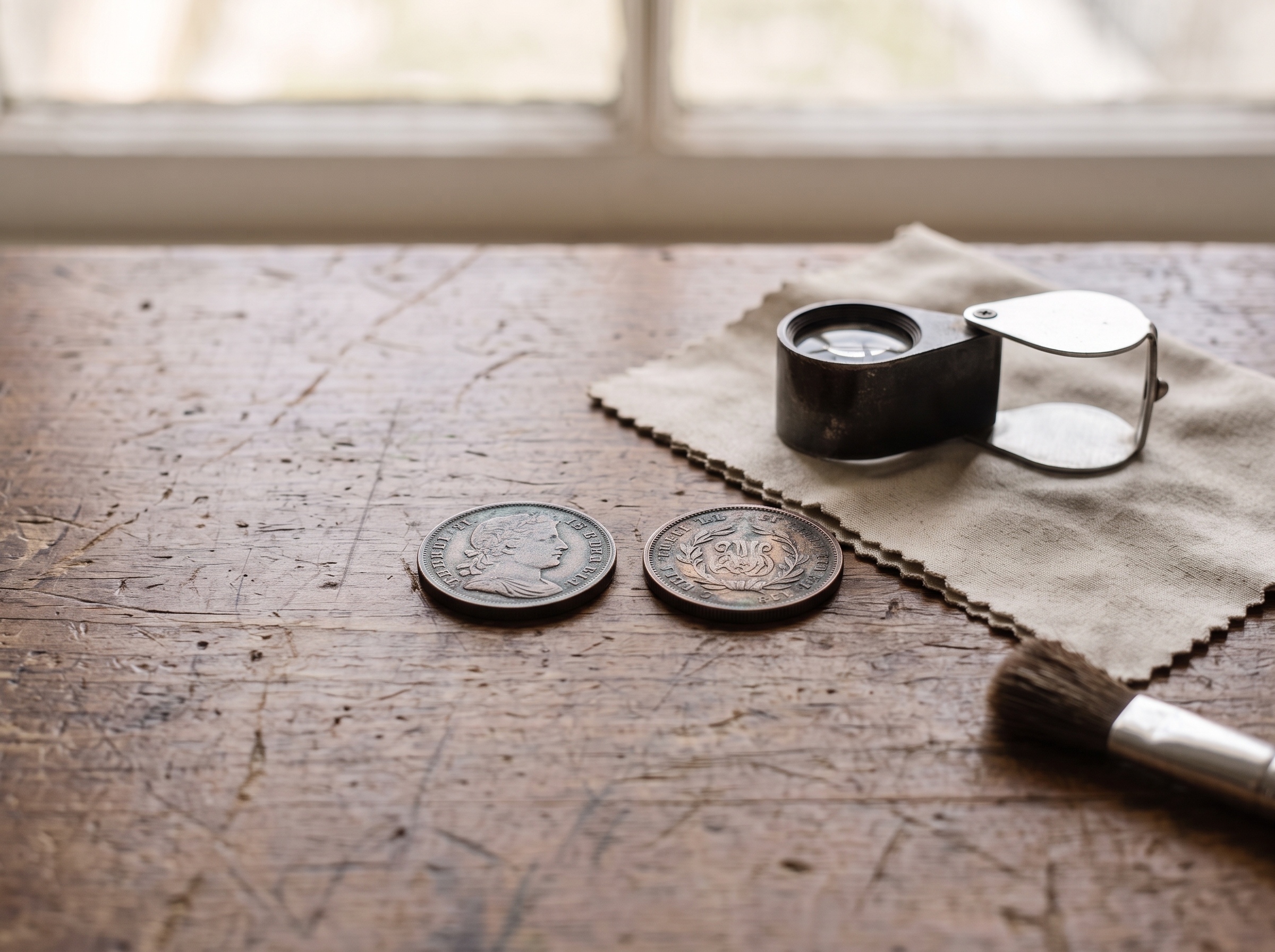
Certain coins confuse even experienced collectors when photos miss key details.
Foreign Coins Mistaken for U.S. Issues
Canadian, Mexican, and older British coins often resemble American pieces. A Canadian cent looks like a U.S. penny at first glance, but the maple leaf and "Canada" text confirm origin. Photos that skip the reverse or cut off rim text lead to wrong guesses.
Circulated vs. Mint State
Photos can show wear, but they can't measure it precisely. A coin might look "uncirculated" in a photo but show light cabinet friction under magnification. Tocuro and other photo-based tools help identify the coin itself—country, year, type—but formal grading requires in-person examination. Photos identify what the coin is, not its precise grade.
Tokens, Medals, and Reproductions
Many items look like coins but aren't legal tender: gaming tokens, commemorative medals, fantasy pieces, and modern reproductions. Photos of both sides usually reveal "copy," a private mint name, or non-governmental text. Missing these details leads to confusion about age and value.
Cleaning Damage Mistaken for Toning
Harsh cleaning leaves scratches, unnatural brightness, or pitted surfaces. Natural toning develops slowly and shows even color or rainbow hues. Photos in good light reveal the difference, but poor lighting hides cleaning damage and makes a coin look better—or worse—than it is.
Partial or Blurry Dates
Worn dates are tough. A "3" might be an "8," or a "1" might be missing entirely. If your photo doesn't capture enough detail, even expert eyes can't help. Multiple angles and lighting can sometimes reveal faint digits.
For more on reading mint marks and dates, see our guide on coin mint mark identification.
What Tocuro Can Help Resolve When You Identify Coins by Photo
Tocuro identifies coins from photos by analyzing the details you capture: design, text, date, mint mark, and metal. It's built to handle the common questions collectors face when they find a coin and want to know what it is.
Country and Denomination
Upload clear photos of both sides, and Tocuro narrows down the issuing country and denomination. This works for U.S. coins, world coins, and older issues that don't have English text.
Year and Mint
With a readable date and mint mark, Tocuro identifies the specific year and facility. This matters for coins where certain mints or years command higher prices—even if the design looks identical.
Design Variants and Types
Many coins have subtle design changes across years: different reverse designs, inscription tweaks, or metal composition shifts. Photos that capture these details help Tocuro distinguish variants that look similar but have different histories.
Estimated Value Context
Tocuro provides estimated value ranges based on market signals—not formal appraisals. These estimates give you context for deciding whether to research further, seek professional grading, or simply enjoy the coin as part of your collection. Value depends on condition, rarity, and current demand, and photos can only reveal so much. Think of it as a starting point, not a final answer.
7 Free Identifications Daily
Tocuro offers 7 free identifications per day, with the count resetting daily. If you have a small collection or a few mystery coins, that's often enough. Larger projects or ongoing research may benefit from higher-volume access.
If you're exploring other collectibles, Tocuro also handles items like vintage lamps, ceramic figurines, and antique plates.
Ready to Identify Your Coins?
Gather your coins, set up good lighting, and photograph both sides plus close-ups of dates, mint marks, and edges. Those photos hold the clues you need to identify what you have and understand its place in numismatic history.
Identify your coins with Tocuro and get clear answers from your photos—no guessing, no waiting.
Photo identification
Identify Your Coin
Use Tocuro to identify your item from a photo and get an estimated value range when market data is available.