
How to Identify Ceramic Figurines: Shape, Material, and Mark Clues
Identifying ceramic figurines requires examining silhouette, material texture, base marks, and decorative details. This guide shows which visual clues matter most and how to photograph them for accurate identification.
How to Identify Ceramic Figurines: Shape, Material, and Mark Clues
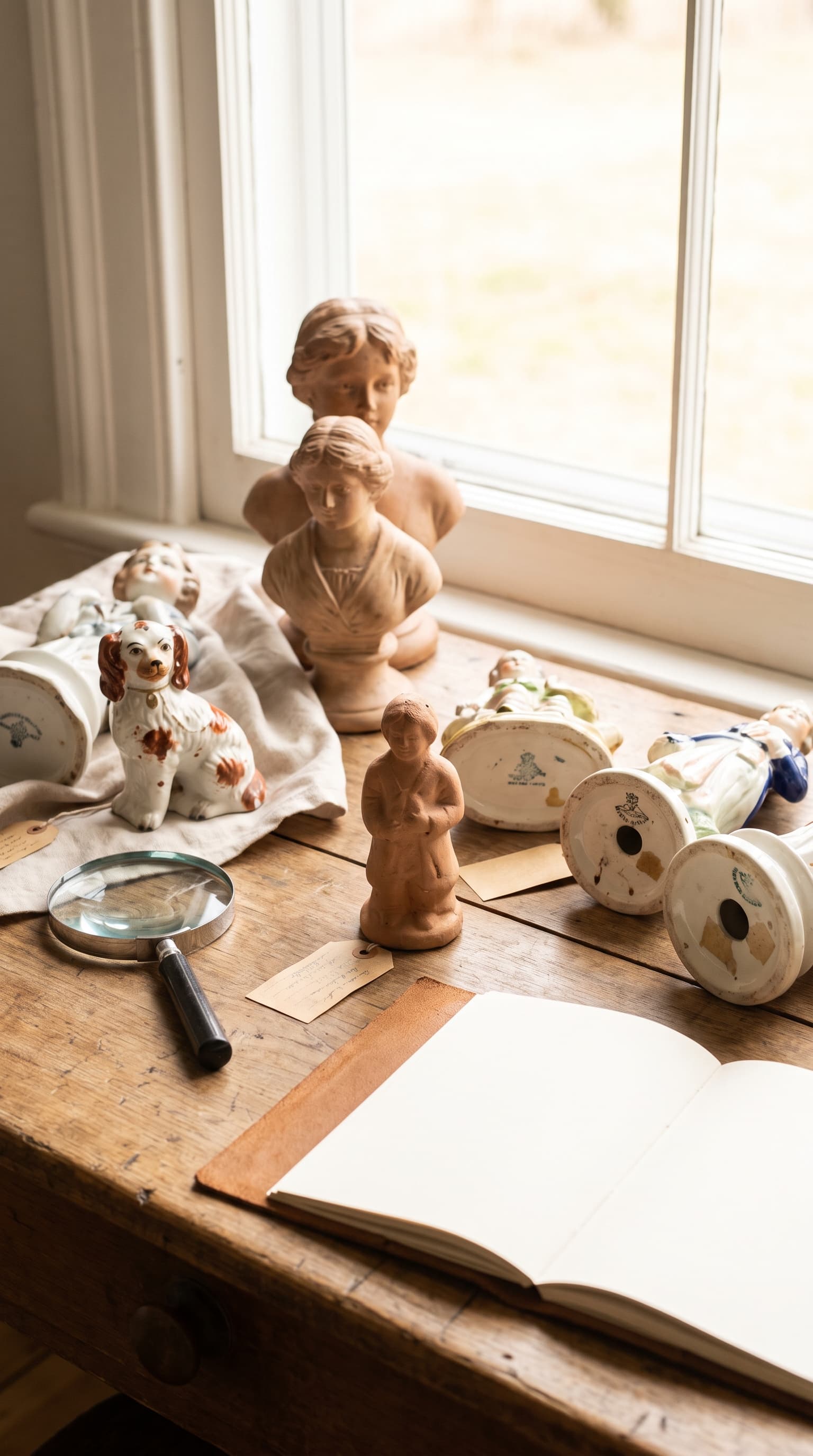
Identifying ceramic figurines often feels like detective work—especially when you're sorting through an estate sale box or examining a thrift store shelf. The good news? Most ceramic figurines reveal their identity through a combination of silhouette, material characteristics, and base marks. Understanding which clues matter most helps you move from "pretty porcelain lady" to "Lladró retired model from 1978."
What Clues Matter Most for Figurine Identification
Ceramic figurine identification relies on four primary visual signals that, taken together, create a reliable identification fingerprint.
Silhouette and Pose
The overall shape tells you more than you might expect. Mid-century American figurines tend toward static poses and simplified forms, while European porcelain manufacturers favored elaborate clothing folds and dynamic movement. A shepherdess with flowing robes and a detailed staff suggests different origins than a streamlined Art Deco dancer.
Pay attention to proportions. Hummel figurines feature oversized heads and simplified limbs. Royal Doulton ladies have elegant, elongated proportions. Occupied Japan pieces often show compressed, compact forms.
Material and Surface Texture
Not all ceramic is porcelain, and the difference matters. True porcelain is translucent when held to light, while earthenware remains opaque. Bisque has an unglazed, matte finish. Bone china feels lighter and rings with a clear tone when tapped gently.
Glaze quality varies dramatically. Factory-made figurines from established manufacturers show even, controlled glazing. Hand-painted artisan pieces may have intentional glaze variation. Crazing (fine surface cracks) appears on older pieces but doesn't always indicate age—some modern pieces craze quickly.
Cold-painted details—enamel or paint applied after firing—chip more easily than fired-on decoration. This helps separate vintage German porcelain (often cold-painted) from fully glazed Asian production.
Base Marks and Stamps
The bottom of a ceramic figurine functions like a business card. Marks may include manufacturer names, country of origin, model numbers, artist signatures, or date codes. Some manufacturers used consistent mark styles across decades; others changed frequently.
Figurine Marks Identification: How to Read Base Marks and Factory Stamps covers the decoder ring for common symbols, but the base tells other stories too. Unglazed ring marks suggest wheel throwing. Mold seams indicate casting. Hand-written numbers often reference model catalogs.
Incised marks (carved into wet clay before firing) generally indicate older or higher-quality production. Stamped or printed marks became standard in the 20th century. "Made in Occupied Japan" dates pieces to 1945–1952. "Japan" without "Occupied" suggests pre-1945 or post-1952.
Decorative Style and Color Palette
Color choices follow fashion and available pigments. Pastel florals dominated 1950s American ceramics. Bold primary colors suggest 1960s–70s. Certain colors prove expensive or difficult—cobalt blue, chrome red, and true black require specific firing conditions.
Decorative techniques matter. Transfer printing creates repeatable patterns with crisp edges. Hand-painting shows brush strokes and slight variations between pieces. Gold or platinum trim indicates higher-end production and requires additional firing.
Which Photos Help Identify Ceramic Figurines
Taking the right photos makes the difference between a vague guess and a confident identification.
Full Figure from Multiple Angles
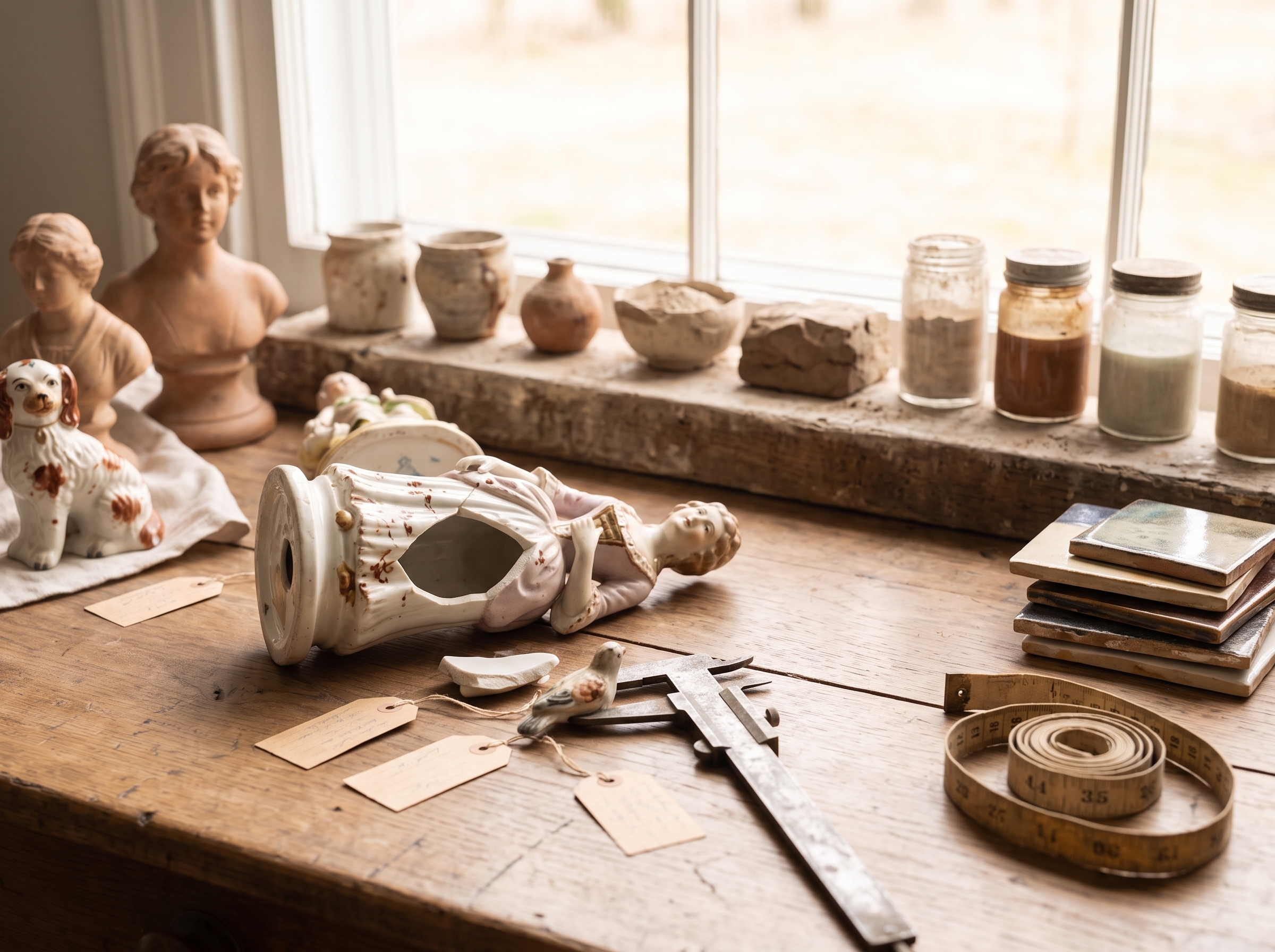
Capture the complete silhouette from front, back, and both sides. Natural daylight works best—avoid harsh shadows or yellow indoor lighting that obscures color accuracy. Include something for scale, like a coin or ruler, since figurine sizes range from miniature to mantel-sized.
Close-Up of the Base
This is your most important shot for ceramic figurine identification. Photograph the entire base in good light, ensuring any marks, numbers, or text stay sharp and readable. If marks are faint, try angling the light to create shadows that make shallow impressions more visible.
How to Photograph Maker Marks: A Complete Guide to Clear Mark Photos walks through the lighting tricks that reveal faded stamps and impressed marks.
Detail Shots of Decorative Elements
Zoom in on faces, hands, clothing details, and any painted or applied decoration. These reveal production quality and technique. Capture both sharp details and any damage—chips, repairs, or paint loss affect identification and value.
Material Texture
Photograph unglazed areas like the base or interior hollows. Show glaze texture and any crazing. If the piece is thin enough, a backlit photo can demonstrate translucency, distinguishing porcelain from earthenware.
Common Ceramic Figurine Misidentifications
Certain assumptions trip up even experienced collectors.
Assuming All White Porcelain Is European
American companies like Cybis and Boehm produced fine white porcelain figurines from the 1950s onward. Japanese manufacturers created convincing Dresden-style pieces. Without base marks, origin becomes surprisingly difficult to pinpoint.
Confusing Reproduction with Period Piece
Popular models get reproduced for decades. Capodimonte-style pieces continue in production today, often marked but sometimes deliberately antiqued. Modern makers reproduce Staffordshire dogs, Meissen styles, and Hummel-inspired children. Compare weight, base finish, and mark clarity—reproductions often feel lighter and show sharper, cleaner marks than genuinely old pieces.
Mistaking Bisque for Unglazed Antique
Bisque (unglazed porcelain) was an intentional finish choice, popular from the 1860s through the 1920s for decorative figurines. It's not damaged or incomplete. Victorian piano babies, German snow babies, and many romantic figurines used bisque deliberately for its soft, skin-like appearance.
Overlooking Regional Production Centers
Not all figurines come from famous makers. Regional American potteries, English cottage industries, and Scandinavian studios created distinctive figurines that don't appear in standard reference books. These often lack marks or use cryptic initials, making them harder to identify but no less collectible.
What Tocuro Helps Resolve for Figurine Identification
Some identification challenges require access to extensive visual databases and market data that individual collectors simply can't maintain.
Tocuro's photo-based identification system compares your figurine against thousands of documented examples, catching visual patterns across silhouette, decoration, and style that narrow down manufacturer and era. The system recognizes common production marks but also identifies unmarked pieces based on form and decorative characteristics.
For ceramic figurines with incomplete or hard-to-read marks, visual matching works when mark databases fall short. You'll get estimated value ranges based on current market signals rather than formal appraisals, helping you understand whether your piece is common production or worth researching further.
Many collectors discover they own production variants, discontinued models, or pieces from short-lived manufacturers that don't appear in standard guides. The identification process surfaces these less-documented pieces by comparing them to similar forms and styles.
Get Your Ceramic Figurine Identified Now
Snap a few clear photos—full figure, base marks, and decorative details—then upload them to identify your item. You'll receive identification insights and market-based value estimates without the guesswork. Whether you inherited a curiosity cabinet or found something promising at an estate sale, knowing what you have is the first step toward understanding its story and worth.
For more specialized help with base marks and factory stamps, explore our figurine identification app for comprehensive mark reading tools. Understanding your ceramic figurines starts with recognizing which visual clues tell the most important parts of the story.
Photo identification
Identify Your Item
Use Tocuro to identify your item from a photo and get an estimated value range when market data is available.