
How to Identify Antique Furniture: What Photos Reveal About Age and Origin
Identifying antique furniture requires careful attention to construction methods, hardware, and materials that reveal whether a piece is genuinely over 100 years old. This guide shows you which details matter most, what photos help experts spot authentic antiques, and how to avoid common misidentifications.
How to Identify Antique Furniture: What Photos Reveal About Age and Origin
When you're trying to identify antique furniture, you're essentially asking whether a piece is genuinely over 100 years old—and if so, when and where it was made. The answer lives in the details: how boards were cut, how joints were assembled, what hardware was used, and how the piece shows its age. A few clear photos of the right features can tell you more than hours of guessing.
The challenge is knowing which clues actually matter and which are just decorative noise.
What Clues Matter When You Identify Antique Furniture
Construction and joinery
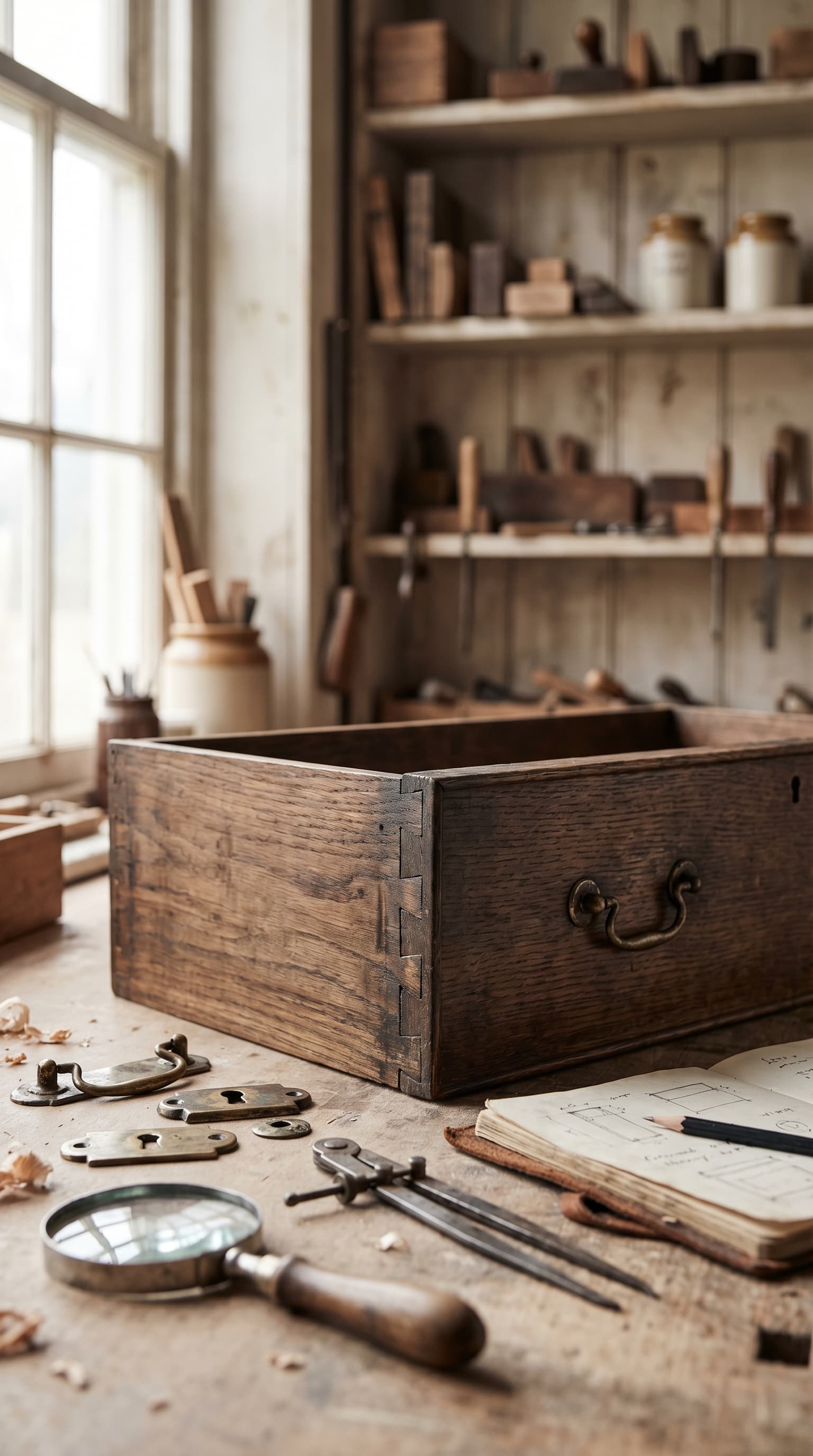
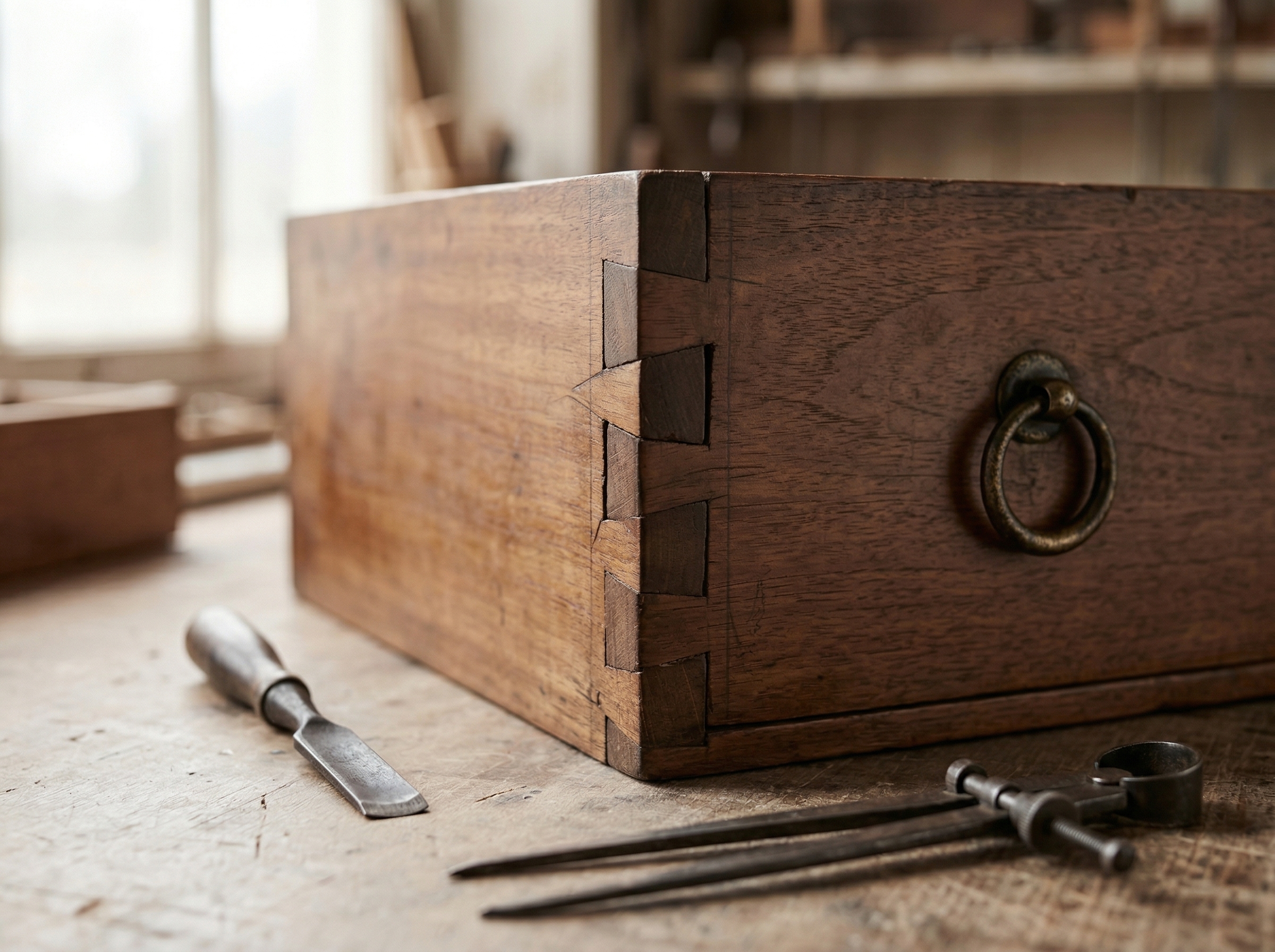
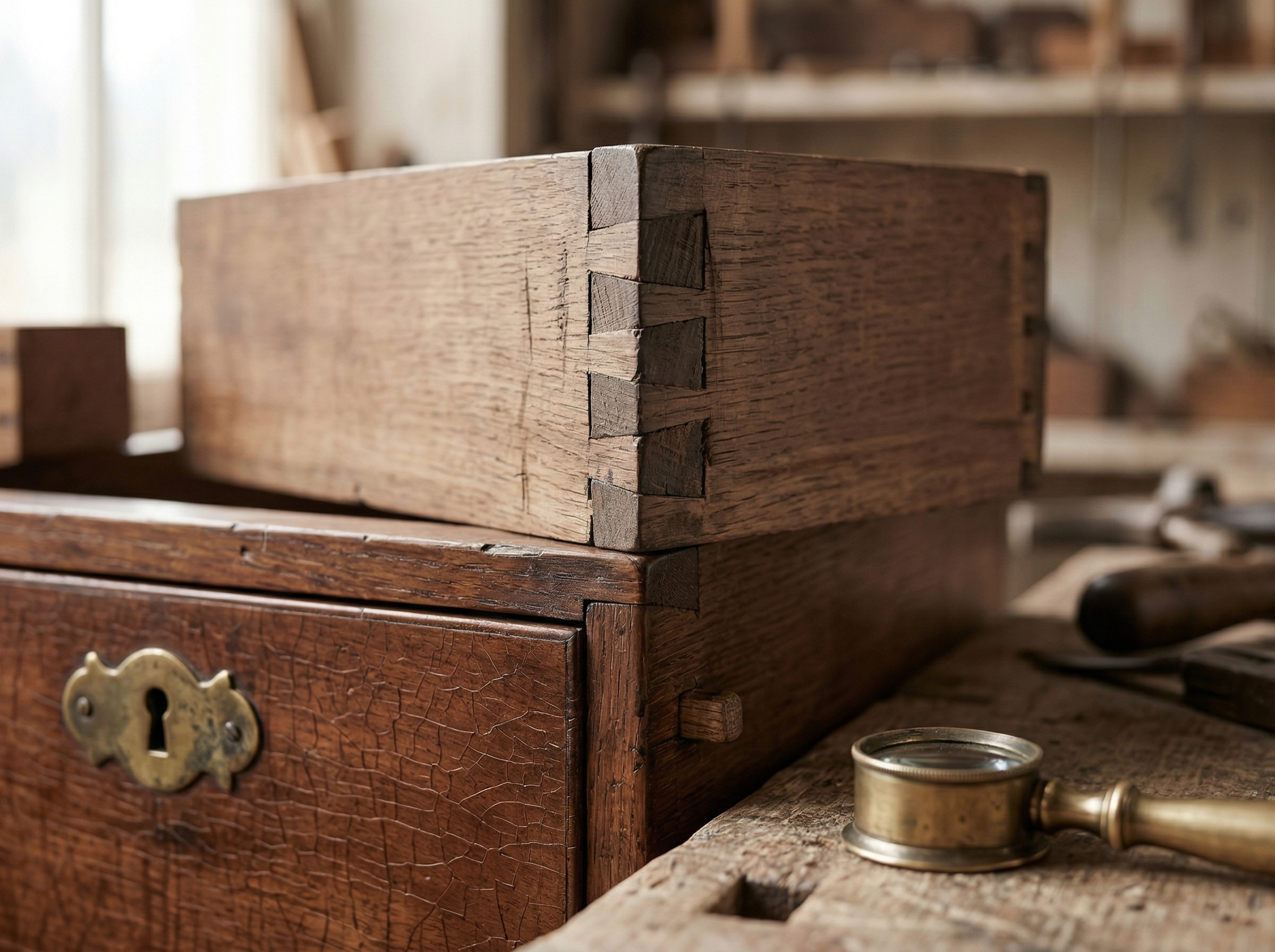
Authentic antique furniture was built by hand or with early machinery that left distinctive marks. Look for dovetails in drawers—hand-cut dovetails are irregular, with varying spacing and slightly uneven pins. Machine-cut dovetails (common after the 1870s) are uniform and evenly spaced. Before dovetails became standard, many pieces used simple nailed butt joints or wooden pegs.
Mortise-and-tenon joints, visible where legs meet rails or frames connect, were cut individually. You'll often see slight gaps, tool marks, or evidence of hand-planing around these joints.
Saw marks and tool evidence
Flip a piece over or pull out a drawer. The back panels, drawer bottoms, and underside surfaces show how lumber was processed. Circular saw marks (concentric arcs) appeared after the 1840s. Straight, parallel marks suggest hand-planing or early mill saws. Irregular, slightly wavy lines point to pit saws or early water-powered mills.
If you see perfectly smooth, uniform surfaces with no tool marks at all, the piece is likely modern or heavily refinished.
Hardware and fasteners
Original hardware is one of the most reliable dating tools. Hand-forged nails have irregular shanks and off-center heads. Machine-cut nails (1790s–1890s) have rectangular shanks and blunt ends. Modern wire nails are round and uniform.
Hinges, pulls, handles, and escutcheons also follow period patterns. Brass hardware with uneven patina, hand-filed edges, or hand-cut threads is a strong indicator of age. Perfectly stamped, shiny reproductions stand out immediately.
Check whether hardware holes have been filled or moved—a sign the piece has been altered or "married" with mismatched parts.
Wood and patina
Antique furniture develops a patina over decades—a natural darkening and subtle sheen that comes from oxidation, handling, and wax. It's uneven, concentrated on edges, handles, and high-traffic areas. Stain can mimic color, but it can't replicate the depth or texture of genuine patina.
Look at the wood itself. Is it solid hardwood (walnut, oak, mahogany, cherry) or veneer over secondary wood? Veneers were used in antique furniture, but the thickness, grain matching, and glue type differ from modern laminates. Hand-sawn veneers are thicker and less uniform.
Shrinkage is another telltale sign. Solid wood panels contract across the grain over time, leaving gaps in joinery or uneven edges. This is normal and expected in antiques.
Style and proportion
Period furniture follows recognizable style conventions—Queen Anne, Chippendale, Federal, Victorian—but style alone doesn't confirm age. Reproductions copy these forms faithfully. What matters is whether the construction, materials, and wear align with the style's era.
Proportions also matter. Antique pieces were built for different-sized rooms and different uses. A chair that feels oddly small or a table that seems too light may reflect period norms, not poor craftsmanship.
What Photos to Take to Identify Antique Furniture
If you're photographing a piece for identification, focus on details that reveal construction and age, not just aesthetics.
Overall shots from multiple angles: Front, back, and both sides in good light. These establish form, proportion, and style.
Joinery close-ups: Open drawers and photograph dovetails from the side and front. Shoot mortise-and-tenon joints where visible. Capture any pegs, nails, or screws.
Underside and interior surfaces: Flip the piece over if possible, or photograph the underside of tables, seats, and drawer bottoms. This is where you'll see saw marks, tool evidence, and original wood finishes.
Hardware in detail: Photograph hinges, pulls, locks, and escutcheons straight-on and from the side. Capture screw heads, nail types, and any marks or stamps on metal components.
Maker's marks or labels: Check drawers, backs, undersides, and interior frames for stamps, tags, paper labels, or handwritten inscriptions. Even partial marks help.
Wear and patina: Photograph areas with uneven color, worn edges, scratches, and repairs. These tell the story of the piece's life and help confirm age.
Wood grain and finish: Close-ups of the wood surface, especially on unfinished areas, show grain, texture, and finish type.
Good lighting is critical. Natural, indirect light works best. Avoid heavy shadows or glare that obscure details.
Common Misidentifications When You Try to Identify Antique Furniture
Confusing reproductions with originals
Reproductions have flooded the market since the Colonial Revival movement of the early 1900s. Many were high-quality copies made with traditional methods. The giveaway is usually in the details: too-perfect symmetry, modern fasteners mixed with period-style joinery, or artificially distressed finishes.
Some reproductions are now old enough to show genuine age and patina, which adds another layer of confusion. The key is matching all the clues—construction, materials, hardware, and wear—to a consistent time period.
Assuming carved or ornate means antique
Elaborate carving, inlay, or gilding doesn't prove age. Victorian-era furniture (1837–1901) was heavily ornamented, but so are many modern imports and reproductions. Machine carving became common in the mid-1800s, and CNC routers can now replicate any historical pattern.
Look past the decoration to the underlying structure.
Mistaking "old" for "antique"
A piece from the 1930s or 1950s is vintage, not antique. The 100-year threshold matters, especially for collectors and appraisers. Vintage furniture can be valuable and worth identifying, but it requires a different lens. If you're not sure where the line is, learn how to identify vintage furniture separately.
Overlooking marriages and alterations
Many antique pieces have been altered, repaired, or combined with parts from other furniture over the decades. A table base married to a mismatched top, a chest with replaced drawer fronts, or a chair with modern upholstery tacks can all mislead.
Check whether all components match in wood, finish, joinery, and wear pattern.
What Tocuro Can Help Resolve When You Identify Antique Furniture
Sorting through all these details takes experience—and honestly, a second set of eyes helps. That's where photo-based identification becomes practical.
Tocuro lets you upload photos of your furniture and get feedback on what you're looking at: likely age range, style, construction clues, and whether the piece shows signs of being a genuine antique or a later reproduction. It's built to catch the details that matter—joinery, hardware, tool marks, patina—and explain what they mean in plain language.
You don't need to be an expert to ask the right questions. The app walks you through what to photograph and helps you understand what the evidence suggests.
Tocuro also estimates value ranges based on market signals, so you'll get a sense of whether a piece is worth pursuing further with a formal appraisal or specialist.
If you're working through a houseful of furniture or sorting an estate, you get 7 free identifications per day. The count resets daily, so you can work through pieces at your own pace.
Ready to Identify Your Antique Furniture?
You've got the photos. You've looked at the joinery, checked the hardware, and studied the wear. Now it's time to get answers.
Identify your furniture with Tocuro and see what the details reveal about age, origin, and value. It's free to start, and you'll know within minutes whether you're holding an antique or something else entirely.
Photo identification
Identify Your Furniture
Use Tocuro to identify your item from a photo and get an estimated value range when market data is available.